
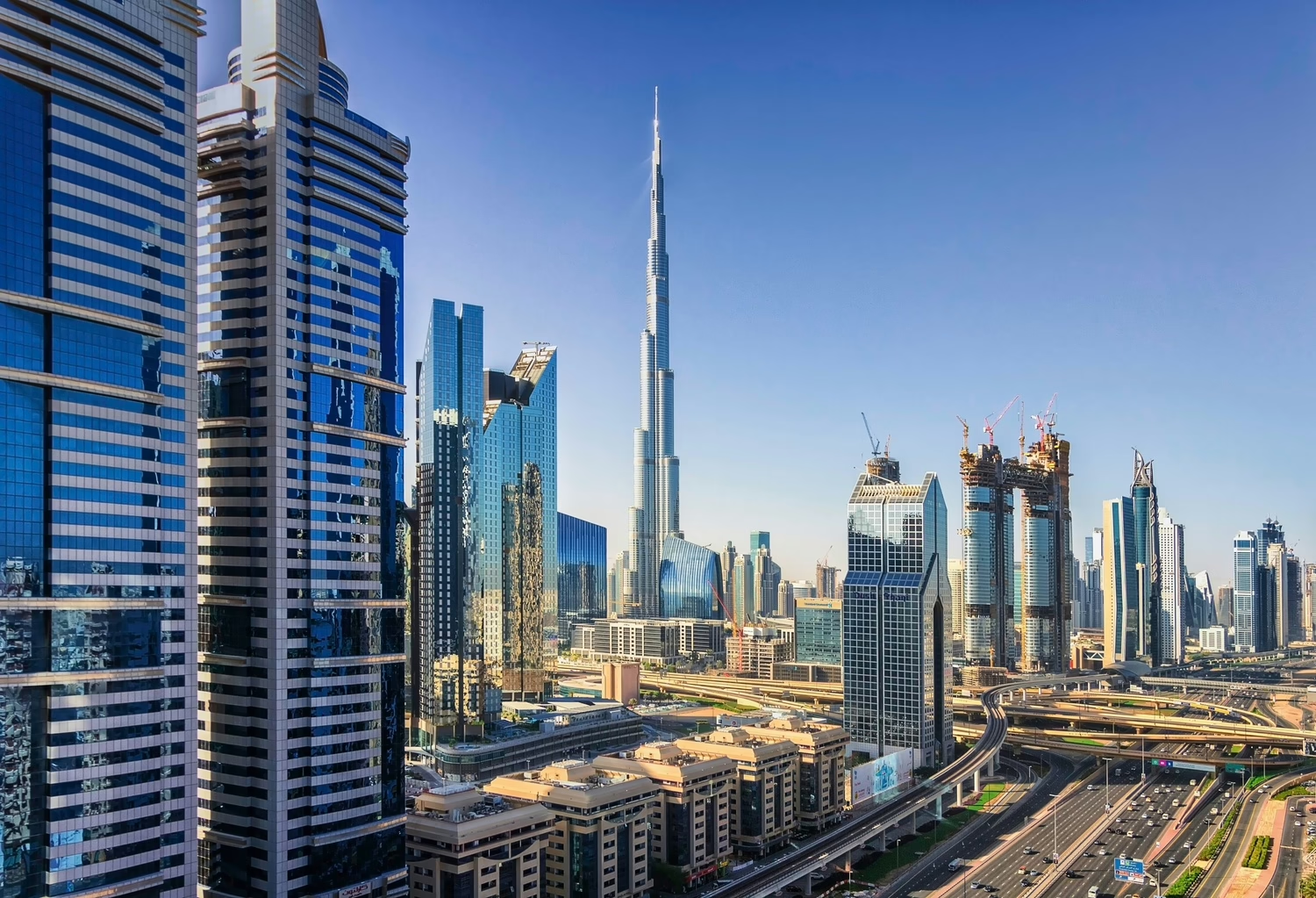
Dubai sits in the top 15 most expensive cities globally according to Mercer and consistently ranks as the costliest city in the Middle East. At the same time, multiple independent indices place it 28-37% below London, 45% below New York and significantly cheaper than Zurich or Geneva when rent is excluded. The gap narrows dramatically once housing is added because rent remains the single largest expense for most residents.
Monthly Budget for a Single Person (No Luxury, Just Comfortable)
A single person aiming for a decent but not flashy lifestyle – studio or small one-bedroom, eating out a few times a week, using public transport, occasional drinks and gym – needs between 11,000 and 15,000 AED per month in 2025.
Lower end (11-12k AED) is achievable in areas like JVC, Al Nahda, Dubai Silicon Oasis or International City. These communities offer newer buildings with pools and gyms at half the price of the Marina, and the metro or feeder buses are usually within a 10-15 minute walk.
Upper end (14-15k AED) applies to better buildings in Dubai Marina, Downtown or Business Bay with more frequent entertainment. The extra money mostly goes to higher rent and chiller-free bills, plus the convenience of walking to bars, restaurants and the beach.
Real-world feedback from expats in 2025 consistently puts 12,500-13,500 AED as the sweet spot for most single males: you get a furnished studio in a decent building, eat out or order delivery 8-10 times a month, hit the gym, have a few weekend brunches or bar nights, and still save or send home a reasonable amount.
Anything below 10,000 AED forces major compromises – either a very old or partitioned studio in Deira/Sharjah, almost no eating out, and no car or regular taxi use. Above 18,000 AED the lifestyle starts shifting toward frequent fine dining, newer cars and prime-location towers, which is no longer “decent” but clearly comfortable-to-luxury territory.
Breakdown of a Realistic 13,000 AED Monthly Budget (Single Male, 2025)
- Rent and bills for furnished studio (45-60 m², mid-tier building): 5,500-7,000 AED
- Groceries and household items: 1,200-1,600 AED
- Eating out / coffee / delivery 3-4 restaurant meals per week: 1,200-1,800 AED
- Transport (Nol card + occasional taxi/Careem): 500-800 AED
- Mobile + internet: 350-450 AED
- Gym or sports activities: 300-500 AED
- Health insurance: employer often covers, otherwise add 300-500 AED
- Entertainment, bars, cinema, brunches: 1,000-1,800 AED
- Miscellaneous (clothing, personal care, small purchases): 800-1,200 AED
Total lands around 12,500-13,500 AED with a small buffer.
Housing Costs – The Biggest Variable
Rent accounts for 45-55% of most single expats’ budgets in 2025. This dominance stems from steady population growth and limited supply in desirable areas, pushing annual increases to 10-18% across the board. For studios and one-bedroom units, prices reflect not just location but also building age, amenities like pools or gyms, and whether the unit comes furnished. Newer developments in emerging suburbs keep entry-level options viable, while prime waterfront spots demand premiums that can double costs.
Factors Driving Rent Variations
Several elements shape these prices beyond square footage. Furnished units add 10-20% to the base rate but save on moving hassles for short-term expats. Payment terms play a role too: annual contracts lock in lower monthly equivalents, but quarterly or semi-annual cheques tie up cash flow. Market reports from mid-2025 note a 11-12% year-over-year jump in central districts due to high demand from remote workers and golden visa holders. Utilities tie directly into this, as older buildings without central cooling rack up higher DEWA bills during peak summer months.
Studio and One-Bedroom Rent Ranges (Annual Contract, 2025 Data)
- International City, Discovery Gardens, JVC, Al Nahda, Dubai Sports City: 38,000-55,000 AED per year (3,200-4,600 AED/month) – these cluster-style communities suit budget-conscious singles with basic setups and easy metro access.
- Dubai Silicon Oasis, Motor City, Arjan, Al Furjan: 50,000-70,000 AED per year – tech hubs and family-oriented suburbs here offer mid-range value, often with on-site retail and green spaces.
- Deira, Bur Dubai, Al Barsha Heights: 60,000-80,000 AED per year – older, vibrant neighborhoods provide cultural immersion and proximity to souks, though maintenance varies by building.
- Dubai Marina, JLT, Downtown (older buildings): 85,000-120,000 AED per year – walkable to offices and nightlife, these appeal to professionals but face higher agency fees.
- Newer towers in Marina, Palm, Downtown: 130,000-180,000+ AED per year – luxury finishes and views justify the tag, targeted at high earners in finance or tech.
City-wide averages hover around 43,000-59,000 AED annually for studios, per platforms like Bayut and Property Finder, with 7,900+ listings active as of late 2025. Short-term monthly rentals in serviced apartments push equivalents to 5,000-8,000 AED but include housekeeping and Wi-Fi.
Payment Structures and Utility Realities
Most landlords usually demand payment in 1-4 cheques, reflecting a preference for upfront security in a transient expat market. A single cheque covers the full year at the lowest rate, while four spreads it quarterly with minimal uplift. Some flexible owners accept six or twelve for newcomers, though this often adds 5-10% to the total. Ejari registration, mandatory for all leases, costs about 220 AED and protects against disputes.
Utilities (DEWA + cooling) for a studio average 550-850 AED monthly, highest in summer when air conditioning can spike to 1,200 AED for inefficient units. Water and electricity combine for the bulk, with chiller fees in shared buildings adding 200-300 AED. Many mid-tier leases cap this at 100 AED per kWh for predictability, but always check the fine print. Internet bundles from du or Etisalat slot in at 300-400 AED, often bundled with DEWA for simplicity.
Tips for Navigating the Rental Process
Start with apps like Bayut or Dubizzle for real-time listings, filtering by “chiller-free” to avoid surprise bills. Viewings reveal hidden gems, like ground-floor studios with private patios in JVC for under 50,000 AED. Negotiate on older units – a 5-10% discount is common in slower seasons like post-summer. For bachelors, shared villas in Al Furjan cut costs further, splitting 80,000 AED annually four ways. Long-term, track RERA indices for trends; 2025’s stabilization in suburbs signals potential bargains before 2026’s projected 8-12% rise.

The Real Dubai Cost of Living With a World Arabia
Dubai can look insane from the outside – private islands, gold-plated everything, brunches that cost more than a flight to Paris. Yet walk ten minutes in any direction and you’ll find 20 AED lunches that locals fight over and buildings quietly cutting rent just to keep the lights on. That contradiction is the only Dubai we have ever known.
We at World Arabia, for years have been covering both ends of this city: the openings everyone photographs and the hidden Karama cafés nobody posts about, the record-breaking penthouse deals and the JVC studios.
The same inbox that gets invitations to yacht launches also gets messages from people earning normal salaries asking whether they can survive here. The answer has never been “only if you’re rich”. The answer is always “it depends on which Dubai you pick”. Prime Marina views or a quiet tower in Sports City? Daily Careem or a Nol card? Spinneys imported aisle or the vegetable market in Deira?
We track every shift. When Bayut shows a building in Arjan falling from 72k to 62k annual, we notice. When a new Lulu opens and chicken suddenly costs 5 AED less per kilo, notice. When a hotel drops its Friday package to 399 AED because occupancy dipped, notice. These are not anomalies – they are the city breathing, and they happen constantly. The Dubai in the headlines and the Dubai in real life are two different places that share the same postcode.

Food and Grocery Expenses
Groceries remain reasonable compared to Western Europe and North America, especially for basic and locally sourced items. Imported goods, alcohol and premium proteins push the bill higher, but even then the overall cost stays manageable for most salaried expats.
Core Grocery Spending Patterns in 2025
A single person shopping mainly at Carrefour, Lulu Hypermarket or Union Coop spends 800-1,100 AED per month on a standard basket: milk, bread, eggs, rice, seasonal vegetables, chicken fillets and basic cleaning supplies. This assumes cooking 80-90% of meals at home and buying in bulk once or twice a month.
Once you add Western habits – imported cheese, Australian beef, Norwegian salmon, cereals, snacks, olive oil and occasional wine or spirits from MMI or African+Eastern – the same person easily reaches 1,600-2,200 AED. Alcohol is the single biggest variable: a moderate drinker buying two or three bottles of mid-range wine plus a 24-pack of beer adds 600-900 AED alone.
Eating Out and Delivery Reality
Street-level and food-court meals stay cheap. A shawarma roll or biryani plate costs 15-25 AED, while a full Indian or Pakistani set meal in Deira or Karama runs 30-50 AED. Mid-range chains (Texas Chicken, Five Guys, Nando’s) or casual sit-down restaurants charge 80-150 AED for a main course plus soft drink or mocktail.
Delivery apps (Talabat, Deliveroo, Noon Food) have become the default for many singles. An average order lands at 60-120 AED including fees and tip. Ordering three to four times a week adds 1,000-1,500 AED to the monthly total. Friday brunch with house beverages remains a Dubai institution: packages start at 350 AED and climb to 600 AED in popular hotels, making it a once-or-twice-a-month treat for most.
Realistic Food Budget Scenarios
- Strict home cooking, eating out once a week: 1,300-1,700 AED
- Balanced approach (cook 4-5 days, delivery/restaurant 2-3 days): 2,000-2,700 AED
- Frequent delivery + regular brunches and bar food: 3,500-4,500 AED
Cooking most meals and limiting restaurant visits to twice a week reliably keeps the total food budget under 2,000 AED for a single person.
Transportation Options and Costs
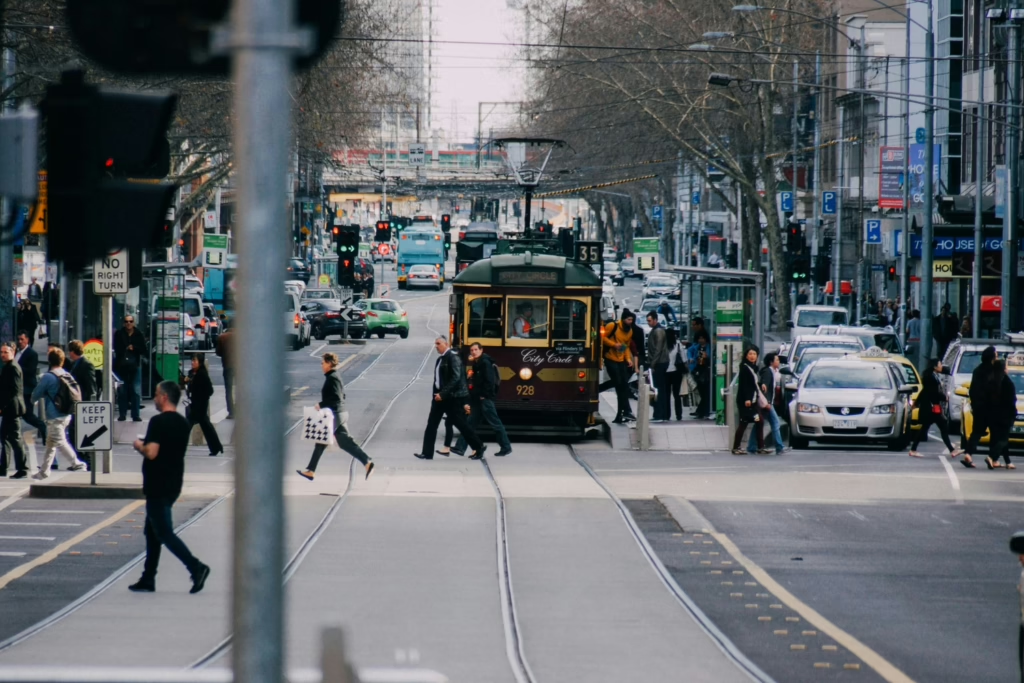
Public transport works well along the main corridors but still leaves gaps in newer suburbs, so most residents combine metro, bus and rideshare rather than relying on one mode.
Available Transport Choices in 2025
- Silver Nol card unlimited monthly (all zones, metro, tram, bus): 350 AED – the default for anyone living near a station.
- Taxi or Careem for 15-20 medium trips per month: 600-900 AED depending on traffic and surge.
- Owning a used mid-size sedan (insurance, Salik tolls, fuel, basic service): 1,800-2,800 AED monthly breakdown.
- Fuel price per litre: 2.80-3.20 AED, among the lowest globally after periodic government adjustments.
How Most Singles Actually Move Around
People living in JVC, Dubai Sports City or Silicon Oasis often buy a 100-150 AED weekly feeder-bus pass plus occasional Careem to the metro, keeping total spend at 500-700 AED. Residents in Marina, JLT or Downtown walk to the tram or metro and rarely need rideshare except late nights, staying under 500 AED. Those in Al Quoz, Al Qusais or further communities accept 800-1,200 AED monthly combining bus and taxi.
Car ownership only makes financial sense if the workplace is far from public routes or if weekends involve frequent desert/beach trips. Otherwise the savings from a Nol card plus selective Careem rides outweigh the fixed costs of insurance, parking and depreciation.
Most single expats in 2025 stick to metro + occasional rideshare and comfortably stay under 700 AED per month.
Healthcare and Mandatory Insurance
Health insurance is compulsory for all residents. Employer-provided plans cover the majority of workers. Self-sponsored basic plans start at 2,000-5,000 AED annually while comprehensive individual policies for a healthy 40-year-old male range 20,000-30,000 AED per year. Out-of-pocket costs without proper coverage become extremely high.
The basic visa-compliant plans typically include only emergency inpatient treatment and a low annual limit (150,000-300,000 AED). They are cheap because they exclude outpatient visits, dental, optical, maternity and chronic conditions. Most expats who rely on these end up paying cash for routine doctor visits, blood tests and prescriptions – a single specialist consultation at American Hospital or Mediclinic can hit 600-1,200 AED.
Comprehensive employer or private plans (20,000-30,000 AED/year) cover outpatient consultations, diagnostics, physiotherapy and worldwide emergency evacuation. These are the ones that actually save money in practice, because a minor surgery or a torn meniscus or appendicitis can easily exceed 80,000 AED without coverage. In 2025 many mid-level companies upgraded their packages to include dental and optical up to 3,000-5,000 AED, which removed a major hidden expense for employees.
Freelancers and self-employed residents usually buy individual international plans from Cigna, Allianz or AXA. Premiums rose 8-12% year-on-year due to medical inflation, but the market is competitive and brokers can still secure direct billing networks that include 95% of private hospitals. Always verify that the plan is DHA-approved and carries at least 1,000,000 AED annual limit if you want real protection.
Salaries and Purchasing Power
Average net salary after tax in Dubai (Numbeo, November 2025) stands at 14,944 AED. Top 25% of earners take home 25,000+ AED, bottom 25% below 8,000 AED. Tax-free income gives strong purchasing power compared to London or New York once rent is secured.
The absence of personal income tax means every dirham earned is take-home pay. A 20,000 AED gross salary in Dubai equals roughly £55,000-60,000 after-tax in the UK or $85,000-90,000 after federal and state taxes in New York. This gap explains why many mid-career professionals can save 40-60% of their income while maintaining a lifestyle that would require a much higher salary back home.
Sector distribution heavily skews the numbers: tech, finance, aviation and healthcare routinely pay 25,000-60,000 AED packages for experienced roles, while hospitality, retail and administrative jobs cluster at 6,000-12,000 AED. Entry-level corporate positions (analyst, marketing executive) start around 15,000-18,000 AED total package including housing allowance. End-of-service gratuity (roughly one month per year worked) adds another hidden saving layer not visible in monthly payslips.
Purchasing power erodes fastest on rent and school fees (if applicable). Once those two fixed costs are controlled, the tax-free structure makes even a 18,000-22,000 AED salary feel upper-middle class: annual holidays, new iPhone every year, weekend trips to Maldives and still 5,000-8,000 AED saved monthly. Below 12,000 AED the lifestyle shrinks to budget areas and minimal entertainment, which is why that threshold is considered the practical minimum for a Western-standard single life in 2025.

Entertainment and Lifestyle Costs
Basic entertainment stays affordable, luxury options escalate quickly. Dubai offers a wide spectrum: you can spend almost nothing or empty your wallet in one weekend depending on choices.
Day-to-Day Leisure in 2025
Gym memberships at mid-range chains (Fitness First, GymNation, Snap Fitness) run 250-450 AED per month with annual contracts. Premium clubs in five-star hotels or with rooftop pools charge 800-1,500 AED, but most singles stick to the cheaper options and still get modern equipment and classes.
Cinema tickets average 50-70 AED for a standard seat in Vox, Reel or Roxy. IMAX, 4DX or VIP screenings push it to 100-150 AED. Streaming subscriptions (Netflix, OSN, Shahid) add another 50-120 AED if you keep them active. A night out for two beers in a standard sports bar or hotel pub costs 90-130 AED after happy-hour deals; ladies’ nights and early-week promotions cut that in half for many.
Weekend and Special Activities
Friday brunch with house drinks remains the signature Dubai expense at 400-650 AED per person in mid-to-high-end hotels. Soft-drink packages drop to 250-350 AED, but alcohol-inclusive deals dominate bookings. Desert safaris, dune bashing or evening camps start at 250 AED on Groupon-style platforms and climb to 500 AED for private setups.
Theme parks (IMG Worlds, Dubai Parks, Wild Wadi) charge 300-450 AED per entry. Water parks and Global Village tickets stay under 100 AED with online discounts. Beach clubs charge 200-500 AED on weekends for sunbed access and minimum spend, while public beaches (Jumeirah, Kite Beach, La Mer) remain completely free including parking.
Free or low-cost options expanded significantly in 2025: Expo City walking tracks, Al Marmoom desert reserve, Hatta hiking trails, and regular free festivals (Dubai Shopping Festival, food trucks, outdoor cinema) mean you can fill weekends without spending if disciplined. Most expats mix both: one paid activity and several free ones per month keeps the entertainment budget at 800-1,500 AED.
Comparison with Major Western Cities (2025 Data)
When rent is included in the equation, Dubai sits noticeably lower than the usual benchmark cities.
For a single person including rent, the monthly cost in London typically runs between £4,200 and £4,800 – that makes London 65-80% more expensive than Dubai at similar lifestyle levels. New York sits at $5,200-6,000 per month, which is 80-100% higher than Dubai once you compare equivalent apartments and spending habits.
Zurich ranges from CHF 5,500 to CHF 6,500, putting it 100-120% above Dubai levels even after Swiss taxes are removed from the equation. Toronto falls between CAD 4,800 and CAD 5,500, or roughly 45-60% more expensive than Dubai when converted and adjusted for purchasing power.
The gap shrinks dramatically if you avoid prime districts in Dubai and choose secondary communities (JVC, Silicon Oasis, Al Barsha). In those areas Dubai often ends up 30-50% cheaper than London or Toronto for the same quality of housing, transport and daily spending. The tax-free salary is what ultimately tilts the scale: the same 15,000 AED take-home in Dubai equals roughly £4,600-5,000 after UK tax or $6,500-7,000 after New York tax, making the real lifestyle gap even larger.

Ways to Keep Costs Down
The difference between spending 9,000 AED and 20,000 AED per month often comes down to a handful of deliberate choices rather than luck.
Location remains the single biggest lever. Moving from Dubai Marina to JVC or Dubai Sports City typically cuts rent by 40-60% for comparable studio size and building quality. The trade-off is a longer commute and fewer walkable bars, but the monthly saving of 3,000-5,000 AED outweighs that for most people who are not tied to a specific office.
Food is the second easiest area to control. Switching from regular delivery and weekend brunches to cooking four or five nights a week plus one moderate restaurant meal saves 1,500-2,500 AED without feeling deprived. Bulk buying rice, chicken and vegetables at Lulu or Union Coop instead of premium aisles at Waitrose or Spinneys for Imported Goods adds another 400-600 AED in savings.
Transport and fitness offer straightforward cuts. A Silver Nol card at 350 AED replaces 800-1,200 AED in daily Careem trips. Similarly, annual gym contracts or free community facilities (many buildings in JVC and Arjan have decent gyms included in maintenance fees) eliminate the 400-800 AED monthly membership that premium chains charge.
Finally, never pay for health insurance twice. If your employer already provides a DHA-compliant plan – even a basic one – decline expensive private top-ups unless you have specific pre-existing conditions. Thousands of expats waste 15,000-25,000 AED per year on duplicate coverage they never use.
Combine these adjustments and a 18,000-20,000 AED lifestyle compresses into 11,000-13,000 AED with almost no noticeable drop in quality of life. The money saved usually goes straight into investments, travel or faster repayment of loans back home.
Practical Cost-Cutting Checklist Used by Most Long-Term Expats in 2025
- Live in JVC, Dubai Sports City, Silicon Oasis, Arjan, Al Furjan or Liwan instead of Marina/Downtown/Palm
- Cook at home 4-5 nights a week and cap eating out/delivery at 8-10 times per month
- Use only the Silver Nol card (350 AED unlimited) and limit Careem to weekends or emergencies
- Join a gym inside your own building or buy an annual pass at GymNation/Fitness First (under 400 AED/month)
- Do the weekly grocery run at Carrefour, Lulu or Union Coop; avoid Spinneys and Waitrose except for rare treats
- Accept the employer-provided health insurance and only add a top-up if you have chronic conditions or want specific hospitals
- Buy alcohol from MMI/African+Eastern during promotions or duty-free on arrival instead of bars every week
- Use Entertainer, Groupon and The Entertainer-style apps for 2-for-1 deals on brunches, spas and activities
Follow six or more items from the list and staying under 12,500 AED while still enjoying Dubai becomes routine rather than a struggle.
Conclusion
Dubai is expensive if the goal is prime location, luxury tower, frequent fine dining and car ownership. It becomes moderate to affordable when living in secondary districts, using public transport and cooking regularly. A single person earning 18,000-25,000 AED net can save 30-50% of salary each month, something difficult in most Western cities. Below 12,000 AED net it feels tight, above 20,000 AED it feels comfortable for most lifestyles.
FAQ
Is 15,000 AED enough to live comfortably in Dubai as a single person?
Yes, 15,000 AED covers a good studio, regular eating out and entertainment in 2025.
Can I live in Dubai on 10,000 AED per month?
Possible but tight – requires shared accommodation or very cheap studio far out, minimal eating out and almost no car.
Is rent paid monthly or yearly in Dubai?
Landlords prefer 1-4 cheques (yearly or quarterly). Some accept 6 cheques with higher rent.
Is health insurance included in salary packages?
Most professional jobs include at least basic insurance. Always confirm during negotiation.
Are groceries cheaper than in Europe?
Basic groceries are 20-30% cheaper than UK/EU, imported items similar or higher.
Is public transport sufficient without a car?
Yes for most areas along metro lines. Further communities still require taxi or car.
Has the cost of living increased a lot in 2025?
Rent rose 15-25% year-on-year in prime areas, groceries and transport remained relatively stable.