
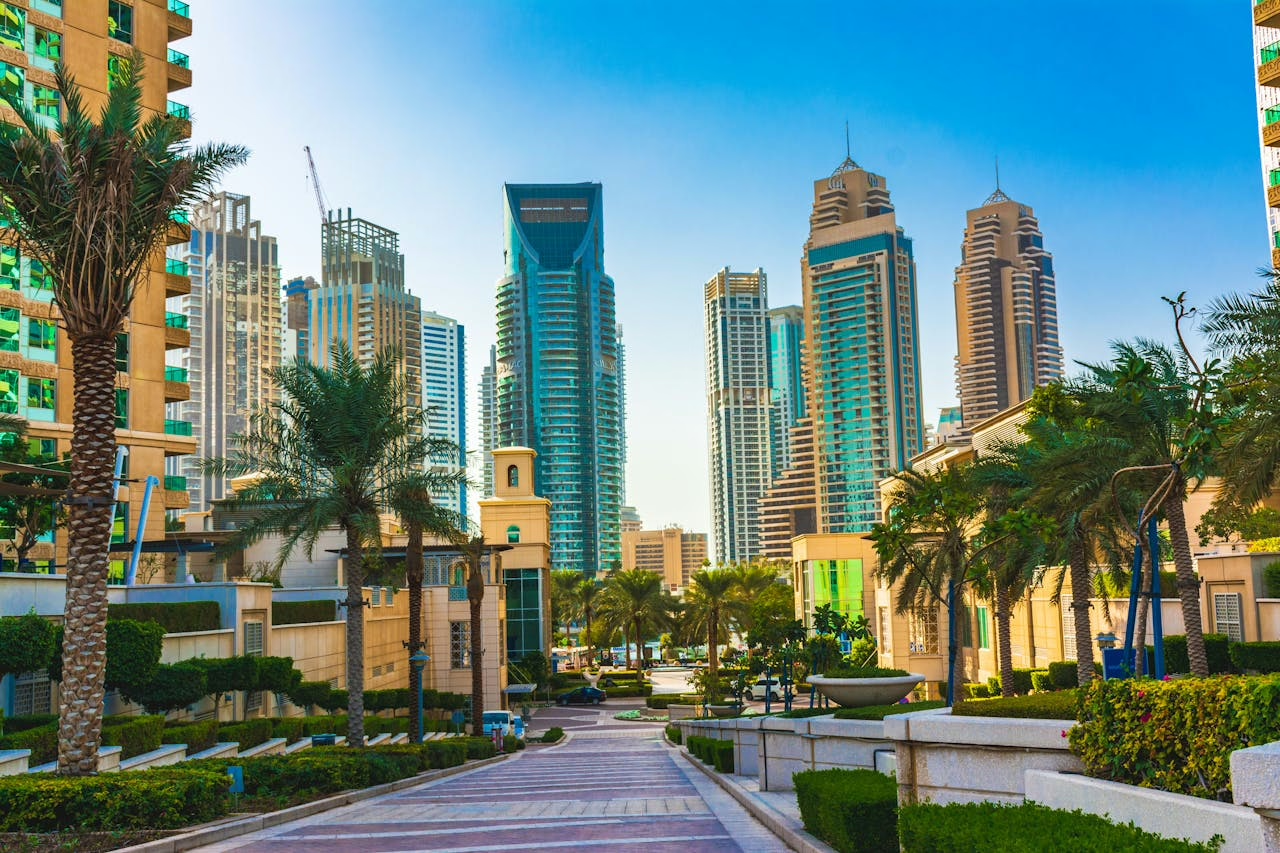
Picture this: a skyline full of glass towers punching through the haze, beaches packed with sun-seekers, and a desert just minutes away. That is Dubai in a nutshell. People toss the word “city” around a lot, but the truth runs deeper. It is a city, sure, but also an emirate with its own ruler, laws, and personality inside the bigger United Arab Emirates puzzle.
Straight Talk on the Basics
Dubai is a city without question. It has neighborhoods, traffic lights, corner cafes, and a metro system that hums along elevated tracks. What throws people off is the scale. The urban area feels massive, yet it sits inside a much larger emirate that stretches into empty desert.
The emirate of Dubai covers 4,114 square kilometers. The city proper takes up only about 35 of those. Everything else is suburbs, industrial zones, and dunes. That dual identity – compact city wrapped in a sprawling emirate – creates the confusion.
How the UAE Puzzle Fits Together
Seven emirates form the United Arab Emirates. Each keeps local control over daily life while sharing defense, currency, and passports.
- Abu Dhabi – largest land area, federal capital, holds the presidency.
- Dubai – trade and tourism engine, second largest.
- Sharjah – cultural focus, borders Dubai on two sides.
- Ajman – smallest, residential feel.
- Umm Al Quwain – quiet coastal strip.
- Ras Al Khaimah – mountains and adventure sports.
- Fujairah – east coast, Indian Ocean access.
Abu Dhabi and Dubai carry the economic weight. The rest add flavor and balance.
Curious About Dubai? Dive Into the Full Story Right Here
We’ve chased sunsets from Marrakesh to Muscat, but Dubai keeps pulling us back – and the first question everyone asks is always the same: “Wait, is Dubai its own country?” Nope. It’s a city, the glitziest one in the UAE, and the heart of its namesake emirate. Think of it as the boldest district in a seven-piece federation, where skyscrapers kiss the clouds and desert dunes roll out just beyond the Marina.
For us in World Arabia, Dubai isn’t just a pin on the Places map; it’s where Motors roar past souks, where Wellness hides in mangrove kayaks, and where Culture stitches Bedouin roots to tomorrow’s skyline. A city? Absolutely. A standalone vibe inside the UAE puzzle? That too.
The Governance Split Nobody Explains
Local rulers handle schools, hospitals, and tourism boards. Federal ministries cover immigration, army, and oil policy. Dubai ruler sets property laws and free-zone rules. Federal court hears major crimes and citizenship cases. Municipality collects parking fines and issues trade licenses.
Sheikh Mohammed bin Rashid Al Maktoum juggles both roles. He signs Dubai building permits in the morning and UAE trade deals in the afternoon.
Mapping the City Versus the Emirate
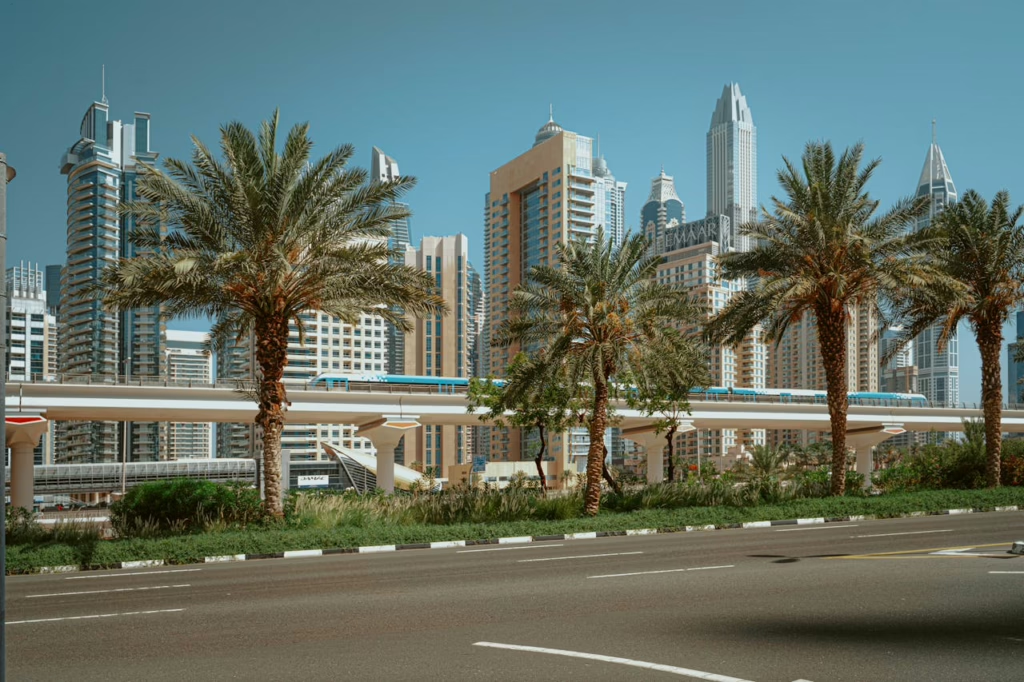
Downtown Dubai clusters around Sheikh Zayed Road. Twelve lanes of highway separate glass towers from the Gulf.
| Zone | What You Find | Distance from Burj Khalifa |
| Downtown | Malls, fountains, offices | 0-5 km |
| Marina & JBR | Yachts, beach walks | 20 km |
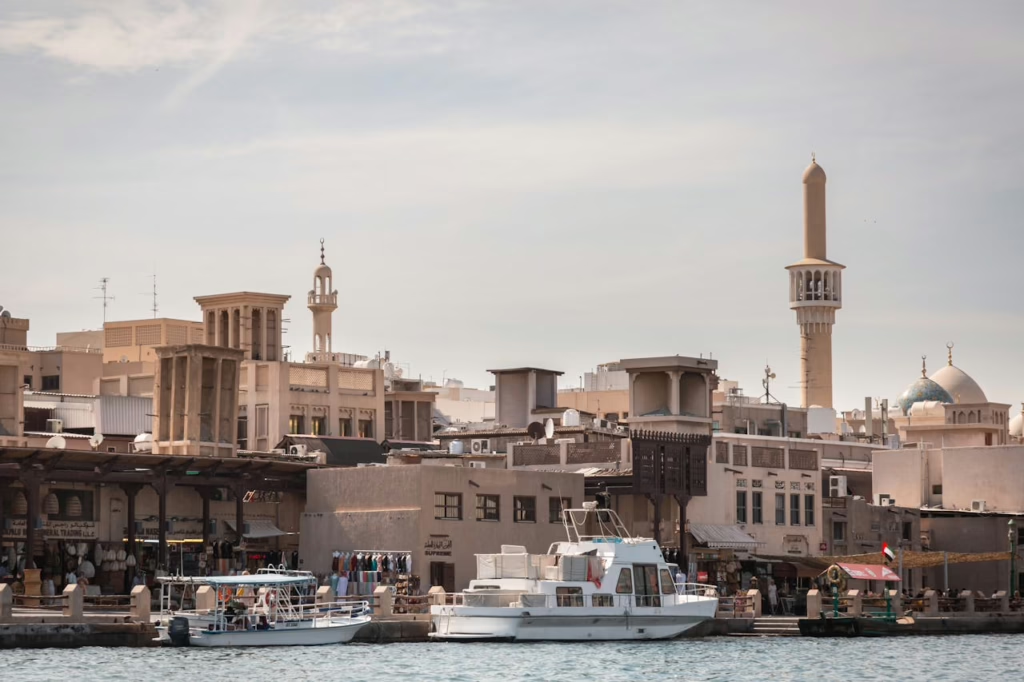
| Deira & Bur Dubai | Souks, old trading houses | 10 km |
| Jebel Ali | Port, factories, free zone | 35 km |
| Hatta | Mountain enclave, dams | 130 km (still Dubai emirate) |
Cross an invisible line south of Jebel Ali and the road signs switch to Abu Dhabi. Same highway, different ruler.
Economic Engines Beyond the Postcards
Oil accounts for less than one percent of Dubai revenue now. The shift happened fast.
- Trade logistics: Jebel Ali Port moves 15 million containers yearly.
- Aviation: Emirates airline carries over 53 million passengers through DXB.
- Tourism: nearly 19 million overnight stays in 2024.
- Real estate: new districts launch every quarter.
- Finance: DIFC hosts over 6,900 firms under English common law.
Zero personal income tax keeps the wheels spinning.
Dubai Unpacked: The Full Picture in One Scroll
Dubai isn’t just a city – it’s a living mosaic of 3.6 million people, where Emiratis are one in eight, Indian subcontinent workers power construction and hospitality, Filipinos run malls and nurseries, and British, Russian, Lebanese, and Egyptian families fill schools, cafés, and clinics. English is the glue; Arabic is official but rarely needed day-to-day.
Everything iconic fits inside a 10-kilometer core. Burj Khalifa soars 828 meters – elevators climb 10 m/s. Dubai Mall spans 1.1 million m² (a full loop is 5 km). Palm Jumeirah adds 56 km of coastline with 17 villa-lined fronds. Burj Al Arab rises 321 m above the sea; afternoon tea books months out. Step beyond, and the skyline melts into low-rise warehouses.
Getting around is easy and layered by budget
- Metro Red Line: airport to Downtown in 24 min, driverless, every 4 min.
- Marina trams link to metro.
- Abras cross the Creek for 1 dirham.
- Orange-plate taxis are metered, no surge.
- AC buses with Wi-Fi reach the suburbs. Driving? Possible – but rush hour demands steel nerves.
Weather runs the calendar
- Winter (Nov–Mar): 24–30 °C days, 15 °C nights – peak season.
- Summer (Jun–Sep): 40–50 °C + 90 % humidity – malls and indoor ski slopes save the day.
- Shoulder months (Apr, Oct): ~35 °C, still packed with events.
Visa rules by passport
- 30 days on arrival: EU, UK, US, Australia, Japan, Korea.
- 90 days on arrival: select stronger EU passports.
- Pre-approval needed: most African, South Asian, some Middle Eastern. Overstay? 50 AED/day after grace.
Safety is world-class: ranked safer than London, Paris, or New York. Violent crime: 0.6 per 100,000. Police every 3 km, response under 8 min. Lost wallets returned 87 % of the time (airport study). Women walk alone at midnight without issue – common sense still rules.
Cultural etiquette in one breath
Cover shoulders/knees in malls & offices. PDA max: hand-holding. Ramadan: public eating behind curtains (hotels normal). Friday prayers pause business 11:30 a.m.–1:30 p.m. Accept offered coffee & dates – it’s hospitality, not sales.
Common Slip-Ups and Quick Fixes
Thinking Dubai Mall is the only mall – try Ibn Battuta or Mall of the Emirates for variety. Assuming alcohol flows freely – stick to hotels and licensed venues. Packing only summer clothes – winter nights drop to 12 °C. Renting a car without international permit – police check randomly.
Conclusion
Dubai is a city that refuses to stay in one box. It functions with big-city energy while enjoying emirate-level autonomy inside the UAE federation. The setup lets it build palm-shaped islands and indoor ski slopes without asking permission from a distant capital. Next time the question pops up, the answer is simple: yes, Dubai is a city – the boldest one in a seven-piece set that keeps rewriting what urban life can look like.
FAQs
Is Dubai a city or a country?
Dubai is a city and the name of the emirate it anchors. The country is the United Arab Emirates, made of seven emirates total.
Do you need a different visa for Dubai versus the rest of the UAE?
One visa covers the entire country. Entry stamp at DXB allows travel to Abu Dhabi, Sharjah, or any other emirate.
What currency works in Dubai?
United Arab Emirates Dirham (AED) is the only legal tender across all seven emirates.
Can you drive from Dubai to Abu Dhabi without border checks?
Yes, the E11 highway connects them with only welcome signs marking the change. Journey takes about 90 minutes.