
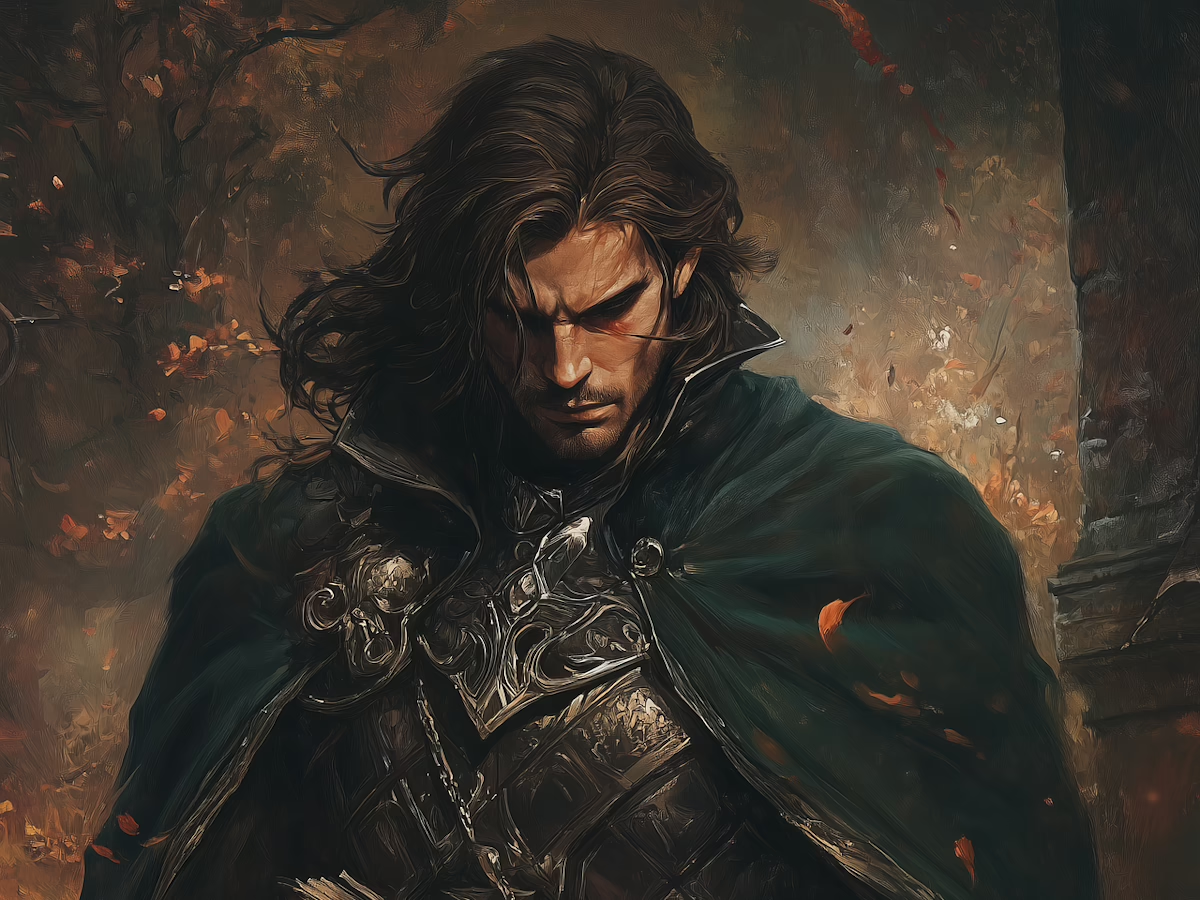
Coming up with character names often sounds easier than it is. You jot down a few options, try them in a sentence, and suddenly none of them feel quite right. Some sound forced. Others feel borrowed from someone else’s story. A few might look good on paper but fall flat once you imagine saying them again and again.
A good character name is rarely about being clever or dramatic. It’s about fit. How the name sits in the story, how it sounds in dialogue, and how easily it sticks in the reader’s mind. This article looks at character name ideas from a practical, writer-first perspective. Not just lists for scrolling, but ways to think about names so they support your characters instead of distracting from them.
Why Character Names Matter More Than You Think
A character’s name does more than label them. It shapes the reader’s expectations before the character even speaks. Certain names feel modern. Others feel old, formal, playful, harsh, or soft. We react to names instinctively, whether we want to or not.
Think about how different a character feels when named Leo versus Leonard. Or Ivy versus Imogen. The story itself does not change, but the emotional texture does. Names quietly signal genre, mood, and social context. That is why a mismatched name can pull a reader out of the story, even if they cannot explain why.
Good character names disappear into the narrative. They do not draw attention to themselves. Bad ones demand explanation or feel distracting. The goal is not to impress. It is to fit.
Start With the Character, Not the Name
One of the most common mistakes writers make is naming characters too early. Before the character is clear. Before the story has found its rhythm.
Names work best when they are chosen after you understand at least a few core things about the character:
- Where they come from
- Roughly how old they are
- Their social and cultural background
- The tone they bring into a scene
You do not need a full biography. But you need enough context to know whether the name belongs to them or not.
If a name feels clever but does not match the character’s behavior, upbringing, or role in the story, it will eventually feel off. Often, the right name sounds obvious only after you truly know who the character is.
Match the Name to the Story’s Tone
Names quietly set expectations. Readers often sense when a name does not align with the genre or emotional tone, even if they cannot immediately explain why. A light romantic story and a bleak crime novel ask for very different naming choices, just as a fantasy epic and a grounded contemporary drama do.
That does not mean you need to follow rigid rules. Contrast can work, but it should feel intentional rather than accidental. A good way to test this is to pause and ask whether the name feels at home in the genre, whether it supports the mood instead of fighting against it, and whether it truly belongs in the world you are building.
A slightly unusual name can work beautifully when it reinforces the story’s atmosphere. The same name can feel jarring when it clashes with everything around it.
Character Name Ideas by Vibe, Not Genre
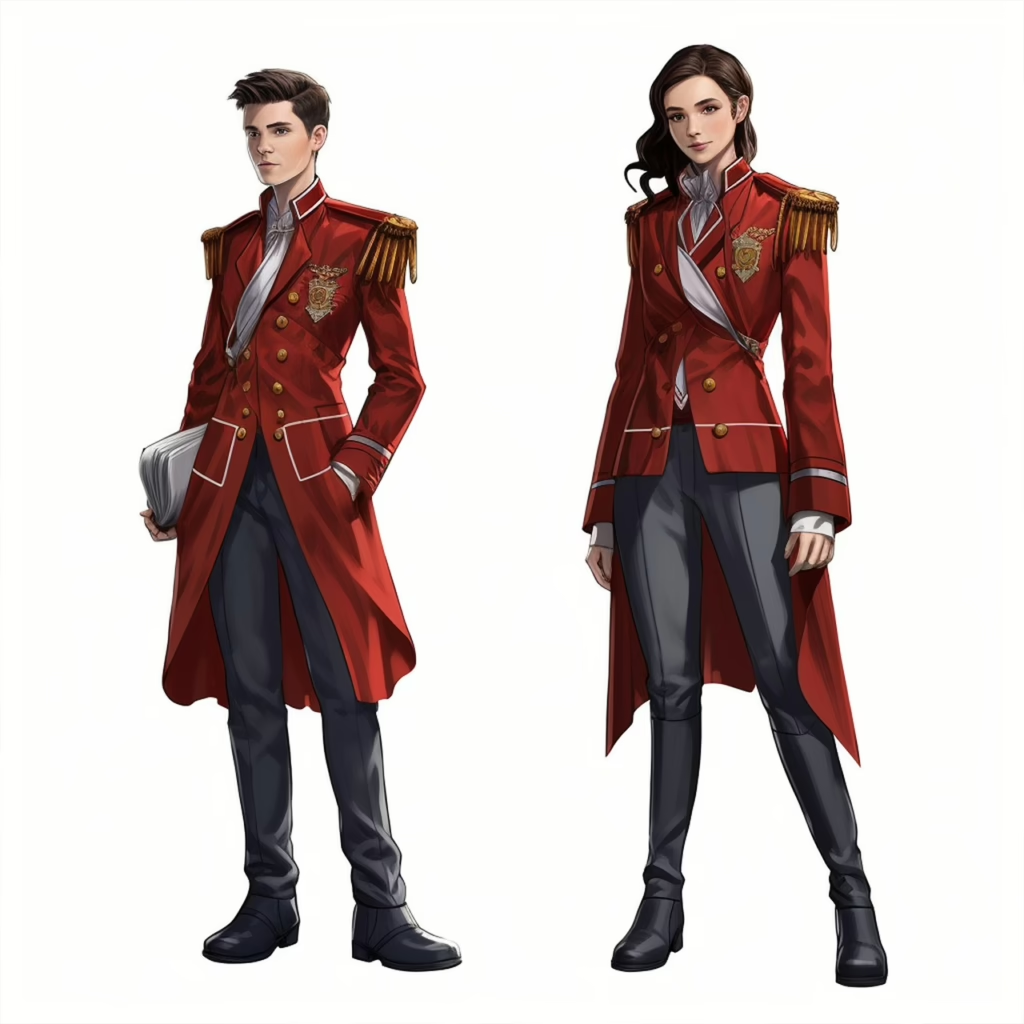
Instead of grouping names strictly by genre, it can be more useful to think in terms of tone and energy. Below are example-style name ideas meant as inspiration, not final answers.
Calm and Grounded Names
These names tend to feel steady and natural, often suited to reflective or character-driven stories.
- Clara Whitman
- Elias Moore
- Hannah Fielding
- Oliver Grant
Sharp and Modern Names
Shorter, punchier names that fit contemporary settings or fast-moving plots.
- Jax Nolan
- Ivy Cross
- Quinn Mercer
- Leo Stark
- Nova Reed
Soft but Distinct Names
Names that feel gentle without being forgettable.
- Elodie Marsh
- Milo Carter
- Phoebe Lane
- Jasper Collins
Dark or Heavy Names
Names with weight, often suited for darker stories or morally complex characters.
- Mara Holloway
- Silas Crowe
- Ruth Calder
- Edmund Graves
Use these as starting points. Swap parts. Adjust spelling. Test how they sound in your own scenes.
Character Name Ideas That Feel Familiar but Not Plain
Some names work because they feel instantly believable. They sound like people you might actually meet, which makes them especially useful for contemporary, literary, or realistic fiction. These names do not try to stand out. They earn their place through balance.
Understated and Everyday Names
Names that blend in quietly and let the character do the heavy lifting.
- Daniel Brooks
- Sarah Collins
- Mark Ellison
- Emily Harper
Warm and Approachable Names
These names feel open and easy, often fitting characters who build trust quickly.
- Anna Lewis
- Theo Morgan
- Lily Prescott
- Noah Palmer
- Sophie Reynolds
Slightly Polished Names
Names that feel a bit more put-together without sounding elite or distant.
- Camille Turner
- Adrian Walsh
- Madeleine Price
- Owen Fletcher
Plain Names with Subtle Edge
Simple on the surface, but with just enough tension to feel interesting.
- Jack Hollow
- Claire Benton
- Peter Knox
- Megan Rowe
- Aaron Slate
These names work well when you want realism without blandness. They rarely distract, which is often their biggest strength.
Character Name Ideas with Strong Personality Signals
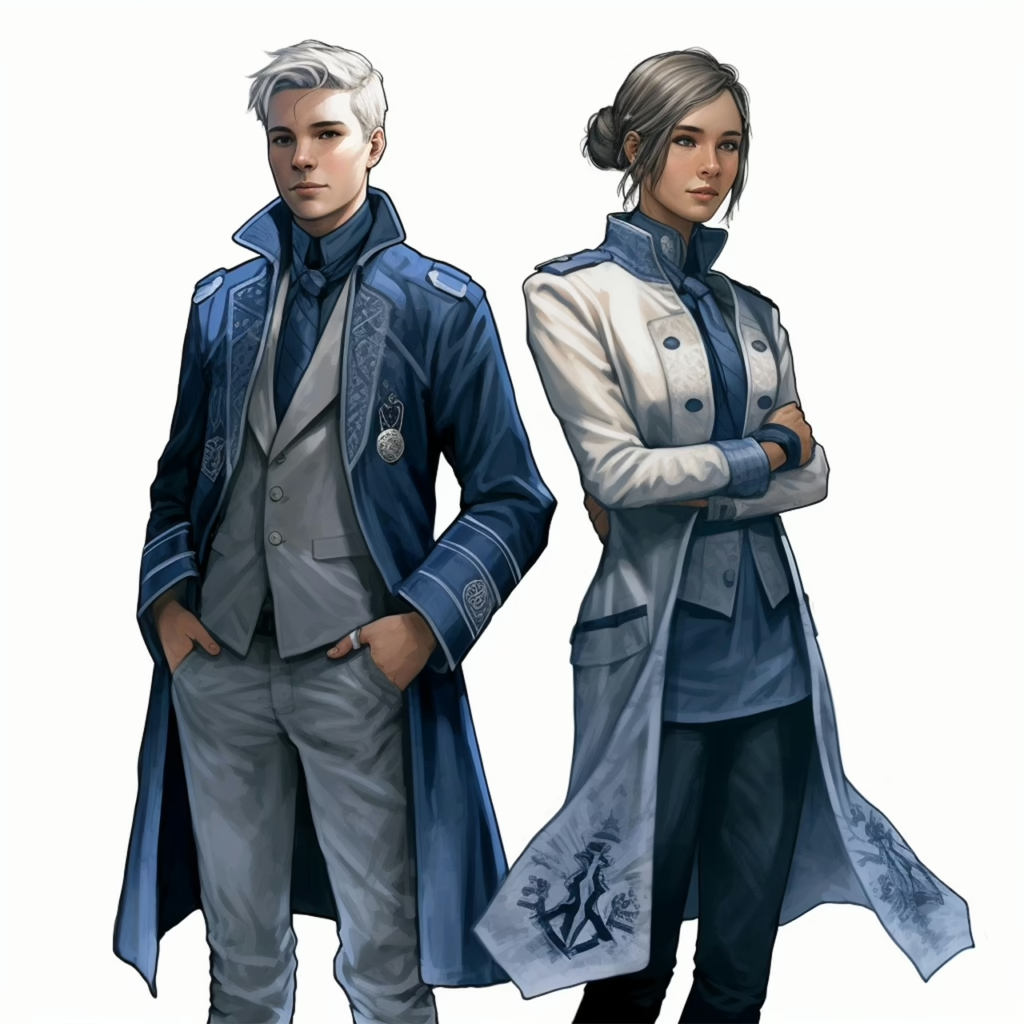
Some names carry a clear tone the moment they appear on the page. They suggest confidence, distance, charm, or intensity before the character even speaks. Used carefully, these names can sharpen first impressions.
Confident and Assertive Names
Names that sound direct and self-assured, often fitting leaders or decisive personalities.
- Max Donovan
- Cole Ramsey
- Natalie Pierce
- Grant Hollis
Playful but Self-Aware Names
These names feel light without being silly, often fitting witty or socially sharp characters.
- Penny Lockhart
- Theo Wilder
- Rosie Caldwell
- Miles Everett
- June Holloway
Controlled and Reserved Names
Names that suggest discipline, distance, or emotional restraint.
- Thomas Ridge
- Eleanor Vaughn
- Richard Hale
- Lydia Morton
- Samuel Crowley
Unusual but Grounded Names
Distinct without feeling invented, these names often suit characters who live slightly outside the norm.
- Arden Lowe
- Callum Price
- Isobel Crane
- Felix Navarro
These names work best when paired with clear character intent. The stronger the signal, the more important it is that the character lives up to it.
Character Name Ideas by Genre
Sometimes the genre does part of the naming work for you. Readers come in with expectations, and names can gently support those expectations without leaning into parody or clichés. The goal is not to announce the genre, but to feel at home inside it.
Literary and Contemporary Fiction
Names that feel realistic, understated, and flexible enough to carry emotional nuance.
- Claire Donnelly
- Thomas Reed
- Julia Markham
- Ethan Wallace
- Nora Bennett
Romance and Relationship-Driven Stories
These names often feel soft, rhythmic, or emotionally open without sounding exaggerated.
- Amelia Rhodes
- Sadie Monroe
- Julian Park
- Rose Whitaker
Crime, Mystery, and Thriller
Sharper names with weight and clarity, often suited to tense, fast-moving narratives.
- Detective Paul Hargreaves
- Lena Frost
- Marcus Vale
- Fiona Cross
- Daniel Rook
Fantasy and Myth-Inspired Worlds
Names that feel slightly elevated or timeless, without becoming hard to read or pronounce.
- Alina Stormfell
- Corvin Ashmere
- Elowen Thatch
- Darien Frostwood
- Maelis Rowan
Science Fiction and Futuristic Settings
Names that sound modern or slightly altered, fitting worlds shaped by technology or change.
- Tamsin Kade
- Orion Wells
- Mira Solace
- Axel Vorn
- Juno Kepler
Historical Fiction
Names grounded in older naming traditions, suited to specific eras without feeling stiff.
- Edith Blackwell
- Henry Ashcroft
- Beatrice Caldwell
- Arthur Langley
- Florence Whitby
Horror and Dark Fiction
Names with atmosphere and tension, often carrying an unsettling or gothic tone.
- Agatha Morrow
- Lucinda Graves
- Victor Hale
- Miriam Crow
These examples are meant to guide tone, not limit creativity. Genre can be a helpful filter, but the final test is always the same. Does the name feel natural once it enters the story, or does it call attention to itself for the wrong reasons?
Using Name Generators Without Losing Control
Name generators can be genuinely useful, especially when you feel stuck or when every option in your notebook starts to look the same. They are good at shaking loose new sounds, structures, and combinations you might not arrive at on your own.
The key is to treat generators as a starting point, not a decision-maker. They work best when you use them to spark ideas, explore naming styles you are less familiar with, or push past a creative block. What they cannot do is judge whether a name truly belongs in your story.
Every generated name still needs to pass your own filters for fit, tone, and believability. Say it out loud. Drop it into dialogue. See how it feels after a few pages. Think of generated names as raw material. Useful, flexible, and disposable until one proves it can carry a character all the way through the story.
Use Meaning Carefully, Not Literally
Many writers feel pressure to choose names based on meaning. While name meanings can add depth, they should not feel heavy-handed.
A subtle connection between a name’s meaning and the character’s journey can be effective. A literal or obvious match often feels forced.
Think of meaning as texture, not explanation. It is something the writer knows, not something the reader must decode.
If a name fits the character and the story, that matters more than whether its historical meaning lines up perfectly with the plot.
Final Thoughts
Character name ideas are not about finding the perfect word. They are about finding the right fit. A name that belongs in the story’s world. A name that feels natural in motion, not just on a list.
Trust your instincts, but support them with testing and research. Names should support the story quietly, doing their job without demanding attention. When they do, readers stop noticing them and start remembering the characters instead.
That is when you know the name works.
FAQ
How do I know if a character name actually fits my story?
A name fits when it stops drawing attention to itself. Try using it in dialogue, narration, and emotional scenes. If it feels natural to repeat and does not pull you out of the story, it is probably doing its job.
Should I choose character names based on their meaning?
Name meanings can add depth, but they should not drive the decision on their own. A name that sounds right for the character and the world matters more than a perfect symbolic match.
Is it okay to change a character’s name after I’ve started writing?
Yes, and it happens more often than people admit. As characters develop, a name that once worked may stop fitting. Changing it early is usually better than forcing a name that no longer feels right.
How unique should character names be?
Unique enough to be memorable, but not so unusual that they distract. If a reader has to pause to decode or remember a name, it may be working against the story rather than helping it.
Can I use name generators for character names?
Name generators are useful for inspiration, especially when you feel stuck. They work best as idea starters, not final answers. Every generated name still needs to be tested in context.