
Zelle payments move fast. That speed is convenient, but it also leaves very little room for mistakes. If you send money to the wrong person or change your mind right after hitting “send,” your first instinct is usually to look for a cancel button.
Sometimes, that button exists. Other times, it doesn’t. And the difference comes down to one detail most people don’t think about until it’s too late.
This guide breaks down how canceling a Zelle payment actually works. No legal language, no vague warnings. Just the real rules, the timing that matters, and what options you still have when cancellation isn’t possible.
Understand What Zelle Is Designed To Do
Before talking about cancellation, it helps to understand what Zelle is and what it is not.
Zelle is a bank-to-bank transfer system. When both people are enrolled, money moves directly between checking or savings accounts. There is no holding balance, no escrow, and no buyer protection layer sitting in the middle. That design choice explains almost everything that frustrates users later.
Zelle is meant for payments between people who already know each other. Friends splitting rent. Family sending money. Reimbursements. Small business payments in limited cases. It is not meant to function like PayPal Goods and Services or a credit card.
Once you accept that, the cancellation rules make a lot more sense.
The One Rule That Matters Most
There is one rule that overrides everything else. A Zelle payment can only be canceled if the recipient has not yet enrolled with Zelle or if the payment is still pending or scheduled for the future.
If the recipient is already enrolled and the payment has been processed, the money goes straight into their bank account. At that point, Zelle cannot pull it back. This is not a technical glitch or a policy choice that might change. It is a structural limitation of how the system works. That single rule is the line between a payment you can cancel and one you cannot.
Zelle Payment Statuses and What They Really Mean
When you open your Zelle activity screen, you will see different statuses. These labels are not cosmetic. They determine your options.
Pending
Pending means the payment has been initiated but not completed.
This usually happens when:
- The recipient is not enrolled yet
- The payment is scheduled for a future date
- The system is waiting for confirmation
Pending is the only status where cancellation is usually possible.
If you see a pending payment, you should act immediately. Waiting does not improve your chances.
Processing
Processing means the transfer is already moving through the banking system.
At this stage, editing or canceling is no longer possible. Even if the money has not appeared in the recipient’s account yet, it is already on its way. Many users assume processing still allows cancellation. It does not.
Completed
Completed means the payment is finished. The money has been delivered or will be delivered shortly to the recipient’s bank account. Zelle cannot reverse this.
Failed
Failed payments are different. If a payment fails due to incorrect details, insufficient funds, or technical issues, the money typically never leaves your account or is returned automatically. No action is required from you.
Canceled
Canceled means the payment was successfully stopped before completion. This status confirms that the funds were not transferred.
How to Cancel a Zelle Payment Step by Step
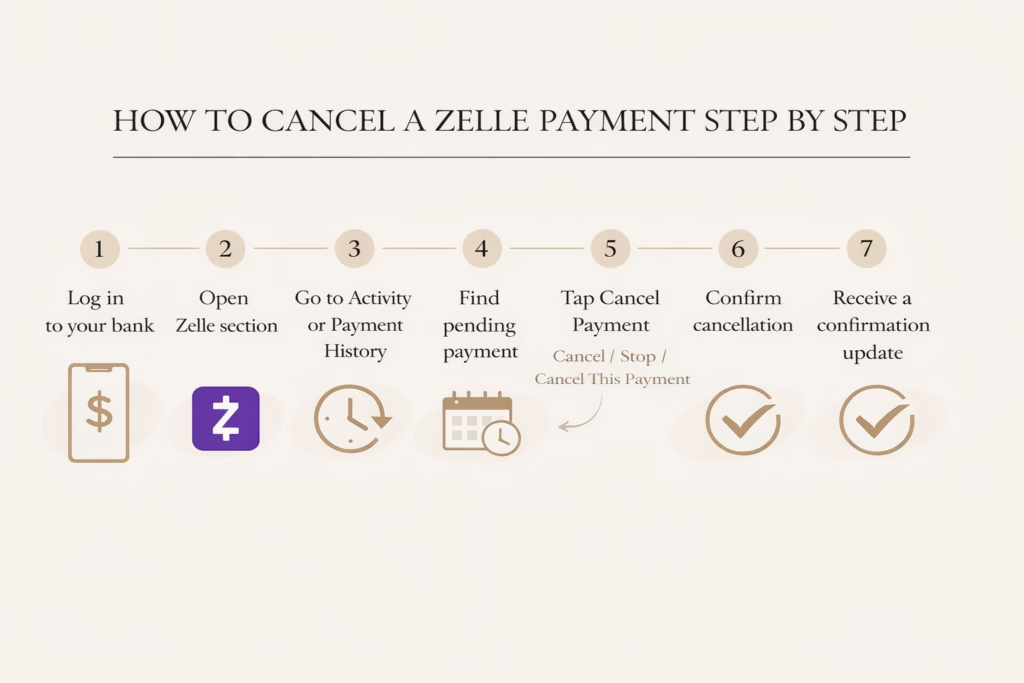
If your payment is eligible for cancellation, the process itself is simple.
The exact menu names may differ slightly depending on your bank, but the steps follow the same pattern.
- Log into your bank’s mobile app or online banking
- Open the Zelle section
- Go to Activity or Payment History
- Find the pending or scheduled payment
- Select Cancel, Stop, or Cancel This Payment
- Confirm your choice
If cancellation is successful, the payment status will update and you should receive a confirmation.
Zelle does not charge a fee for canceling a pending payment.
How Long Refunds Take After Cancellation
Canceling a payment does not always mean the money returns instantly. In most cases, a canceled Zelle payment is refunded within one to three business days, depending on how your bank processes transactions.
During this time, you should see the payment status change in your activity history, followed by a refund notification and an updated account balance. If several business days pass and the payment still shows as canceled without the funds returning, contact your bank directly to have them review the transaction.
What Happens If the Recipient Is Already Enrolled
This is where most confusion and frustration comes from.
If the recipient is enrolled with Zelle and the payment has been processed, there is no cancel option. The money is already in their account.
At this point, Zelle cannot reverse the transaction for you. That does not mean you have no options. It means your options change.
Your Options When Cancellation Is Not Possible
Contact the Recipient Directly
This is the simplest and often the only practical solution.
If you sent money to someone you know, reach out and ask them to return it. Many mistakes are resolved this way.
This is also why Zelle repeatedly warns users to only send money to people they trust.
Contact Your Bank for Fraud Situations
If the payment was unauthorized or part of a scam, contact your bank immediately.
Time matters here. The sooner you report suspicious activity, the better your chances of assistance.
Banks may ask for:
- Details of the transaction
- Signs of account compromise
- Evidence of unusual activity
- Communication related to the scam
While refunds are not guaranteed, fraud cases are handled differently from simple mistakes.
Understand the Limits of Support
If you authorized the payment and sent it to the correct contact but later changed your mind, support will usually not be able to reverse it.
This is not a service failure. It is how Zelle is designed.
Common Mistakes That Lead to Lost Money
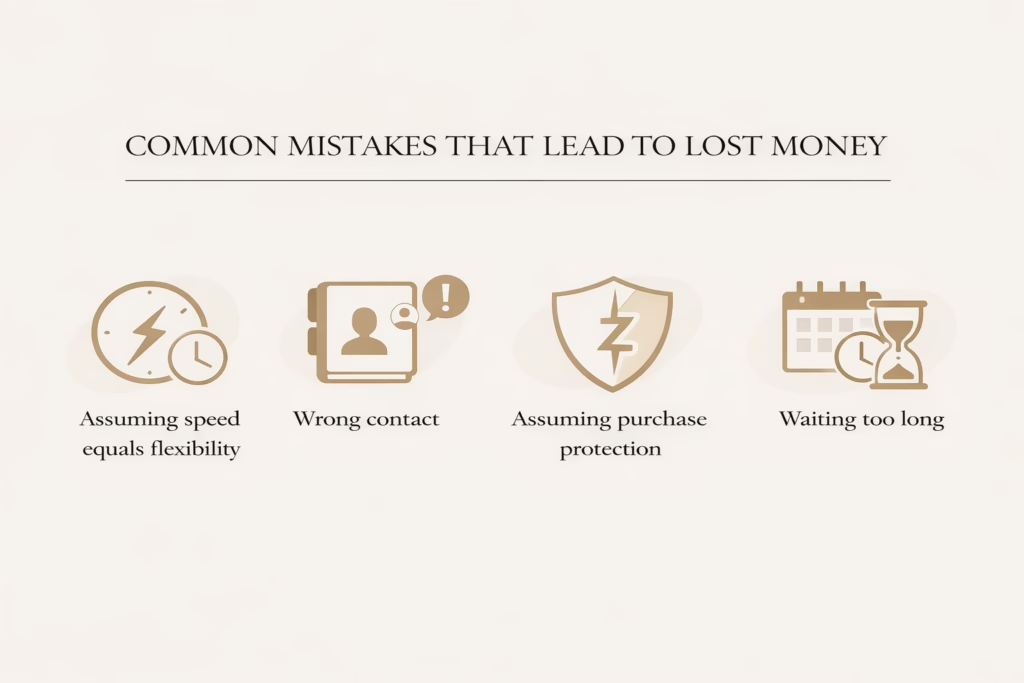
Most Zelle issues follow a few predictable patterns.
- Assuming speed equals flexibility: Zelle moves money quickly, but that speed removes safety nets. Once a payment is completed, it cannot be pulled back.
- Sending money to the wrong contact: Phone numbers and email addresses change. Numbers get recycled. One small typo can send money to someone else entirely. Always double-check recipient details before sending.
- Believing Zelle works like PayPal or credit cards: Zelle does not offer purchase protection, dispute resolution, or escrow. If buyer protection matters, Zelle is not the right tool.
- Waiting too long to act: If a payment is still pending, time matters. Delaying reduces your chances of stopping it. Check your activity as soon as something feels off.
Scheduled and Future-Dated Payments
Some banks allow Zelle payments to be scheduled ahead of time instead of being sent immediately. These future-dated payments give you a bit more flexibility, since they usually remain cancelable right up until the day they are set to go out. As long as the payment has not started processing, you can stop it through your activity or payment history.
The cancellation process for scheduled payments works the same way as it does for pending ones. You simply locate the future-dated transaction and cancel it before the send date arrives. Once the scheduled payment begins processing, however, it follows the same rules as any other Zelle transfer and can no longer be canceled.
Small Business Payments and Zelle
Zelle can be used with some small business accounts, but the rules around cancellation remain the same.
If a business is enrolled with Zelle, payments are treated like person-to-person transfers.
That means:
- No buyer protection
- No chargebacks
- No guaranteed refunds
If you are paying a business you do not know well, Zelle carries more risk than other payment methods.
Why Zelle Emphasizes Trust So Strongly
Zelle’s repeated warnings about only sending money to people you trust are not just legal disclaimers meant to protect the company. They are practical guidance based on how the system actually works. Zelle is designed to move money quickly and directly between bank accounts, with as few steps as possible.
That design choice leaves little room for disputes, reversals, or mediation. It works well when payments are personal, intentional, and between people who already know each other. It works poorly when Zelle is used for online purchases, payments to strangers, or situations where trust has not been established. In those cases, the speed that makes Zelle convenient can also make mistakes permanent.
What Zelle Will Not Do
To avoid confusion later, it helps to be clear about what Zelle simply does not offer. Many frustrations come from expecting protections that were never part of the service in the first place.
- It does not reverse completed payments once the money reaches the recipient’s bank account
- It does not offer buyer protection for goods or services
- It does not hold funds for verification or approval
- It does not mediate disputes between senders and recipients
- It does not guarantee refunds for mistakes or change-of-mind payments
Understanding these limits upfront sets realistic expectations. Zelle works best when used for straightforward, trust-based payments, not situations where protection or dispute resolution might be needed later.
How to Reduce Risk Before Sending a Zelle Payment
A few small habits can prevent most problems before they happen. Zelle works best when you slow down just enough to double-check what you are doing.
- Double-check contact details every time. Phone numbers and email addresses change, and even a small typo can send money to the wrong person. Always confirm the details before hitting send, even if you have paid the person before.
- Confirm the recipient verbally if the amount is large. For higher amounts, a quick text or call can prevent an expensive mistake. Make sure the recipient is expecting the payment and that you are using their current contact information.
- Avoid sending money under pressure. Scammers often rely on urgency. If someone is pushing you to send money immediately, pause and reassess. Legitimate payments can usually wait a few minutes.
- Do not use Zelle for purchases from unknown sellers. Zelle is not built for buying goods or services from strangers. If you need purchase protection, use a payment method that offers it.
- Review your activity history regularly. Checking your Zelle activity helps you catch unfamiliar transactions early and makes it easier to act quickly if something looks wrong.
These steps may sound basic, but they matter. Most Zelle payment issues come from rushed decisions or skipped checks, not complicated technical failures.
Final Thoughts
Canceling a Zelle payment is possible, but only in narrow situations. If the recipient is not enrolled or the payment is still pending or scheduled, cancellation is straightforward.
Once the recipient is enrolled and the payment is processed, cancellation is no longer an option. At that point, resolution depends on the recipient’s cooperation or, in fraud cases, your bank’s investigation.
Zelle works best when used exactly as intended. Fast, direct payments between people who already trust each other.
If you treat it like a protected payment platform, it will disappoint you. If you treat it like a digital version of handing someone cash, it makes much more sense.
Frequently Asked Questions
Can I cancel a Zelle payment after it is completed?
No. Once a payment is completed and the recipient is enrolled, Zelle cannot cancel or reverse it.
How long does a canceled Zelle payment take to refund?
Most refunds are processed within one to three business days, depending on your bank.
What if I sent money to the wrong person?
If the recipient is enrolled, your only option is to contact them directly and request a return. If fraud is involved, contact your bank immediately.
Does Zelle charge a fee to cancel a payment?
No. Zelle does not charge fees for canceling pending or scheduled payments.
Can Zelle reverse a payment in case of a scam?
Possibly, but only if you act quickly and provide evidence. Refunds are not guaranteed.