

The EU Deforestation Regulation (EUDR) is a game-changer for businesses dealing with deforestation-linked products. With clear deadlines and compliance phases, companies need to stay ahead of the curve. Here’s a look at the critical dates and milestones to help businesses understand the evolving timeline and prepare for what’s ahead.
What Is the EUDR?
The EU Deforestation Regulation (EUDR) is a piece of legislation aimed at curbing deforestation and forest degradation. It specifically targets key commodities such as cocoa, coffee, palm oil, timber, soy, rubber, and beef that are linked to deforestation in their production processes. The regulation mandates that companies ensure their products are not associated with deforestation and forest degradation before placing them on the EU market. This regulation is part of the EU’s broader sustainability goals and is closely tied to the European Green Deal.
Key Phases of the EUDR Timeline
The EUDR comes into force in stages, allowing businesses time to adjust to the new compliance requirements. Understanding these phases is crucial to avoid last-minute scrambling and potential non-compliance penalties.
2023: Official Adoption and Initial Framework
Although being adopted in 2022, the EUDR became law in 2023, it wasn’t immediately enforced. The first part of the timeline was focused on laying the groundwork for implementation, with important actions like:
- June 2023: The EUDR officially entered into force. Although the law was in effect, the enforcement phase was set to begin later, giving businesses a chance to prepare.
- December 2023: EU authorities worked on establishing the technical infrastructure to support businesses in compliance. This included the creation of the Observatory on Deforestation and Forest Degradation.
2024: Setting the Stage for Full Implementation
The year 2024 was critical for businesses to prepare for full compliance by 2025. Here’s a breakdown of what happened and what you need to watch out for:
- March 2024: The EUDR Information System began development in earnest, focusing on the systems where businesses will submit their compliance documents, particularly DDS.
- June 2024: The European Commission started releasing detailed guidance on how companies should implement the EUDR. This included the classification of countries based on their deforestation risk, which will affect the intensity of due diligence required.
- December 2024: The EUDR Information System became open for test registrations, allowing companies to familiarize themselves with the platform ahead of the official launch.
2025: The Crunch Time for Large and Medium Enterprises
2025 marks the first major deadline for businesses operating in the EU or exporting to the EU. By the end of the year, large and medium-sized enterprises must fully comply with the EUDR. Specifically, December 30, 2025, is the final deadline for these companies. From this date onward, all businesses in scope must ensure their products are accompanied by a Due Diligence Statement (DDS) that proves they are deforestation-free.
This is a crucial deadline, and companies need to ensure that they have completed the following by this time:
- Supply Chain Mapping: Full traceability of the products to their source.
- Risk Assessments: Companies must evaluate the risk of deforestation associated with their supply chains.
- Risk Mitigation Measures: If risks are identified, companies must put measures in place to mitigate these risks.
2026: Smaller Enterprises Get Their Turn
Small and micro enterprises have a bit more time to comply with the EUDR, but they must still be proactive to avoid falling behind. By June 30, 2026, SMEs must ensure their compliance with the regulation. While the requirements for these businesses are slightly simplified compared to larger ones, they still need to follow the core principles of the regulation. It’s important to note that SMEs won’t need to redo the Due Diligence Statement (DDS) if their suppliers already have one. Instead, they can reference the existing DDS, as long as no changes have been made to the product.
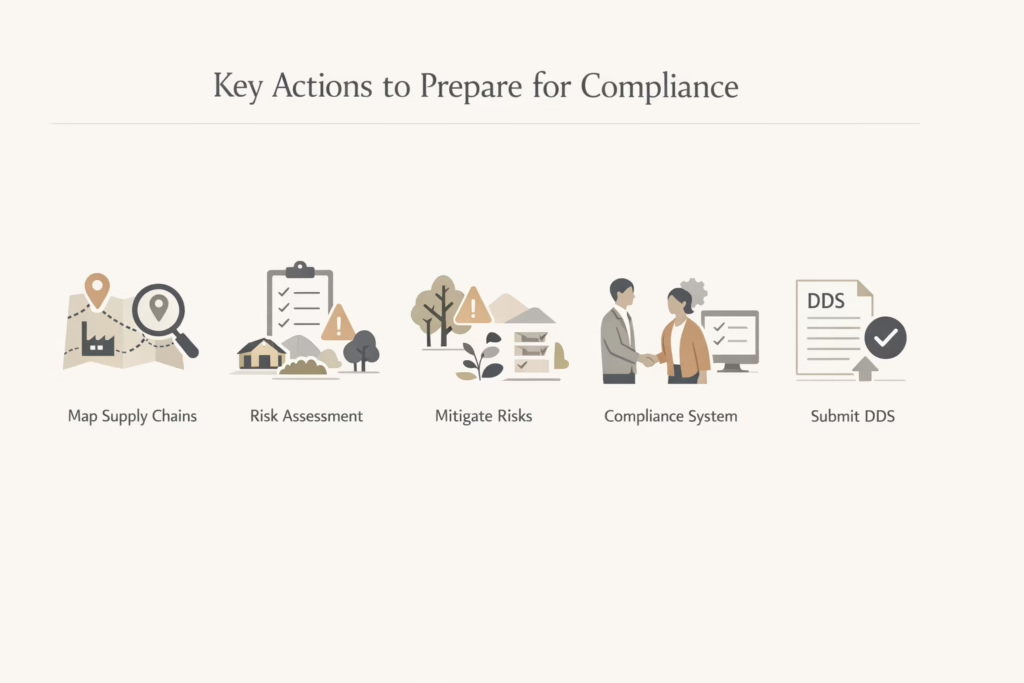
Key Actions to Prepare for Compliance
Whether you are a large, medium, or small enterprise, here are the critical actions you should take to prepare for the EUDR compliance deadlines.
1. Map Your Supply Chains
Businesses need to establish full traceability across their supply chains. This involves gathering geolocation data from suppliers and ensuring all relevant information is documented. A full understanding of your supply chain will help you identify high-risk areas and ensure transparency.
2. Risk Assessments
Assessing the risk of deforestation in your supply chains is a critical step. You’ll need to analyze whether the products you source could contribute to deforestation or forest degradation. This involves looking at the sourcing country, the specific plot of land, and the practices used by your suppliers.
3. Mitigate Risks
If any risks are identified, companies will need to implement mitigation measures. This might include working directly with suppliers to improve practices or finding alternative sources for high-risk commodities. Your mitigation plans should be documented and ready for submission.
4. Implement a Compliance System
Set up a robust internal system for managing EUDR compliance. This includes establishing clear roles and responsibilities within your company, ensuring all relevant staff are trained, and implementing systems for managing and submitting the required documentation, including the DDS.
5. Submit DDS and Documentation
As the key compliance deadline approaches, make sure all documentation is in order. From December 2024, businesses became able to submit their Due Diligence Statements (DDS) via the EUDR Information System. Keep track of the various deadlines for submission and ensure that your DDS is accurate and complete.
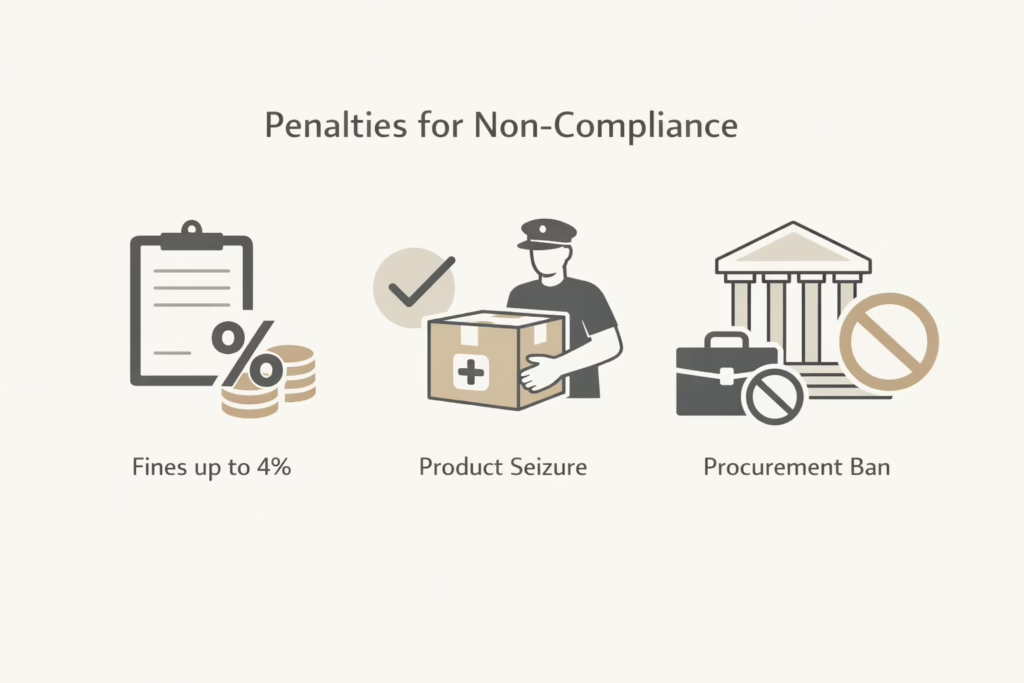
Penalties for Non-Compliance
Failing to comply with the EUDR can result in significant penalties for businesses. The European Commission has outlined the following penalties for non-compliance:
- Fines: Up to 4% of a company’s annual turnover.
- Confiscation of Non-Compliant Products: Products that do not meet the EUDR standards can be seized by authorities.
- Exclusion from Public Procurement: Non-compliant businesses may be barred from participating in public procurement processes.
Ongoing Compliance and Future Reviews
Even after you meet the deadlines, compliance with the EUDR is an ongoing process. Companies must continuously monitor their supply chains, update geolocation data, and ensure they’re meeting evolving legal requirements. The European Commission has committed to reviewing the EUDR every five years, with the first review set for 2028.
Conclusion
The EUDR timeline is fast approaching, and businesses of all sizes need to act now to ensure compliance. From mapping supply chains to submitting Due Diligence Statements, there are multiple steps along the way. The regulation’s phased timeline offers businesses the chance to prepare, but the stakes are high, with penalties for non-compliance. Whether you’re a large enterprise facing the 2025 deadline or a small business with until 2026, now is the time to take action and ensure that your business remains deforestation-free and fully compliant.
By understanding the key deadlines and requirements of the EUDR timeline, you can better navigate the path ahead and avoid costly mistakes. The good news is, with the right systems and strategies in place, compliance can be achieved smoothly and effectively.
FAQ
1. What is the EU Deforestation Regulation (EUDR)?
The EU Deforestation Regulation (EUDR) is a new law that aims to reduce deforestation globally by ensuring that products sold in the EU aren’t linked to deforestation. It applies to key commodities like cocoa, coffee, palm oil, soy, timber, and beef. The goal is to promote sustainable sourcing practices and protect forests worldwide. This regulation holds companies accountable by requiring them to trace their products back to their source and ensure that no part of the supply chain contributes to deforestation or forest degradation.
2. When does the EUDR go into full effect?
The regulation officially came into force in June 2023, but the full enforcement of its requirements begins on December 30, 2025 for large and medium-sized companies. Smaller businesses, such as SMEs, have until June 30, 2026 to comply. While the clock is ticking, businesses have time to prepare, whether by mapping their supply chains or implementing compliance systems, before facing penalties.
3. What does compliance with the EUDR require?
To comply with the EUDR, businesses must implement a due diligence system. This includes collecting data on the origin of their products, assessing the risk of deforestation, and ensuring suppliers meet legal and sustainability standards. Additionally, companies will need to submit Due Diligence Statements (DDS) through the EUDR Information System, which verifies that their products meet the deforestation-free requirements.
4. Who needs to comply with the EUDR?
Any business that sells or exports products tied to deforestation in the EU must comply. This includes companies involved in the trade of commodities like timber, cocoa, coffee, palm oil, and beef. Whether you’re a large multinational or a small SME, if your business deals with these commodities, you’re required to ensure that your products are sourced sustainably and do not contribute to deforestation.
5. What happens if my company doesn’t comply with the EUDR?
Non-compliance can lead to severe penalties, including fines of up to 4% of annual turnover, confiscation of non-compliant products, and exclusion from public procurement. These penalties highlight the importance of staying ahead of the regulation and ensuring your supply chain is deforestation-free. Taking proactive steps now can help you avoid these costly consequences.
6. How does the EUDR affect small and medium-sized businesses (SMEs)?
SMEs have until June 30, 2026, to comply with the EUDR, which gives them some extra time to implement necessary changes. While the requirements for SMEs are somewhat simplified compared to larger businesses, they must still ensure their supply chains are traceable and deforestation-free. SMEs can reference their suppliers’ DDS, provided the product hasn’t changed, but they must still keep thorough records of compliance.
7. What is the role of the EUDR Information System?
The EUDR Information System is the central platform where businesses will submit their Due Diligence Statements (DDS). It’s the EU’s way of ensuring that all businesses comply with the EUDR by providing an easy-to-use, standardized system for submitting the required data. Companies should familiarize themselves with the platform to avoid any last-minute challenges.