

It usually starts the same way. A message goes unanswered. A profile you used to see suddenly disappears. You search their name, refresh the page, check your connection, and still nothing. That quiet gap is often what makes people wonder if they’ve been blocked.
The tricky part is that most apps don’t tell you when it happens. There’s no alert, no explanation, and no clear line between being blocked, unfollowed, muted, or simply ignored. What you’re left with are small clues and a lot of second-guessing.
This guide walks through how to tell if someone blocked you, what signs actually matter, and when it’s better to pause before assuming the worst.
Why Social Media Never Tells You When You Are Blocked
Blocking is intentionally quiet. Platforms avoid notifications because blocks are meant to create distance, not confrontation. If people were alerted every time someone blocked them, it would invite conflict, harassment, or repeated attempts to reconnect.
Instead, platforms remove access silently. Profiles vanish. Messages stop delivering. Interaction options disappear. To the blocked person, it feels ambiguous on purpose.
That design choice is why there is no single sign that confirms a block. You have to look at combinations of changes rather than one isolated clue.
The First Thing to Check: Can You Still See Their Profile?
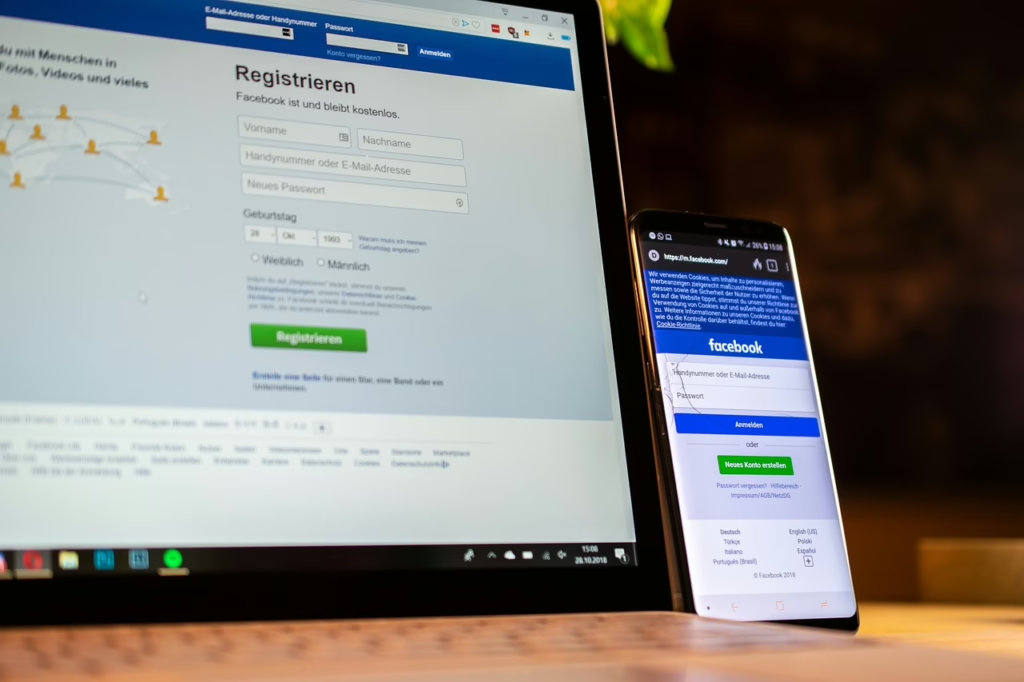
This is often the moment that triggers suspicion.
If you search for someone you interacted with recently and their profile no longer appears, that is a possible signal. If you had a direct link to their profile and it now shows an error, missing page, or blank screen, that adds weight.
However, profile disappearance alone does not equal a block.
Here are other explanations that produce the same result:
- They deactivated their account
- They deleted their account
- They changed their username
- Their account was suspended
- Their privacy settings changed
Blocking becomes more likely only when profile disappearance happens alongside other changes.
Other Ways Blocking Can Show Up
Blocking rarely shows up as one dramatic moment. More often, it reveals itself through small changes in how you can interact with someone. Each sign on its own can be misleading. When several of them appear together, the picture becomes clearer.
Messages That Never Deliver
Messaging behavior is one of the strongest indicators across platforms. If your messages suddenly stop showing delivery confirmation, fail to send, or sit indefinitely without any status update, that can be meaningful. On many apps, blocked messages appear to send normally from your side but never reach the other person.
At the same time, message delivery problems are not always personal. Poor internet connections, temporary platform outages, disabled messaging settings, message request filters, or built-in spam protection can all create the same effect. This is why one undelivered message is never enough on its own. What matters is consistency. When messages fail repeatedly over time and other signs begin to stack up, the likelihood of being blocked becomes much higher.
When Someone Disappears From Your Followers or Friends List
If someone vanishes from your followers or friends list, it can feel abrupt and personal. Still, this change alone does not automatically mean you were blocked.
People unfollow for many reasons. They remove followers. They clean up old connections. None of that requires blocking. Blocking becomes more likely only when several things happen at once. If they disappear from both your followers and following lists, you cannot re-follow them, their profile cannot be found through search, and messaging options no longer exist, those combined signals point in the same direction.
Again, it is not one action that matters. It is the pattern.
Searching for Their Username
Searching for someone by username is usually the next step. If their name no longer appears in search results, many people assume blocking immediately. This method can be useful, but only when done carefully.
Usernames disappear for reasons that have nothing to do with blocking. People change their usernames. Accounts are temporarily deactivated. Platforms sometimes remove accounts without warning. Search results can also lag behind real account changes, making active profiles seem invisible for a while.
A more reliable check is comparison. If the profile does not appear when you search from your account but shows up clearly from another account, blocking becomes the most likely explanation.
What Happens to Old Comments, Likes, and Tags
This sign often catches people off guard. If someone blocks you, their past likes and comments on your posts may disappear or become invisible to you. You may also notice that tagging or mentioning them no longer works, even on posts where you interacted before.
However, disappearing interactions are not exclusive to blocking. People delete comments. Posts get edited. Privacy settings change. Platforms also filter or hide older activity from time to time. Because of this, missing likes or comments work best as confirmation, not as a starting point.
When Tagging and Mentioning Stops Working
If you try to tag or mention someone and their username no longer appears at all, that is a stronger signal. Tagging usually fails completely when someone blocks you.
Still, there are other possibilities worth ruling out. Tagging limits exist, and hitting them can temporarily prevent new tags. Private accounts may restrict who can mention them. Some users disable mentions entirely or limit them to approved followers. Temporary account changes can also affect how tagging works.
When tagging stops working alongside profile invisibility and messaging failures, blocking becomes the most reasonable explanation.
Group Chats, Live Rooms, and Shared Spaces
Shared spaces often reveal blocking more clearly than one-on-one interaction. If you suddenly cannot add someone to a group chat, join a live session they host, or see their activity in shared spaces where you previously interacted, it may indicate a block.
On some platforms, even one participant blocking you can limit access for everyone involved. That said, group size limits, privacy controls, moderation rules, or event restrictions can produce similar results. As with every other sign, context matters more than a single failed attempt.
The Most Reliable Check: Another Account
This is the closest thing to confirmation.
If you cannot find or view someone from your account but can see them clearly from another account, the odds of being blocked are extremely high.
This method removes:
- Search glitches
- Account deactivation confusion
- Username change uncertainty
It does not mean the situation feels good, but it gives clarity.
Blocked vs Restricted vs Muted: Why It Gets Confusing
Many platforms now offer softer alternatives to blocking.
When you are restricted or muted:
- You can still see profiles
- Your messages may go to message requests
- Your comments may be hidden from others
- You may not receive engagement notifications
Blocking is more final. Restricted states are designed to reduce interaction without cutting it off completely.
If you can still view profiles and interact, even quietly, you are likely restricted or muted, not blocked.
Platform Differences That Matter
The signs of being blocked often overlap, but each social platform handles blocking a little differently. Some remove all visibility. Others leave partial access in place. Understanding these differences can help you interpret what you are seeing without overanalyzing one missing feature.
On Instagram, blocking tends to feel abrupt. Profiles often disappear completely, messages stop delivering, and tagging no longer works. Past comments and likes may vanish from your posts, even if they were visible before. Searching for the username usually returns no results, and direct profile links may lead to an error page.
Instagram also makes it easy to confuse blocking with restriction. When restricted, you can still see the profile and interact quietly, but your comments may be hidden from others and messages may be filtered. If the profile itself is completely inaccessible and messaging options are gone, blocking is more likely.
Snapchat
Snapchat handles blocking in a quieter way. If someone blocks you, their name usually disappears from your chat list and contact list. Searching for their username often returns nothing, and attempts to send messages may fail or remain pending.
What complicates Snapchat is removal. Someone can remove you as a friend without blocking you, which still allows you to search for and re-add them. If you cannot find their profile at all and another account can, blocking becomes the most likely explanation.
On Facebook, blocking removes almost all visibility. You cannot view the profile, send messages, tag the person, invite them to events, or add them to groups. Searching for their name usually returns no results, and direct profile links often display an unavailable message.
However, Facebook also allows unfriending without blocking. In that case, the profile may still be visible depending on privacy settings. If the profile is completely inaccessible and interaction options are gone, blocking is likely.
WhatsApp blocking shows up mostly through messaging and status behavior. Messages you send may show as sent but never delivered. You may no longer see the person’s profile photo updates, online status, or last seen information. Calls will not go through, and you will not be able to add them to group chats.
None of these signs alone confirm a block, since privacy settings and connectivity issues can cause similar behavior. When several of these changes happen at once and remain consistent, blocking becomes more likely.
iMessage
On iMessage, blocking affects delivery and calling rather than profile visibility. Messages may lose delivery confirmation, switch from blue to green, or never show as delivered at all. FaceTime calls may fail immediately, and regular calls may go straight to voicemail.
Focus and Do Not Disturb modes can look similar at first, but those settings usually come with visible indicators. When delivery never resumes and calls consistently fail, blocking becomes a reasonable conclusion.
Common Mistakes People Make When Checking
When something feels off online, it is easy to jump straight to conclusions. Blocking feels like the most obvious explanation, especially when communication suddenly stops. In reality, social platforms are messy systems, and many normal changes can look far more intentional than they actually are.
Some of the most common misreads happen when people focus on one signal instead of the bigger picture:
- Assuming silence equals blocking. People go quiet for many reasons. They get busy, overwhelmed, distracted, or simply choose not to respond right away. Silence on its own does not confirm anything.
- Treating one failed message as proof. A single undelivered message can be caused by connectivity issues, app glitches, or message filtering. It only becomes meaningful when the same thing happens repeatedly over time.
- Ignoring privacy changes. When someone switches to a private account, restricts messages, or adjusts visibility settings, access can disappear without blocking being involved at all.
- Forgetting username changes. A username change can make someone seem impossible to find, even though their account still exists and is active.
- Overchecking and refreshing repeatedly. Constantly searching, refreshing, or testing different features often increases anxiety without adding real clarity. At some point, more checking stops being helpful.
Social media systems are imperfect by design. Profiles disappear temporarily, searches fail, and features behave inconsistently. Jumping to conclusions usually creates more stress than certainty, especially when the full context is missing.
Final Thoughts
There is no single sign that proves someone blocked you. But patterns exist. When profiles disappear, messages stop delivering, interactions vanish, and another account confirms visibility, blocking is the most likely explanation.
At the same time, silence does not always mean rejection. Platforms blur lines between blocking, muting, restricting, and simple disengagement. The only certainty is that social media removes context from human decisions.
If you are blocked, the best thing you can do is respect the boundary and refocus your attention elsewhere. If you are unsure, avoid spiraling. And if the situation matters enough, sometimes the clearest answer comes not from an app, but from a direct conversation offline.
Social media may stay quiet, but you do not have to.
FAQ
Can someone block me without me knowing?
Yes. Social media platforms do not notify users when they are blocked. Blocking is designed to be silent, which is why people usually notice it through changes in visibility or interaction rather than a clear message.
Does being blocked mean I did something wrong?
Not necessarily. People block others for many reasons, including personal boundaries, emotional space, misunderstandings, or simple preference. A block is not always a judgment or a reaction to something specific you did.
Is silence the same as being blocked?
No. Silence can mean many things, including being busy, overwhelmed, or choosing not to respond. Blocking usually comes with additional signs, such as profile invisibility, failed messages, and missing interaction options.
Can someone block me temporarily?
Some platforms allow users to block and unblock at any time, while others offer softer options like muting or restricting. Blocking itself is not labeled as temporary, but it can be reversed if the person chooses to unblock later.
How accurate is checking from another account?
Searching from another account is one of the most reliable ways to confirm a block. If a profile appears normally from another account but not from yours, blocking is very likely. However, it still does not explain why the block happened.
Can privacy settings look like blocking?
Yes. Switching to a private account, restricting messages, limiting mentions, or changing visibility settings can remove access without blocking. This is why it is important to look at multiple signs together rather than relying on one change.