
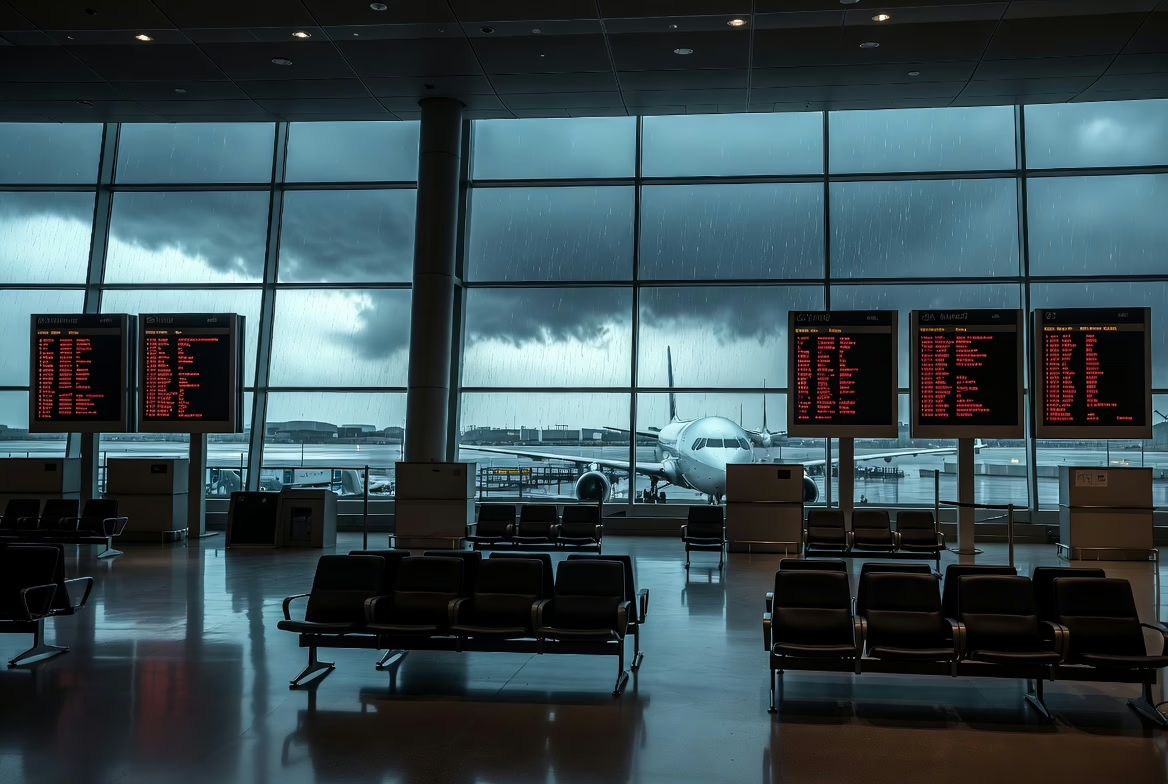
Executive Summary: On February 28, 2026, Dubai Airports suspended all flight operations at both DXB and DWC airports due to multiple regional airspace closures following US and Israeli strikes on Iran. Emirates, flydubai, and dozens of international carriers cancelled thousands of flights, with passengers advised not to travel to airports and to contact airlines directly for rebooking.
Saturday, February 28, 2026, became one of the most disruptive days in Dubai aviation history. Both Dubai International Airport (DXB) and Dubai World Central – Al Maktoum International (DWC) completely suspended operations. The reason? A cascading series of airspace closures across the Middle East following military strikes.
According to Dubai Airports, the official authority managing both facilities, all flight operations were suspended “until further notice” as of 4:05 PM Dubai time. Passengers received clear instructions: do not travel to the airport. Contact airlines directly for updates.
What Caused the Complete Shutdown
The suspension wasn’t a localized issue. Military operations involving the United States and Israel targeting Iran triggered widespread airspace closures across Iran, Iraq, and neighboring countries. When missiles started flying, commercial aviation had to clear out fast.
Emirates confirmed the scope of the crisis in their travel advisory last updated at 15:43 Dubai time on February 28. “Due to multiple regional airspace closures, Emirates has temporarily suspended all operations to and from Dubai,” the airline stated on their official help page.
Flight tracking data from FlightRadar24 showed virtually empty skies over the Middle East on February 28, a stark contrast to the region’s typically dense air traffic. More than 9,600 flights faced delays globally, with over 500 cancelled worldwide according to FlightAware’s tracking data as of 1030 GMT on February 28, 2026.
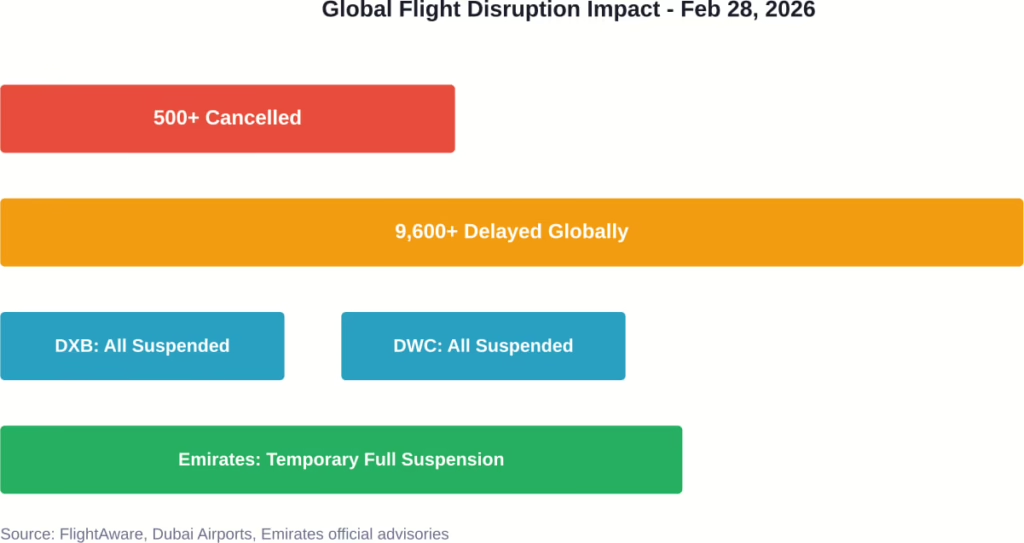
Overview of flight disruptions affecting Dubai and global aviation on February 28, 2026
Specific Flight Cancellations at Dubai Airports
Real-time flight status data from Dubai Airports showed the extent of cancellations. At Dubai International, multiple flights scheduled for 19:25 and 19:30 Dubai time were marked as cancelled.
Here’s what the official status boards showed:
| Flight Number | Airline | Destination | Scheduled Time | Status |
|---|---|---|---|---|
| YI 571 | Yemen Airways | Mitiga (MJI) | 19:25 | Cancelled |
| J9 126 | Jazeera Airways | Kuwait (KWI) | 19:25 | Cancelled |
| FZ 979 / EK 2038 | flydubai / Emirates | Yekaterinburg (SVX) | 19:25 | Cancelled |
| SG 016 | SpiceJet | Ahmedabad (AMD) | 19:25 | Cancelled |
| FZ 143 / EK 2056 | flydubai / Emirates | Amman (AMM) | 19:30 | Cancelled |
At Dubai World Central, the situation was similar. Flight XY 228 to Riyadh and XY 524 to Jeddah, both operated by flynas, were cancelled. Interestingly, some flights like SU 775 to Yekaterinburg and H4 8680 to Cluj-Napoca initially showed as “On time” before the complete shutdown took effect.
Airlines Scrambling to Respond
Emirates wasn’t alone in suspending operations. The crisis forced dozens of international carriers to cancel or divert flights. Turkish Airlines flights to Istanbul turned back mid-route. LOT Polish Airlines diverted Warsaw-bound aircraft. Emirates flights from Dublin returned to their origin airport.
One passenger on a fully-boarded flight reported the sudden announcement: “About 10 minutes after the ‘boarding complete’ announcement we were told airspace is closed.”
Malaysia Airlines also felt the impact. Flights to Doha and Jeddah turned back over airspace risk advisories, highlighting how the disruption extended beyond just Dubai-bound routes.
What Passengers Were Told to Do
Dubai Airports issued clear passenger guidance. The advisory was blunt: passengers must not travel to the airport. Full stop.
For those with cancelled flights, the rebooking process varied by booking method. Customers who booked through travel agencies needed to contact those agencies directly. Those who booked directly with Emirates or other airlines had to reach out to the carrier.
The advisory emphasized checking flight status before making any airport journey. Given the “until further notice” nature of the suspension, that status could change at any moment.
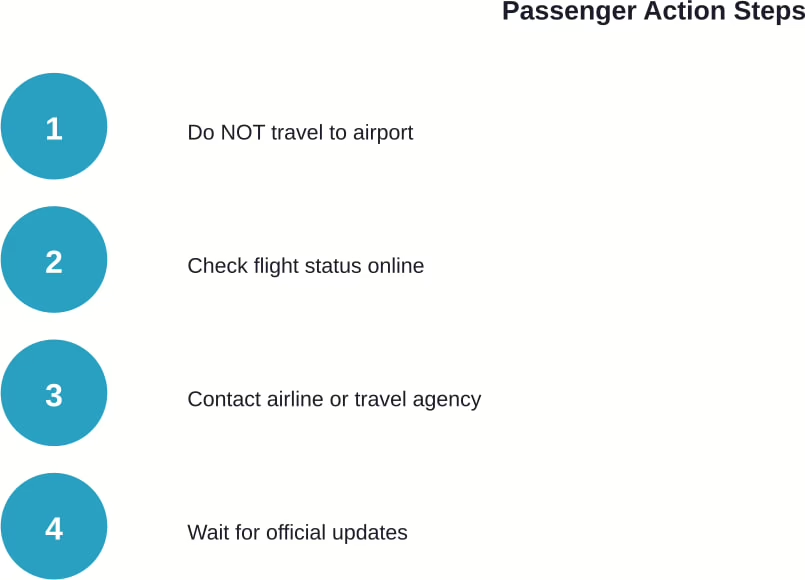
Official guidance for passengers affected by Dubai flight cancellations on February 28, 2026
Regional Impact Beyond Dubai
Dubai wasn’t the only aviation hub affected. Qatar faced similar disruptions. Airlines suspended flights across the Middle East as countries closed their airspace. The strikes involving the US and Israel created a domino effect that emptied commercial planes from skies across Iran, Iraq, and neighboring airspace.
The scale was unprecedented. As one aviation analyst noted, the entire regional airspace essentially shut down for commercial operations. When military operations escalate to this level, civilian aviation has no choice but to ground everything.
Historical Context
Airlines have periodically cancelled flights to the Middle East region for years as conflicts arise. But complete suspension of operations at the world’s biggest international aviation hub? That’s rare.
Dubai International Airport typically handles massive volumes of international traffic. It’s designed as a global aviation hub connecting East and West. A full shutdown represents not just a regional crisis, but a significant disruption to worldwide air travel networks.
Frequently Asked Questions
When will Dubai airports reopen?
As of February 28, 2026, Dubai Airports stated operations are suspended “until further notice.” No specific reopening time has been announced. Passengers should monitor Dubai Airports’ official website and their airline’s travel advisories for updates.
Will I get a refund for my cancelled Dubai flight?
Refund and rebooking policies vary by airline. Contact your airline directly if you booked with them, or contact your travel agency if you booked through one. Most airlines offer rebooking or refunds during airspace closure situations, but specific terms depend on your ticket type and airline policy.
Are flights from Dubai also cancelled?
Yes. Dubai Airports suspended all operations, meaning both arrivals and departures at DXB and DWC are cancelled. Emirates specifically confirmed suspension of “all operations to and from Dubai.”
Which airlines cancelled Dubai flights on February 28?
Emirates, flydubai, Jazeera Airways, SpiceJet, Yemen Airways, flynas, Turkish Airlines, LOT Polish Airlines, Malaysia Airlines, United, Air India, Lufthansa, and Virgin Atlantic were among carriers that cancelled or suspended Dubai routes. The list includes dozens of international carriers.
How can I check my Dubai flight status?
Check Dubai Airports’ official flight status page at dubaiairports.ae for DXB or dwc.dubaiairports.ae for DWC. Emirates passengers should check emirates.com/help for travel updates. Most airlines are updating their websites with specific advisory pages.
Is it safe to fly to Dubai now?
Currently, it’s not possible to fly to Dubai as both airports have suspended all operations. Once operations resume, airlines and aviation authorities will determine safety protocols. The suspension was implemented specifically due to regional airspace safety concerns.
What caused the airspace closures?
Multiple regional airspace closures occurred following US and Israeli military strikes on Iran on February 28, 2026. Iran, Iraq, and neighboring countries closed their airspace to commercial aviation during the military operations, forcing Dubai airports to suspend operations due to the inability to safely route flights through the region.
Looking Ahead
The situation remains fluid. Dubai Airports committed to closely monitoring developments and providing updates as soon as available. Their media centre will publish official announcements as the situation evolves.
For now, thousands of passengers face uncertainty. Travel plans are disrupted. Airlines are working through massive rebooking queues. And the world’s busiest international airport sits quiet, waiting for airspace to reopen.
If your travel plans involve Dubai, don’t make any moves until you’ve confirmed your flight status directly with your airline. Check official sources frequently. And be prepared for changes as regional tensions continue to impact Middle East aviation.