
Executive Summary: On March 2, 2026, Dubai faced heightened regional tensions requiring shelter-in-place protocols, while weather forecasts predicted unstable conditions with scattered rain starting March 3. Flight operations resumed on a limited basis by evening March 2, though major disruptions continued across UAE airports. Sporting events like the Nad Al Sheba Sports Tournament concluded March 7, while preparations continued for the Dubai World Cup on March 28.
March 2, 2026 marked a complex day for Dubai, with multiple factors converging to create an unprecedented operational environment. Regional security concerns dominated headlines, while aviation operations adapted to new restrictions and weather forecasters prepared residents for incoming atmospheric changes.
The situation required coordination across government entities, airlines, and private organizations. Here’s what actually happened on the ground.
Security Protocols and Shelter-in-Place Directives
The U.S. Mission to the UAE issued a security alert dated March 2, 2026, stating that U.S. government personnel in the UAE continue shelter-in-place protocols. The embassy recommended all Americans in the UAE follow the same precautions.
According to the U.S. Embassy statement, residents were advised to remain in residences, hotels, or other structures, and stay away from windows to the extent possible. This marked day three of heightened security measures across the region.
The Ministry of Interior (MoI) and the National Emergency Crisis and Disasters Management Authority (NCEMA) coordinated nationwide directives that fundamentally altered daily operations. Schools were shifted to distance learning from March 2-4, 2026, as part of the broader response framework.
Real talk: this wasn’t business as usual. The coordination between federal entities and local authorities demonstrated Dubai’s crisis management infrastructure in action.
Airport Operations and Flight Disruptions
Dubai International Airport (DXB) experienced significant operational changes throughout March 2. Flight suspensions that began earlier were partially lifted by evening, though restrictions remained in place.
Over 40 outbound flights from DXB were delayed or rescheduled, according to Emirates and Flydubai reports. Etihad Airways at Zayed International Airport (AUH) diverted several flights to Muscat and Doha as alternative routing became necessary.
Emirates SkyCargo suspended operations temporarily, with restrictions on booking and acceptance of all new shipments for 24 hours. The suspension was valid until 15:00 UAE time on March 3, according to operational updates from logistics providers.
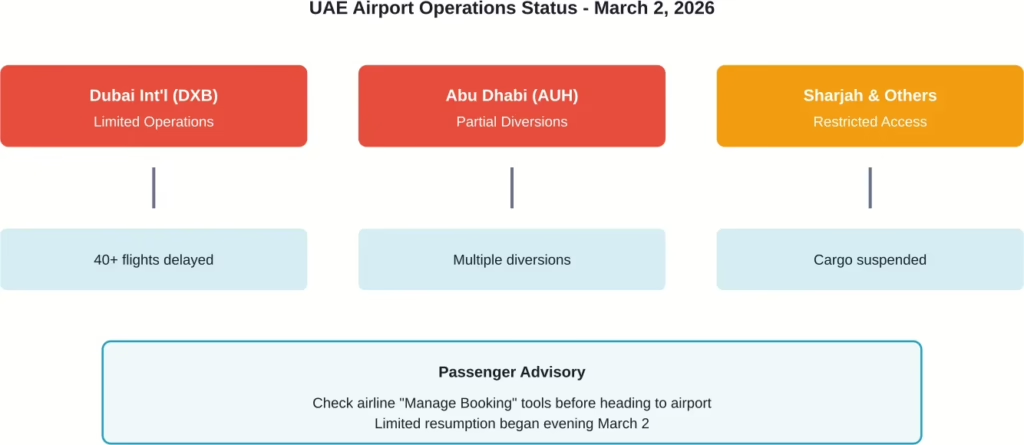
Airlines issued travel waivers and urged passengers to use “Manage Booking” tools on airline websites rather than traveling to airports. The operational reality on March 2 involved constant flux as authorities assessed conditions hour by hour.
What Airlines Told Passengers
Emirates temporarily restricted booking acceptance for a 24-hour window. Flight suspensions affected both passenger and cargo operations, creating ripple effects across global routing networks.
Passengers already at Dubai Airport faced extended wait times and limited rebooking options. Alternative hubs in Muscat, Doha, and other Gulf locations absorbed some diverted traffic, though capacity constraints limited how many flights could be accommodated.
But here’s the thing: by evening March 2, limited operations began resuming. This phased approach allowed Dubai Airports to test systems while maintaining safety protocols.
Weather Forecast: Unstable Conditions Incoming
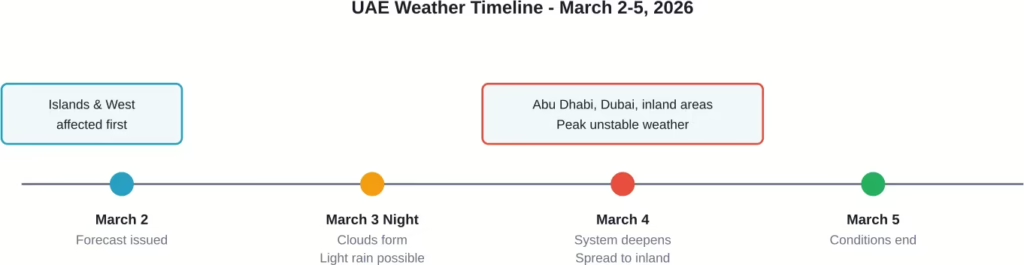
The National Centre of Meteorology (NCM) issued forecasts on March 2 predicting unstable weather across the UAE starting Tuesday night, March 3, continuing through Thursday, March 5, 2026.
According to the NCM, clouds would begin forming Tuesday night over islands and western regions, with a possibility of light rain. The low-pressure system was expected to deepen Wednesday, spreading clouds and rain to Abu Dhabi, inland areas, and eventually Dubai.
Sharjah24 reported the NCM forecast included increasing cloud cover and chances of rainfall in scattered areas. The timing meant residents needed to prepare for wet conditions coinciding with the security-related operational constraints.
March weather in Dubai typically offers pleasant conditions, with average daytime temperatures ranging from 23°C to 30°C. The incoming unstable weather represented a deviation from typical patterns for the month.
Daily Life and Government Operations
Distance learning protocols meant schools across all seven emirates were shifted to online instruction from March 2-4. This directive, coordinated by educational authorities in consultation with NCEMA, affected hundreds of thousands of students.
Government services operated with modified protocols. Some offices implemented remote work arrangements where feasible, while essential services maintained in-person operations with enhanced safety measures.
Commercial establishments followed guidance from local authorities. Shopping malls, restaurants, and retail outlets remained open but saw reduced foot traffic as residents adhered to shelter-in-place recommendations.
Sporting Events and Cultural Calendar
Despite the security situation, Dubai’s sporting calendar continued with adjustments. The 13th edition of the Nad Al Sheba Sports Tournament, organized by Dubai Sports Council, was held from February 18 until March 7, 2026, at the Nad Al Sheba Sports Complex.
According to protocol.dubai.ae, His Highness Sheikh Hamdan bin Mohammed bin Rashid Al Maktoum, Crown Prince of Dubai, had reiterated that Dubai’s year-round sporting calendar positioned the city as a global sporting destination. Since its inception, the Nad Al Sheba Sports Tournament has attracted over 60,000 amateur, professional and special needs athletes from diverse nationalities and age groups.
On March 1, His Highness Sheikh Mohammed bin Rashid Al Maktoum, Vice President, Prime Minister and Ruler of Dubai, attended the 2026 Emirates Super Saturday at Meydan Racecourse. The event featured thrilling races and strong competition, held one month ahead of the 30th edition of the Dubai World Cup scheduled for March 28.
These events proceeded with enhanced security protocols, demonstrating Dubai’s commitment to maintaining normalcy where safely possible.
Economic and Business Impacts
The flight disruptions created immediate challenges for cargo operations. With Emirates SkyCargo temporarily suspended, supply chain managers scrambled to identify alternative routing options.
Ocean freight operations at Jebel Ali Port experienced partial restrictions. Customs processing continued but with modified schedules. Warehousing and distribution centers maintained active operations, providing continuity for already-landed goods.
| Operation Type | Status March 2 | Key Restrictions |
|---|---|---|
| Air Cargo | Suspended (24hrs) | No new bookings until 15:00 March 3 |
| Passenger Flights | Limited Resume | Evening restart with reduced capacity |
| Ocean Freight | Partial | Modified schedules, some delays |
| Customs Processing | Partial | Essential clearances prioritized |
| Warehousing | Active | Normal operations with safety protocols |
Tourism operators faced booking cancellations and postponements. Hotels near the airport saw occupancy fluctuations as transit passengers either departed early or extended stays waiting for flight availability.
The short answer? Businesses activated contingency plans developed for precisely these scenarios. Dubai’s experience with crisis management meant most organizations had frameworks ready.
Regional Context and Broader Implications
The situation in Dubai didn’t exist in isolation. Regional tensions affected multiple Gulf states simultaneously, creating coordinated challenges across neighboring countries.
According to CNN reporting, March 2, 2026 marked day three of the US-Israeli war with Iran. Military operations affected airspace management across multiple countries, requiring airlines to adjust routing and capacity allocation.
Bahrain airports showed closed status for air operations. Qatar and other Gulf locations absorbed diverted traffic where capacity permitted. The interconnected nature of regional aviation meant disruptions cascaded across the network.
Middle East logistics providers issued updates throughout March 2, advising clients on operational statuses across multiple countries. Expeditors reported varied restrictions across air, ocean, customs, and overland transportation modes.
Official Information Sources
Dubai authorities emphasized checking official sources rather than relying on social media for situation updates. The protocol.dubai.ae domain provided verified government announcements.
The U.S. Embassy’s ae.usembassy.gov site posted security alerts specific to American citizens. The National Centre of Meteorology maintained updated weather forecasts accessible through official channels.
Airlines posted operational updates on their websites, with Emirates, Etihad, and Flydubai maintaining dedicated status pages. Dubai Airports operated information channels providing real-time updates on DXB operations.
Now, this is where accurate information became crucial. With multiple evolving situations simultaneously, misinformation spread quickly through unofficial channels. Government entities repeatedly urged residents and visitors to verify information through official sources only.
Fuel Prices and Economic Indicators
March 2026 brought fuel price adjustments that coincided with the operational disruptions. According to published reports, fuel price changes for March were announced March 1, adding another variable to the transportation and logistics equation.
The price adjustments reflected global oil market dynamics and regional economic factors. While specific figures varied by fuel grade, the increases affected both individual motorists and commercial fleet operators.
Economic analysts monitored how the combined effects of security measures, flight disruptions, and commodity price changes would impact business sentiment and consumer confidence in the near term.
Looking Ahead: What Came Next
As March 2 ended, attention shifted to March 3 and the predicted weather changes. The combination of unstable atmospheric conditions with ongoing security protocols created planning challenges for the days ahead.
Schools prepared to continue distance learning through March 4 as planned. Airport operators worked to expand the limited flight resumption that began evening March 2, with hopes of returning to fuller capacity pending security clearances.
The weather forecast suggested March 5 would mark the end of the unstable period, potentially allowing outdoor activities and events to resume more normally. The Dubai World Cup preparations on March 28 remained on schedule, with organizers confident the situation would stabilize well before the premier racing event.
Government entities coordinated messaging about when various restrictions might lift. The phased approach allowed flexibility to respond to changing conditions while providing residents with planning frameworks.
Frequently Asked Questions
Was Dubai Airport completely closed on March 2, 2026?
No. Dubai International Airport experienced significant disruptions and temporary suspensions, but limited flight operations resumed by evening March 2. Over 40 flights were delayed or rescheduled, but the airport wasn’t completely closed. Passengers were advised to check with airlines before traveling to DXB.
What caused the shelter-in-place directive in Dubai?
Regional security concerns prompted the U.S. Embassy and local authorities to recommend shelter-in-place protocols. The U.S. Mission to the UAE stated that U.S. government personnel continued sheltering in place and recommended all Americans follow similar precautions, staying in residences or hotels and away from windows where possible.
Did schools operate normally on March 2, 2026?
No. Schools across the UAE were shifted to distance learning from March 2-4, 2026. This directive came from educational authorities coordinating with the National Emergency Crisis and Disasters Management Authority (NCEMA) as part of broader safety protocols during the heightened security period.
What was the weather forecast for Dubai starting March 3?
The National Centre of Meteorology predicted unstable weather from Tuesday night March 3 through Thursday March 5, 2026. Forecasts included increasing cloud cover and scattered rainfall, with clouds forming first over islands and western regions, then spreading to Abu Dhabi, inland areas, and Dubai as a low-pressure system deepened.
Were sporting events canceled in Dubai on March 2?
No. The Nad Al Sheba Sports Tournament continued as scheduled, running from February 18 until March 7, 2026. The event proceeded with enhanced security protocols. His Highness Sheikh Mohammed bin Rashid Al Maktoum attended Emirates Super Saturday at Meydan Racecourse on March 1, with preparations continuing for the Dubai World Cup on March 28.
How long did Emirates SkyCargo suspend operations?
Emirates SkyCargo implemented temporary restrictions on booking and acceptance of all new shipments for 24 hours, valid until 15:00 UAE time on March 3, 2026. This suspension affected cargo operations while passenger flights began limited resumption by evening March 2.
Where could travelers find reliable updates about the situation?
Official sources included protocol.dubai.ae for government announcements, ae.usembassy.gov for U.S. Embassy alerts, airline websites for flight status, and the National Centre of Meteorology for weather forecasts. Authorities emphasized checking official channels rather than social media to avoid misinformation during the evolving situation.
Conclusion: Dubai’s Resilience Under Pressure
March 2, 2026 tested Dubai’s crisis management systems across multiple dimensions simultaneously. Security protocols, aviation disruptions, weather challenges, and continued economic activity created a complex operational environment.
The response demonstrated institutional preparedness. Government entities coordinated effectively, businesses activated contingency plans, and residents adapted to rapidly changing conditions. By evening March 2, the limited resumption of flight operations signaled progress toward normalization.
Sound familiar? Dubai has built its reputation partly on managing complexity. The infrastructure, both physical and institutional, proved capable of handling multiple concurrent challenges while maintaining essential services and preparing for the days ahead.
For anyone monitoring the situation or planning travel to Dubai, the key takeaway remains: check official sources frequently. Conditions evolved throughout March 2 and would continue changing in subsequent days. The combination of security measures, weather developments, and operational adjustments required real-time information for effective planning.
The coming days would reveal whether the March 3-5 weather forecast proved accurate and how quickly security protocols could be adjusted. But March 2 itself showed Dubai’s capacity to manage crisis while maintaining its commitment to major events and economic continuity.