
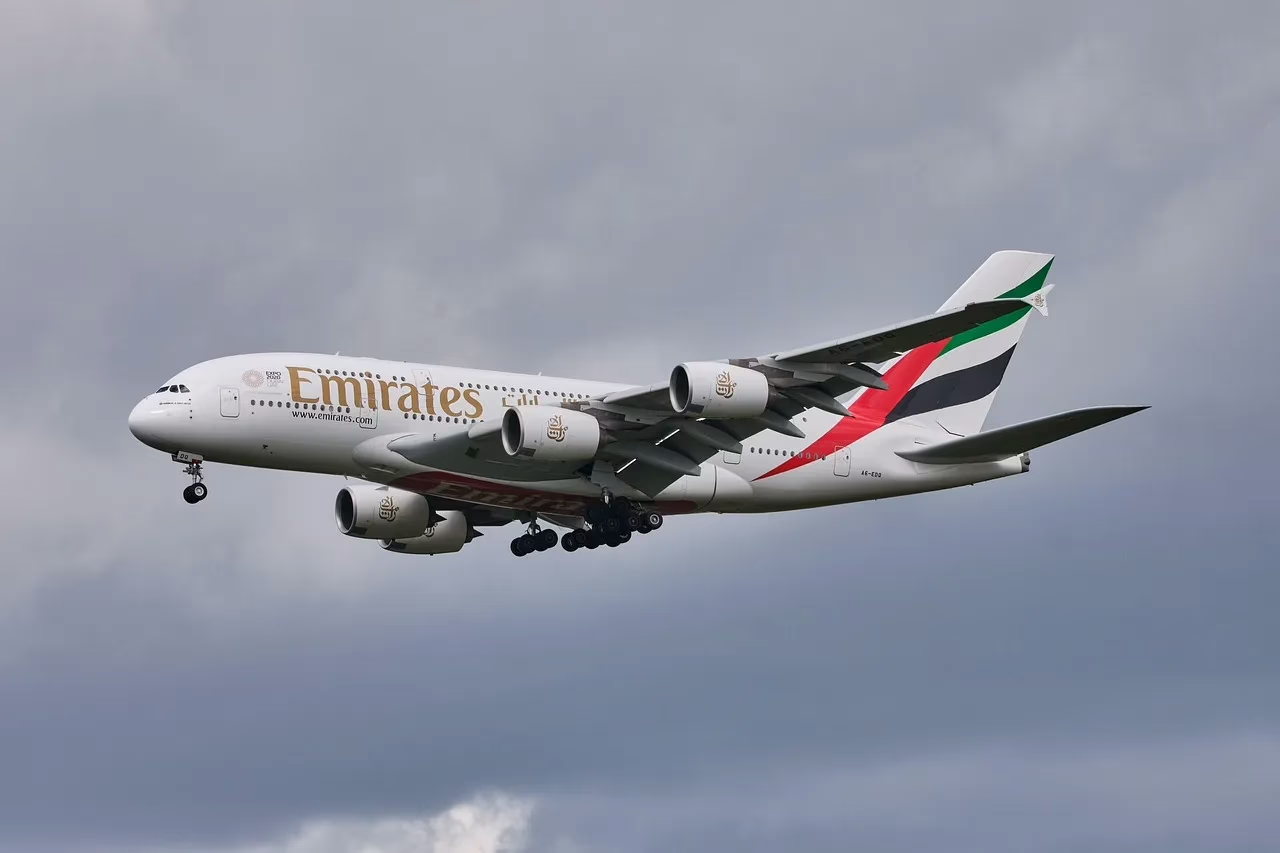
Executive Summary: As of March 2026, multiple governments have issued ‘do not travel’ advisories for Dubai and the UAE following retaliatory strikes across the Middle East after US/Israel operations in Iran. While Dubai maintains low crime rates and advanced infrastructure, the volatile regional security situation, potential missile attacks, and airspace closures affecting flights make travel unsafe at this time.
Dubai has long been considered a safety haven in the Middle East, with advanced infrastructure, low crime rates, and world-class tourism facilities. But the current situation is dramatically different from the stable environment travelers have come to expect.
The landscape changed abruptly in late February 2026. What was once the safest major city in the region now sits at the center of an escalating security crisis.
Current Security Situation in Dubai and the UAE
Following the launch of U.S. combat operations in Iran, the security environment across the Middle East has deteriorated rapidly. The U.S. Department of State issued a worldwide caution specifically highlighting Americans in the Middle East should follow the latest security alerts from the nearest U.S. embassy or consulate.
Following U.S. combat operations in Iran, retaliatory strikes occurred across the Middle East region on February 28, 2026, including in the UAE. The UAE’s Ministry of Defence confirmed military action in the country.
Australian government travel advice escalated to its highest level: “Do not travel.” Their advisory states: “Due to the volatile security situation in the region and military strikes in the United Arab Emirates (UAE), we’ve raised our level of advice for the UAE to do not travel.”
What Changed Over the Weekend
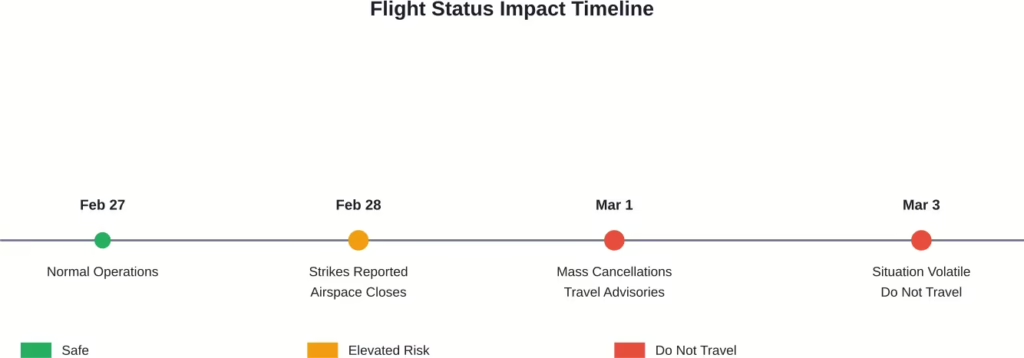
The situation escalated dramatically on February 28, 2026. Retaliatory strikes occurred across the Middle East region following military strikes on Iran. The UAE wasn’t spared from this retaliation.
The UK Foreign Office issued warnings against all but essential travel. British nationals in Dubai were advised to stay indoors due to the risk of missile attacks. That’s not standard travel advisory language—that’s crisis-level guidance.
Canadian authorities updated their travel advisories on March 2, 2026, with critical information about airspace and commercial flight status. The frequency of these updates reflects how quickly the situation continues to develop.
Airspace Closures and Flight Disruptions
Here’s the thing though—even if someone decided to travel despite the warnings, getting there has become exceptionally difficult.
The UAE airspace may open or close at short notice, directly impacting flights at Dubai International Airport and Abu Dhabi International Airport. These aren’t weather delays or technical issues. These are security-driven closures affecting one of the world’s busiest aviation hubs.
The majority of Dubai flights have been cancelled. Airlines have suspended or significantly reduced services to Dubai, leaving thousands of travelers stranded or scrambling to rebook.
Which Airlines Are Affected
Major international carriers have limited or suspended services to Dubai. The situation remains fluid, with airlines updating their policies daily as the security situation evolves.
Travelers with existing bookings face difficult decisions. Many flights aren’t just delayed—they’re cancelled outright, with no clear indication when normal service might resume.
Government Travel Advisories Breakdown
Let’s look at what different governments are actually saying. These aren’t suggestions—they’re official warnings from foreign ministries.
| Country | Advisory Level | Key Guidance | Last Updated |
|---|---|---|---|
| Australia | Do Not Travel | Volatile security situation, military strikes occurred | March 3, 2026 |
| United Kingdom | Against all but essential travel | Stay indoors, risk of missile attacks | March 2, 2026 |
| Canada | Avoid all travel | Airspace closures, commercial flight disruptions | March 2, 2026 |
| United States | Exercise increased caution | Worldwide caution for Middle East, follow embassy alerts | Ongoing updates |
The U.S. Department of State specifically advises Americans worldwide, and especially in the Middle East, to enroll at https://step.state.gov to receive the latest security updates. That enrollment system exists precisely for situations like this.
What ‘Do Not Travel’ Actually Means
These aren’t cautionary suggestions to be extra vigilant. When Australia issues a “Do Not Travel” advisory—their highest warning level—they’re saying the risks are too severe for any non-essential travel.
The UK’s “against all but essential travel” carries similar weight. What constitutes “essential”? Generally, only diplomatic, critical business, or emergency family situations qualify. Tourism doesn’t.
Dubai’s Historical Safety Record
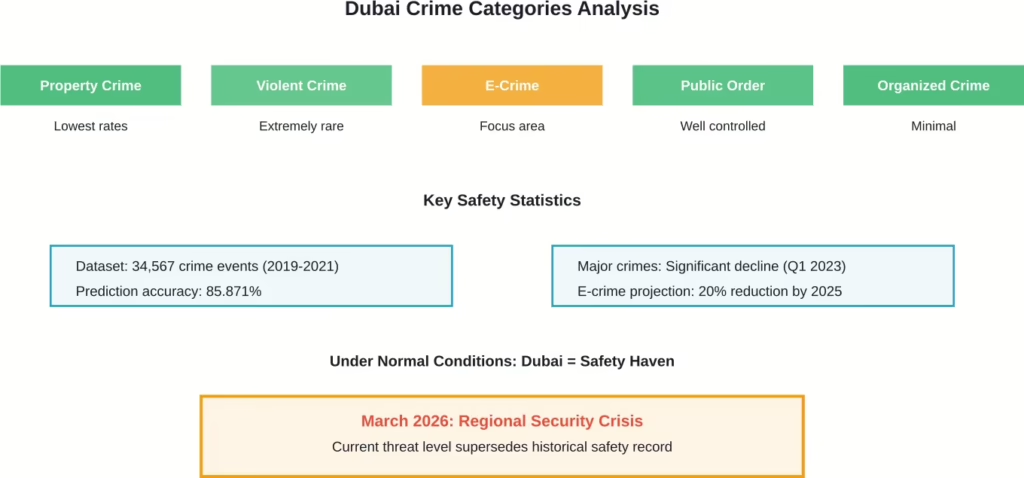
Now, this is where it gets important to separate current crisis from baseline conditions. Under normal circumstances, Dubai is remarkably safe.
Academic research examined approximately 34,567 crime events from Dubai Police Department data spanning 2019 to 2021. The data showed Dubai experienced significant declines in major crimes during the first quarter of 2023, reinforcing its reputation as a safety haven.
Crime rates in Dubai are significantly lower than most major international cities. Most incidents involve petty theft in areas populated by lower-income temporary workers, with violent crime being exceptionally rare.
Machine learning analysis of Dubai crime data achieved 85.871% accuracy in predicting crime behavior. Researchers projected e-crime rates could drop by 20% by 2025 through data-driven resource allocation and crime reduction techniques.
The Traffic Safety Caveat
Even in normal times, road safety presents the most significant daily risk in the UAE. On highways, unmarked speed bumps and drifting sand create additional hazards. Over 25 percent of road fatalities are pedestrians, according to U.S. Department of State travel information.
The police emergency number and ambulance number is 999.
Travel Insurance and Coverage Concerns
Here’s where travelers face a frustrating reality: most standard travel insurance won’t cover trip cancellations when government advisories are this severe.
Most standard travel insurance policies rely on government advisories to determine coverage. Once a “do not travel” or “avoid all travel” warning is issued, standard policies typically won’t provide refunds for voluntary cancellations.
Travelers seeking greater flexibility should consider Cancel For Any Reason (CFAR) coverage. These policies offer partial refunds—typically 50 to 75%—but must be purchased within days of the original booking.
That said, CFAR policies are expensive and not available for bookings made weeks or months ago. Many travelers with Dubai trips planned for March or April 2026 find themselves in a difficult position.
What About Existing Bookings?
Airlines have varying policies. Some are offering flexible rebooking options or refunds given the extraordinary circumstances. Others are maintaining standard change fees.
Hotels in Dubai are similarly inconsistent. Larger international chains tend to offer more flexibility during crisis situations, while smaller properties may enforce standard cancellation policies.
The key is to contact providers directly and reference the specific government advisories by name and date.
Other Safety Considerations in Dubai
Setting aside the current crisis, travelers eventually planning future Dubai trips should understand the broader legal and cultural landscape.
Legal Differences
The UAE operates under a different legal framework than Western countries. Behaviors considered minor offenses elsewhere can result in serious consequences.
Custodial sentences are served in local jails. If deportation is ordered, immigration detention lasts at least 24 hours before departure is permitted. This isn’t theoretical—the Australian government specifically highlights this in their standard travel advice.
Cultural Norms and Dress Codes
Dubai is relatively liberal compared to neighboring countries, but it’s still a Muslim-majority emirate with cultural expectations. Modest dress is expected in public areas, particularly outside tourist zones and beach areas.
In malls, government buildings, and traditional areas, clothing should cover shoulders and knees at minimum. Swimwear is appropriate only at beaches and pools, not in public streets or shopping areas.
Alcohol Consumption
Drinking is permitted in licensed venues like hotels and restaurants, but public intoxication is illegal and can result in arrest. Drinking in public areas or being drunk and disorderly can lead to detention and deportation.
LGBT Travelers
Same-sex relationships are illegal in the UAE. While enforcement is inconsistent and many LGBT travelers visit without incident, public displays of affection between same-sex couples can result in legal action.
This creates a challenging environment for LGBT travelers who must weigh the risks carefully and maintain discretion throughout their visit.
Health and Medical Considerations
Beyond security concerns, health factors deserve attention for future travel planning.
Middle East Respiratory Syndrome (MERS)
MERS symptoms range from mild and flu-like to more severe pneumonia-like symptoms and can result in death. There is no vaccine or medication that protects against MERS, according to Canadian government travel advisories.
Prevention focuses on standard hygiene practices: cleaning hands regularly with soap and water for at least 20 seconds, or using hand sanitizer containing at least 60% alcohol.
Healthcare Quality
Dubai offers world-class medical facilities, particularly in private hospitals catering to international patients. Healthcare standards in major facilities match or exceed those in Western countries.
However, medical care is expensive. Comprehensive travel health insurance is essential for any future travel to the UAE.
What Stranded Travelers Should Do Right Now
Real talk: if someone is currently in Dubai or the UAE, their priority should be getting home safely.
The Australian government advises travelers already in the UAE to follow the instructions of local authorities and stay in contact with their airline regarding flight options.
British nationals are specifically advised to stay indoors when possible and avoid unnecessary movement, particularly during periods of heightened alert.
Embassy and Consular Assistance
Contact the nearest embassy or consulate immediately. The Consular Emergency Centre can provide lists of lawyers, updated security information, and assistance with emergency travel documents if needed.
U.S. citizens should enroll in the State Department’s Smart Traveler Enrollment Program (STEP) at https://step.state.gov to receive the latest security updates.
Communication and Documentation
Keep digital and physical copies of important documents: passport, visa, travel insurance, booking confirmations, and emergency contacts.
Maintain charged devices and backup power sources. Keep emergency numbers readily accessible: the UAE police emergency number is 999.
When Might It Be Safe Again?
That’s the question everyone wants answered, but nobody can provide with certainty.
The situation depends on regional geopolitical developments completely outside Dubai’s control. The UAE is not driving this crisis—it’s caught in the crossfire of broader Middle East tensions.
Government advisories will be updated as the situation evolves. When travel advisories are downgraded, that’s the signal that conditions are improving.
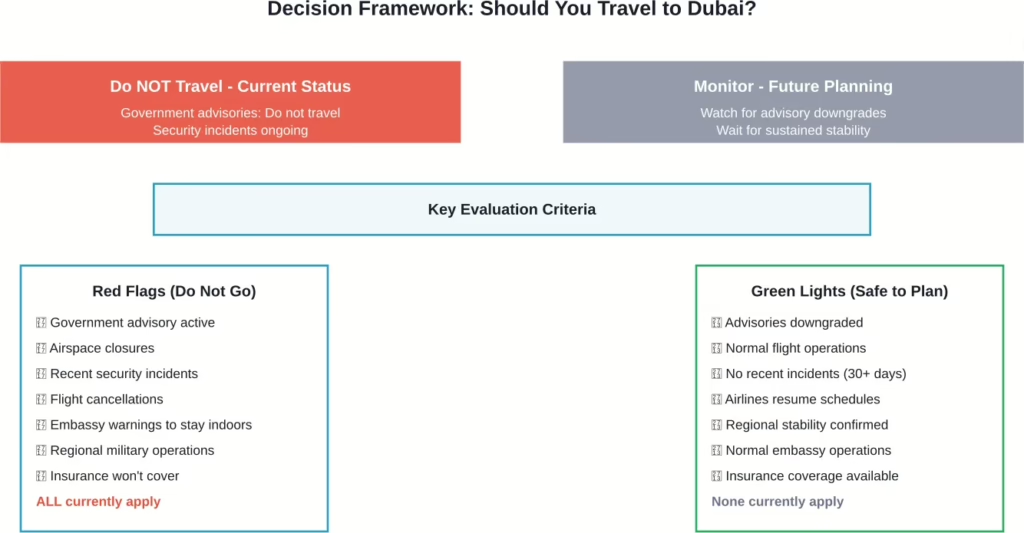
Look for these indicators:
- Sustained period without security incidents
- Airspace reopening with consistent operations
- Airlines resuming normal service schedules
- Government advisories downgraded to lower warning levels
- Foreign embassies resuming normal operations
None of those conditions currently exist.
Alternative Destinations to Consider
For travelers with non-refundable time off or those who were planning a luxury getaway, alternative destinations offer similar experiences without the current security risks.
European cities like Barcelona or Lisbon provide cosmopolitan luxury and excellent weather. Southeast Asian destinations like Singapore or Bangkok offer the mix of modernity and culture that attracts many Dubai visitors.
The Maldives remains accessible and provides the luxury resort experience without the current regional tensions affecting the UAE.
Terrorism and Long-Term Threats
The UK government notes there is a high threat of terrorist attack globally affecting UK interests and British nationals, including from groups and individuals who view the UK and British nationals as targets.
This isn’t specific to the current crisis—it’s ongoing baseline risk. But the current volatile situation increases the potential for various groups to conduct attacks.
Staying aware of surroundings at all times is standard travel advice, but it takes on greater urgency during regional instability.
FAQ: Dubai Safety March 2026
Is Dubai safe to visit right now in March 2026?
No. As of March 3, 2026, multiple governments including Australia, the UK, and Canada have issued their highest-level warnings against travel to Dubai and the UAE. The region experienced military strikes on February 28, airspace closures are ongoing, and the security situation remains volatile. This is not the time for leisure travel to Dubai.
Can I still fly to Dubai right now?
Most flights to Dubai have been cancelled. The UAE airspace may open or close at short notice, directly impacting flights at Dubai International Airport. Airlines have suspended or significantly reduced services. Even if some flights operate, government advisories strongly warn against travel regardless of flight availability.
Will my travel insurance cover a Dubai trip cancellation right now?
Most standard travel insurance policies won’t provide refunds for voluntary cancellations once government advisories reach “do not travel” status. Cancel For Any Reason (CFAR) policies offer partial refunds of 50-75%, but must have been purchased within days of the original booking. Contact your insurer to understand your specific coverage.
What should I do if I’m currently in Dubai?
Contact your embassy or consulate immediately. British nationals are advised to stay indoors when possible. All travelers should follow instructions from local authorities, maintain contact with airlines about departure options, and enroll in their government’s emergency notification system (like the U.S. STEP program). Keep important documents and emergency numbers accessible. The UAE emergency number is 999.
Is Dubai normally a safe city outside of the current crisis?
Yes. Under normal circumstances, Dubai has remarkably low crime rates. Analysis of approximately 34,567 crime events from 2019-2021 shows Dubai experiences significant declines in major crimes, with violent crime being extremely rare. The city is considered a safety haven in the Middle East. The current situation is an exceptional regional security crisis, not reflective of Dubai’s typical safety profile.
When will it be safe to travel to Dubai again?
There’s no definitive timeline. Safety depends on broader Middle East geopolitical developments. Watch for these indicators: sustained period without security incidents, consistent airspace operations, airlines resuming normal schedules, government advisories being downgraded, and foreign embassies resuming normal operations. Monitor official government travel advisories from your country for updates.
What are the main risks in Dubai right now beyond security threats?
Under normal conditions, road traffic presents the most significant daily risk—over 25% of road fatalities are pedestrians, with unmarked speed bumps and drifting sand creating hazards. Health-wise, Middle East Respiratory Syndrome (MERS) exists in the region, though cases are relatively rare. Legal differences mean behaviors considered minor elsewhere can result in serious consequences, including jail time or deportation.
Conclusion: The Clear Answer
Is it safe in Dubai right now? No.
That’s not an opinion—it’s the consensus of multiple governments with access to intelligence and security assessments far beyond what any individual traveler can access.
Dubai is typically one of the safest major cities in the world. Its low crime rates, advanced infrastructure, and high-quality services make it an attractive destination. But March 2026 is not a typical time.
The regional security situation has deteriorated rapidly. Military strikes occurred on UAE soil. Airspace closures continue. Governments are telling their citizens to avoid all travel or stay indoors if already there.
This isn’t about being overly cautious or risk-averse. This is about recognizing when a situation has fundamentally changed and responding appropriately.
For anyone with Dubai travel plans in the coming weeks or months: postpone. Monitor official government advisories from your country. When the situation stabilizes—and it will eventually—Dubai will still be there, ready to welcome visitors again.
For those currently in Dubai: contact your embassy, follow local authority instructions, maintain communication with your airline, and prioritize getting home safely.
Check official government travel advisory websites regularly for updates. Situations can evolve quickly, and current recommendations may change as circumstances develop.
The best travel decision is an informed one based on official guidance, not optimism or convenience. Right now, that guidance is unambiguous: Dubai isn’t safe for travel.