
An Amazon buyer account suspension tends to arrive without much warning, and the message you get rarely explains things in plain terms. One day everything works. The next, you cannot place orders, access Prime, or use your balance, and you are left guessing what went wrong.
This article looks at buyer account suspensions from the practical side. What Amazon usually means by a suspension, why it happens, and how to approach the situation without making it worse. No scare tactics, no filler. Just a clear starting point for understanding what is going on and how to respond.
What Amazon Means by a Buyer Account Suspension
A buyer account suspension means Amazon has restricted your access to most or all buyer-side features. This usually includes placing orders, managing returns, using gift card balances, accessing Prime benefits, and sometimes even logging into the account at all.
Amazon frames this as a security or policy action, not a punishment. In practice, it functions as a freeze while the system flags something it does not trust. The suspension can be temporary or permanent, depending on the issue and how it is handled.
One important detail often missed is that Amazon does not separate buyer behavior from the rest of the account ecosystem. If you also sell on Amazon, your buyer history still matters. If you only buy, your account is still evaluated using the same fraud and risk models Amazon applies across the platform.
Why Amazon Rarely Explains the Exact Reason
One of the most frustrating parts of a buyer account suspension is the lack of detail. Amazon usually does not tell you exactly which action caused the problem or when it happened.
This is intentional.
Amazon relies heavily on automated systems that evaluate patterns rather than single actions. Explaining precise triggers would make it easier to bypass safeguards. Instead, Amazon keeps explanations broad and forces users to focus on correcting behavior rather than debating specifics.
For buyers, this means you often have to infer the cause based on recent activity. It is not fair, but it is how the system works.
The Most Common Causes of Buyer Account Suspension
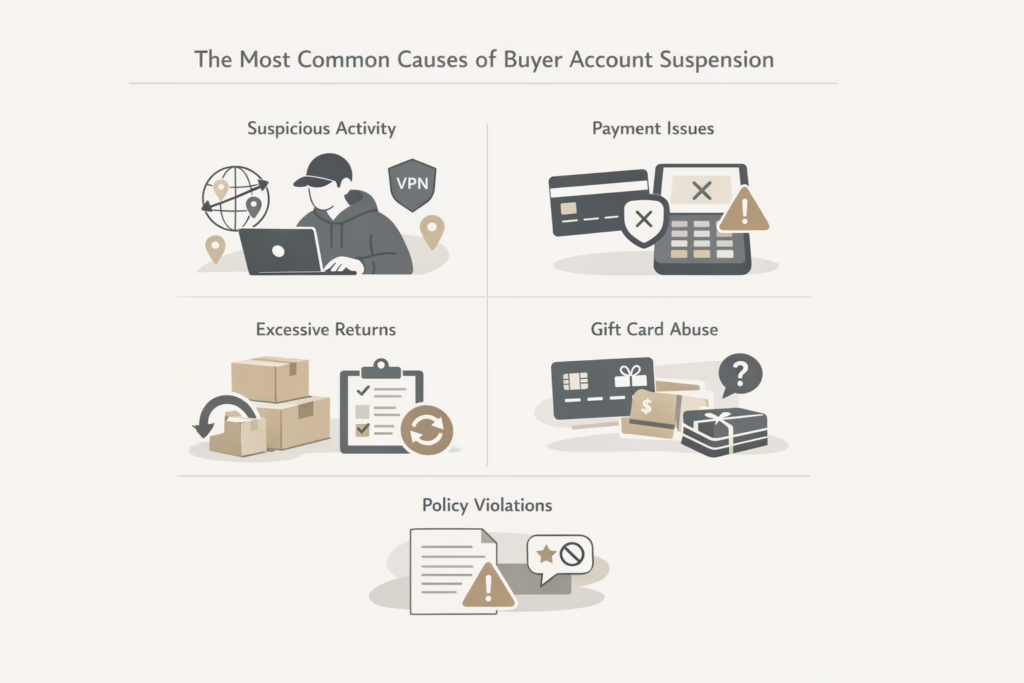
While Amazon does not publish a full list, patterns across official documentation and long-term cases are consistent. Most buyer suspensions fall into a few broad categories.
1. Suspicious Account Activity
Amazon monitors login behavior closely. Sudden changes can trigger automated reviews.
Examples include logging in from multiple countries within a short time, frequent device switching, or using VPNs that rotate IP addresses. Shared networks and public Wi-Fi can also play a role, especially if other accounts on the same IP have issues.
Multiple buyer accounts linked to the same payment method, address, or device are another major risk factor. Amazon allows only one buyer account per person unless specific exceptions apply, such as Amazon Household.
2. Payment-Related Problems
Payment issues are one of the fastest ways to trigger a suspension.
Declined cards, repeated payment failures, mismatched billing information, or using cards that Amazon cannot verify often lead to an automatic hold. Even legitimate cards can cause issues if the issuing bank flags transactions or blocks authorization attempts.
Using prepaid cards or virtual cards inconsistently also increases risk, especially when combined with other warning signals.
3. Excessive Returns and Refund Requests
Amazon’s return policy is generous, but not unlimited.
Returning a high percentage of orders, especially expensive items, attracts scrutiny. Refund requests without returning items, frequent claims of missing deliveries, or repeated reports of damaged goods all contribute to a risk profile.
Amazon does not look at returns in isolation. Patterns matter more than individual cases.
4. Gift Card Misuse or Verification Issues
Gift cards are a common source of buyer suspensions.
Using gift cards purchased from unofficial sellers, redeeming large amounts at once, or mixing gift card balances with frequent refunds can trigger fraud checks. Even legitimate gift cards may cause issues if Amazon cannot verify the source.
Once gift card activity is flagged, Amazon often freezes the entire account until verification is complete.
5. Policy Violations Beyond Payments
Other actions can also contribute, even if they seem unrelated.
Leaving misleading reviews, attempting to manipulate feedback, providing inconsistent account information, or repeatedly violating terms of service can all add weight to a suspension decision.
In many cases, no single action is severe on its own. The issue is accumulation.
How Amazon Decides to Suspend a Buyer Account
Amazon’s suspension process is largely automated.
Systems continuously scan for behavior that deviates from normal patterns. When enough risk signals align, the account is flagged. A review may follow, but the initial action is usually automatic.
Once flagged, Amazon places the account on hold and sends a notification. The message may refer to unusual activity, payment concerns, or policy compliance without naming specifics.
At this point, access is restricted while Amazon waits for the account holder to respond.
How to Confirm the Suspension Notice Is Legitimate
Phishing emails often imitate Amazon suspension notices, which makes verification essential.
A legitimate Amazon message will come from an official Amazon domain. It will not ask for passwords, card numbers, or external payments. It will direct you to log in through Amazon’s own site rather than clicking unknown links.
If anything feels off, avoid links entirely and access your account directly by typing the Amazon website into your browser.
What to Do Immediately After a Suspension
The first step is restraint.
Do not create a new buyer account. Do not start changing information randomly. Do not contact support repeatedly with emotional messages. All of these actions can make reinstatement harder.
Instead, take time to review recent activity.
Look at payment changes, returns, gift card usage, login locations, and any unusual transactions. Even small details matter when Amazon evaluates appeals.
How to Handle an Amazon Buyer Account Appeal
What Amazon Actually Looks For in an Appeal
Amazon does not evaluate appeals based on emotion or persuasion. The review process is designed to check whether the issue was understood, corrected, and is unlikely to happen again.
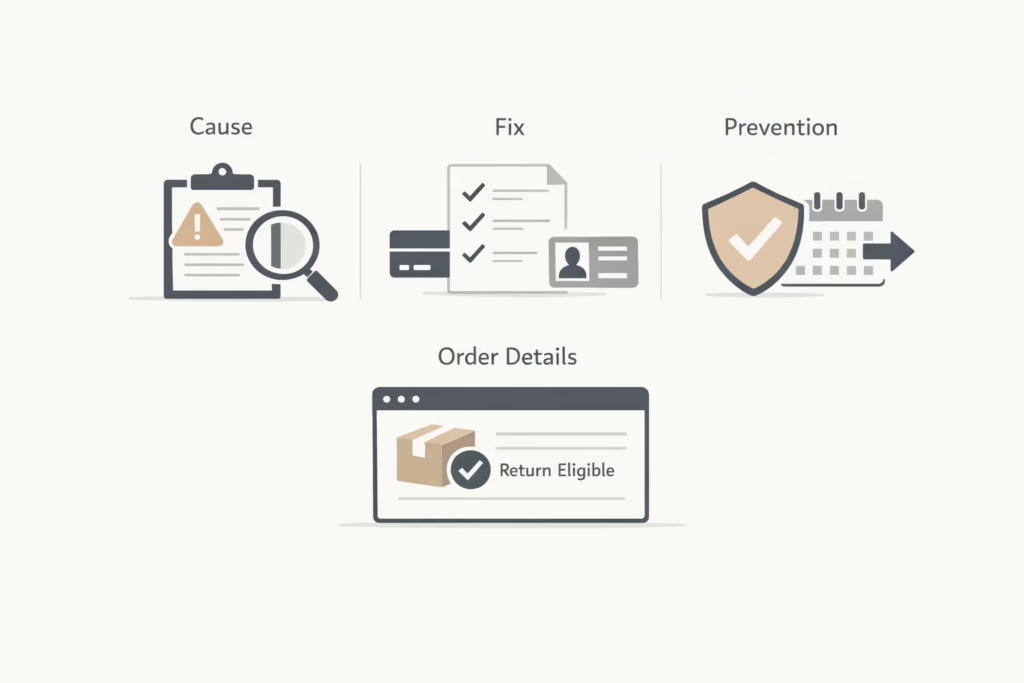
A strong appeal usually covers three points, clearly and directly:
- The likely cause: Show that you understand what triggered the suspension, even if Amazon did not spell it out.
- What has been fixed: Explain the specific action you took. Updated payment details, verified identity, adjusted return behavior, or improved account security.
- How it will be avoided: Describe what will change going forward so the same issue does not repeat.
This approach matters even if you believe the suspension was a mistake. Amazon prioritizes risk reduction, not debate.
Writing an Effective Appeal Without Overexplaining
An appeal does not need to be long to be effective. In fact, shorter and more focused messages tend to work better.
Stick to facts and actions. Avoid blaming Amazon, your bank, delivery services, or third parties. Do not speculate or guess wildly. Only address what you can reasonably support.
Match your explanation to the issue:
- If it was payment-related, confirm billing information was updated and verified.
- If it involved suspicious activity, explain changes to login habits or security settings.
- If it was tied to returns or refunds, acknowledge the pattern and explain how behavior will change.
Tone matters more than perfect wording. Calm, professional language signals cooperation and reliability.
How Long Reinstatement Usually Takes
Amazon often replies to appeals within one to two days, but full resolution can take longer depending on the case.
Some accounts are restored quickly after basic verification. Others require additional documents or follow-up reviews. In a small number of cases, Amazon decides not to reinstate the account.
To avoid delays, follow instructions exactly and respond only when requested. Repeated messages or unnecessary updates rarely speed things up.
Actions That Can Hurt Your Chances During Review
Certain mistakes almost always make reinstatement harder.
Creating duplicate buyer accounts is a serious violation. Changing names, addresses, or payment methods while the review is ongoing can look like an attempt to bypass controls. Sending multiple appeals with different explanations creates inconsistency.
Amazon values stability and predictability during review. Patience is not optional. Consistency is often what determines the outcome.
Preventing Future Buyer Account Suspensions
While no system is perfect, certain habits reduce risk significantly.
Keep account information accurate and stable. Use verified payment methods. Avoid excessive returns. Be cautious with gift cards. Use secure, consistent login environments.
If you travel frequently or use VPNs, expect occasional verification requests and respond promptly.
The goal is not perfection, but predictability.
Buyer Accounts and Seller Accounts Are Not Separate Worlds
If you sell on Amazon, your buyer behavior still matters.
Buyer account suspensions can affect seller privileges, even if your seller metrics are clean. Amazon views the account holder as a single entity across roles.
Treat buyer activity with the same care you would give seller operations.
When a Suspension Becomes Permanent
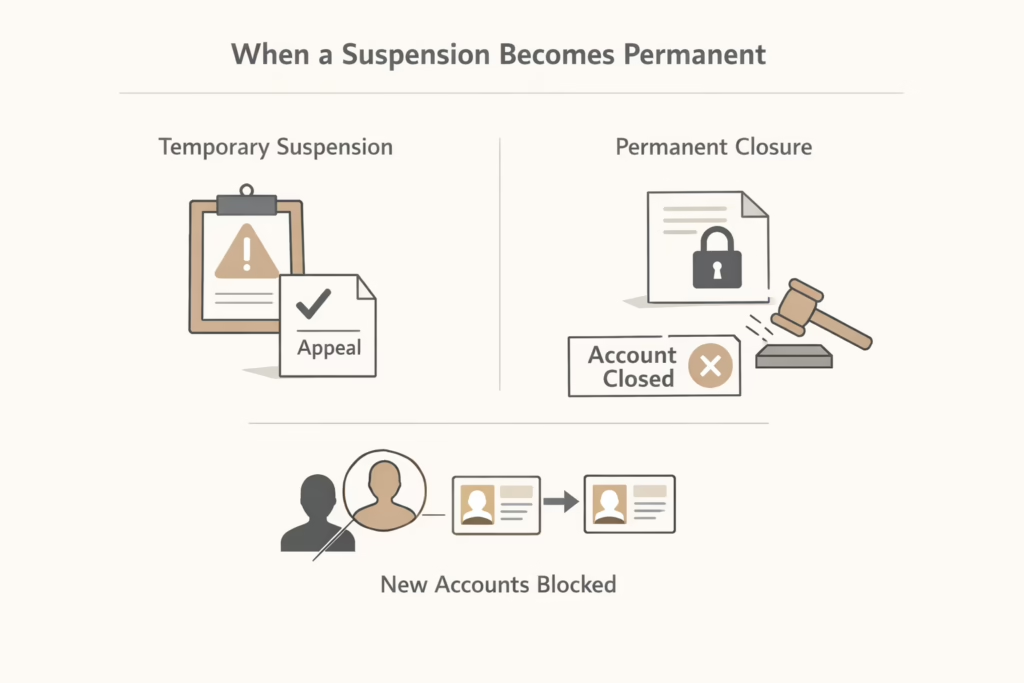
Not all suspensions are reversible.
Repeated violations, serious fraud signals, or failure to respond properly can lead to permanent closure. In those cases, Amazon usually states that the decision is final.
At that point, creating new accounts using the same information is likely to fail.
Wrapping It Up
An Amazon buyer account suspension is not the end of the world, but it does require a measured response. Most suspensions are triggered by patterns rather than single mistakes. Most are also preventable.
Understanding how Amazon thinks about risk, security, and compliance makes the situation easier to navigate. Calm analysis beats panic every time.
If you treat the suspension as a system problem rather than a personal attack, your chances of resolution improve significantly.
FAQ
What causes an Amazon buyer account suspension most often?
Most suspensions are triggered by patterns rather than a single action. Common reasons include unusual login activity, payment problems, frequent returns or refunds, gift card verification issues, or multiple buyer accounts linked to the same details. Amazon’s systems look at overall behavior over time.
Is an Amazon buyer account suspension permanent?
Not always. Many buyer account suspensions are temporary and can be resolved after verification or a successful appeal. Permanent suspensions usually happen when there are repeated violations, serious fraud signals, or when required information is not provided.
Will Amazon tell me exactly what I did wrong?
In most cases, no. Amazon usually provides a general explanation, such as suspicious activity or payment issues, without naming the exact trigger. This is part of how their security system works and is fairly standard.
How long does it take to get a suspended buyer account reinstated?
Amazon often responds to appeals within 24 to 48 hours, but full reinstatement can take longer. Some cases are resolved quickly after verification, while others may require additional reviews or documents.
Can I create a new buyer account if my account is suspended?
This is strongly discouraged. Creating a new account using the same personal, payment, or device information can lead to further restrictions. In many cases, it makes the situation worse and reduces the chance of reinstating the original account.