
At first glance, Amazon feels simple. You click Buy, get a confirmation, and assume the payment is done. But if you’ve ever checked your bank app and wondered why the charge hasn’t appeared, or why it showed up days later, you’re not imagining things.
Amazon does not always charge your card the moment you place an order. In most cases, the timing depends on who sells the item, whether it’s ready to ship, and how the order is fulfilled. Sometimes you’ll see a temporary hold. Sometimes nothing at all, until shipping starts.
This article walks through how Amazon’s payment timing actually works in real life. No policy jargon. Just what happens after checkout, why it happens that way, and how to tell when money is really leaving your account.
The Core Rule Amazon Follows
The simplest rule to remember is this:
Amazon usually charges you when an item ships, not when you place the order.
That single idea explains most situations people find confusing. But there are layers underneath it, and those layers matter.
When you click Buy Now or Place Order, Amazon does not immediately take your money. Instead, it checks whether your payment method is valid and whether the funds are available. This step is called an authorization, not a charge.
An authorization is a temporary hold placed by your bank. It tells Amazon, yes, this card works and the money should be there later. The funds are reserved, but they have not been collected.
The actual charge usually happens only when Amazon confirms that the item is about to leave the warehouse.
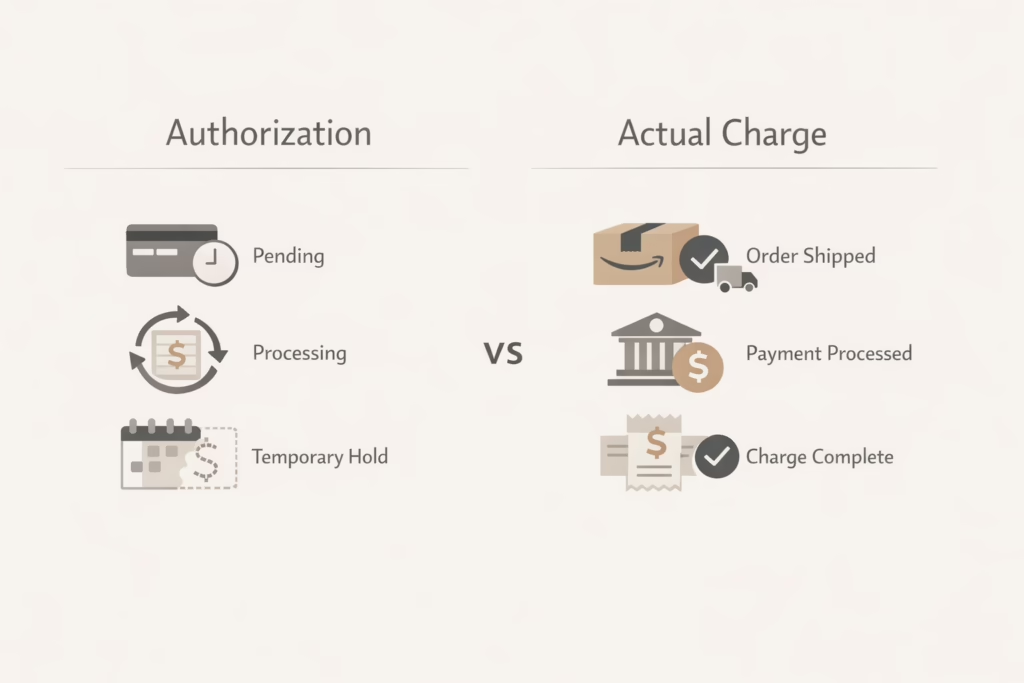
Authorization vs Actual Charge
This distinction is where most confusion starts.
What an Authorization Really Means
An authorization is a signal, not a payment. Your bank sets aside the amount temporarily, often marking it as pending. No money is transferred to Amazon at this stage.
Depending on your bank, you may see:
- A pending charge
- A processing transaction
- A temporary hold that disappears after a few days
If the order does not ship, the authorization expires and the hold is released. That is why you may see money appear to leave your account and then return without explanation.
When the Real Charge Happens
The real charge occurs when Amazon notifies your bank that the order has shipped or is in the final stage of shipping preparation. At that point, the pending authorization becomes a completed transaction.
This timing protects you from being charged for items that are delayed, canceled, or unavailable.
Why Amazon Does Not Charge Immediately
This is not just a convenience choice. It is closely tied to consumer protection rules and the realities of large-scale logistics.
Retailers are generally discouraged from charging customers before an item ships unless the customer clearly agrees to it. Amazon builds its payment system around that principle. Instead of taking money upfront, it waits until there is real certainty that the order can be fulfilled.
There are also practical reasons behind this approach. Inventory levels can change after an order is placed. Some orders end up being split into separate shipments. Items may go out of stock unexpectedly, and shipping timelines can shift due to warehouse or carrier issues. Charging only when items are ready to ship helps Amazon avoid unnecessary refunds, reduces payment disputes, and lowers frustration for customers who would otherwise be billed for orders that are delayed or canceled.
Orders Sold and Shipped by Amazon
When Amazon is both the seller and the shipper, the process is consistent.
What Usually Happens
- You place the order
- Amazon authorizes your payment method
- The order sits in preparing status
- When shipping begins, your card is charged
If an item never ships, you are not charged.
Why This Matters
This is why you might place an order on Monday and not see a charge until Wednesday or Thursday. The delay is not a mistake. It simply means the item has not entered the shipping stage yet.
Orders from Third-Party Marketplace Sellers
This is where payment behavior can vary.
Amazon Marketplace sellers operate under Amazon’s general rules, but they are given more flexibility when it comes to charging customers. Unlike items sold directly by Amazon, marketplace sellers can decide when they collect payment based on how they run their business.
Two Common Approaches
In practice, there are two common ways third-party sellers handle payments. Some sellers follow Amazon’s standard approach and charge customers only when the item ships. Others choose to charge immediately after checkout, even if the order will not be shipped right away. Both approaches are allowed within Amazon’s marketplace framework.
Because of this, the timing of your charge may depend entirely on who you are buying from, even when product pages appear almost identical at first glance.
How to Spot the Difference
There are a few signals that can suggest a seller may charge earlier than Amazon does. Items that are not Prime eligible often fall into this category. Vague or unusually long shipping timelines can also be a sign, especially when the seller handles fulfillment themselves rather than using Amazon’s warehouses. In some cases, the product page may reference shipping or payment policies that differ from Amazon’s standard terms.
Amazon usually shows a notice during checkout if a seller charges before shipment, but it is still worth paying attention, particularly when purchasing from sellers you have not used before.
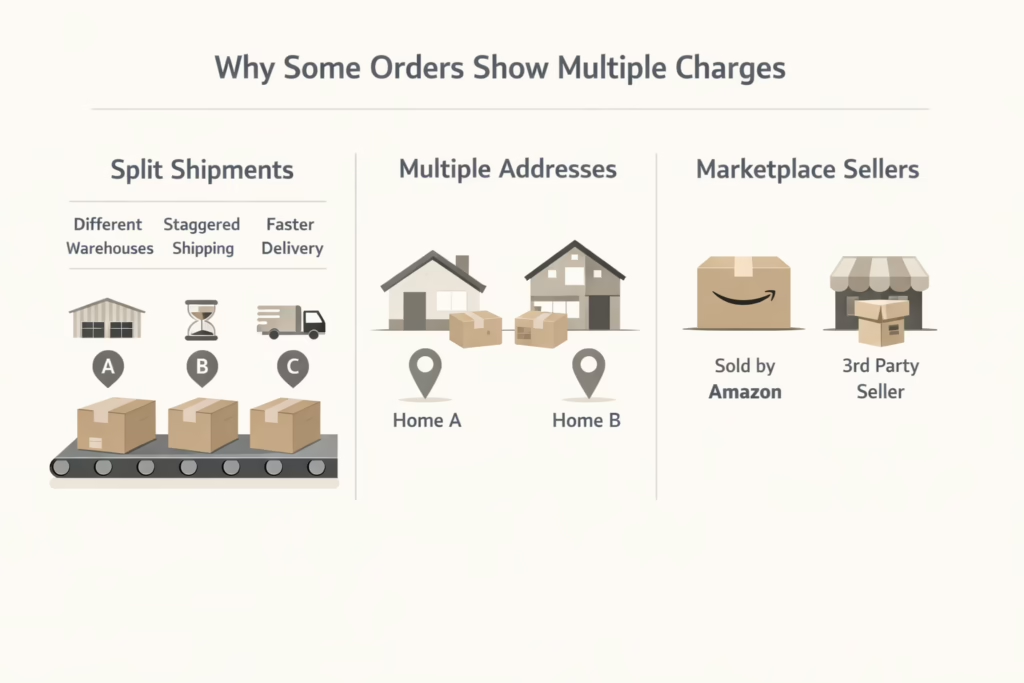
Why Some Orders Show Multiple Charges
Seeing multiple charges for a single order is one of the most common reasons people contact customer support.
In most cases, nothing is wrong.
Split Shipments
Amazon often ships items separately, even if you placed one order. Reasons include:
- Items come from different fulfillment centers
- Some items are available sooner than others
- You selected faster shipping for available items
Each shipment triggers its own charge. The total will still match your order amount, but it appears in parts.
Multiple Delivery Addresses
If you send items to different addresses, Amazon treats them as separate shipments and charges accordingly.
Marketplace Combinations
If your order includes items sold by Amazon and items sold by third-party sellers, charges may be split based on who ships what.
Debit Cards vs Credit Cards
The type of card you use affects how charges appear, even if the timing logic is the same.
Debit Cards
Debit cards pull money directly from your bank account. When an authorization is placed, your available balance may decrease immediately.
This makes debit card users more likely to notice authorizations and think they have been charged.
Credit Cards
Credit cards show pending charges without affecting your cash balance. The final charge appears later on your statement.
This difference is visual, not functional. The underlying process is the same.
Gift Cards and Amazon Balance
Amazon gift cards behave differently from credit and debit cards.
When you use a gift card balance to pay for an order, the amount is deducted immediately at checkout. There is no authorization phase, because the funds already belong to your Amazon account. Once the order is placed, the balance reduction is final at that moment.
If the order is later canceled, Amazon restores the amount back to your gift card balance rather than returning it to a bank or card. This immediate deduction often surprises people who expect the same shipping-based payment logic used for card payments, but gift cards follow a simpler, more direct system.
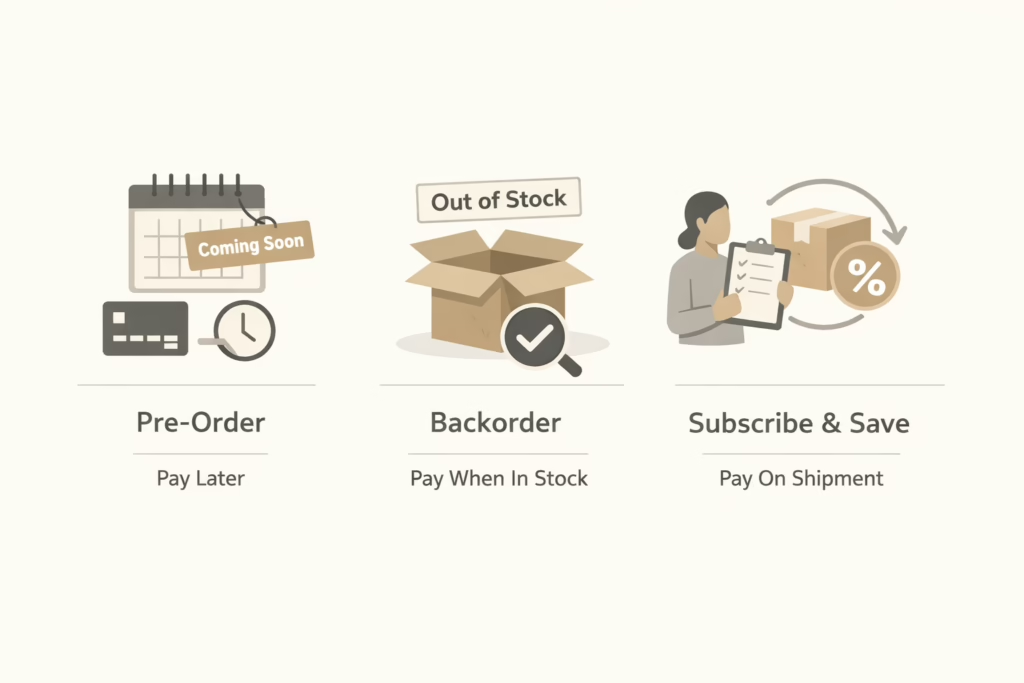
Special Order Types and When Amazon Charges You
Not all Amazon orders follow the same timeline. Pre-orders, backorders, and Subscribe and Save purchases each have their own payment logic, but they all share one core idea: Amazon tries to avoid charging you until an item is actually ready to ship.
Pre-Orders
Pre-orders follow one of the clearest and most predictable rules in Amazon’s system.
When you place a pre-order, Amazon does not charge your payment method immediately. You may see a temporary authorization, but no real charge is collected at checkout. The actual charge happens closer to the release date, when the order enters shipping preparation and Amazon is ready to send the item.
Until that point, you can cancel the pre-order at any time without being charged. This approach exists because pre-orders often sit for weeks or even months. Charging customers at checkout would tie up funds for long periods and increase refund complexity if plans change.
Backorders
Backorders apply to items that are temporarily out of stock but expected to return.
When you place a backorder, Amazon does not charge you at checkout. As with other orders, an authorization may appear, but no money is taken. The charge only happens once the item is back in stock and the shipping process begins.
If the item never restocks and the order is canceled, you are not charged. This ensures you do not pay for products that never actually ship, even if the order remains open for some time.
Subscribe and Save Orders
Subscribe and Save may look like a traditional subscription, but the payment timing works differently.
You are not charged when you set up a Subscribe and Save item. Instead, Amazon notifies you before each scheduled shipment, giving you time to review the order. You can modify quantities, skip a delivery, delay it, or cancel the item entirely before it ships.
The charge only happens when the shipment actually ships. This setup gives you flexibility and control, even though the order repeats automatically, and helps prevent unexpected charges for items you no longer need.
Why You Might See a Charge and Then Nothing
This situation usually comes down to how authorizations work.
When you place an order, Amazon may request an authorization from your bank to confirm that your payment method is valid. That authorization can expire if the order is delayed, if shipment timing changes, or if the item does not move into the shipping stage as quickly as expected. In some cases, bank processing delays can also cause a pending charge to disappear temporarily.
Seeing a charge appear and then vanish does not mean something went wrong. Most of the time, it simply means the item has not shipped yet and the authorization was released. Once the order is ready to ship, a new authorization or the final charge will appear.
Unknown or Unexpected Charges
If you notice a charge you do not immediately recognize, it is often related to something familiar rather than an error.
Common causes include a Prime membership renewal, a digital service subscription such as video or music, or an authorization that looks like a completed charge. Another frequent reason is a split shipment from an older order, where part of the order shipped later and triggered its own charge.
Amazon’s transaction history usually links each charge to a specific order number. Checking that page is often the fastest way to understand what the charge is for and when it occurred.
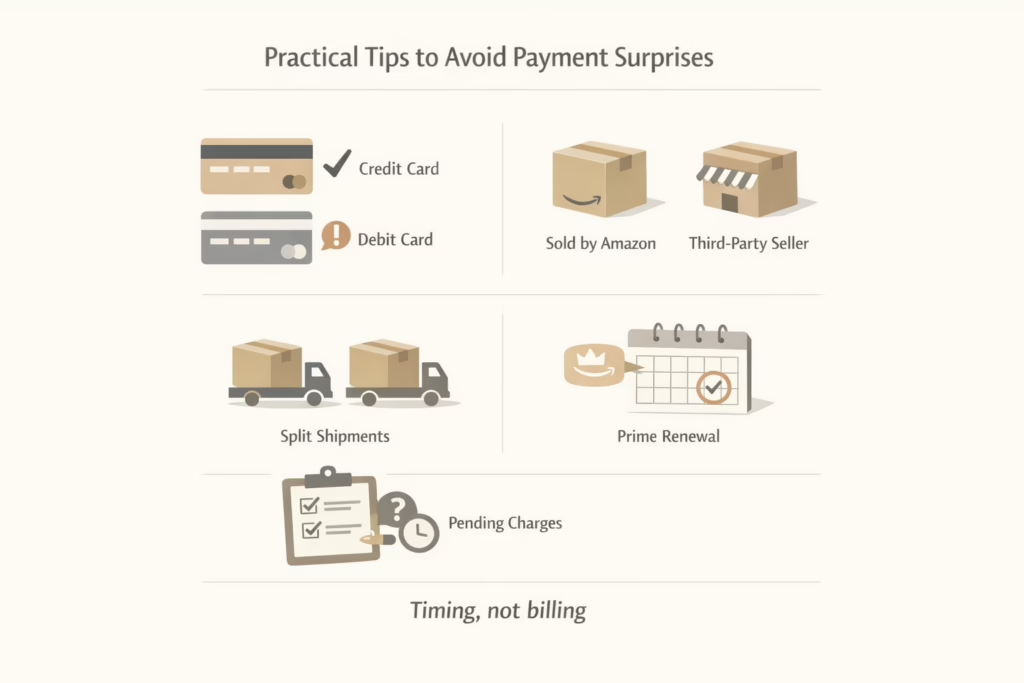
Practical Tips to Avoid Payment Surprises
A few simple habits can make Amazon’s payment timing much easier to understand:
- Use a credit card instead of a debit card when possible. Debit cards tend to show authorizations more clearly, which can make it feel like money has already been taken when it has not.
- Check the order details to see who is selling the item. Products sold by Amazon and those sold by marketplace sellers can follow different charging timelines.
- Watch for split shipments. If items ship separately, charges often appear separately as well, even though the total stays the same.
- Keep an eye on your Prime renewal dates. Subscription charges follow a fixed schedule and are a common source of unexpected payments.
- Do not panic over pending charges. In most cases, these are temporary authorizations that either finalize when the item ships or disappear if the order changes.
Most Amazon payment surprises are caused by timing, not billing errors.
Final Thoughts
Amazon’s payment system can feel opaque, but it follows a clear internal logic. Charges are tied to shipment, not intention. Authorizations are placeholders, not withdrawals. And multiple charges usually reflect multiple shipments, not overbilling.
Once you understand that structure, most confusion disappears.
If you know when items ship, you know when Amazon takes payment.
Frequently Asked Questions
When exactly does Amazon charge my card for an order?
In most cases, Amazon charges your card when the item ships or enters final shipping preparation. You usually are not charged at checkout, even though you may see a temporary authorization.
Why do I see a pending charge but no completed payment?
That pending amount is usually an authorization, not a real charge. Amazon uses it to confirm that your payment method works and that funds are available. If the order does not ship right away, the authorization may disappear and be replaced later when shipping begins.
Does Amazon ever charge immediately at checkout?
Yes, in some situations. Digital products, gift card purchases, Prime memberships without a free trial, and some third-party marketplace orders may be charged immediately. For physical items sold directly by Amazon, charging usually waits until shipping.
Why was my order charged in multiple smaller amounts?
This typically happens when your order ships in separate packages. Each shipment triggers its own charge. The total amount still matches your original order, but it appears as multiple transactions instead of one.