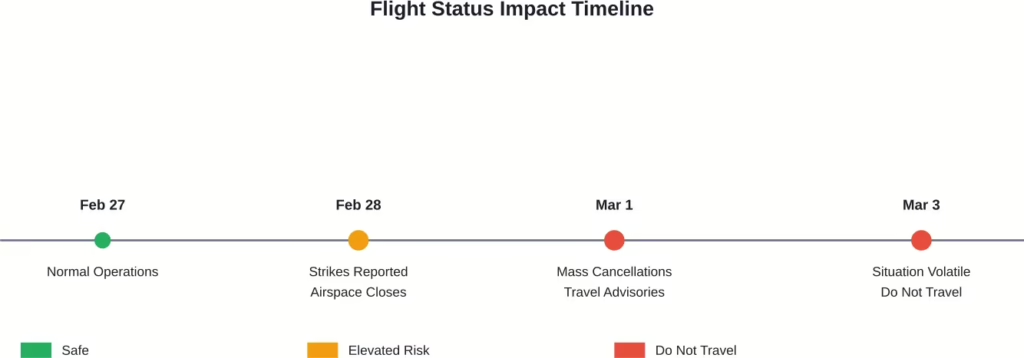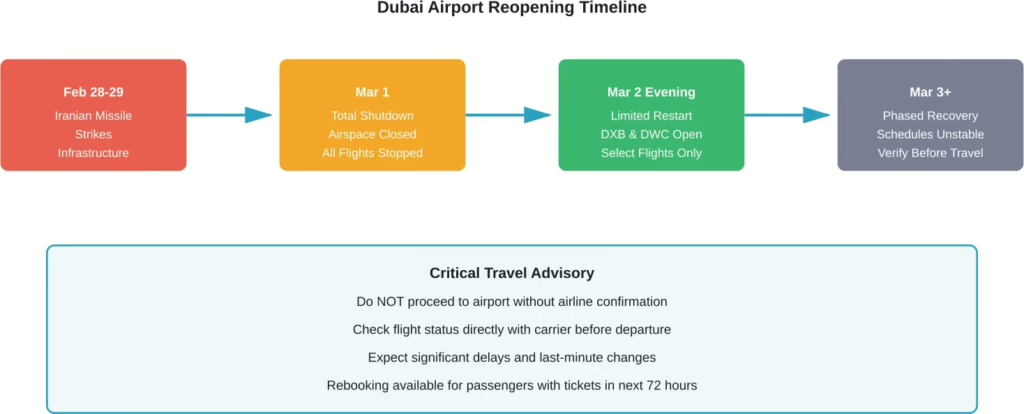

Executive Summary: On March 3, 2026, Dubai and Abu Dhabi airports resumed limited flight operations after a multi-day suspension caused by regional airspace closures linked to escalating US-Israel-Iran tensions. Emirates, Etihad, flydubai, and Air Arabia began operating select flights, though disruptions continued with Air Arabia suspending services until 3pm that day. Stock markets remained closed, and authorities maintained heightened safety protocols as the Middle East crisis entered its third day.
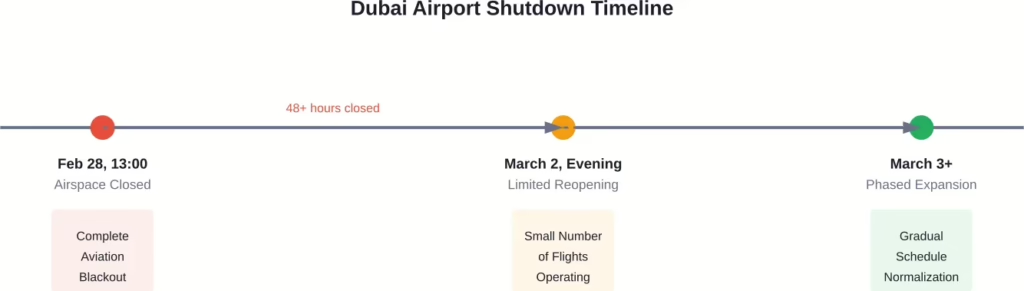
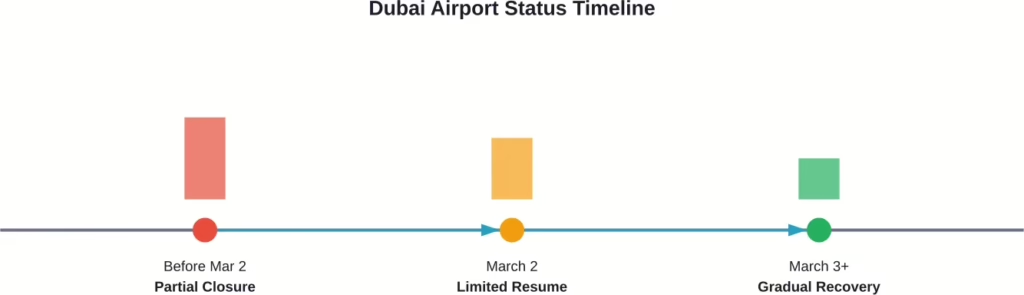
March 3, 2026 marked a turning point for Dubai as the city began emerging from one of the most significant aviation disruptions in recent memory. After days of complete flight suspensions triggered by regional airspace closures, Dubai International Airport and Dubai World Central International Airport initiated limited operations late on March 2, with select flights operating throughout March 3.
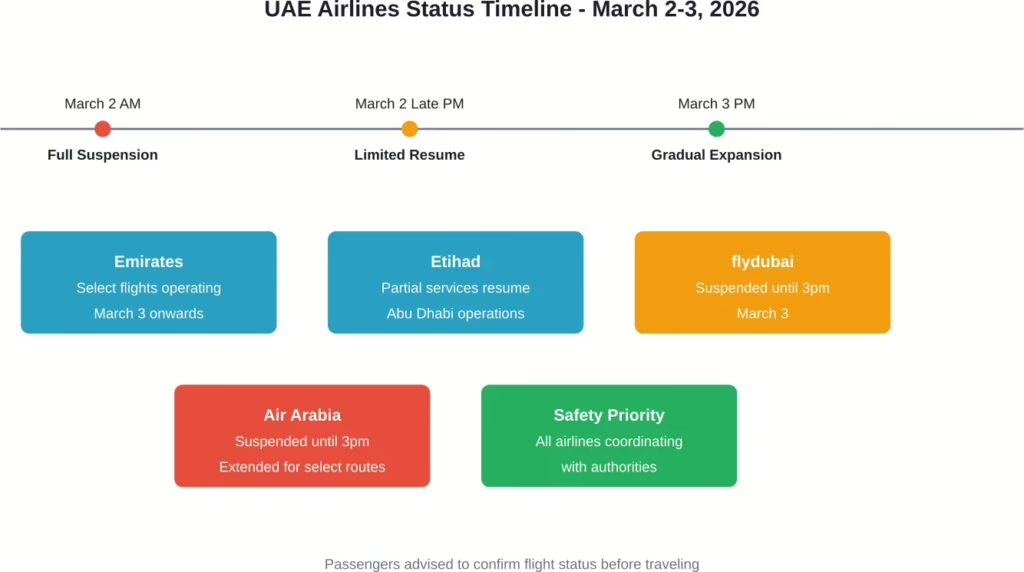
The situation remained fluid. While Emirates and flydubai began operating specific routes, Air Arabia temporarily suspended all flights to and from the UAE until 3:00 pm UAE time on Wednesday, March 4, 2026. Extended suspensions for flights to Lebanon, Jordan, Syria, and Iraq remained in place until March 5. The UAE aviation sector prioritized safety above all else as regional tensions continued to affect Middle East airspace.
Aviation Operations Resume With Restrictions
Dubai’s two major airports—Dubai International Airport (DXB) and Dubai World Central International Airport (DWC)—started limited operations on late Tuesday night, March 2, carrying into March 3. But this wasn’t business as usual.
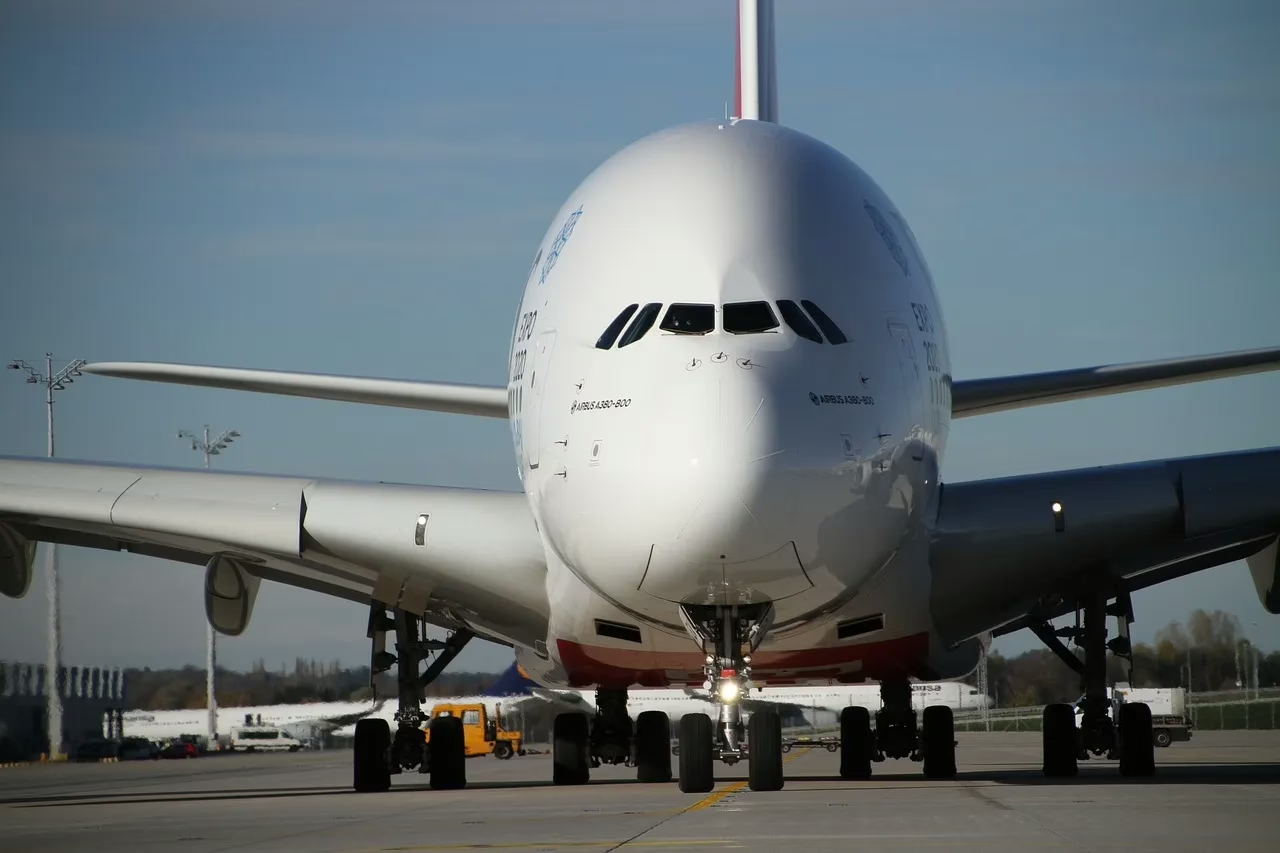
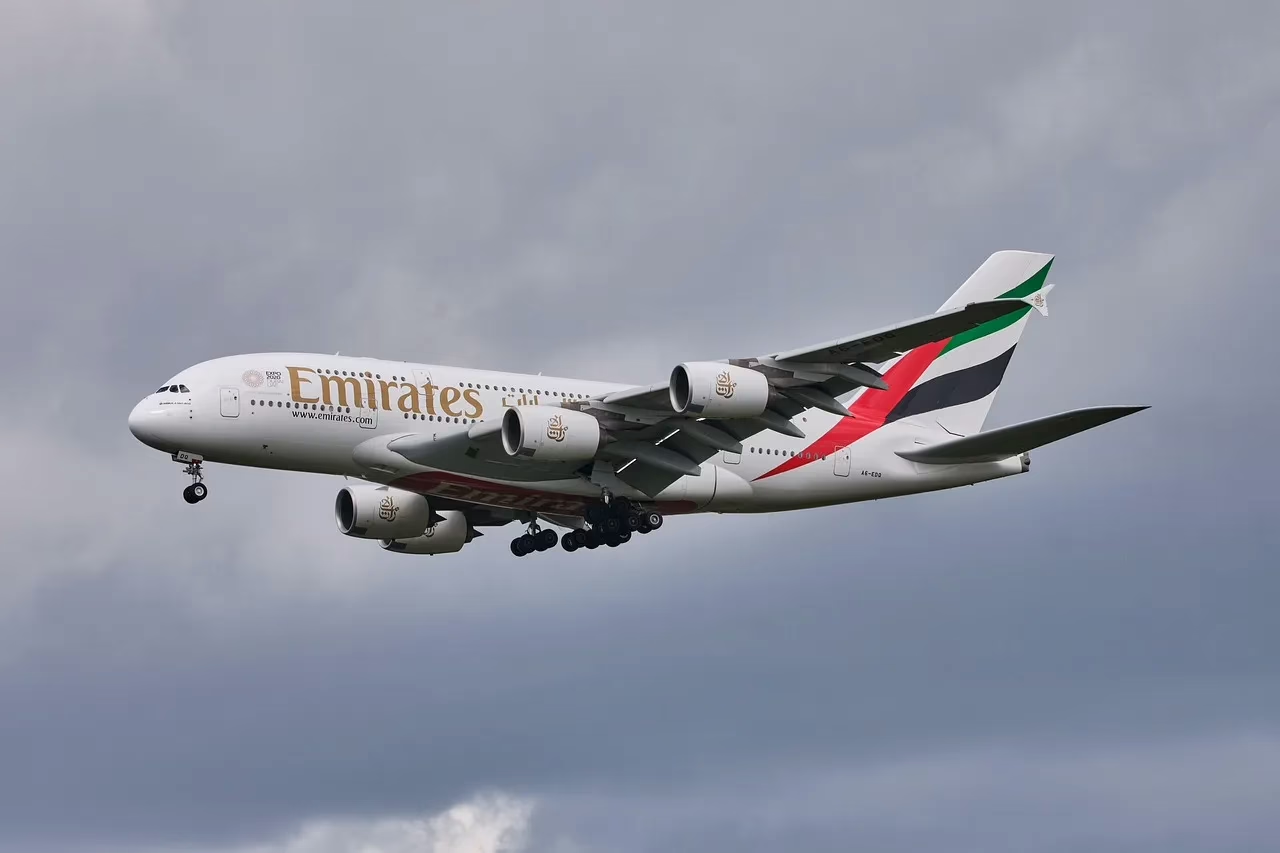
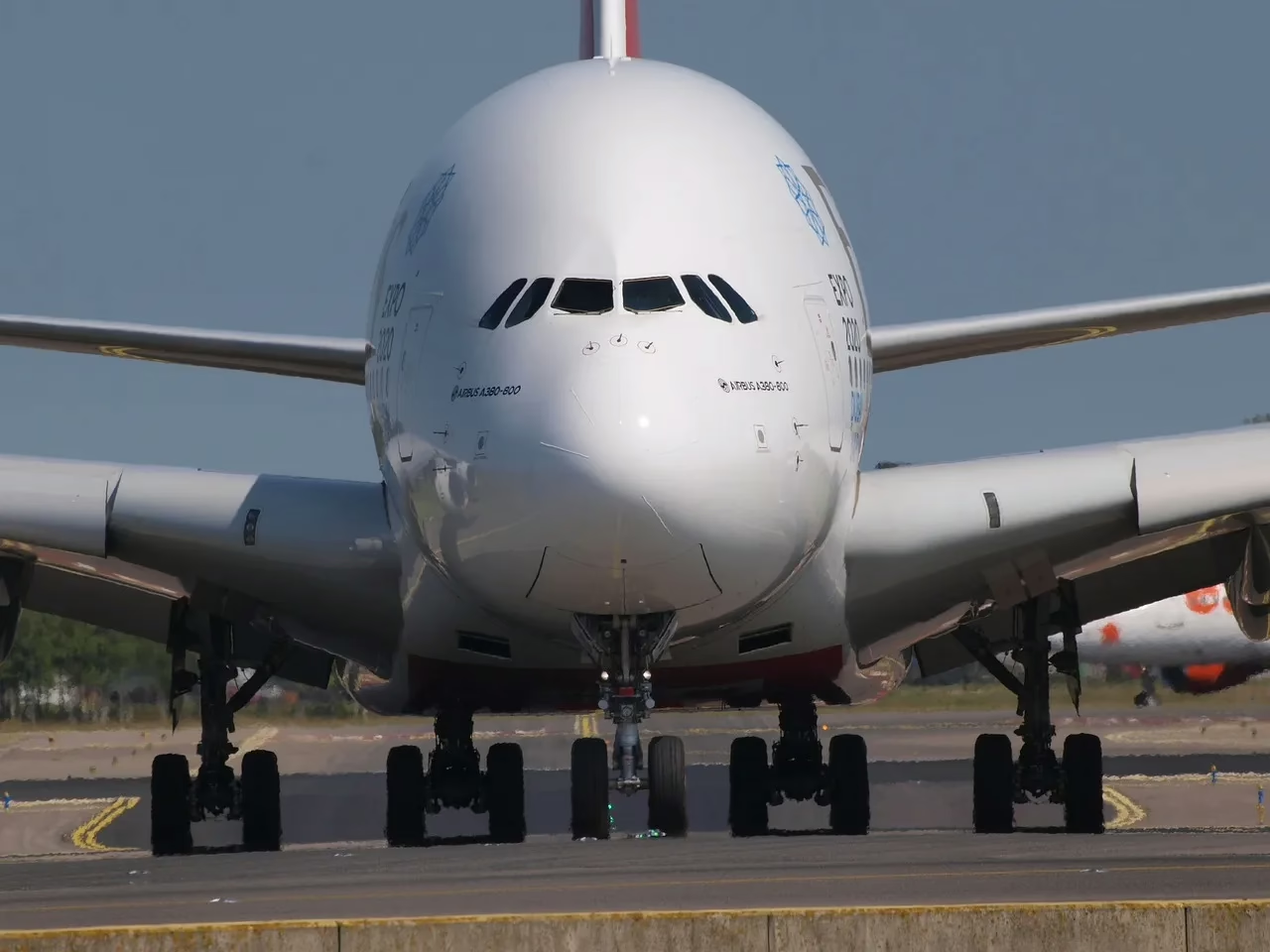
Emirates, the UAE’s flagship carrier, began operating select flights after extending its suspension multiple times. The airline had initially suspended all Dubai flights, then extended that suspension as regional conditions deteriorated. According to official statements, Emirates actively monitored the evolving situation and coordinated with aviation authorities to determine which routes could safely operate.
Etihad Airways followed a similar pattern, resuming partial services from Abu Dhabi. The airline began operating limited flights, with at least one Abu Dhabi flight landing in India as operations gradually normalized.
Airline-Specific Status on March 3
Each major UAE carrier faced different operational constraints on March 3. Flydubai extended its Dubai flight suspension until 3pm Tuesday, citing the ongoing situation affecting regional airspace. The airline’s contact center experienced high call volumes as thousands of passengers sought rebooking options.
Air Arabia took the most conservative approach, suspending all flights to and from the UAE until 3:00 pm UAE time on Wednesday, March 4, 2026. Flights to particularly sensitive destinations—Lebanon, Jordan, Syria, and Iraq—remained grounded until March 5, reflecting heightened safety concerns for those specific routes.
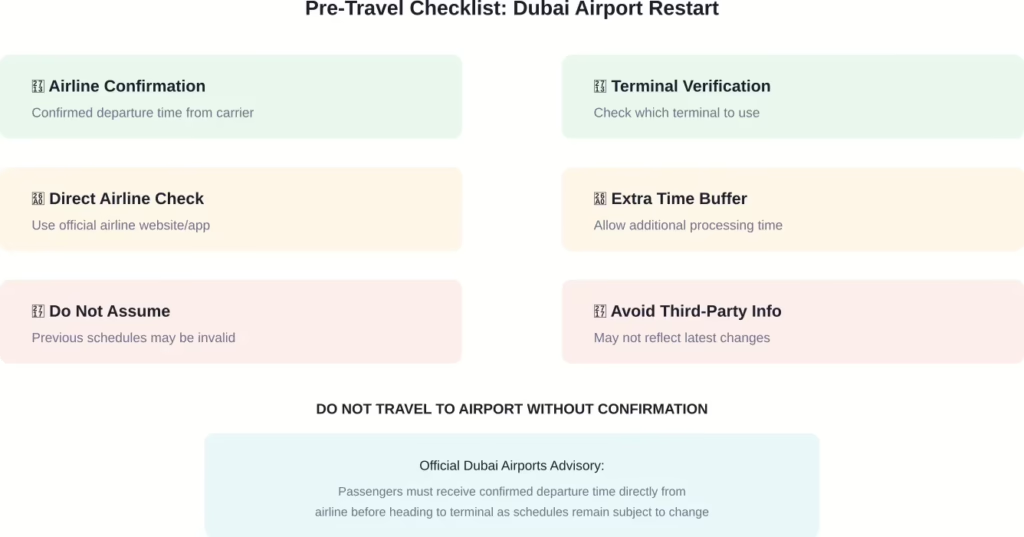
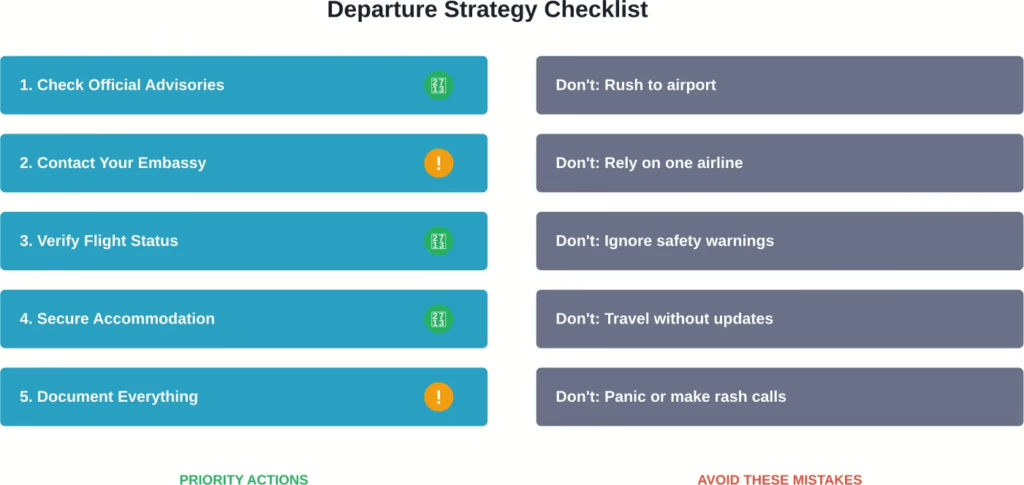
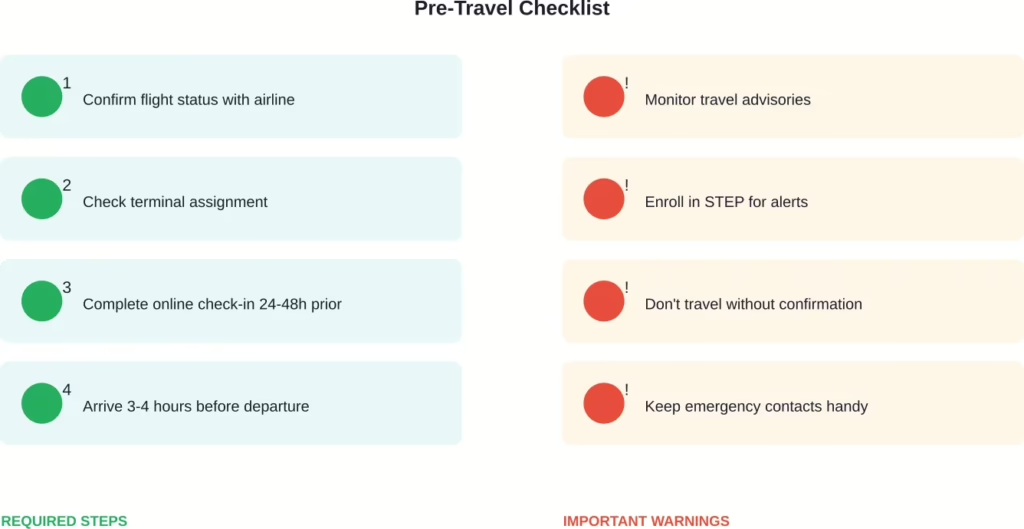
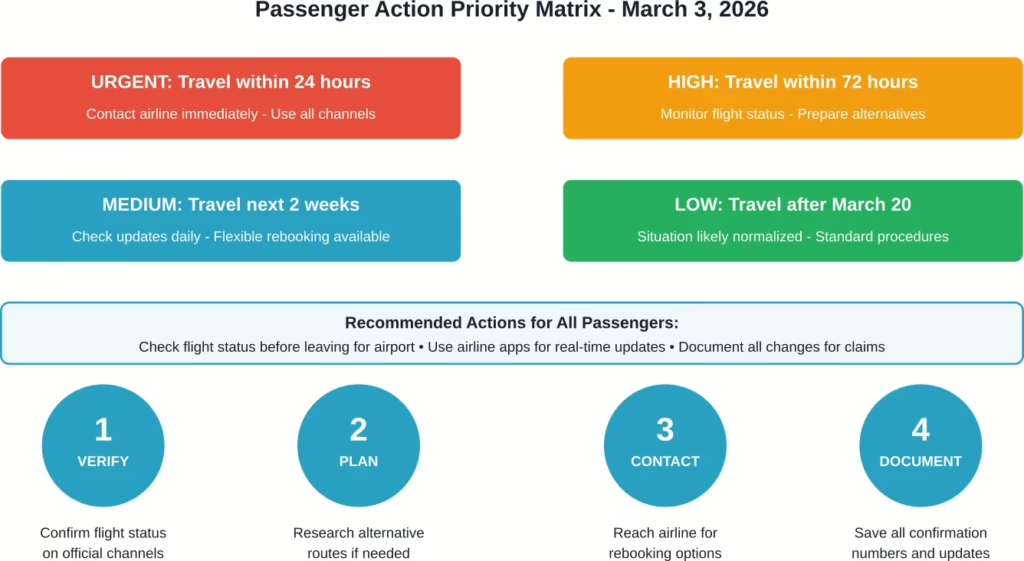
Passengers booked to travel within 72 hours received priority assistance, though airline contact centers struggled with unprecedented demand. The recommendation was clear: confirm flight status directly with airlines before heading to airports to avoid congestion and disappointment.
Why Did Dubai’s Airports Shut Down?
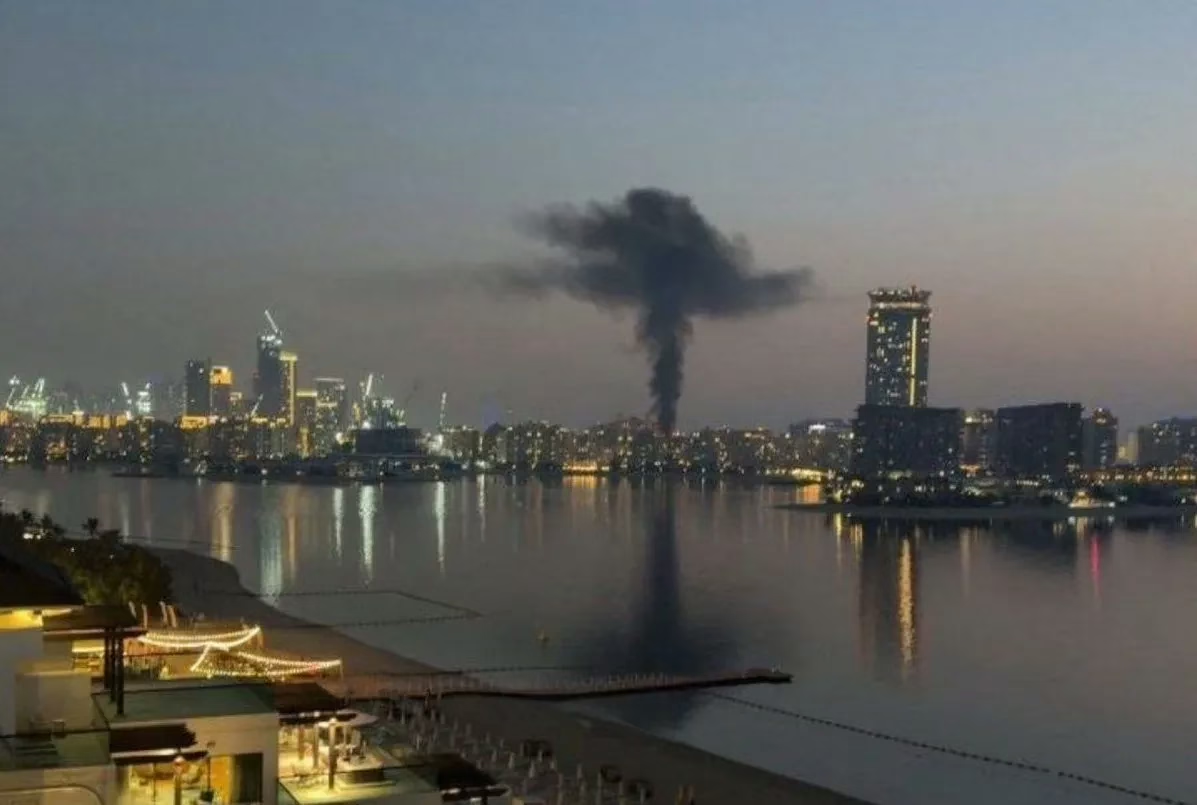
The suspension wasn’t a Dubai-specific decision. Regional airspace closures triggered by escalating US-Israel-Iran tensions forced the hand of UAE aviation authorities. The Middle East crisis entered its third day on March 3, with rising tensions affecting multiple countries across the region.
Safety remained the top priority. UAE authorities coordinated closely with airlines to minimize passenger inconvenience while ensuring no flights operated through potentially compromised airspace. The situation was serious enough that the US urged Americans to immediately depart more than a dozen countries in the Middle East.
According to Gulf News reports, the conflict involved direct military actions that necessitated airspace restrictions. While specific operational details remained closely held by authorities, the scope of the disruption indicated significant regional security concerns.
The Broader Regional Impact
Dubai didn’t face this crisis alone. The airspace closures affected the entire Gulf region, with implications for international aviation networks. Middle East airspace serves as a critical corridor for flights between Europe, Asia, and Africa—shutting it down created ripple effects worldwide.
The Iranian strikes mentioned in authoritative sources added another layer of complexity. Regional tensions reached levels that prompted stock market closures and heightened diplomatic activity across the Gulf.
Stock Markets and Business Operations
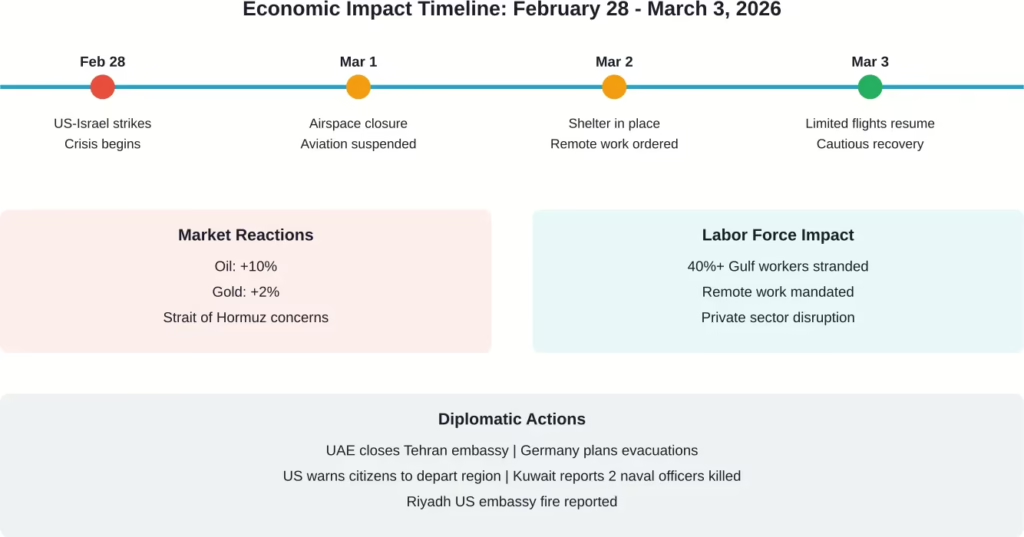
The Abu Dhabi Securities Exchange and Dubai Financial Market extended their shutdown through March 3 due to the ongoing regional situation. The Abu Dhabi Securities Exchange has more than 100 listed companies, making the closure a significant pause in Gulf financial activity.
Authorities emphasized that this was a precautionary measure. The exchanges would resume operations once conditions normalized, with officials monitoring the situation continuously to determine the appropriate reopening time.
But here’s the thing—while financial markets paused, many other business operations in Dubai continued. The emirate’s reputation as a regional business hub meant maintaining as much normalcy as possible even during crisis conditions.
| Sector | Status on March 3, 2026 | Expected Normalization |
|---|---|---|
| Aviation | Limited operations resumed | Gradual expansion dependent on regional conditions |
| Stock Markets | Closed through March 3 | Monitoring for safe reopening window |
| General Business | Operational with precautions | Continued operations with heightened awareness |
| Tourism & Hospitality | Open but affected by travel restrictions | Recovery tied to aviation normalization |
Dubai’s Response and Crisis Management
His Highness Sheikh Mohammed bin Rashid Al Maktoum, Vice President, Prime Minister and Ruler of Dubai, maintained a visible presence during the crisis period. On March 1, 2026, he attended the Emirates Super Saturday at Meydan Racecourse—an event that took place one month ahead of the 30th edition of the Dubai World Cup scheduled for March 28.
This public appearance sent a message: Dubai remained functional and resilient despite regional challenges. The decision to proceed with major events demonstrated confidence in the emirate’s security and crisis management capabilities.
Dubai’s authorities coordinated across multiple government entities to manage the situation. The approach balanced caution with the practical need to maintain the emirate’s position as a regional hub for business, tourism, and transit.
Communication Strategy
Official channels provided regular updates throughout the crisis. The protocol.dubai.ae website served as a primary source for government announcements, while airlines maintained direct communication with affected passengers.
Gulf News and other regional media outlets published frequent updates, creating a stream of information that helped residents and visitors understand the evolving situation. The “live updates” format became standard, with new information posted as conditions changed.
Passenger Impact and Rebooking Options
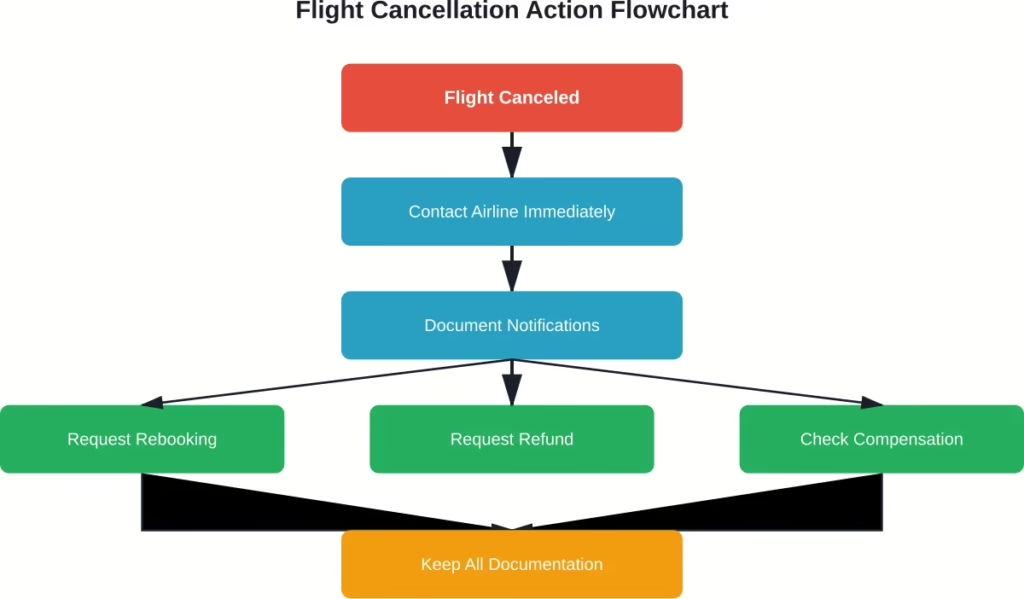
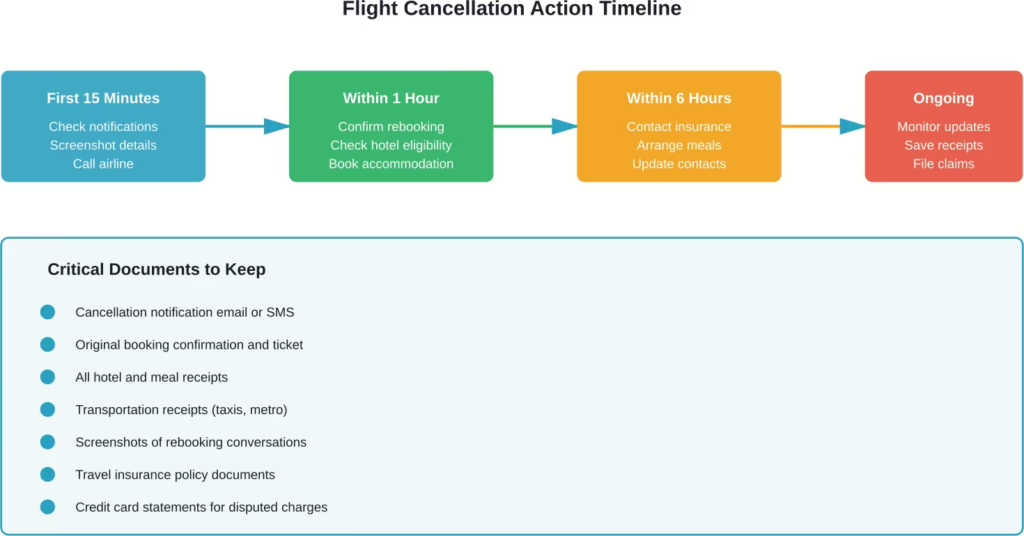
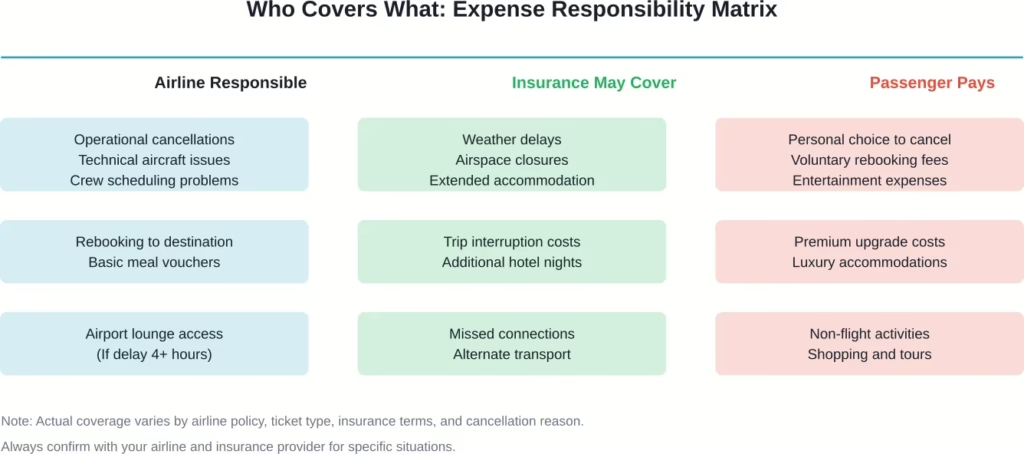
Thousands of passengers worldwide found their travel plans disrupted. Emirates offered rebooking options to the same destination on or before March 20, giving affected travelers flexibility to reschedule.
The challenge was volume. With days of accumulated cancellations, airline contact centers couldn’t handle the flood of calls. Passengers booked within the next 72 hours received priority, but wait times stretched to hours for many trying to reach airline representatives.
Smart passengers used digital channels—airline apps and websites—to check flight status and explore rebooking options without waiting on hold. But for complex itineraries or special circumstances, speaking with an agent remained necessary.
What Changed After March 3?
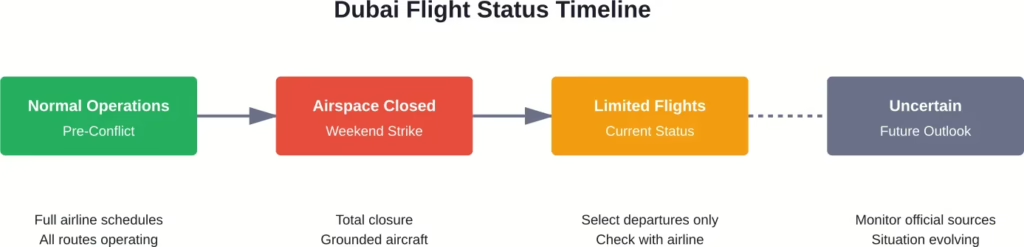
March 3 represented a transition point, not an immediate return to normal. Limited operations meant exactly that—select flights on specific routes, with the network expanding gradually as regional conditions allowed.
Air Arabia’s decision to keep flights suspended until 3pm on March 3, with extended restrictions on Middle Eastern destinations until March 5, showed that different airlines assessed risk differently. Some took more conservative approaches based on their specific route networks and operational considerations.
The stock markets remained closed through March 3, suggesting financial authorities wanted clear stability before resuming trading. This conservative approach made sense given the volatility regional tensions could introduce to markets.
Looking Toward the Dubai World Cup
The 30th edition of the Dubai World Cup was scheduled for March 28—less than four weeks after the crisis began. This prestigious horse racing event attracts international visitors and represents a significant moment for Dubai’s tourism and sports sectors.
The fact that His Highness Sheikh Mohammed bin Rashid Al Maktoum attended the Emirates Super Saturday on March 1 signaled confidence that major events would proceed as planned. Dubai’s leadership clearly intended to maintain the emirate’s international calendar despite regional challenges.
International Reactions and Embassy Activities
The situation extended beyond aviation disruptions. Reports emerged of a fire at the US embassy in Riyadh, Saudi Arabia, following an explosion—though this occurred in the broader regional context rather than in Dubai specifically.
The US government’s advisory for Americans to depart more than a dozen Middle Eastern countries reflected the seriousness of the regional situation. These advisories affect tourism, business travel, and expatriate communities throughout the Gulf.
Dubai’s large expatriate population—which forms the majority of the emirate’s residents—monitored the situation closely. Many maintained connections to countries directly affected by the regional tensions, making this more than just a travel inconvenience.
Economic Implications for Dubai
Even a brief disruption to Dubai’s aviation sector carries significant economic weight. Dubai International Airport ranks among the world’s busiest airports for international passengers, serving as a critical hub connecting East and West.
Tourism accounts for a substantial portion of Dubai’s economy. Flight suspensions during peak travel periods translate directly to lost hotel bookings, restaurant revenue, retail sales, and entertainment spending. The timing—early March—falls within Dubai’s high season when weather attracts visitors from colder climates.
The business sector faced challenges too. Dubai positions itself as a regional headquarters location for multinational corporations. When executives can’t fly in or out, meetings get cancelled, deals get delayed, and the friction costs money.
| Economic Sector | Impact Level | Primary Concerns |
|---|---|---|
| Aviation & Logistics | Severe | Cancelled flights, cargo delays, crew positioning challenges |
| Tourism & Hospitality | High | Cancellations, refunds, reputation concerns for upcoming events |
| Retail & Entertainment | Moderate | Reduced foot traffic from tourists, local spending continues |
| Financial Services | Moderate | Market closures, transaction delays, currency volatility |
| Real Estate | Low | Short-term disruptions unlikely to affect property market fundamentals |
Safety Measures and Protocols
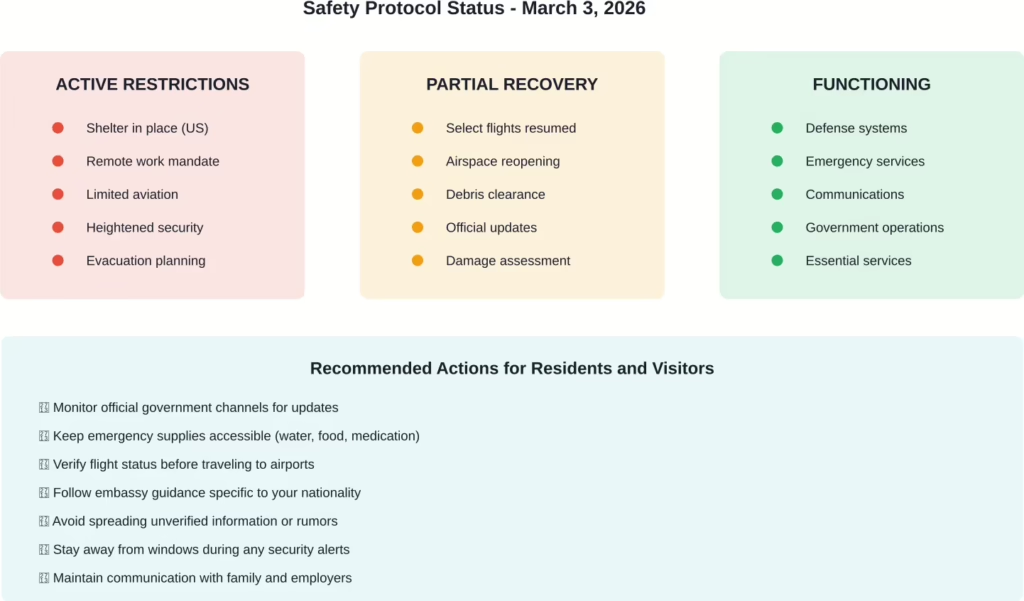
UAE authorities emphasized that safety and smooth service remained top priorities throughout the crisis. This wasn’t just rhetoric—the decision to suspend flights despite economic costs demonstrated genuine commitment to passenger and crew safety.
The gradual resumption approach reflected continued caution. Rather than immediately reopening all routes, authorities and airlines collaborated to identify which flights could operate safely and which needed to remain grounded.
Passengers experienced enhanced security measures and additional checks. The situation required heightened awareness across the entire aviation ecosystem, from air traffic control to ground handling to passenger screening.
Community Response and Resilience
Community discussions on social media and forums revealed how residents and visitors coped with the disruption. Some passengers found themselves stranded mid-journey, forced to wait in transit cities or return to origin points.
Others adapted by shifting to alternative transportation or simply postponing travel. The flexibility many airlines offered helped, though not everyone could easily adjust plans around work commitments or family obligations.
Dubai’s expatriate community showed the resilience that comes from navigating previous regional challenges. While concerning, the situation wasn’t unprecedented for those who’ve lived in the Gulf through various geopolitical tensions over the years.
Media Coverage and Information Flow
The “live updates” approach dominated media coverage, with outlets like Gulf News publishing rolling coverage that updated as new information became available. This created a steady information stream but also required readers to actively follow updates rather than reading a single definitive article.
Official government sources through protocol.dubai.ae provided authoritative announcements, though these typically contained less frequent but more substantial updates compared to media outlets.
The challenge for residents and visitors was filtering signal from noise—determining which sources provided reliable information versus speculation or outdated details. Official airline channels and government websites offered the most trustworthy data.
Frequently Asked Questions
Were Dubai airports completely closed on March 3, 2026?
No, Dubai airports were not completely closed on March 3. Dubai International Airport (DXB) and Dubai World Central (DWC) resumed limited operations late on March 2, carrying into March 3. Emirates and flydubai operated select flights, though Air Arabia kept services suspended until 3pm on March 3. The situation represented gradual resumption rather than full closure.
Why did UAE airlines suspend flights in early March 2026?
UAE airlines suspended flights due to regional airspace closures triggered by escalating US-Israel-Iran tensions. The Middle East crisis reached levels that made certain airspace unsafe or inaccessible for commercial aviation. UAE authorities prioritized passenger and crew safety, coordinating with airlines to suspend operations until conditions improved.
When did Emirates resume flights after the suspension?
Emirates began operating select flights as limited operations resumed at Dubai airports late on March 2, 2026, continuing through March 3. The airline had extended its suspension multiple times as the situation evolved, but started gradual resumption once authorities determined specific routes could operate safely. Full network restoration took longer, expanding progressively as conditions allowed.
Could passengers get refunds or rebooking for cancelled Dubai flights?
Yes, affected passengers had options. Emirates offered rebooking to the same destination on or before March 20 for passengers with cancelled flights. Airlines accommodated schedule changes, though contact centers experienced extremely high call volumes. Passengers were advised to use airline websites and apps to explore options rather than waiting on hold.
Did the flight suspensions affect the Dubai World Cup scheduled for March 28?
The Dubai World Cup remained scheduled for March 28, 2026—its 30th edition. His Highness Sheikh Mohammed bin Rashid Al Maktoum attended the Emirates Super Saturday on March 1, signaling confidence that major events would proceed despite regional tensions. The three-week gap between the crisis peak and the event provided time for aviation operations to normalize.
Were other UAE businesses affected beyond aviation?
Yes, the Abu Dhabi Securities Exchange and Dubai Financial Market closed through March 3 due to the regional situation. With more than 100 listed companies affected, this represented a significant pause in Gulf financial activity. However, many other business operations continued with heightened precautions, demonstrating Dubai’s effort to maintain functionality during the crisis.
How long did the aviation disruptions last?
The most severe disruptions spanned roughly three days, with complete suspensions beginning before March 2 and limited operations resuming late March 2 into March 3. However, full normalization took longer, with some airlines maintaining restrictions on specific routes through March 5. The situation improved progressively rather than resolving instantly on March 3.
Conclusion: Dubai’s Path Forward
March 3, 2026 marked Dubai’s emergence from a challenging period of aviation disruption and heightened regional tensions. The gradual resumption of flight operations, the careful coordination between authorities and airlines, and the measured approach to reopening demonstrated the emirate’s crisis management capabilities.
But the situation remained dynamic. Regional tensions don’t resolve overnight, and the full restoration of normal aviation operations would take time beyond March 3. What the day represented was transition—from complete suspension to controlled resumption, from uncertainty to cautious optimism.
Dubai’s resilience comes from experience navigating regional challenges while maintaining its position as a global business and tourism hub. The decision to proceed with major events like the upcoming Dubai World Cup signals confidence in the emirate’s stability and security.
For passengers and businesses affected by the disruptions, patience remained essential. Checking flight status before traveling, maintaining flexibility with plans, and using official channels for information continued to be critical practices as operations normalized.
The situation on March 3 wasn’t resolved—it was evolving. And that evolution, managed carefully with safety as the priority, offered the path back to the normal operations that make Dubai a vital connection point in global aviation networks.
Stay informed through official airline websites and UAE government channels for the most current flight status and safety information.