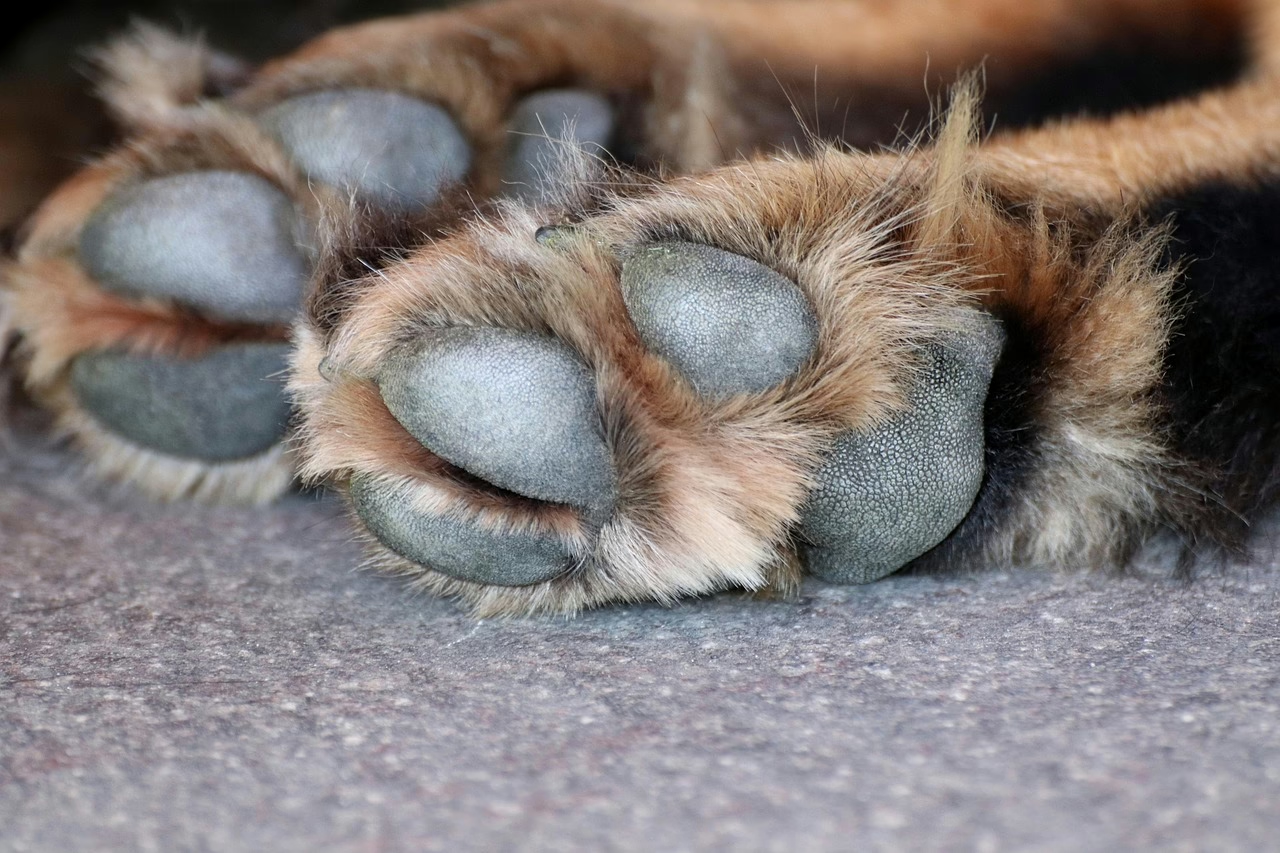
Dog elbow callus is a condition during which the skin on your dog’s elbows, hips, sternum, hocks, and the side of the legs becomes more rough and appears in dark brown, black, or grey color. A callus is a localized hyperplastic skin reaction a pet’s body uses to protect the bony protrusions from pressure.
Large breed dogs with short coats such as Great Danes, Labrador Retrievers, Mastiffs, and Rottweilers are more prone to developing elbow calluses. Short breeds such as Dachshunds, Pointers, Shetland Sheepdogs, Boxers, and Doberman Pinschers can often develop calluses on the chest.
If left untreated, calluses can result in pyoderma (an infection) or hydromas (fluid pockets), which can cause your dog a lot of pain.
If you’re reading this article, you may have seen rough, unpleasant-looking patches on your dog’s elbows and wondered what they are. Just like when humans wear uncomfortable shoes, a dog’s skin tends to become more rough when it’s in contact with hard surfaces, and over time this skin turns into a callus.
Statistics show that about 20% of dogs suffer from elbow callus at some point in their lives, regardless of their breed. This condition is usually not painful and not life-threatening to your dog, but it can be quite uncomfortable to live with. In some cases, if a dog’s elbow callus is left untreated, it results in cracks and bleeding, making it easy for infection to step in. In this article, we’ll give you some tips for managing your dog’s calluses and alleviating your pup’s discomfort.
Hyperkeratosis is a condition that causes excessive growth of keratin on your dog’s paws, nose, or ears. Usually, this condition doesn’t pose any danger to your dog, but it can cause discomfort and pain. Your pet may even develop an infection if the skin in the affected areas has cracks.
The most common underlying causes of hyperkeratosis in dogs are zinc-responsive dermatosis, canine distemper virus, auto-immune diseases, parasites, papillomavirus infection, and hepatocutaneous syndrome.
Canine hyperkeratosis causes several distinct symptoms, including the loss of skin color in the affected area, cracks in the skin, reduced activity, limping or licking of the affected paws, increased sensitivity of paws, nose, or ears.
Hyperkeratosis is not reversible, but with proper treatment and care, you can alleviate your dog’s pain and improve its quality of life.
As your dog gets older, you can notice its paws getting thicker or its nose appearing more crusty. This may indicate that your pup has developed hyperkeratosis – a relatively common condition in middle-aged and senior dogs.
Younger dogs can get hyperkeratosis too, however, it’s not that common. This condition is typically harmless, but it can sometimes indicate that your dog has an underlying skin condition. In this article, we’ll go over all the causes and symptoms of hyperkeratosis and give you some tips for treating this condition.
Seizures are relatively common in dogs, and most of the time, they are not life-threatening. They typically happen when abnormal activity occurs in your pet’s brain during a sleep transition period.
Small dogs, puppies, and senior dogs are more likely to have seizures.
The most common seizure causes in dogs include idiopathic epilepsy, kidney failure, brain trauma, toxins, brain tumors, liver disease, neoplastic growths, and metabolic disorders.
The most common medications for dog seizures are phenobarbital, potassium bromide, zonisamide, and Keppra. You should consult a veterinarian about seizure treatment for your pet and closely follow the vet’s instructions since abrupt changes in the medication can cause the symptoms to worsen.
Seeing your dog experience a seizure during sleep is not something that pet owners enjoy. It may be frustrating and even painful to see your beloved pet twitching unconsciously. The causes of sleep seizures in canines may vary from epilepsy to kidney and liver diseases. This abnormal canine behavior has been the object of many studies, and some of the discoveries may surprise you.
In this article, we will explain how you can tell whether your dog is just twitching in its dreams or having an actual seizure, tell you important information about seizures, and give some tips on what to do if your pup has a seizure.
Seizures And Dreams: How To Tell Them Apart
Sometimes, dogs can be very active when they dream during sleep which brings up the question: what’s the difference between seizures and dreams? Here are some clear differences between these two.
When dreaming, your dog is likely to run or yelp. It’s easy to wake the pet up, and the active seizure-like state lasts for about 30 seconds.
However, if you see that your dog’s limbs are stiff, its head is pulled back, and its movements ook very violent in general, it means that your dog is having a seizure. The episode usually lasts for a few minutes, and after the seizure, your dog may look confused. The pet may also drool, pant, urinate, or defecate.
There are also different seizure stages. Understanding them may help you to differentiate a seizure from a dream. These stages are:
Pre-ictal. This is the phase that occurs before a seizure. During this time, your dog may look restless or seem alert and anxious.
Ictal. The ictal phase is the period during which the seizure itself occurs. The signs associated with this phase may vary. For instance, your dog may simply stare into space or shake, lose consciousness, and have violent, repetitive leg movements.
Post-ictal. After the seizure stops, your dog will enter the post-ictal phase, meaning it may seem confused, restless, or dazed. Excessive salivation is another common sign of the post-ictal phase.
Why Does My Dog Twitch During Sleep?
Puppies and senior dogs can be especially twitchy during sleep. So what is the cause of this condition?
One theory suggests that when your dog is in the process of falling asleep, its brainstem sends signals to relax the muscles. However, twitching may occur because the brainstem is not as efficient in senior dogs and underdeveloped in puppies.
Can Dogs Have Dreams?
Scientific studies suggest that dogs can have dreams just like us humans. Stanley Coren, a neuropsychology researcher, says that our brains are similar to those of dogs and the brain wave patterns of humans and dogs also have a close resemblance. This means that a dog’s brain goes through the same stages of electrical activity, meaning that dogs likely can dream.
Causes Of Sleep Seizures In Dogs
Seizures of flips are a neurological disorder that occurs due to abnormal activity in the cerebral cortex of the brain. You may have heard the term “epilepsy”, which is often associated with seizures. When someone has epilepsy, it means that their seizures are recurrent and unprovoked. But epilepsy is only one of the conditions that can cause your dog to experience seizures rather than the default diagnosis.
Your dog can experience seizures at any time, including periods when there’s a transition in its brain activity. This can include falling asleep, waking up, feeling anxious or excited. In some cases, dogs will only experience seizures while sleeping since the transition between falling asleep or waking up is the most common time for seizure episodes to occur.
Common reasons for seizures in dogs
Idiopathic epilepsy is the condition that’s most likely to cause canine seizures. However, the real cause of seizures remains unknown even though we know that this condition is inherited.
Some other causes of canine seizures include:
Kidney failure
Neoplastic growths
Brain trauma
Liver disease
Brain tumors
Metabolic disorders
Toxins
Some Dogs Are More Prone To Having Seizures
There is a number of factors that can make dogs more prone to experiencing seizures:
Age
Younger epileptic dogs are more likely to experience severe and more frequent seizures. This is because younger dogs are generally more curious and energetic – they easily get distracted and sleep more. Plus, the canine brain continues developing until the dog reaches the age of 2, making it difficult for pets to control all the internal body changes, resulting in a seizure.
Size
Besides epilepsy, other common seizure causes include blood pressure issues, low blood sugar, or ingestion of toxic substances. Since smaller dogs suffer from low blood sugar and blood pressure more often, they are also more prone to having seizures.
Smaller dogs also have quicker metabolism and stronger reactions to disruptions in the body, which is why ingesting something poisonous can result in a seizure as well.
Types Of Seizures Dogs Can Experience
Generalized Seizures
Generalized seizures or grand mal seizures are the most common for dogs to experience. These seizures are identified by full-body convulsions, usually including paddling leg movements. If your pup experiences generalized seizures when it’s awake, it’s likely to lose consciousness. If the pet has a seizure during sleep, you’ll also find it unresponsive and unable to be woken up.
Focal Seizures
Another type of seizure is focal or petit mal seizures. Focal seizures affect only a particular body part. You can notice your dog having repeated twitches of the face, jaw, or legs. Your dog is likely to be conscious during focal seizures, but these seizures can also result in generalized seizures.
Your Dog Is Having A Seizure: What To Do?
First of all, don’t panic, seizures are not that rare in canines, especially if the condition occurs during nighttime. Remember that most seizures don’t pose any threat to your dog. You should also remember that seizures are not painful to your dog, no matter how harsh they look.
If you see your pup having one seizure that lasts about 3-4 minutes, contact a veterinarian and book an appointment to find out the underlying cause of the episode. However, if your pup experiences cluster seizures (multiple seizures within a short period of time), you should seek immediate veterinary attention and help. The same goes for episodes that last for more than 5 minutes, as these are considered to be severe and require immediate veterinary attention.
If you see your dog having a seizure episode, remove all objects located around the pet that can potentially hurt it and gently move your dog away from stairs and other hazards. Also, don’t try to stop or restrict any movements since it can only cause injuries to your dog. Instead, try to learn as much as possible about your dog’s seizures. For example, think about when they occur, how long they last, how often they happen, and whether your dog exhibits any destructive behavior before the seizure starts.
To make it easier for a veterinarian to diagnose your dog, you can record each seizure episode and note the duration of the seizure.
Once the seizure episode ends, you should try to comfort your dog. Be gentle and patient since your pet will likely be confused and disoriented. It’s also usually a good idea to cool your dog down after a seizure by using a damp towel on its neck, chest, and abdomen to reduce the risk of hyperthermia.
What Not To Do If Your Dog Has A Seizure
First of all, don’t try to put your fingers in the dog’s mouth or attempt to restrain the pet during a seizure because the dog may accidentally bite you. Don’t worry, your dog won’t swallow its tongue during an attack.
If your dog is dreaming and having a nightmare, don’t try to wake it up by shaking or touching it since you will be risking getting bitten. It’s better to use your voice and gently call your pup from a distance. If your dog experiences seizures at night, don’t try to change its sleeping routine, as it won’t be helpful and will only make your puppy tired and agitated.
Dog Seizure Medications
The way canine seizures are treated will depend on the type of seizure that your dog is experiencing. Veterinarians commonly prescribe traditional seizure treatment if your dog has multiple isolated attacks in a 6-month period, its seizures are severe or last for more than 5 minutes, or your pup has cluster seizures (more than 3 episodes in 24 hours).
Common seizure medications for dogs include phenobarbital, potassium bromide, zonisamide, and Keppra.
If you’ve already started giving your dog seizure medications, you should avoid seizing or changing the treatment without your veterinarian’s direction. If your dog receives traditional seizure treatment, the pet will need to take it for the rest of its life. If the treatment is stopped abruptly, it can result in more severe and dangerous consequences, and the intensity of the pet’s seizures may increase.
FAQ
What can trigger a seizure in a dog?
The most common seizure triggers in dogs include epilepsy, ingestion of a poisonous substance, liver or kidney disease, low blood sugar, anemia, head injury, and encephalitis.
What does a dog seizure look like?
If your dog is having a seizure, you may see it falling to the side, losing consciousness, and having rapid muscle contractions, including leg paddling, chewing jaw movements, and leg jerking.
What should I do if my dog starts having a seizure?
Don’t panic because seizures aren’t painful. Don’t try to stop your pet’s violent movements since it can bite you involuntarily. Make sure to call a veterinarian after the seizure ends, so you can book an appointment and determine the cause of the seizures and develop a further treatment plan.
Are dog seizures more common at night?
Yes, seizures are more likely to happen during transitional brain activity, usually just before the pet wakes up or falls asleep. Thus, attacks often occur at night or early in the morning.
Should I take my dog to the vet after a seizure?
If your dog’s seizure lasts for more than 5 minutes, you should take it to a veterinarian as soon as possible. This type of seizure is severe and can cause hyperthermia and even brain damage.
Novox has strong anti-inflammatory properties, which is why veterinarians prescribe it for dogs that suffer from arthritis. It’s also recommended to control pain after surgery.
Novox is generally safe for dogs and has rare and mild side effects such as appetite loss, vomiting, diarrhea, or constipation. If your dog is on Novox, you should monitor it for adverse effects that include excessive drinking or urinating, lethargy, bloody vomit, abdominal pain, and seizures.
Your dog will need to be professionally diagnosed before it can start taking Novox, as this medication can only be given with your veterinarian’s prescription and recommendations.
Novox is not recommended for dogs that have allergies to other NSAIDs, low platelet counts, and bleeding disorders, such as the Von Willebrand disease (VWD).
As our beloved pets age, they become more prone to different illnesses, some of which can seriously interfere with their normal lifestyles. One of these conditions is arthritis which, unfortunately, can’t be cured. However, if you stay determined to help your dog and administer the correct treatment, you can minimize the discomfort that your pet may experience because of its illness. In this article, we’ll talk about Novox – a very effective anti-inflammatory drug for canines. Below, you’ll find out all about its usage, side effects, precautions, and alternatives.
Buprenorphine or Buprenex is a human opioid drug used for pets struggling from mild to moderate pain. It’s a fast-acting, extra-label medication that works by blocking pain receptors. It can be prescribed both to cats and dogs.
Buprenorphine can be administered orally in the form of liquid to cats and as intravenous or under the skin injections for dogs. The dose of the drug is usually low since its efficacy doesn’t depend on the dose.
In cats, the side effects of buprenorphine include dilated pupils, excessive licking, gastrointestinal side effects, rubbing, and pacing. Dogs may experience agitation, slow heart rate and breathing, low body temperature and blood pressure, and excessive salivation.
Buprenorphine is not recommended for pets suffering from severe liver disease, heart or lung problems, severe respiratory issues, Addison’s Disease, central nervous system dysfunction, or hypothyroidism.
Prednisone and prednisolone are synthetic forms of corticosteroid drugs prescribed to treat inflammation, allergies, autoimmune diseases, and other conditions.
Prednisone is an off-label drug that needs to be prescribed by a veterinarian. It’s generally safe for dogs, but adverse reactions may still occur. Prednisone side effects include vomiting, increased thirst, increased appetite, panting, and lethargy.
The safe dosage of prednisone for dogs depends on the canine’s overall health condition, weight, and the illness being treated. You should carefully follow the vet’s recommendations when administering prednisone and avoid stopping treatment on your own.
If you have questions about prednisone and prednisolone or think that your dog has accidentally overdosed, contact your veterinarian immediately.
Inflammation is not something we want our dogs to experience. This condition is painful and can also result in many unpleasant symptoms, including skin redness and fever.
If your pet is suffering from inflammation, you may have heard that prednisolone and prednisone are often used to treat this condition. But what’s the difference between prednisolone and prednisone? Are these medications safe for dogs, and if so, what are their safe dosages?
Keep reading to find out all the necessary information about prednisone usage, side effects, and alternatives for dogs.
Benadryl is an antihistamine drug that helps relieve the symptoms of allergic reactions in dogs and alleviate anxiety, motor sickness, and even insomnia.
Because Benadryl is a fast-acting drug, it can often cause side effects. The most common side effects include dry mouth, urinary retention, drowsiness, hypersalivation, increased heart rate, and rapid breathing. More rare side effects include diarrhea, vomiting, low and increased appetite.
Benadryl can be administered in the form of a liquid, pills, spray, topical cream, and injections. Make sure not to give your dog time-release capsules of Benadryl.
The correct dosage of Benadryl should be established by a veterinarian. It depends on your pup’s weight, health history, and condition. The signs of Benadryl overdose include dilated pupils, rapid heartbeat, agitation, constipation, and seizures.
Most people share everything with their dogs, including their meals and even beds. But when it comes to medications, this approach can be dangerous, as not all human meds are safe for canines. In fact, the ways humans and dogs react to the same medications are very different, which is the reason why you shouldn’t give your pet any drugs without consulting a veterinarian beforehand. Not all human medications are dangerous for dogs, but the dosage and recommendations for their administration are different.
One of these medications is Benadryl or diphenhydramine, which helps dogs deal with allergies, motion sickness, and travel anxiety. Remember to always consult a vet about administering this drug to your pup. In this article, you’ll find out all the information you need to know about Benadryl for dogs.
Allergic conjunctivitis is a medical condition associated with red eyes and itchiness. It is usually caused by environmental triggers such as tree and grass pollen, mold and mildew, certain fabrics and materials, dust and dust mites, fleas, dander, hair, and feathers, cologne and perfume, household cleaning products, and certain medications.
The symptoms of allergic conjunctivitis are usually minor and include squinting of the affected eye, excessive tear production, discharge coming from one or both eyes, and pawing at the face.
The treatment for dog eye allergies includes sterile saline eye drops, steroid eye drops, or Benadryl.
If your dog has red eyes and you’re wondering what is causing it – you came across the right article. While dog allergies are most commonly expressed via symptoms related to the pet’s skin or intestinal tract, they can also result in red eyes and clean eye discharge.
Red eyes, or, in medical terms, “allergic conjunctivitis,” is an eye inflammation condition that occurs due to a reaction to environmental factors such as pollen and mold. Dogs that suffer from allergic dermatitis are more prone to allergic conjunctivitis than dogs with no allergy history.
If you suspect that your dog may be suffering from allergic conjunctivitis, you should have your dog examined by a veterinarian to rule out the possibility of other more serious diseases that have the same symptoms.
If the redness is caused by allergies, this article will tell you all you need to know about dog eye allergies, their treatment, and remedies.
Puppies acquire more than half of their adult brain mass during the first month of life. Thus, it is vital to supplement their diet with DHA, an essential structural component of the brain;
You should include products rich in antioxidants in your elderly dog’s diet to prevent cognitive dysfunction. These include spinach, blueberries, and sweet potatoes;
To keep your pup’s brain working properly, feed the pet a well-formulated diet that contains enough protein, fats, carbohydrates, fiber, vitamins, minerals, and water.
Do you still doubt that food can affect our behavior? Then you should try to recall the last time you ate a big meal. It’s almost certain that you felt extremely tired after consuming it. You can also recall how giving your child a sweet treat can instantly make it hyperactive. However, food doesn’t just influence our brain function and behavior, it also affects our dogs.
Feeding canines with species-appropriate food made from natural ingredients is not only important for their physical health but also for their behavior, i.e., their psyche. A dog that feels good all-around has a balanced mind. Moreover, some scientists now believe that it’s possible to alter certain neurological and physical features of a canine’s brain by changing its diet.
Cats have one of the longest life expectancies of all household pets. The life of an average cat lasts around 15 years;
The lifespan of a feline depends on different factors such as its diet, surroundings, breed, physical care, emotional care, etc.;
Outdoor cats are exposed to many different dangers that affect their life expectancy every day. Indoors cats generally live longer;
A high-quality diet formulated with animal protein is necessary to provide a cat with crucial vitamins, minerals, and fiber and thus help extend its life.
Just like all loving cat owners, you want your cat to live a long and happy life. But, unfortunately, even though our furry friends are said to have seven lives, their time on Earth is limited.
The life expectancy of domestic cats is much higher than that of felines in the wild. With an average lifespan of 15 years, house cats live longer than dogs, rabbits, hamsters, and many other pets. In some cases, cats can live for 20 years or even longer. How long your cat will live depends on a variety of factors such as its diet, surroundings, and care. The breed of the cat might also play an important role. Some breeds suffer from numerous hereditary diseases that can significantly shorten the life of the animal. For instance, British breed cats usually reach the age of 15, Persian cats live around 20 years on average, and Siamese cats can survive for up to 30 years.
But do not forget each case, and each cat is different. No matter how well you care for your cat, you can never get a guarantee that your pet won’t get sick and will reach old age if it is properly cared for. Unfortunately, diseases often occur for no specific reason. However, the tips in our article will give you a good chance of extending your pet’s life.