
Author: World Arabia

  • Best Aesthetic Clinics in Dubai for Refined, Natural Results

    Best Aesthetic Clinics in Dubai for Refined, Natural Results

    Dubai treats aesthetics as part of a broader lifestyle. Here, clinics are not simply medical spaces – they operate at the intersection of science, design, and personal confidence. Subtlety matters. Precision matters even more. The city has quietly built a reputation for practitioners who focus on balance rather than excess, on refinement rather than transformation for the sake of spectacle.

    Choosing the right clinic often comes down to philosophy as much as credentials. Some specialise in injectables and non-invasive treatments with a light touch. Others lean into advanced laser protocols or regenerative therapies. What unites the leading names is consistency – measured consultations, controlled techniques, and results that feel aligned with the person, not imposed upon them.

    1. Lucia Clinic

    Lucia Clinic is based in Jumeirah and combines dermatology, non-surgical aesthetics, and plastic surgery in one space. The structure is clear – face, body, treatments for men, and surgery are separated but connected through one clinical approach. The clinic is led by Dr. Radmila Lukian, European Board-Certified Dermatologist and founder of Lucia Clinic, working with a team focused on personalised treatment plans.

    Their portfolio moves between technology-based treatments and surgical procedures. Laser platforms, injectables, skin rejuvenation, and body contouring sit alongside rhinoplasty, liposuction, and breast surgery. Consultations appear structured and assessment-driven. Skin diagnostics, hair concerns, pigmentation, and long-term skin quality are part of the process rather than afterthoughts.

    Key Highlights:

    • Located in Jumeirah 2
    • Led by experienced dermatologist
    • Combines dermatology and surgery
    • Treatments for women and men
    • Wide use of laser technology

    Services:

    • Botox and dermal fillers
    • Laser treatments for acne and pigmentation
    • Body contouring and cellulite reduction
    • PRP and hair loss treatments
    • Facial and body plastic surgery
    • IV therapy and dermatology care

    Contact Information:

    • Website: luciaclinic.com
    • Facebook: www.facebook.com/LuciaClinicDubai
    • LinkedIn: www.linkedin.com/company/lucia-aesthetic-clinic
    • Instagram: www.instagram.com/luciaclinic
    • Address: Jumeirah 2 Jumeirah Beach Road, Villa 323, Dubai, UAE
    • Phone: +971 4 385 4525

    2. Hortman Clinics

    Hortman Clinics operate from two Dubai locations and position themselves as a multi-specialty aesthetic and wellness centre. Cosmetic dermatology is offered alongside dentistry, gynecology, hair transplant, and regenerative therapies. Their concept follows a 360-degree structure, where aesthetic procedures sit within a broader health setting.

    Technology is central to their model, with multiple laser and energy-based devices integrated into treatment plans. Alongside cosmetic surgery and dermatology, they provide IV therapy and wellness programs. The setup feels coordinated rather than segmented. Clients can address aesthetic goals and general health within the same clinical environment.

    Key Highlights:

    • Two Dubai locations
    • Multi-specialty medical clinic
    • Combines aesthetic and wellness care
    • Advanced laser platforms
    • Membership programs available

    Services:

    • Cosmetic surgery
    • Dermatology treatments
    • Laser and skin resurfacing
    • Hair transplant services
    • IV therapy
    • Regenerative treatments

    Contact Information:

    • Website: hortmanclinics.com
    • Email: info@hortmanclinics.com
    • Facebook: www.facebook.com/hortmanclinicsdubai
    • Instagram: www.instagram.com/hortman.clinics
    • Address: 32nd Floor, Burj Al Salam, Sheikh Zayed Road, Dubai, UAE
    • Phone: +971 52 200 5011

    3. Roxana Aesthetics

    Roxana Aesthetics is located on Al Wasl Road and focuses mainly on non-surgical procedures. Skin treatments, laser work, injectables, and body contouring form the core of their offering. Technology plays a visible role, with devices such as Alma platforms, Morpheus8, Thermage FLX, and Emsculpt integrated into treatment plans.

    The team includes dermatology specialists, aestheticians, and laser technicians. Treatments address concerns like acne scars, pigmentation, unwanted hair, and localized fat. The scope stays within minimally invasive solutions. Consultations appear structured around skin type and realistic expectations.

    Key Highlights:

    • Located on Al Wasl Road
    • Focus on non-surgical treatments
    • Technology-driven approach
    • Dermatology and laser specialists
    • Installment options available

    Services:

    • Laser hair removal
    • Injectables and fillers
    • PRP skin rejuvenation
    • Body contouring
    • Chemical peels and microneedling
    • IV drip therapy

    Contact Information:

    • Website: roxanaaesthetics.com
    • Facebook: www.facebook.com/profile/100090615759555
    • Instagram: www.instagram.com/roxanaaesthetics
    • Address: 825 Al Wasl Rd – Al Safa, Al Safa 2, Dubai, UAE
    • Phone: +971 43 464401

    4. Enhance by Mediclinic

    Enhance by Mediclinic is located in Dubai Mall Fashion Avenue and operates within a structured medical setting. The clinic combines cosmetic dermatology, plastic surgery, aesthetic gynaecology, and wellness programs in one coordinated space. Their positioning feels clinical rather than trendy, with a clear link to broader medical care through the Mediclinic network.

    Treatments range from non-surgical skin procedures to reconstructive surgery and lifestyle medicine. Laser therapies, body contouring, injectables, and skin analysis sit alongside health coaching and IV infusions. The approach appears holistic, placing aesthetic treatments within a wider view of physical wellbeing rather than treating them as isolated fixes.

    Key Highlights:

    • Located in Dubai Mall Fashion Avenue
    • Part of the Mediclinic network
    • Combines aesthetics and medical care
    • Offers lifestyle and wellness programs
    • Modern clinical setting

    Services:

    • Cosmetic and medical dermatology
    • Plastic and reconstructive surgery
    • Laser treatments and hair removal
    • Body contouring and injectables
    • Aesthetic gynaecology
    • IV infusions and health coaching

    Contact Information:

    • Website: enhancebymediclinic.ae
    • E-mail: Enhance@Mediclinic.ae
    • Facebook: www.facebook.com/EnhanceByMediclinic
    • Instagram: www.instagram.com/enhancebymediclinic
    • Address: Second floor, Parking P7, Fashion Parking, The Dubai Mall
    • Phone: +971 506808474

    5. La Vida Clinic

    La Vida Clinic is based in Umm Suqeim on Al Wasl Road and focuses on aesthetic and plastic procedures within a boutique-style environment. Their services are structured around cosmetic injectables, facials, laser treatments, body contouring, and surgery. The tone of the clinic leans toward personal consultation and visible results, supported by an in-house medical team.

    Alongside non-surgical procedures, they provide plastic surgery and hair solutions. Skin concerns such as acne, pigmentation, and texture are addressed through laser and injectable treatments. The setup feels centered on aesthetic refinement, with procedures grouped clearly by concern rather than by device.

    Key Highlights:

    • Located in Umm Suqeim
    • Focus on aesthetic and surgical treatments
    • Offers injectables and laser services
    • Dedicated plastic surgery team
    • Boutique clinical setting

    Services:

    • Cosmetic injectables
    • Glow facials and skin treatments
    • Acne and pigmentation treatments
    • Laser procedures
    • Body contouring
    • Plastic surgery and hair solutions

    Contact Information:

    • Website: lavidaclinic.com
    • Email: leads@lavidaclinic.com
    • Facebook: www.facebook.com/lavidaclinic.ae
    • Instagram: www.instagram.com/lavidaclinic.ae
    • Address: Villa 1188, Al Wasl Rd Umm Suqeim 2, Dubai
    • Phone: +971 56 499 9952

    6. SKIN111

    SKIN111 operates from DIFC and Palm Jumeirah, positioning itself at the intersection of aesthetics and regenerative wellness. Their structure combines IV therapy, anti-ageing treatments, body contouring, dental services, and hair transplant procedures. The clinic places strong emphasis on drip therapies and longevity-focused care.

    Energy-based devices and injectable treatments are part of their aesthetic offering, alongside weight management and slimming programs. The range is broad, extending from skin treatments to diagnostic tests and sexual wellness. The model suggests a clinic designed for clients who prefer combining cosmetic procedures with ongoing wellness support.

    Key Highlights:

    • Locations in DIFC and Palm Jumeirah
    • Combines aesthetics and wellness
    • Wide range of IV drip therapies
    • Offers body contouring and slimming
    • Home care services available

    Services:

    • IV vitamin and regenerative drips
    • Botox and dermal fillers
    • Laser hair removal
    • Body contouring and fat reduction
    • Hair transplant
    • Dental services

    Contact Information:

    • Website: skin111.com
    • Email: skin111clinic@skin111.com
    • Facebook: www.facebook.com/people/Skin111-Clinics/100094553062701
    • Instagram: www.instagram.com/skin.111
    • Address: Unit G02, Building #5, The Gate Village 5, DIFC, Road 312 – Dubai
    • Phone: +971544488611

    7. Aesthetics International

    Aesthetics International is based in Jumeirah and focuses on plastic surgery, dermatology, and non-surgical aesthetic treatments. The clinic presents itself as a multidisciplinary centre where surgical and non-invasive procedures are handled within the same framework. Their team includes plastic surgeons and dermatology specialists who work across both cosmetic and reconstructive fields.

    Procedures range from facial and body surgery to injectables and skin rejuvenation. Regenerative medicine is also part of their scope, alongside body contouring and treatments for men. Consultations appear structured around detailed planning and aftercare support, with attention given to recovery and realistic outcomes rather than quick solutions.

    Key Highlights:

    • Located in Jumeirah
    • Multidisciplinary plastic surgery clinic
    • Combines surgical and non-surgical treatments
    • Focus on personalised planning
    • Offers regenerative procedures

    Services:

    • Facial plastic surgery
    • Body contouring and liposuction
    • Skin rejuvenation treatments
    • Injectables and fillers
    • Regenerative medicine
    • Treatments for men

    Contact Information:

    • Website: aesthetics.ae
    • E-mail: Info@aesthetics.ae
    • Facebook: www.facebook.com/AestheticsInternational
    • LinkedIn: www.linkedin.com/company/aesthetics-international
    • Instagram: www.instagram.com/aesthetics.dubai
    • Address: Utamah Villa # 1049c, Intersection of, Al Wasl Rd & Al Thanya Rd, Jumeirah, Dubai, UAE.
    • Phone: +971 4 384 5600

    8. Evolution Aesthetics Clinic

    Evolution Aesthetics Clinic is located on Umm Al Sheif Road and centres its offering around aesthetic cosmetology and advanced device-based treatments. Their structure leans toward non-surgical procedures, with laser platforms, skin tightening technologies, and collagen stimulators forming a visible part of their approach.

    Alongside injectables and PRP therapy, they provide IV drips, body contouring, and medical testing. The clinic environment appears compact and focused, with a team that includes dermatologists and laser therapists. Treatments are organised around visible skin concerns such as acne, pigmentation, and ageing rather than broad lifestyle positioning.

    Key Highlights:

    • Located on Umm Al Sheif Road
    • Focus on non-surgical aesthetic care
    • Advanced laser and RF technologies
    • Dermatology and laser specialists
    • IV therapy available

    Services:

    • Injectables and collagen stimulators
    • Laser skin rejuvenation
    • Body contouring treatments
    • PRP therapy
    • IV drips
    • Medical skin analysis

    Contact Information:

    • Website: evoclinic.ae
    • Email: info@evoclinic.ae
    • Facebook: www.facebook.com/evoclinicdubai
    • Instagram: www.instagram.com/evoclinicdubai
    • Address: Umm Al Sheif Road 49, Dubai
    • Phone: +971 4 706 5000

    9. SnB Aesthetic Clinic

    SnB Aesthetic Clinic operates from Al Wasl Road and positions itself as a cosmetic and skin care centre with a medical base. Their model combines aesthetic treatments with dentistry, physiotherapy, and selected medical services. A structured diagnostic approach, including 3D skin imaging, appears central to their consultations.

    Treatments extend from injectables and laser therapies to plastic surgery and cosmetic dentistry. Hair restoration and body contouring are also included in their scope. The clinic emphasises ethical practice and medically trained professionals, suggesting a setting that blends cosmetic care with clinical oversight.

    Key Highlights:

    • Located on Al Wasl Road
    • Combines aesthetics and dental services
    • Uses diagnostic skin analysis tools
    • Offers plastic surgery and physiotherapy
    • DHA-approved training facility

    Services:

    • Skin treatments and injectables
    • Laser hair removal
    • Body contouring
    • Hair restoration
    • Plastic surgery
    • Cosmetic dentistry

    Contact Information:

    • Website: snbaestheticclinic.ae
    • Instagram: www.instagram.com/snbaestheticclinic
    • Address: Villa No. 2 (287B), Villas, Al Wasl Road, Al badaa Area, Dubai, U.A.E.
    • Phone: +971 (04) 548 4669

    10. Los Angeles Aesthetic Clinic

    Los Angeles Aesthetic Clinic is based in Dubai and focuses on non surgical cosmetic treatments. Their concept draws from Hollywood style aesthetic trends, with attention placed on facial refinement, skin quality, and subtle enhancements. Consultations appear detailed, with doctors assessing facial structure and skin condition before suggesting a treatment plan.

    Their scope covers face, body, skin, treatments for men, and cosmetic dentistry. A noticeable part of their practice includes injectables such as fillers, wrinkle treatments, and non surgical rhinoplasty. They also address hair loss and provide smile related procedures. The overall structure suggests a clinic centered on aesthetic maintenance rather than surgical intervention.

    Key Highlights:

    • Focus on non surgical aesthetic treatments
    • Consultation based treatment planning
    • Services for face, body, and skin
    • Offers cosmetic dentistry
    • Provides treatments for men

    Services:

    • Dermal fillers and wrinkle treatments
    • Non surgical rhinoplasty
    • Hair loss treatments
    • Laser and skin procedures
    • Hollywood Smile dentistry
    • Facial rejuvenation

    Contact Information:

    • Website: losangelesclinic.ae
    • Email: info@losangelesclinic.ae
    • Facebook: www.facebook.com/LosAngelesAestheticClinic
    • Instagram: www.instagram.com/losangeles.clinic
    • Address: 63 Al Thanya St, Villa D, Dubai, UAE
    • Phone: +971 4 235 4190

    11. Glow Aesthetics Dermatology Clinic

    Glow Aesthetics Dermatology Clinic operates across several branches in Dubai and Sharjah. Their structure combines dermatology, aesthetic medicine, and wellness based treatments under one network. The clinic works with dermatologists and general practitioners who focus on skin health, acne care, pigmentation, and hair related concerns.

    Their service list includes laser hair removal, hydrafacial treatments, PRP, mesotherapy, IV therapy, and weight management injections. They also provide medical skin analysis and health check ups. The clinic appears to handle both routine skin care maintenance and targeted dermatological conditions, with follow up sessions forming part of their process.

    Key Highlights:

    • Multiple branches in Dubai and Sharjah
    • Focus on dermatology and aesthetic medicine
    • Provides IV and wellness treatments
    • Offers laser hair removal
    • Skin and hair treatment programs

    Services:

    • Laser hair removal
    • Hydrafacial and LED treatments
    • PRP and mesotherapy
    • Botox and dermal fillers
    • IV drip therapy
    • Acne and pigmentation treatments

    Contact Information:

    • Website: glowdubai.ae
    • Email: info@glowdubai.ae
    • Address: Shop 45, Ground Floor, Al Attar Business Centre, Al Barsha 1, Dubai, UAE
    • Phone: +971 56 548 7001

    12. Maris Aesthetic Clinic

    Maris Aesthetic Clinic is located in Jumeirah 1 and follows a Brazilian concept focused on non surgical aesthetic procedures. The clinic has operated in Dubai since 2017 and concentrates on facial injectables, skin treatments, and body procedures. Semi permanent makeup is also part of their offering, reflecting the founder’s background in aesthetics.

    Their services include face injectables, hydrafacial treatments, wrinkle treatments, laser hair removal, exosome therapy, and IV drip therapy. Hair loss treatments and body contouring are also available. The clinic presents itself as a non surgical aesthetic space where cosmetic treatments are performed without plastic surgery procedures.

    Key Highlights:

    • Located in Jumeirah 1
    • Brazilian concept aesthetic clinic
    • Focus on non surgical treatments
    • Offers semi permanent make up
    • Provides laser and IV therapies

    Services:

    • Face injectables
    • Wrinkle treatments
    • Hydrafacial treatments
    • Laser hair removal
    • Exosome therapy
    • Semi permanent make up
    • Body treatments

    Contact Information:

    • Website: marisclinic.com
    • E-mail: hello@marisclinic.com
    • Facebook: www.facebook.com/marisclinicae
    • LinkedIn: www.linkedin.com/company/marisclinic
    • Instagram: www.instagram.com/marisclinics
    • Address: 327, Al Wasl Road, Jumeirah 1, Dubai UAE
    • Phone: +971 04 235 5858

    13. Bionix Clinic

    Bionix Clinic operates in Jumeirah – Al Wasl and Al Barsha, focusing on non-surgical aesthetic and wellness treatments. Their work covers injectables, laser procedures, skin care, slimming therapies, and IV treatments, all handled by DHA-licensed professionals. Consultations begin with an assessment, followed by a structured plan that outlines the suggested procedures and follow-up steps.

    Beyond facial treatments, they also provide body contouring, hair restoration, and home healthcare services. Equipment and devices used in the clinic are FDA-approved, and treatment protocols are adjusted depending on individual skin or body concerns. The clinic structure feels medically organized, with attention given to monitoring progress rather than one-time procedures.

    Key Highlights:

    • Two branches – Jumeirah and Al Barsha
    • Non-surgical aesthetic focus
    • DHA-licensed medical team
    • FDA-approved machines and devices
    • Skin, body, and IV therapies under one roof

    Services:

    • Botox and dermal fillers
    • Laser hair and tattoo removal
    • Skin treatments and peels
    • Slimming and body contouring
    • PRP and hair restoration
    • IV drip therapy
    • Home healthcare services

    Contact Information:

    • Website: bionixclinic.com
    • Email: info@bionixclinic.com
    • Instagram: www.instagram.com/bionixclinic
    • Address: Villa 7, 27th Street, Al Wasl Road, Dubai, UAE
    • Phone: 04 355 2066

    14. The Nova Clinic

    The Nova Clinic operates across several Dubai locations, including Al Wasl, Palm Jumeirah, and Mina Al Salam. It combines aesthetic procedures with wellness treatments, offering both surgical and non-surgical options. The clinic is licensed by MOHAP, and treatments are carried out by board-certified doctors and licensed practitioners.

    Their services range from plastic surgery and injectables to regenerative therapies such as stem cell and exosome treatments. Alongside aesthetic care, they provide IV therapy and certain wellness-focused procedures. Treatment plans usually include pre-procedure assessments and structured follow-ups, keeping care organized rather than casual.

    Key Highlights:

    • MOHAP-licensed clinic
    • Surgical and non-surgical procedures
    • Regenerative medicine options
    • Multiple Dubai branches
    • Board-certified medical team

    Services:

    • Plastic surgery procedures
    • Botox and dermal fillers
    • Skin treatments and facials
    • PRF hair restoration
    • Stem cell and exosome therapy
    • IV therapy
    • Chiropractic care

    Contact Information:

    • Website: thenovaclinic.com
    • E-mail: info@thenovaclinic.com
    • Facebook: www.facebook.com/thenovaclinic
    • Instagram: www.instagram.com/thenovaclinic.ae
    • Address: Utamah Villa 1047, Al Wasl Road, Al Manara, Jumeirah – Dubai
    • Phone: +971 58 585 7688

    15. Swan Aesthetic Clinic

    Swan Aesthetic Clinic is located in Al Karama and focuses on personalized aesthetic treatments. Their services cover facial procedures, laser treatments, body contouring, and hair restoration. Consultations typically begin with a skin or treatment assessment before moving into tailored recommendations.

    The clinic provides both cosmetic and functional aesthetic procedures, including aesthetic gynecology and men’s services. Non-surgical skin tightening, injectables, laser-assisted treatments, and facial therapies form a large part of their daily work. The approach is structured and medical in tone, with gradual treatment plans rather than dramatic changes.

    Key Highlights:

    • Based in Al Karama, Dubai
    • Non-surgical skin and contour treatments
    • Aesthetic gynecology services
    • Dedicated men’s treatments
    • Laser and collagen-stimulating procedures

    Services:

    • Botox and dermal fillers
    • Laser hair removal
    • Skin boosters and facials
    • PDO thread lifting
    • Endolift laser treatments
    • Hair loss treatments
    • IV drip therapy

    Contact Information:

    • Website: swanclinic.ae
    • E-mail: info@swanclinic.ae
    • Facebook: www.facebook.com/people/Swan-Aesthetic-Clinic/61553944473831
    • LinkedIn: www.linkedin.com/company/swanaestheticclinic
    • Instagram: www.instagram.com/swan.aesthetic.clinic
    • Address: 67B, Floor 6, Block B, Zomorrodah building, Umm Hurair Road- Al Karama, Dubai, UAE
    • Phone: +971 50 460 3010

    16. The Aesthetics Clinic

    The Aesthetics Clinic is based in Al Furjan and focuses on medically guided aesthetic treatments. Their positioning centers on structured care rather than trend-based procedures. Consultations are part of the process, with treatment plans developed around individual concerns and measurable changes. The clinic operates daily, offering a consistent schedule for clients who prefer flexibility.

    Their services lean toward facial aesthetics and skin-focused procedures. Treatments are delivered within a controlled clinical setting, with emphasis placed on natural balance rather than dramatic alteration. The tone of the clinic is straightforward – clear communication, defined protocols, and visible but subtle outcomes.

    Key Highlights:

    • Clinically led treatment approach
    • Personalized treatment planning
    • Focus on natural-looking outcomes
    • Open daily

    Services:

    • Hydrafacial
    • Skin rejuvenation treatments
    • Lip fillers
    • Injectable treatments
    • Facial aesthetic procedures

    Contact Information:

    • Website: www.theaestheticsclinic.ae
    • E-mail: info@theaestheticsclinic.ae
    • Facebook: www.facebook.com/AestheticsclinicUAE
    • Instagram: www.instagram.com/aestheticsclinicuae
    • Address: Jebel Ali Village – Al Furjan – Dubai – United Arab Emirates
    • Phone: +971 54 482 1557

    17. DrypSkin

    DrypSkin operates from Dubai Marina and combines aesthetic treatments with medical wellbeing services. The clinic structure covers injectables, laser procedures, IV therapies, diagnostic testing, and certain surgical options. It functions as a hybrid space where aesthetic care and health-focused services exist side by side.

    Their aesthetic offerings range from Botox and fillers to skin boosters, laser resurfacing, body contouring, and hair treatments. Alongside these, they provide IV infusions, wellness diagnostics, and home services. The clinic runs extended hours, which makes it accessible for both routine appointments and ongoing treatment plans.

    Key Highlights:

    • Based in Dubai Marina
    • Aesthetics and wellbeing under one roof
    • IV therapy and diagnostic services
    • Laser and injectable treatments
    • Extended daily opening hours

    Services:

    • Botox and dermal fillers
    • PRP and skin boosters
    • Laser hair removal
    • Body contouring treatments
    • IV vitamin infusions
    • Hair transplant services
    • Plastic surgery options

    Contact Information:

    • Website: drypskin.com
    • E-mail: info@drypskin.com
    • Facebook: www.facebook.com/DrypSkinDubai
    • Instagram: www.instagram.com/drypskin
    • Address: Unit R-04, Marinascape Mall, Marina, Dubai, UAE
    • Phone: 042759200

    18. Dr. Mehri Aesthetic Clinic

    Dr. Mehri Aesthetic Clinic is located in Jumeirah 3 and centers its work around non-surgical facial rejuvenation and contouring. The clinic is led by Dr. Mehri Pourkand, whose practice focuses on structured treatment planning and personalized aesthetic adjustments. The setting reflects a more private and boutique-style environment, with consultations guiding each procedure.

    Signature treatments include full-face contouring, lip enhancement, eye-area rejuvenation, and anti-aging therapies. While the branding leans toward luxury, the clinical offering remains rooted in aesthetic medicine techniques aimed at gradual improvement rather than instant change. Most procedures are non-surgical, with an emphasis on facial harmony and skin quality.

    Key Highlights:

    • Located in Jumeirah 3
    • Led by Dr. Mehri Pourkand
    • Focus on non-surgical facial treatments
    • Boutique-style clinic environment
    • Personalized consultation process

    Services:

    • Full-face beautification
    • Lip enhancement treatments
    • Eye-area rejuvenation
    • Anti-aging therapies
    • Facial contouring procedures
    • Body contouring solutions

    Contact Information:

    • Website: drmehri-aesthetic.com
    • E-mail: management@drmehri-aesthetic.com
    • Address: 726 Al Wasl Rd – Jumeirah – Jumeirah 3 – Dubai – United Arab Emirates
    • Phone: 04 343 0095

    Conclusion

    Dubai’s aesthetic scene is wide and, at times, a little overwhelming. Clinics range from compact neighborhood spaces to larger medical centers that combine aesthetics with wellness and advanced diagnostics. Some focus strictly on injectables and laser, others build their identity around regenerative medicine or non-surgical contouring. The difference often comes down to approach – how carefully they assess, how clearly they explain, and how realistic they are about outcomes.

    Choosing the right aesthetic clinic in Dubai is rarely about chasing trends. It is more about finding a team that understands balance, works within medical standards, and takes time to tailor treatments rather than applying the same formula to everyone. A good clinic feels measured, not rushed. It should offer clarity, not pressure. In a city that moves quickly, that kind of steady professionalism tends to stand out.


  • Top Plastic Surgeons in Dubai: Leading Experts in Aesthetic Surgery

    Top Plastic Surgeons in Dubai: Leading Experts in Aesthetic Surgery

    Dubai has evolved into one of the region’s most closely watched centers for aesthetic medicine. Beyond the skyline and luxury, there is a medical landscape shaped by international training, strict regulation, and a clientele that expects subtlety rather than excess.

    In plastic surgery, reputation rarely forms overnight. It builds through years of disciplined practice, consistent results, and an understanding of proportion that goes beyond trends. The specialists featured below are widely recognized for their surgical precision, patient trust, and contribution to the city’s modern aesthetic standards.

    1. Dr. Dirk Kremer

    Dr. Dirk Kremer practices at Perfect Doctors Clinic in Dubai. He completed his medical studies in Germany and later continued surgical training in the United States before returning to Europe and eventually establishing his practice in the UAE. His background includes reconstructive surgery alongside aesthetic procedures performed in clinical environments.

    In Dubai, his work focuses mainly on facial surgery and body contouring. The approach combines surgical planning with minimally invasive treatments, depending on the case. Consultations are structured, and procedures are discussed in detail before treatment decisions are made. Patients typically seek his opinion for lifting procedures, contouring surgery, and facial corrections.

    Key Highlights:

    • Additional surgical training in the United States
    • Background in reconstructive and aesthetic surgery
    • Member of European professional associations
    • Practicing in Dubai since 2013

    Services:

    • Facelift and neck lift
    • Eyelid surgery – blepharoplasty
    • Brow lift and lip lift
    • Chin liposuction and cheek procedures
    • Breast augmentation and lift
    • Liposuction and tummy tuck
    • Fat transfer
    • Botox and dermal fillers
    • Hair transplant procedures

    Contact Information:

    • Website: www.perfectdrs.com/doctors/doctor-1
    • Phone: +971 56 191 7976
    • Email: concierge@perfectdrs.com
    • Address: Villa 888 Al Wasl Rd – Jumeirah – Umm Suqeim 1 – Dubai – United Arab Emirates
    • Facebook: www.facebook.com/PerfectDoctorsClinic
    • Instagram: www.instagram.com/perfectdoctorsclinic

    2. Dr. Dragana Spica

    Dr. Dragana Spica is a Specialist Reconstructive and Plastic Surgeon based in Dubai. She completed her medical degree and specialist training in Serbia, followed by residency in plastic and reconstructive surgery. Her professional background includes hospital-based reconstructive work as well as aesthetic procedures in private practice.

    Her clinical work covers facial surgery, breast procedures, and body contouring. In addition to surgical treatments, she performs non-surgical aesthetic procedures such as injectables and minimally invasive lifting techniques. The overall approach reflects reconstructive principles applied within cosmetic practice.

    Key Highlights:

    • Serbian board-certified plastic surgeon
    • Residency completed in Belgrade
    • Member of Serbian and Emirates plastic surgery societies
    • Experience in reconstructive and aesthetic surgery
    • Based at Aesthetics by King’s in Dubai

    Services:

    • Face and neck lift
    • Upper and lower eyelid surgery
    • Double chin correction
    • Breast augmentation, lift, and reduction
    • Gynecomastia surgery
    • Vaser liposuction
    • Abdomen and thigh contouring
    • Botox and fillers
    • Thread lifting and PRP

    Contact Information:

    • Website: aesthetics.kingscollegehospitaldubai.com/team/dr-dragana-spica
    • Phone: +971 (0)4 581 7510
    • Email: info.aesthetics@KCH.AE
    • Address: Emaar Towers Marina Walk next to Spinneys Dubai UAE
    • Facebook: www.facebook.com/aestheticskingscollege
    • Instagram: www.instagram.com/aestheticskingscollege

    3. Dr. Matteo Vigo

    Dr. Matteo Vigo completed his medical training and specialization in plastic and reconstructive surgery in Italy. Early in his career, he worked within breast units and reconstructive departments, focusing on both aesthetic and reconstructive breast procedures. He later expanded his practice to include cosmetic surgery and fat transfer techniques.

    Since relocating to Dubai, his clinical focus has centered on breast surgery and body contouring. He is affiliated with several medical facilities in the city and continues to work within both aesthetic and reconstructive frameworks. His background reflects a surgical pathway that combines hospital training with private aesthetic practice.

    Key Highlights:

    • Italian board-certified plastic surgeon
    • Specialized in plastic, aesthetic, and reconstructive surgery
    • Training experience in Italy
    • Member of international plastic surgery societies
    • Based in Dubai since 2012

    Services:

    • Breast augmentation
    • Breast lift and reduction
    • Breast reconstruction
    • Fat grafting procedures
    • Liposuction
    • Body contouring
    • Abdominoplasty
    • Regenerative fat-based treatments
    • Reconstructive breast procedures

    Contact Information:

    • Website: www.plasticsurgerydubaiuae.com/about-me/best-plastic-surgeon-in-dubai
    • Phone: +971 56 2825 825
    • Email: booking@matteovigo.com
    • Address: HEALTHBAY VITALIA Al Wasl Road, Umm Al Sheif, Dubai
    • LinkedIn: www.linkedin.com/in/matteo-vigo-125613b
    • Facebook: www.facebook.com/DrMatteoVigo
    • Twitter: x.com/drMatteoVigo
    • Instagram: www.instagram.com/drmatteovigo

    4. Dr. Jamil Al Jamali

    Dr. Jamil Al Jamali is a Consultant Plastic Surgeon practicing at Medcare in Dubai. His medical training spans Egypt, Germany, and the United Kingdom, with board certifications and fellowships across Europe. Over the years, his work has combined aesthetic surgery with reconstructive and microsurgical procedures, reflecting a hospital-based background rather than a purely cosmetic pathway.

    His practice covers both elective aesthetic treatments and complex reconstructive cases. Facial surgery, breast procedures, and body contouring form part of his aesthetic work, while hand surgery, microsurgery, and maxillofacial reconstruction remain central to his broader surgical profile. The scope of his training allows him to move between cosmetic refinement and functional restoration depending on patient needs.

    Key Highlights:

    • Consultant Plastic Surgeon at Medcare Dubai
    • German board certification in plastic and aesthetic surgery
    • Fellow of the Royal College of Surgeons UK
    • European Board certifications in plastic and hand surgery
    • Background in microsurgery and maxillofacial surgery

    Services:

    • Facelift and neck lift
    • Eyelid surgery and rhinoplasty
    • Breast augmentation, lift, and reduction
    • Tummy tuck and liposuction
    • Facial fat grafting
    • Hand surgery and nerve repair
    • Breast reconstruction including flap procedures
    • Skin cancer and burn reconstruction
    • Cleft lip and palate correction

    Contact Information:

    • Website: www.medcare.ae/en/physician/view/jamil-al-jamali.html
    • Phone: 800 633 2273
    • Address: Near Al Safa Park Al Hadiqa Rd Dubai, UAE
    • LinkedIn: www.linkedin.com/company/medcareae
    • Facebook: www.facebook.com/medcareae
    • Instagram: www.instagram.com/medcareae

    5. Dr. Claudia Alves Silva Machado

    Dr. Claudia Alves Silva Machado is a Specialist Plastic Surgeon at Al Shunnar Plastic Surgery in Dubai. She completed her medical education and plastic surgery residency in Brazil, followed by years of clinical work across Brazil, Saudi Arabia, and the UAE. Her training includes reconstructive microsurgery alongside aesthetic procedures.

    Her work today focuses largely on aesthetic facial surgery, breast procedures, and body contouring. She is also experienced in minimally invasive and endoscopic techniques, which form part of her surgical approach. In addition to operative procedures, she performs non-surgical treatments as part of aesthetic care planning.

    Key Highlights:

    • Brazilian board-certified plastic surgeon
    • Residency in plastic and reconstructive microsurgery
    • Member of Brazilian and Emirates plastic surgery societies
    • Experience across Brazil, Saudi Arabia, and UAE
    • Background in endoscopic surgical techniques

    Services:

    • Endoscopic facial procedures
    • Breast augmentation and lift
    • Tummy tuck
    • Body contouring and liposuction
    • Fat transfer
    • Botox and dermal fillers
    • PRP treatments
    • CO2 therapy
    • Reconstructive plastic surgery

    Contact Information:

    • Website: alshunnarplasticsurgery.ae/team/dr-claudia-alves-silva-machado
    • Phone: +971 4 395 3033 
    • Email: info@alshunnarplasticsurgery.ae
    • Address: Villa #591 Jumeirah Beach Rd Dubai, UAE
    • LinkedIn: www.linkedin.com/company/al-shunnar-plastic-surgery
    • Facebook: www.facebook.com/AlShunnarPlasticSurgeryuae
    • Instagram: www.instagram.com/al_shunnar

    6. Dr. Ken Arashiro

    Dr. Ken Arashiro is a Japanese plastic surgeon affiliated with Euromed Clinic in Dubai. He completed his medical degree and PhD in Japan and has practiced plastic surgery for several decades. His professional background includes board certification in Japan and licensing to practice in the UAE, along with active membership in international aesthetic surgery societies.

    His clinical work centers on aesthetic surgery of the face and body. Procedures such as lifting surgeries, breast operations, and contouring treatments form a consistent part of his practice. Alongside surgical work, he performs non-surgical cosmetic procedures including injectables and laser-based treatments.

    Key Highlights:

    • Japanese board-certified plastic surgeon
    • Licensed to practice in the UAE
    • Member of international aesthetic surgery societies
    • Experience in both surgical and non-surgical treatments
    • Visiting surgeon at Euromed Clinic Dubai

    Services:

    • Facelift and neck lift
    • Eyelid surgery
    • Breast lift and augmentation
    • Liposuction
    • Tummy tuck
    • Arm and thigh lift
    • Body contouring
    • Botox and fillers
    • Laser treatments

    Contact Information:

    • Website: www.euromedclinicdubai.com/doctors/dr-ken-arashiro
    • Phone: +971 4 894 5000
    • Email: info@euromedclinicdubai.com
    • Address: Jumeirah Beach Road Umm Suqeim 1 – Villa 611, Dubai, UAE
    • Facebook: www.facebook.com/EuroMedClinic
    • Twitter: x.com/euromeduae
    • Instagram: www.instagram.com/euromedclinic

    7. Dr. Leonard Nenad Josipovic

    Dr. Leonard Nenad Josipovic is a Consultant Plastic Surgeon at Seline Clinic in Dubai. He completed his medical degree in Germany and undertook clinical internships in the United States and the United Kingdom before continuing his surgical training in Frankfurt. His background reflects a European training pathway with additional international exposure early in his career.

    Since relocating to Dubai, his clinical focus has centered on aesthetic breast surgery and body contouring. Fat transfer techniques and facial rejuvenation procedures form part of his regular work. His practice combines surgical treatment with non-surgical aesthetic procedures, depending on individual needs.

    Key Highlights:

    • German board-certified plastic surgeon
    • Medical degree from Goethe University Frankfurt
    • Clinical internships at UCLA and Imperial College London
    • Background in European hospital-based surgical training
    • Consultant Plastic Surgeon at Seline Clinic Dubai

    Services:

    • Breast augmentation and lift
    • Breast reduction
    • Liposuction
    • Tummy tuck
    • Arm and face lift
    • Body contouring procedures
    • Fat transfer
    • Facial rejuvenation treatments
    • Non-surgical aesthetic procedures

    Contact Information:

    • Website: seline.ae/en/specialists/dr-leonard-nenad-josipovic
    • Phone: 971800735463
    • Email: info@seline.ae
    • Address: 623 Jumeira St, Umm Suqeim 1, Dubai
    • Instagram: www.instagram.com/seline.dubai

    8. Dr. Iraj Ahmadi

    Dr. Iraj Ahmadi is a Consultant Plastic and Reconstructive Surgeon practicing at Mediclinic in Dubai. He trained in Australia, graduating from Monash University before completing specialist training and fellowship with the Royal Australian College of Surgeons. His professional background includes work in tertiary hospitals in Australia, where he performed reconstructive surgery for cancer and trauma alongside general plastic surgery.

    In Dubai, his work spans aesthetic and reconstructive procedures. Facial surgery, breast operations, and body contouring are part of his aesthetic scope, while microsurgery and hand surgery remain central to his reconstructive training. His practice reflects a hospital-based surgical foundation combined with cosmetic procedures.

    Key Highlights:

    • Fellow of the Royal Australian College of Surgeons
    • Specialist training in plastic and reconstructive surgery
    • Background in Australian tertiary hospitals
    • Experience in microsurgery and cancer reconstruction
    • Consultant at Mediclinic Dubai

    Services:

    • Breast augmentation, lift, and reduction
    • Gynecomastia surgery
    • Abdominoplasty
    • Body lift after weight loss
    • Liposuction
    • Facelift and neck lift
    • Blepharoplasty
    • Fat grafting
    • Hand and trauma surgery

    Contact Information:

    • Website: www.mediclinic.ae/en/dubai-mall/services/plastic-surgery.doctor.html/5/iraj-ahmadi.html
    • Phone: 800 1999
    • Email: Cityhospital@mediclinic.ae
    • Address: Dubai Mall, Fashion Parking, Level 7, Dubai
    • LinkedIn: www.linkedin.com/company/mediclinic-middle-east
    • Facebook: www.facebook.com/MediclinicMiddleEast
    • Twitter: x.com/MediclinicME
    • Instagram: www.instagram.com/mediclinicme

    9. Dr. Sahar Al Kazzaz

    Dr. Sahar Al Kazzaz is a Plastic and Body Contouring Surgeon at Novomed in Dubai. She has practiced plastic and reconstructive surgery for decades, with a long-standing focus on cosmetic procedures. Her training includes board certification in plastic and reconstructive surgery, followed by further academic qualifications in aesthetic surgery.

    Her clinical work is centered on breast surgery, body contouring, and post-weight loss procedures. She manages patients who require complex body reshaping after bariatric surgery as well as those seeking aesthetic breast and abdominal surgery. In addition to surgical procedures, she incorporates regenerative and minimally invasive treatments where appropriate.

    Key Highlights:

    • Board-certified plastic and reconstructive surgeon
    • Academic background in aesthetic surgery
    • Focus on body contouring after weight loss
    • Experience in cosmetic breast surgery
    • Practicing in Dubai since 1999

    Services:

    • Body lift after massive weight loss
    • Tummy tuck
    • Breast augmentation and lift
    • Breast reduction
    • Liposuction
    • Brazilian butt reshaping
    • Gynecomastia surgery
    • Fat grafting
    • Labiaplasty

    Contact Information:

    • Website: www.novomed.com/doctors/dr-sahar-al-kazzaz
    • Phone: 800 6686
    • Email: callcenter@novomed.com
    • Address: Novomed Face Villa 5B, 5B street corner Jumeirah Beach Rd Jumeirah 1 Dubai
    • LinkedIn: www.linkedin.com/company/novomedcenters
    • Facebook: www.facebook.com/NovomedCenters
    • Instagram: www.instagram.com/novomedcenters

    10. Dr. Naser Mozafari

    Dr. Naser Mozafari is a Specialist Plastic Surgeon at the American Academy of Cosmetic Surgery Hospital in Dubai. His background includes academic work in medical universities in Iran, where he held a professorship in plastic surgery. In the UAE, he has also served in leadership roles within hospital settings, combining clinical work with administrative responsibility.

    His surgical focus centers on aesthetic body procedures and facial surgery. Breast operations, contouring after weight loss, and rhinoplasty form part of his regular clinical scope. His practice reflects a long-standing involvement in both reconstructive and cosmetic plastic surgery within hospital environments.

    Key Highlights:

    • Specialist Plastic Surgeon
    • Academic background in plastic surgery
    • Former Director General of Iranian Hospital Dubai
    • Experience in hospital-based plastic surgery
    • Practices at American Academy of Cosmetic Surgery Hospital

    Services:

    • Rhinoplasty
    • Mommy makeover procedures
    • Liposuction
    • Abdominoplasty
    • Breast augmentation
    • Gynecomastia surgery
    • Brazilian buttock lift
    • Post weight loss body contouring
    • Body sculpting procedures

    Contact Information:

    • Website: www.aacsh.com/doctors/dr-naser-mozafari
    • Phone: +971 442 37600
    • Email: info@aacsh.com
    • Address: Building 73, Umm Hurair 2, Dubai Healthcare City, Dubai, United Arab Emirate
    • LinkedIn: www.linkedin.com/company/american-academy-of-cosmetic-surgery-hospital
    • Facebook: www.facebook.com/AACSHospital
    • Twitter: x.com/AACSHospital
    • Instagram: www.instagram.com/aacsurgery.hospital

    11. Dr. Allen Rezai

    Dr. Allen Rezai is part of the surgical team at Elite Cosmetic Surgery in Dubai. His practice centers on aesthetic plastic surgery, with a focus on body contouring and facial procedures. He works within a private clinical environment that offers both surgical and non-surgical treatments.

    His areas of interest include reshaping procedures for the abdomen and breasts, as well as contouring treatments designed to refine body proportions. Alongside operative work, he performs injectable and minimally invasive procedures depending on patient goals and suitability.

    Key Highlights:

    • Plastic surgeon at Elite Cosmetic Surgery Dubai
    • Focus on aesthetic procedures
    • Experience in surgical and non-surgical treatments
    • Works in private cosmetic clinic setting

    Services:

    • Breast augmentation and lift
    • Tummy tuck
    • Liposuction
    • Body contouring
    • Facelift
    • Eyelid surgery
    • Rhinoplasty
    • Botox and fillers
    • Non-surgical aesthetic treatments

    Contact Information:

    • Website: elitecosmeticsurgery.ae/about-us/our-team/meet-dr-allen
    • Phone: +971 4 431 2396
    • Email: INFO@ELITECOSMETICSURGERY.AE
    • Address: Unit 101, 1st Floor, Building 72 Dubai Healthcare City Umm Hurair 2nd, Oud Metha Road Dubai, UAE
    • Instagram: www.instagram.com/eliteclinicdubai

    12. Dr. Ahmed Ghanem

    Dr. Ahmed Ghanem is a Consultant Plastic Surgeon at HMS Al Garhoud Hospital in Dubai. His surgical training spans Egypt, Ireland, and the United Kingdom. Earlier in his career, he worked in public hospital systems in the Gulf region, contributing to the development of plastic and reconstructive units before moving into private practice in Dubai.

    In recent years, aesthetic surgery has formed the core of his work. Liposuction, tummy tuck procedures, breast surgery, and facial operations are central to his clinical scope. He also incorporates laser-based treatments and non-surgical facial procedures as part of aesthetic planning.

    Key Highlights:

    • Consultant Plastic Surgeon at HMS Al Garhoud Hospital
    • Surgical training in Egypt, Ireland, and the UK
    • Experience in reconstructive and aesthetic surgery
    • Background in hospital-based plastic surgery units
    • Practicing in Dubai private sector since 2000

    Services:

    • Liposuction
    • Tummy tuck
    • Body sculpting
    • Breast surgery
    • Eyelid surgery
    • Rhinoplasty
    • Facelift
    • Facial rejuvenation
    • Laser treatments

    Contact Information:

    • Website: www.gph.ae/en/doctors/Plastic-surgeon-in-Dubai-dr-ahmed-ghanem
    • Phone: +971 4 454 5000
    • Email: info_gph@hmsco.ae
    • Address: 5 10 St – near Millennium Airport Hotel – Al Garhoud – Dubai – United Arab Emirates
    • Facebook: www.facebook.com/HMSAlGarhoudHospital
    • Instagram: www.instagram.com/hmsgarhoudhospital

    13. Dr. Sanjay Parashar

    Dr. Sanjay Parashar is a board-certified plastic surgeon based in Dubai and founder of Cocoona Centre for Aesthetic Transformation. He has been practicing in the UAE since the mid-2000s, with a surgical career that began decades earlier. His background includes work in aesthetic and reconstructive surgery, along with involvement in professional medical organizations in the region.

    His clinical work focuses largely on body contouring, breast surgery, and facial procedures. Liposuction and tummy tuck surgeries form a consistent part of his practice, alongside rhinoplasty and lifting procedures. He also incorporates regenerative medicine concepts into selected treatments, combining surgical and non-surgical approaches depending on patient goals.

    Key Highlights:

    • Board-certified plastic surgeon
    • Founder of Cocoona Centre Dubai
    • Practicing in Dubai since 2005
    • Background in aesthetic and reconstructive surgery
    • Involvement in regional plastic surgery societies

    Services:

    • Liposuction and body contouring
    • Tummy tuck
    • Breast augmentation and lift
    • Rhinoplasty
    • Facelift and neck lift
    • Body lift after weight loss
    • Gluteal lift procedures
    • Gynecomastia surgery
    • Regenerative medicine treatments

    Contact Information:

    • Website: drsanjayparashar.ae
    • Phone: +971 50 251 7184
    • Email: sanjay@cocoona.ae
    • Address: Villa 894, 898, AL RAAJI Street, Al Wasl Road, Dubai, U.A.E
    • LinkedIn: www.linkedin.com/in/sanjay-parashar-35216a2
    • Facebook: www.facebook.com/cocoona.ae
    • Instagram: www.instagram.com/drsanjayparashar

    14. Dr. Mahmoud Soliman

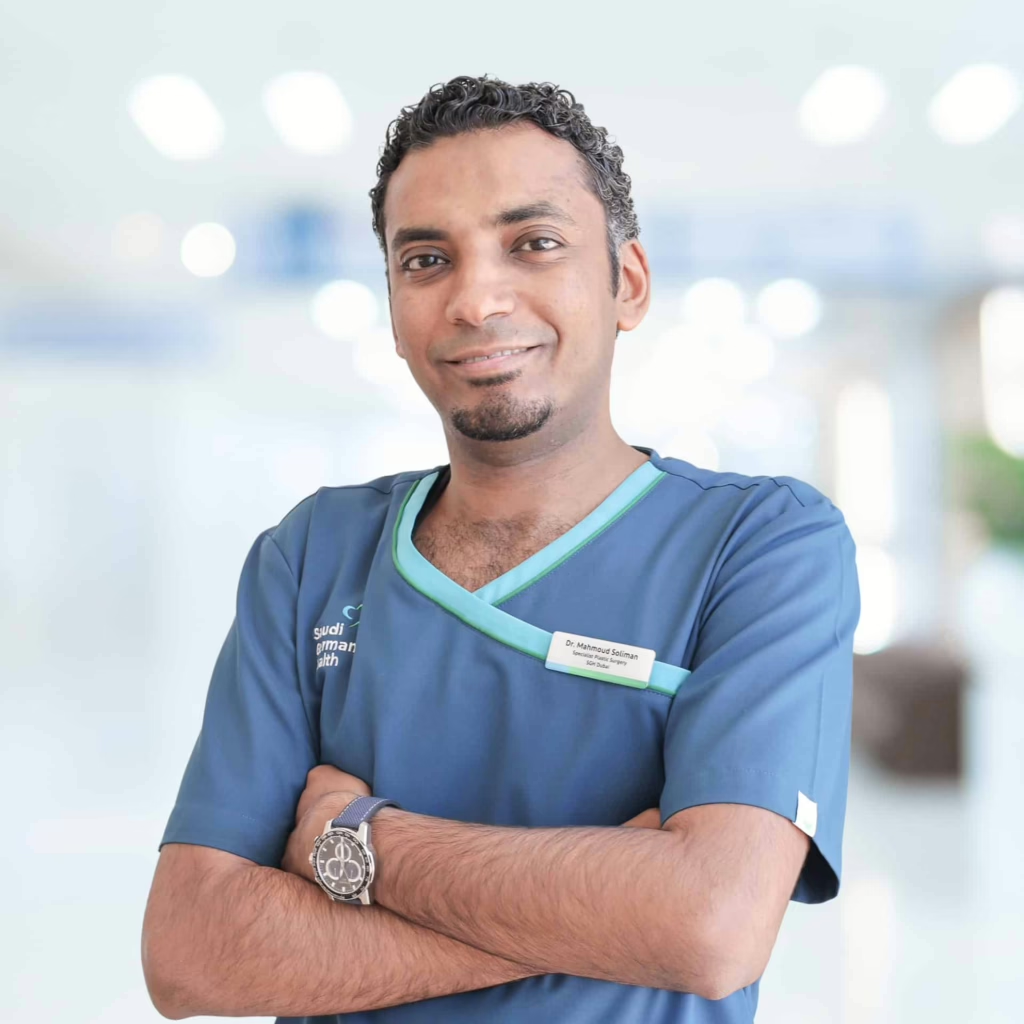
    Dr. Mahmoud Soliman is a Consultant Plastic, Cosmetic and Reconstructive Surgeon at Saudi German Hospital in Dubai. He holds a doctorate degree in plastic surgery and completed fellowship training in Milan. Alongside clinical work, he has academic experience as a lecturer and has contributed to research within the field of plastic and reconstructive surgery.

    His practice includes both aesthetic procedures and reconstructive cases. Body contouring, breast surgery, and facial treatments are part of his aesthetic scope. In parallel, he manages trauma, burn care, congenital conditions, and microvascular reconstruction, reflecting a hospital-based surgical background.

    Key Highlights:

    • Consultant Plastic and Reconstructive Surgeon
    • Doctorate degree in plastic surgery
    • Fellowship training in Milan
    • Academic and research background
    • Practices at Saudi German Hospital Dubai

    Services:

    • Abdominoplasty and liposuction
    • Breast augmentation and reduction
    • Mastopexy
    • Buttock reshaping
    • Facial aesthetic procedures
    • Burn and trauma reconstruction
    • Microvascular free flap surgery
    • Hand surgery
    • Management of congenital anomalies

    Contact Information:

    • Website: saudigerman.com/doctors/dr-mahmoud-soliman
    • Phone: +9718002211
    • Email: info@saudigerman.com
    • Address: Hessa Street 331 West, Al Barsha 3, Exit 36 Sheikh Zayed Rd opposite of American School Dubai

    15. Dr. Adnan Tahir

    Dr. Adnan Tahir is a UK-trained plastic surgeon practicing in Dubai. He completed his surgical training in the United Kingdom and is registered with the UK General Medical Council as a specialist in plastic surgery. His early career included work in burns, hand surgery, trauma reconstruction, and cancer reconstruction before focusing on aesthetic surgery.

    In Dubai, his work centers on cosmetic procedures of the face and body. Liposuction, breast surgery, and rhinoplasty form a large part of his clinical scope. His approach reflects a balance between reconstructive training and aesthetic refinement, with both surgical and non-surgical treatments available depending on the case.

    Key Highlights:

    • UK-trained plastic surgeon
    • Registered with UK General Medical Council
    • Fellowship in aesthetic surgery
    • Background in reconstructive and burns surgery
    • Practicing in Dubai for over a decade

    Services:

    • HD liposuction
    • Tummy tuck
    • Breast augmentation and lift
    • Breast implant exchange
    • Rhinoplasty
    • Facelift and neck lift
    • Blepharoplasty
    • Gynecomastia surgery
    • Hand surgery

    Contact Information:

    • Website: adnan-tahir.com/best-plastic-surgeon-in-dubai
    • Phone: +971 50 567 4770
    • Email: dradnantahirenquiries@gmail.com
    • Address: CosmeSurge Hospital, 02 Jumeirah Beach Road, Dubai
    • Facebook: www.facebook.com/dradnantahirsurgeon
    • Instagram: www.instagram.com/dradnantahir

    16. Dr. Mohan Rangaswamy

    Dr. Mohan Rangaswamy is a Consultant Plastic Surgeon at Al Zahra Hospital Dubai. His training began in India, followed by advanced qualifications and fellowship recognition in the United Kingdom. Over the years, he has worked across reconstructive, cosmetic, and hand surgery, combining hospital-based practice with academic involvement. He has also held leadership roles in plastic surgery departments in the region.

    His work covers a wide range of procedures, from aesthetic surgery to complex reconstruction. Breast surgery, rhinoplasty, and body contouring are part of his cosmetic scope, while burn reconstruction, cancer-related defects, and microvascular surgery reflect his reconstructive background. Hand surgery and wound management remain part of his clinical practice, which reflects a broad surgical base rather than a narrow focus.

    Key Highlights:

    • Consultant Plastic Surgeon at Al Zahra Hospital Dubai
    • Fellowship of the Royal College of Surgeons UK
    • Background in reconstructive and cosmetic surgery
    • Experience in microvascular and hand surgery
    • Former chief of plastic surgery in Dubai hospital setting

    Services:

    • Breast surgery
    • Rhinoplasty
    • Eyelid surgery
    • Body contouring
    • Post weight loss body lift
    • Burn reconstruction
    • Cancer defect reconstruction
    • Hand surgery
    • Management of complex wounds

    Contact Information:

    • Website: azhd.ae/doctors/dr-mohan-rangaswamy
    • Phone: 971 4 378 6666
    • Email: info@azhd.ae
    • Address: Al Zahra Hospital Dubai – Sheikh Zayed Road – Dubai – United Arab Emirates
    • LinkedIn: www.linkedin.com/company/al-zahra-hospital-dubai
    • Facebook: www.facebook.com/AZHDubai
    • Instagram: www.instagram.com/alzahrahospitaldubai

    17. Dr. Abizer Kapadia

    Dr. Abizer Kapadia is a Consultant Plastic Surgeon practicing at the American Academy of Cosmetic Surgery Hospital in Dubai Healthcare City. His training includes experience in the UK, UAE, and India. His practice combines cosmetic surgery with reconstructive procedures, carried out within a hospital setting.

    Body contouring and breast surgery form a large part of his daily clinical work. He also performs rhinoplasty and microsurgical reconstruction when required. His approach is structured around surgical planning and follow-up care, with procedures tailored to individual anatomy rather than fixed templates.

    Key Highlights:

    • Consultant Plastic Surgeon at AACSH Dubai
    • Board-certified plastic surgeon
    • Training and experience in UK and UAE
    • Background in cosmetic and reconstructive surgery
    • Hospital-based surgical practice

    Services:

    • Liposuction
    • Tummy tuck
    • Breast augmentation and lift
    • Breast reduction
    • Rhinoplasty
    • Gynecomastia surgery
    • Facial surgery
    • Microsurgical reconstruction
    • Non-surgical aesthetic treatments

    Contact Information:

    • Website: www.drakapadia.com
    • Phone: +971 55 571 8498
    • Email: contact@drabizerkapadia.com
    • Address: AACSH Dubai Healthcare City
    • LinkedIn: www.linkedin.com/in/drabizerkapadia

    18. Dr. Paulo Michels

    Dr. Paulo Michels is a Brazilian plastic surgeon practicing in the UAE, with clinical work in Dubai and Abu Dhabi. He trained in Brazil and maintains active involvement in international plastic surgery societies. His background includes both aesthetic and reconstructive surgery, with a focus on body and facial procedures.

    His practice centers on body contouring, breast surgery, and facial surgery. High-definition liposuction, tummy tuck procedures, and breast augmentation are part of his aesthetic scope. He also performs rhinoplasty, facelift surgery, and neck procedures, combining surgical precision with attention to proportion and balance.

    Key Highlights:

    • Brazilian-trained plastic surgeon
    • Practicing in Dubai and Abu Dhabi
    • Member of international plastic surgery societies
    • Focus on aesthetic and reconstructive procedures
    • Over a decade of surgical practice

    Services:

    • VASER liposuction
    • Body lift
    • Tummy tuck
    • Breast augmentation
    • Breast reduction and lift
    • Gynecomastia surgery
    • Rhinoplasty
    • Facelift and neck lift
    • Eyelid surgery

    Contact Information:

    • Website: drpaulomichels.com
    • Phone: +971 50 106 7981
    • Address: Al Khaleej Al Arabi St Al Mushrif W47 Abu Dhabi 
    • Instagram: www.instagram.com/drpaulomichels

    Conclusion

    Dubai offers a broad range of plastic surgeons, each shaped by different training paths and clinical focus. Some come from reconstructive backgrounds, others concentrate mainly on aesthetic work. That distinction often influences not just the outcome, but the way consultations, planning, and recovery are handled.

    In the end, the right choice comes down to alignment. Experience, communication style, and surgical approach should feel consistent with what the patient actually wants. A face-to-face consultation usually makes that clearer than any profile or list ever could.

  • Dubai Situation March 3, 2026: Flights Resume Amid Crisis

    Dubai Situation March 3, 2026: Flights Resume Amid Crisis

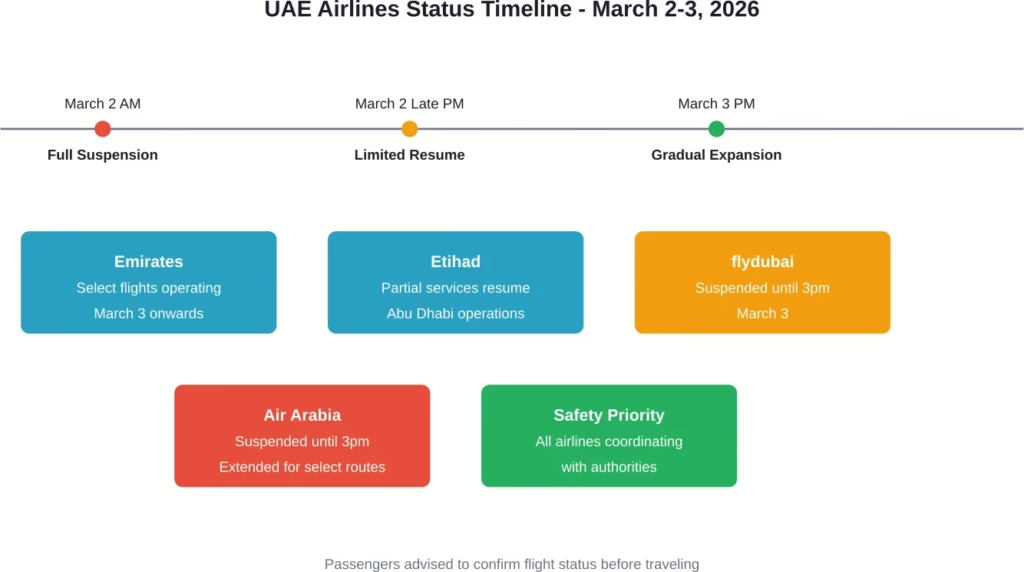
    Executive Summary: On March 3, 2026, Dubai and Abu Dhabi airports resumed limited flight operations after a multi-day suspension caused by regional airspace closures linked to escalating US-Israel-Iran tensions. Emirates, Etihad, flydubai, and Air Arabia began operating select flights, though disruptions continued with Air Arabia suspending services until 3pm that day. Stock markets remained closed, and authorities maintained heightened safety protocols as the Middle East crisis entered its third day.

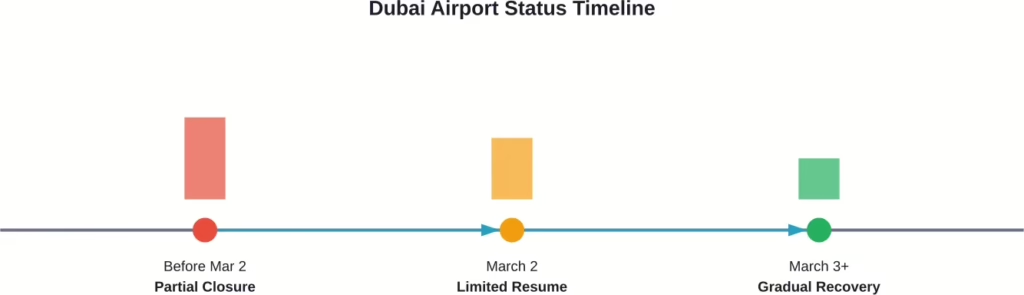
    March 3, 2026 marked a turning point for Dubai as the city began emerging from one of the most significant aviation disruptions in recent memory. After days of complete flight suspensions triggered by regional airspace closures, Dubai International Airport and Dubai World Central International Airport initiated limited operations late on March 2, with select flights operating throughout March 3.

    The situation remained fluid. While Emirates and flydubai began operating specific routes, Air Arabia temporarily suspended all flights to and from the UAE until 3:00 pm UAE time on Wednesday, March 4, 2026. Extended suspensions for flights to Lebanon, Jordan, Syria, and Iraq remained in place until March 5. The UAE aviation sector prioritized safety above all else as regional tensions continued to affect Middle East airspace.

    Aviation Operations Resume With Restrictions

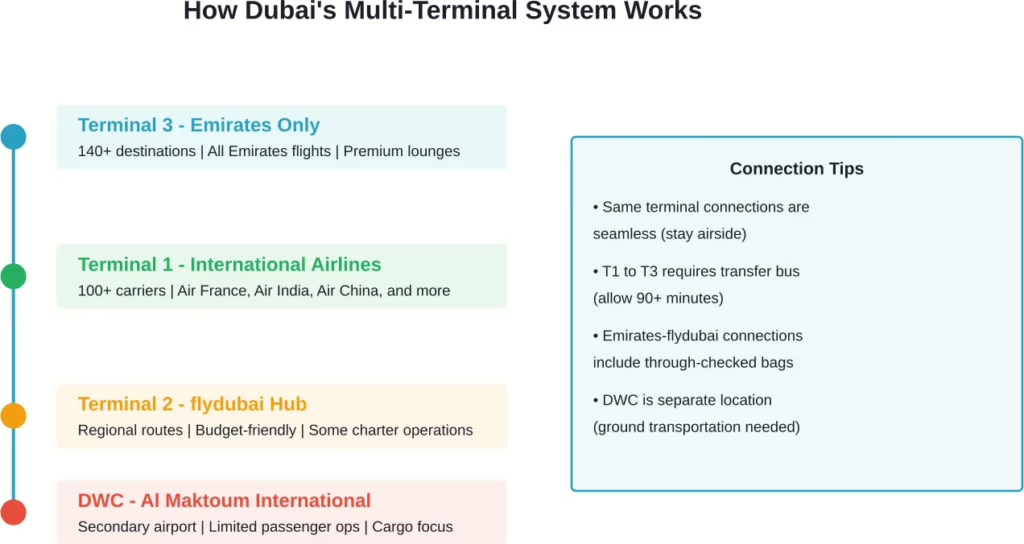
    Dubai’s two major airports—Dubai International Airport (DXB) and Dubai World Central International Airport (DWC)—started limited operations on late Tuesday night, March 2, carrying into March 3. But this wasn’t business as usual.

    Emirates, the UAE’s flagship carrier, began operating select flights after extending its suspension multiple times. The airline had initially suspended all Dubai flights, then extended that suspension as regional conditions deteriorated. According to official statements, Emirates actively monitored the evolving situation and coordinated with aviation authorities to determine which routes could safely operate.

    Etihad Airways followed a similar pattern, resuming partial services from Abu Dhabi. The airline began operating limited flights, with at least one Abu Dhabi flight landing in India as operations gradually normalized.

    Airline-Specific Status on March 3

    Each major UAE carrier faced different operational constraints on March 3. Flydubai extended its Dubai flight suspension until 3pm Tuesday, citing the ongoing situation affecting regional airspace. The airline’s contact center experienced high call volumes as thousands of passengers sought rebooking options.

    Air Arabia took the most conservative approach, suspending all flights to and from the UAE until 3:00 pm UAE time on Wednesday, March 4, 2026. Flights to particularly sensitive destinations—Lebanon, Jordan, Syria, and Iraq—remained grounded until March 5, reflecting heightened safety concerns for those specific routes.

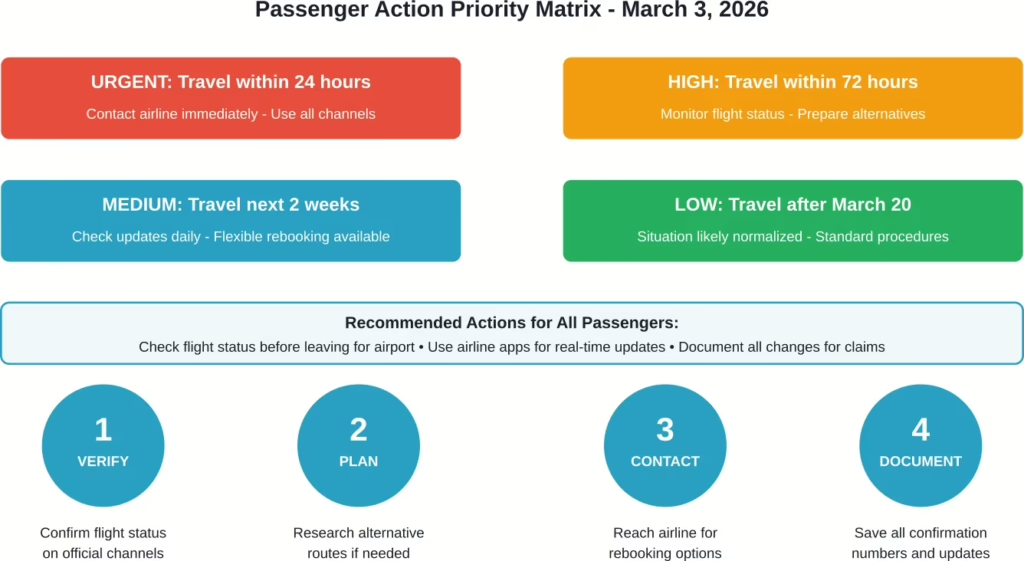
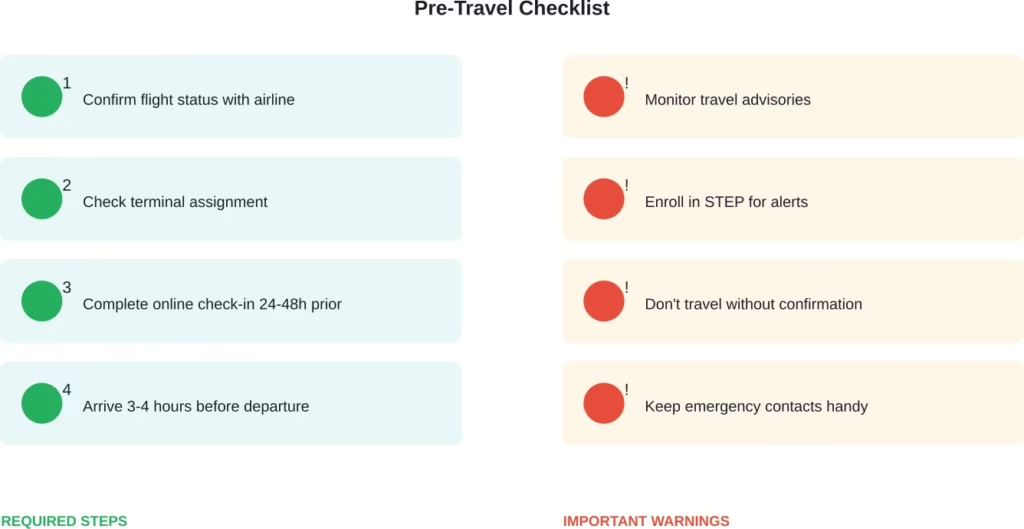
    Passengers booked to travel within 72 hours received priority assistance, though airline contact centers struggled with unprecedented demand. The recommendation was clear: confirm flight status directly with airlines before heading to airports to avoid congestion and disappointment.

    Timeline showing the progression of UAE airline operations from full suspension to gradual resumption on March 2-3, 2026

    Why Did Dubai’s Airports Shut Down?

    The suspension wasn’t a Dubai-specific decision. Regional airspace closures triggered by escalating US-Israel-Iran tensions forced the hand of UAE aviation authorities. The Middle East crisis entered its third day on March 3, with rising tensions affecting multiple countries across the region.

    Safety remained the top priority. UAE authorities coordinated closely with airlines to minimize passenger inconvenience while ensuring no flights operated through potentially compromised airspace. The situation was serious enough that the US urged Americans to immediately depart more than a dozen countries in the Middle East.

    According to Gulf News reports, the conflict involved direct military actions that necessitated airspace restrictions. While specific operational details remained closely held by authorities, the scope of the disruption indicated significant regional security concerns.

    The Broader Regional Impact

    Dubai didn’t face this crisis alone. The airspace closures affected the entire Gulf region, with implications for international aviation networks. Middle East airspace serves as a critical corridor for flights between Europe, Asia, and Africa—shutting it down created ripple effects worldwide.

    The Iranian strikes mentioned in authoritative sources added another layer of complexity. Regional tensions reached levels that prompted stock market closures and heightened diplomatic activity across the Gulf.

    Stock Markets and Business Operations

    The Abu Dhabi Securities Exchange and Dubai Financial Market extended their shutdown through March 3 due to the ongoing regional situation. The Abu Dhabi Securities Exchange has more than 100 listed companies, making the closure a significant pause in Gulf financial activity.

    Authorities emphasized that this was a precautionary measure. The exchanges would resume operations once conditions normalized, with officials monitoring the situation continuously to determine the appropriate reopening time.

    But here’s the thing—while financial markets paused, many other business operations in Dubai continued. The emirate’s reputation as a regional business hub meant maintaining as much normalcy as possible even during crisis conditions.

    SectorStatus on March 3, 2026Expected Normalization
    AviationLimited operations resumedGradual expansion dependent on regional conditions
    Stock MarketsClosed through March 3Monitoring for safe reopening window
    General BusinessOperational with precautionsContinued operations with heightened awareness
    Tourism & HospitalityOpen but affected by travel restrictionsRecovery tied to aviation normalization

    Dubai’s Response and Crisis Management

    His Highness Sheikh Mohammed bin Rashid Al Maktoum, Vice President, Prime Minister and Ruler of Dubai, maintained a visible presence during the crisis period. On March 1, 2026, he attended the Emirates Super Saturday at Meydan Racecourse—an event that took place one month ahead of the 30th edition of the Dubai World Cup scheduled for March 28.

    This public appearance sent a message: Dubai remained functional and resilient despite regional challenges. The decision to proceed with major events demonstrated confidence in the emirate’s security and crisis management capabilities.

    Dubai’s authorities coordinated across multiple government entities to manage the situation. The approach balanced caution with the practical need to maintain the emirate’s position as a regional hub for business, tourism, and transit.

    Communication Strategy

    Official channels provided regular updates throughout the crisis. The protocol.dubai.ae website served as a primary source for government announcements, while airlines maintained direct communication with affected passengers.

    Gulf News and other regional media outlets published frequent updates, creating a stream of information that helped residents and visitors understand the evolving situation. The “live updates” format became standard, with new information posted as conditions changed.

    Passenger Impact and Rebooking Options

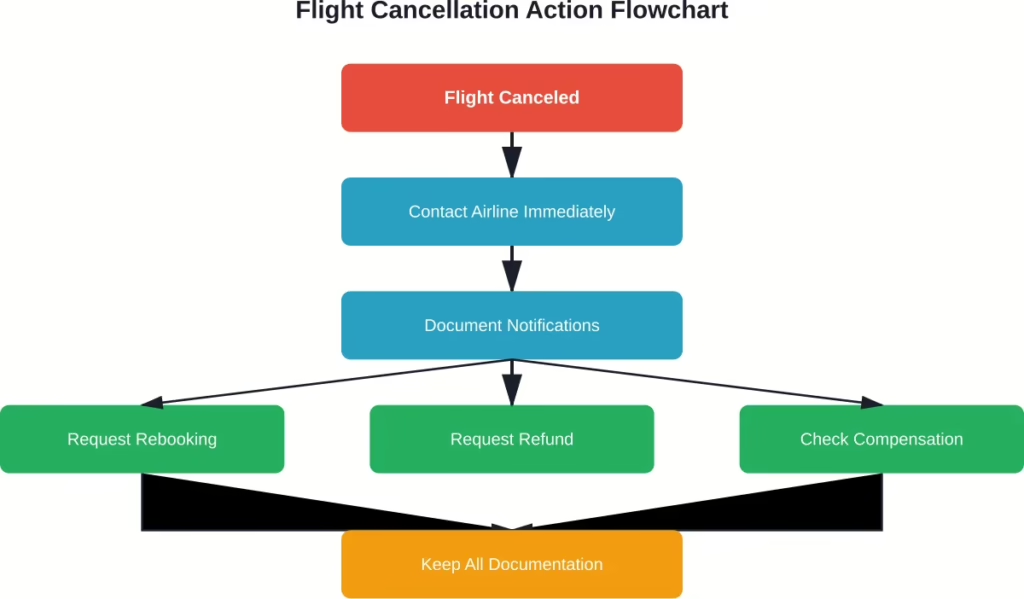
    Thousands of passengers worldwide found their travel plans disrupted. Emirates offered rebooking options to the same destination on or before March 20, giving affected travelers flexibility to reschedule.

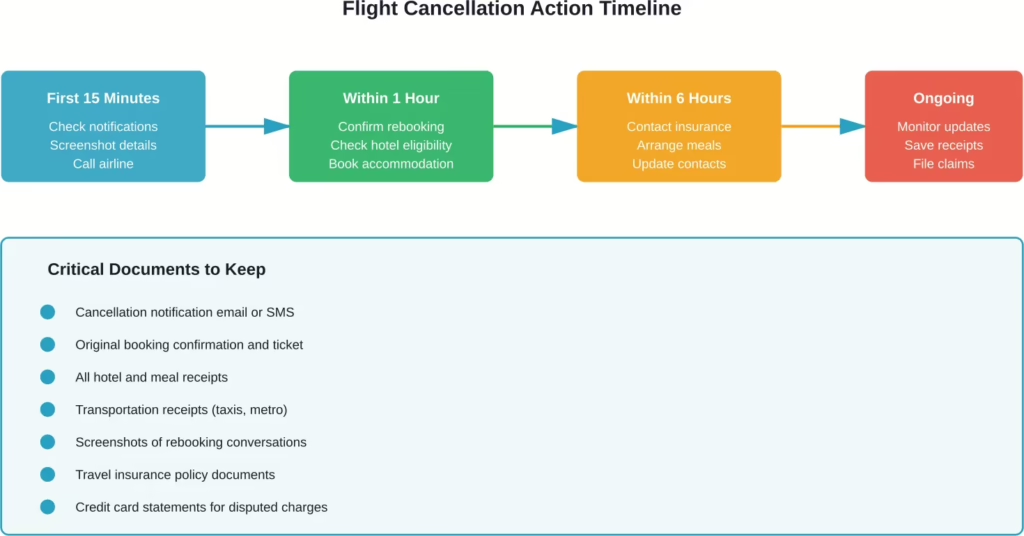
    The challenge was volume. With days of accumulated cancellations, airline contact centers couldn’t handle the flood of calls. Passengers booked within the next 72 hours received priority, but wait times stretched to hours for many trying to reach airline representatives.

    Smart passengers used digital channels—airline apps and websites—to check flight status and explore rebooking options without waiting on hold. But for complex itineraries or special circumstances, speaking with an agent remained necessary.

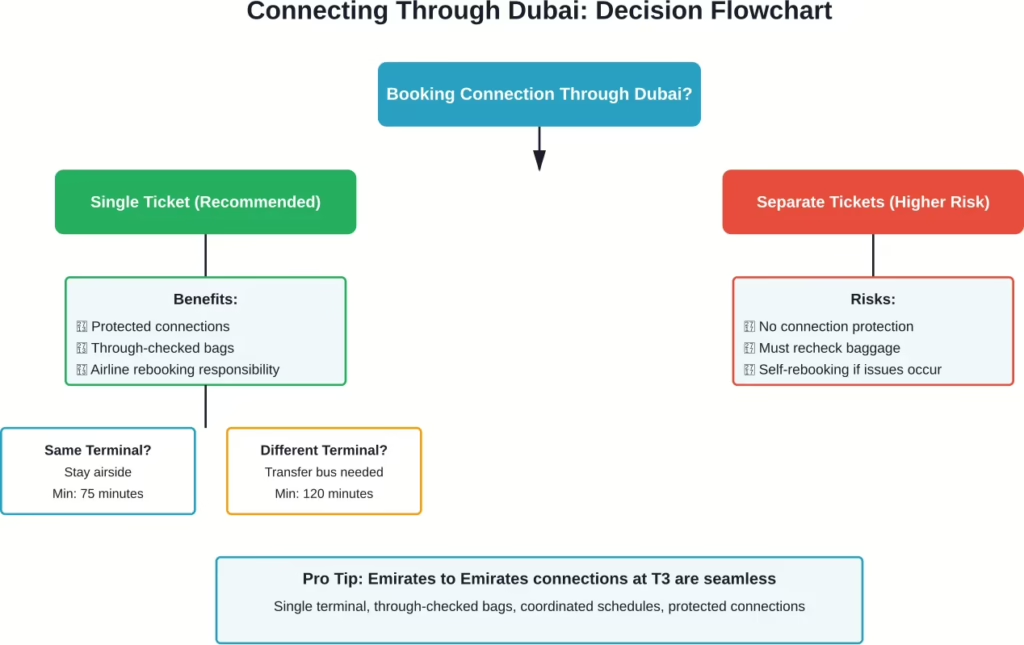
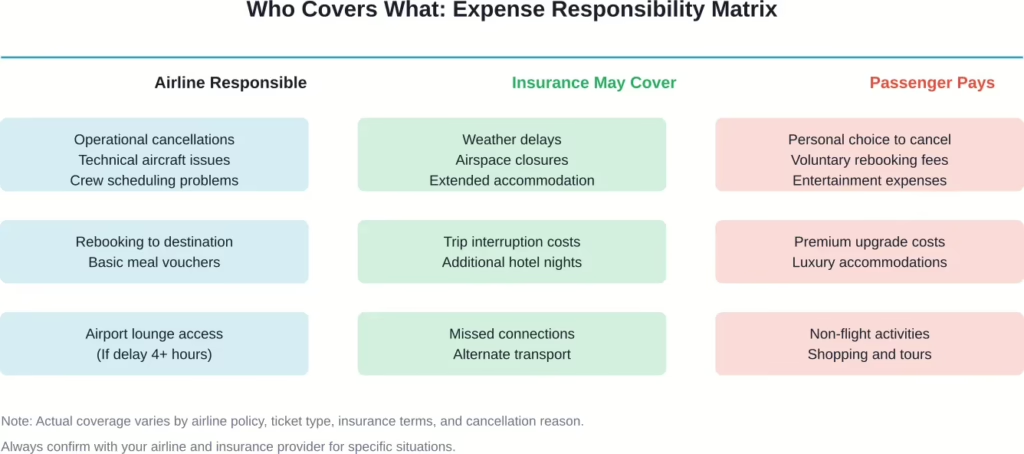
    Priority matrix and action steps for passengers affected by the March 2-3, 2026 Dubai flight disruptions

    What Changed After March 3?

    March 3 represented a transition point, not an immediate return to normal. Limited operations meant exactly that—select flights on specific routes, with the network expanding gradually as regional conditions allowed.

    Air Arabia’s decision to keep flights suspended until 3pm on March 3, with extended restrictions on Middle Eastern destinations until March 5, showed that different airlines assessed risk differently. Some took more conservative approaches based on their specific route networks and operational considerations.

    The stock markets remained closed through March 3, suggesting financial authorities wanted clear stability before resuming trading. This conservative approach made sense given the volatility regional tensions could introduce to markets.

    Looking Toward the Dubai World Cup

    The 30th edition of the Dubai World Cup was scheduled for March 28—less than four weeks after the crisis began. This prestigious horse racing event attracts international visitors and represents a significant moment for Dubai’s tourism and sports sectors.

    The fact that His Highness Sheikh Mohammed bin Rashid Al Maktoum attended the Emirates Super Saturday on March 1 signaled confidence that major events would proceed as planned. Dubai’s leadership clearly intended to maintain the emirate’s international calendar despite regional challenges.

    International Reactions and Embassy Activities

    The situation extended beyond aviation disruptions. Reports emerged of a fire at the US embassy in Riyadh, Saudi Arabia, following an explosion—though this occurred in the broader regional context rather than in Dubai specifically.

    The US government’s advisory for Americans to depart more than a dozen Middle Eastern countries reflected the seriousness of the regional situation. These advisories affect tourism, business travel, and expatriate communities throughout the Gulf.

    Dubai’s large expatriate population—which forms the majority of the emirate’s residents—monitored the situation closely. Many maintained connections to countries directly affected by the regional tensions, making this more than just a travel inconvenience.

    Economic Implications for Dubai

    Even a brief disruption to Dubai’s aviation sector carries significant economic weight. Dubai International Airport ranks among the world’s busiest airports for international passengers, serving as a critical hub connecting East and West.

    Tourism accounts for a substantial portion of Dubai’s economy. Flight suspensions during peak travel periods translate directly to lost hotel bookings, restaurant revenue, retail sales, and entertainment spending. The timing—early March—falls within Dubai’s high season when weather attracts visitors from colder climates.

    The business sector faced challenges too. Dubai positions itself as a regional headquarters location for multinational corporations. When executives can’t fly in or out, meetings get cancelled, deals get delayed, and the friction costs money.

    Economic SectorImpact LevelPrimary Concerns
    Aviation & LogisticsSevereCancelled flights, cargo delays, crew positioning challenges
    Tourism & HospitalityHighCancellations, refunds, reputation concerns for upcoming events
    Retail & EntertainmentModerateReduced foot traffic from tourists, local spending continues
    Financial ServicesModerateMarket closures, transaction delays, currency volatility
    Real EstateLowShort-term disruptions unlikely to affect property market fundamentals

    Safety Measures and Protocols

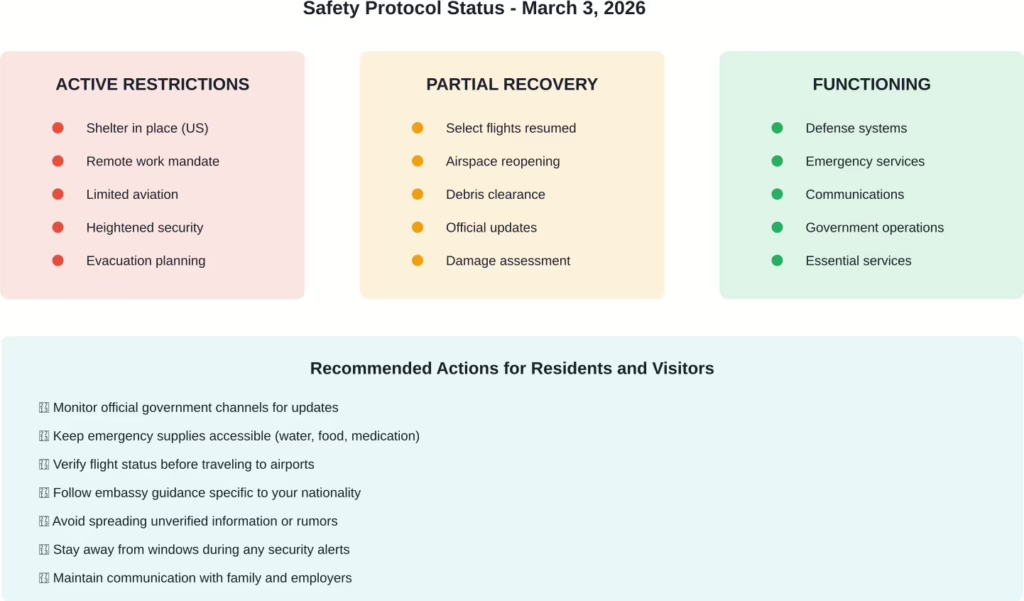
    UAE authorities emphasized that safety and smooth service remained top priorities throughout the crisis. This wasn’t just rhetoric—the decision to suspend flights despite economic costs demonstrated genuine commitment to passenger and crew safety.

    The gradual resumption approach reflected continued caution. Rather than immediately reopening all routes, authorities and airlines collaborated to identify which flights could operate safely and which needed to remain grounded.

    Passengers experienced enhanced security measures and additional checks. The situation required heightened awareness across the entire aviation ecosystem, from air traffic control to ground handling to passenger screening.

    Community Response and Resilience

    Community discussions on social media and forums revealed how residents and visitors coped with the disruption. Some passengers found themselves stranded mid-journey, forced to wait in transit cities or return to origin points.

    Others adapted by shifting to alternative transportation or simply postponing travel. The flexibility many airlines offered helped, though not everyone could easily adjust plans around work commitments or family obligations.

    Dubai’s expatriate community showed the resilience that comes from navigating previous regional challenges. While concerning, the situation wasn’t unprecedented for those who’ve lived in the Gulf through various geopolitical tensions over the years.

    Media Coverage and Information Flow

    The “live updates” approach dominated media coverage, with outlets like Gulf News publishing rolling coverage that updated as new information became available. This created a steady information stream but also required readers to actively follow updates rather than reading a single definitive article.

    Official government sources through protocol.dubai.ae provided authoritative announcements, though these typically contained less frequent but more substantial updates compared to media outlets.

    The challenge for residents and visitors was filtering signal from noise—determining which sources provided reliable information versus speculation or outdated details. Official airline channels and government websites offered the most trustworthy data.

    Frequently Asked Questions

    Were Dubai airports completely closed on March 3, 2026?

    No, Dubai airports were not completely closed on March 3. Dubai International Airport (DXB) and Dubai World Central (DWC) resumed limited operations late on March 2, carrying into March 3. Emirates and flydubai operated select flights, though Air Arabia kept services suspended until 3pm on March 3. The situation represented gradual resumption rather than full closure.

    Why did UAE airlines suspend flights in early March 2026?

    UAE airlines suspended flights due to regional airspace closures triggered by escalating US-Israel-Iran tensions. The Middle East crisis reached levels that made certain airspace unsafe or inaccessible for commercial aviation. UAE authorities prioritized passenger and crew safety, coordinating with airlines to suspend operations until conditions improved.

    When did Emirates resume flights after the suspension?

    Emirates began operating select flights as limited operations resumed at Dubai airports late on March 2, 2026, continuing through March 3. The airline had extended its suspension multiple times as the situation evolved, but started gradual resumption once authorities determined specific routes could operate safely. Full network restoration took longer, expanding progressively as conditions allowed.

    Could passengers get refunds or rebooking for cancelled Dubai flights?

    Yes, affected passengers had options. Emirates offered rebooking to the same destination on or before March 20 for passengers with cancelled flights. Airlines accommodated schedule changes, though contact centers experienced extremely high call volumes. Passengers were advised to use airline websites and apps to explore options rather than waiting on hold.

    Did the flight suspensions affect the Dubai World Cup scheduled for March 28?

    The Dubai World Cup remained scheduled for March 28, 2026—its 30th edition. His Highness Sheikh Mohammed bin Rashid Al Maktoum attended the Emirates Super Saturday on March 1, signaling confidence that major events would proceed despite regional tensions. The three-week gap between the crisis peak and the event provided time for aviation operations to normalize.

    Were other UAE businesses affected beyond aviation?

    Yes, the Abu Dhabi Securities Exchange and Dubai Financial Market closed through March 3 due to the regional situation. With more than 100 listed companies affected, this represented a significant pause in Gulf financial activity. However, many other business operations continued with heightened precautions, demonstrating Dubai’s effort to maintain functionality during the crisis.

    How long did the aviation disruptions last?

    The most severe disruptions spanned roughly three days, with complete suspensions beginning before March 2 and limited operations resuming late March 2 into March 3. However, full normalization took longer, with some airlines maintaining restrictions on specific routes through March 5. The situation improved progressively rather than resolving instantly on March 3.

    Conclusion: Dubai’s Path Forward

    March 3, 2026 marked Dubai’s emergence from a challenging period of aviation disruption and heightened regional tensions. The gradual resumption of flight operations, the careful coordination between authorities and airlines, and the measured approach to reopening demonstrated the emirate’s crisis management capabilities.

    But the situation remained dynamic. Regional tensions don’t resolve overnight, and the full restoration of normal aviation operations would take time beyond March 3. What the day represented was transition—from complete suspension to controlled resumption, from uncertainty to cautious optimism.

    Dubai’s resilience comes from experience navigating regional challenges while maintaining its position as a global business and tourism hub. The decision to proceed with major events like the upcoming Dubai World Cup signals confidence in the emirate’s stability and security.

    For passengers and businesses affected by the disruptions, patience remained essential. Checking flight status before traveling, maintaining flexibility with plans, and using official channels for information continued to be critical practices as operations normalized.

    The situation on March 3 wasn’t resolved—it was evolving. And that evolution, managed carefully with safety as the priority, offered the path back to the normal operations that make Dubai a vital connection point in global aviation networks.

    Stay informed through official airline websites and UAE government channels for the most current flight status and safety information.

  • UAE Situation March 3, 2026: Crisis Update & Recovery

    UAE Situation March 3, 2026: Crisis Update & Recovery

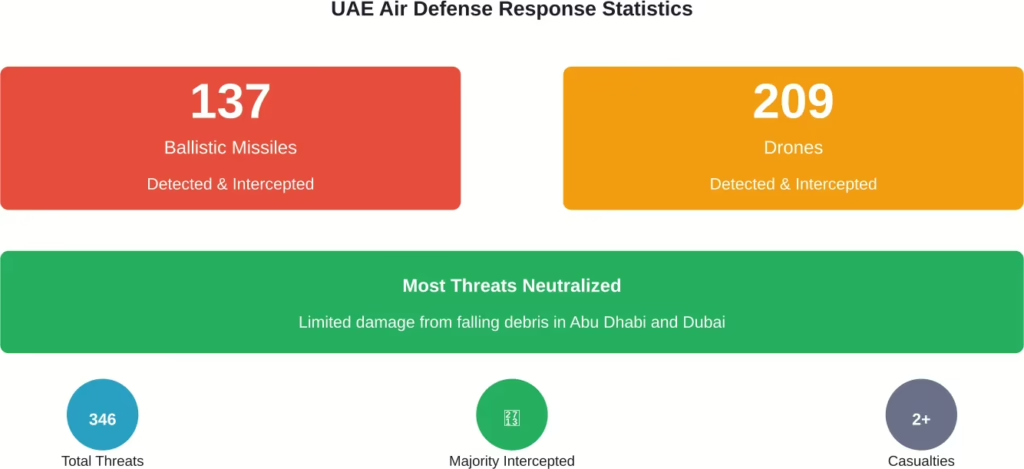
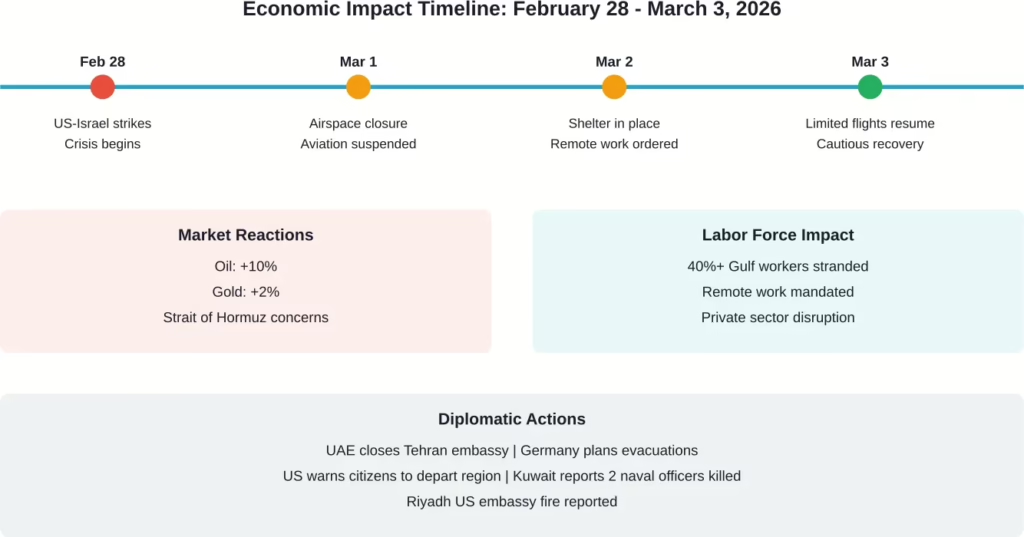
    Executive Summary: On March 3, 2026, the UAE navigated the aftermath of a significant regional crisis involving US-Israel strikes on Iran and Iranian retaliatory attacks. According to the UAE Ministry of Defence, on Day 1 (February 28), 137 ballistic missiles and 209 drones were detected and intercepted. By Day 2 (March 1), forces destroyed 20 ballistic missiles, 2 cruise missiles, and 311 drones, with 21 drones striking civilian targets. Cumulative totals through March 1 reached 165 ballistic missiles, 2 cruise missiles, and 541 drones. Emirates and Etihad airlines began resuming limited operations after multi-day suspensions, while authorities maintained heightened security protocols.

    The United Arab Emirates found itself at a critical juncture on March 3, 2026, as the nation worked to restore normalcy following unprecedented regional tensions. The situation escalated rapidly over the preceding days, transforming the Gulf from a stable business hub into a region on high alert.

    What started as a US-Israel military operation against Iranian targets on February 28 quickly spiraled into broader regional instability. By March 3, the UAE was managing the complex aftermath of retaliatory strikes while working to reassure residents, businesses, and the international community.

    The UAE’s response demonstrated both its advanced defense capabilities and the vulnerabilities of even the most secure Gulf states when regional conflicts escalate.

    The Defense Response: Missiles and Drones Intercepted

    According to the UAE Ministry of Defence, on Day 1 (February 28), the nation detected and responded to a massive aerial assault consisting of 137 ballistic missiles and 209 drones. The scale of this attack represented one of the most significant threats to UAE airspace in recent history.

    Most of these projectiles were neutralized by the UAE’s air defense systems before reaching populated areas. But the sheer volume meant that some debris inevitably fell to ground level.

    While interceptions prevented major damage to infrastructure, falling debris caused limited harm in parts of Abu Dhabi and Dubai. One Pakistani national died from missile debris. Reports indicated that falling debris caused limited harm in parts of Abu Dhabi and Dubai, with some sources referencing two casualties from debris impact.

    UAE Ministry of Defence data on the Iranian aerial assault and defense response

    Geographic Impact Areas

    Dubai and Abu Dhabi experienced the most significant impacts from falling debris. Reports from March 1 and March 2 detailed damage assessments, though authorities emphasized that direct hits to critical infrastructure were prevented.

    The Dubai International Airport area saw some disruption, though not from direct strikes. Airport operations were suspended primarily due to regional airspace closures rather than physical damage.

    Aviation Crisis and Recovery

    The aviation sector bore the brunt of operational disruption. Emirates temporarily suspended all operations to and from Dubai until 15:00 UAE time on Sunday, March 1, due to multiple regional airspace closures.

    By March 3, both Emirates and Etihad began resuming limited operations. This marked a cautious return to normalcy, with airlines emphasizing that schedules remained fluid and safety was the highest priority.

    The resumption wasn’t comprehensive. Select routes reopened first, with carriers prioritizing repatriation flights and essential travel. A flight from Abu Dhabi to Bengaluru landed successfully on March 3, signaling the beginning of broader recovery.

    AirlineSuspension PeriodStatus on March 3, 2026Key Restrictions 
    EmiratesUntil March 1, 15:00 UAE timeLimited operations resumedFluid schedules, select routes only
    EtihadMulti-day closureLimited operations resumedPrioritizing essential travel
    Regional CarriersVaried by locationGradual resumptionDependent on airspace clearance

    Impact on Stranded Travelers

    The aviation disruption left thousands stranded across the Gulf region. South Asian celebrities including Ajith Kumar and Vishnu Manchu were among those affected, with media tracking their safety status.

    Germany announced plans to evacuate vulnerable citizens from the UAE, reflecting international concern about the security situation. The scale of disruption meant that recovery would take days, not hours.

    Diplomatic Fallout and Regional Responses

    The UAE took decisive diplomatic action in response to the Iranian attacks. The nation shut its Tehran embassy and recalled its ambassador, signaling a significant deterioration in bilateral relations.

    This move came after Iranian retaliatory strikes. The diplomatic rupture represented one of the most serious breakdowns in UAE-Iran relations in recent years.

    The UAE had maintained careful diplomatic balance with Iran despite regional tensions. The attacks and subsequent embassy closure marked a clear red line being crossed.

    US Embassy Security Alert

    The U.S. Mission to the UAE issued a security alert on March 2, 2026, recommending that U.S. government personnel and all Americans in the UAE shelter in place. The guidance was explicit: remain in residences, hotels, or other structures, and stay away from windows.

    The U.S. Mission to the UAE issued a security alert on March 2, 2026, recommending shelter-in-place status. The status on March 3 remained contingent on evolving security conditions. The U.S. also urged Americans to immediately depart more than a dozen countries across the Middle East, reflecting broader regional security concerns.

    Meanwhile, a fire erupted at the US embassy in Riyadh following an explosion, demonstrating that the security situation extended well beyond UAE borders.

    Economic and Business Impact

    The UAE government urged the private sector to work remotely until Tuesday, extending work-from-home protocols that had been implemented during the initial crisis days. This directive aimed to minimize civilian exposure to potential secondary strikes or incidents.

    Oil prices responded dramatically to the crisis. Reports indicated potential for crude to hit $100 per barrel if the Strait of Hormuz faced closure—echoing concerns about 1970s-style oil shocks. Gold climbed 2% on rising Middle East tensions, while oil jumped 10%.

    Iran’s IRGC warned that oil prices could reach $200 following closure of the Strait of Hormuz, though this represented a threat scenario rather than immediate reality on March 3.

    Key events and economic impacts during the four-day crisis period

    Labor Force Considerations

    Over 40% of the labor force in Gulf countries consists of migrant workers. Many remained stranded as the crisis unfolded, unable to travel home or return to work. This demographic bore significant burden from the aviation disruptions and security restrictions.

    Broader Regional Context

    The UAE situation didn’t exist in isolation. Kuwait’s military reported two non-commissioned naval officers killed. Attacks and counterattacks created a multi-front crisis across the Gulf.

    Iranian media confirmed significant developments following US-Israel strikes, though specific details varied across sources. The conflict involved multiple nations and created ripple effects throughout the Middle East.

    President Trump issued fresh warnings on March 3, urging Iranians to “take over” their government and calling it “their only chance for generations.” The rhetoric signaled continued tensions despite tactical pauses in fighting.

    Airspace Closures Across the Region

    The UAE wasn’t alone in closing its airspace. Regional closures disrupted aviation patterns across the Gulf, forcing rerouting of international flights and creating cascading delays worldwide.

    By March 3, selective reopenings began. But the situation remained fluid, with authorities maintaining the right to reimpose restrictions if security conditions deteriorated.

    Information Management and Public Communication

    UAE authorities consistently urged residents to rely on official sources and avoid spreading rumors. This message repeated throughout the crisis reflected challenges in managing information flow during rapidly evolving security situations.

    The government provided updates through official channels, though the pace of developments sometimes outstripped official communications. Media outlets aggregated information from multiple sources, creating comprehensive coverage despite restrictions.

    Managing public information during a crisis of this scale presents unique challenges. The balance between transparency and security requires careful calibration.

    Recovery Outlook and Ongoing Challenges

    March 3 represented a transition day—no longer in acute crisis mode, but not yet returned to normalcy. The UAE demonstrated resilience in its response, leveraging advanced defense systems and coordinated government action.

    But questions remained about regional stability. Would tensions escalate again? How long would aviation recovery take? What economic impacts would persist beyond the immediate crisis?

    The IMF’s last Article IV Executive Board Consultation with the United Arab Emirates occurred on July 11, 2024, well before this crisis. Future economic assessments will need to account for the March 2026 events and their lingering effects.

    SectorImmediate ImpactRecovery Status (March 3)Outlook 
    AviationComplete suspensionLimited operations resumedGradual full recovery over days
    Defense346 threats interceptedHeightened alert maintainedContinued vigilance required
    DiplomacyEmbassy closuresAmbassador recalled from IranLong-term relationship strain
    BusinessRemote work mandatedContinuing through March 3Gradual return to offices
    TourismInternational warningsEvacuation plans activeReputation management needed

    Long-Term Strategic Implications

    The events of late February and early March 2026 highlighted the UAE’s geographic vulnerability despite its economic prosperity and military capabilities. Located in a region prone to periodic conflict, the nation must continuously balance its role as a global business hub with security realities.

    According to World Bank Open Data, as of 2023, life expectancy at birth in the UAE is 83 years. The poverty headcount ratio at $3.00 a day (2021 PPP) was 0.0% as of 2018, indicating minimal extreme poverty. Security challenges can disrupt even the most prosperous societies.

    Safety Measures for Residents and Visitors

    On March 3, practical safety guidance remained crucial. While immediate danger had subsided compared to March 1-2, authorities maintained precautionary measures.

    The shelter-in-place recommendation from the U.S. Mission persisted. This meant staying indoors when possible, avoiding windows during any alerts, and keeping emergency supplies accessible.

    Travelers faced difficult decisions. Some governments actively evacuated citizens, while others issued travel warnings. Israel arranged recovery flights to nearby border hubs such as Taba in Egypt and Aqaba in Jordan, with Taba crossings remaining open 24 hours.

    Safety protocol status and recommended actions for UAE residents and visitors on March 3, 2026

    Media Coverage and Information Landscape

    Coverage of the UAE situation on March 3 came from multiple angles. Gulf News provided extensive live updates tracking developments hour by hour. International outlets like the Times of India and Hindustan Times focused on aviation disruptions affecting South Asian travelers.

    The sheer volume of coverage reflected global interest in Gulf stability. Keywords like “Dubai news,” “Abu Dhabi updates,” and “UAE airspace” trended across search engines as people worldwide sought information.

    Information quality varied. Some sources provided factual updates based on official statements. Others speculated about future scenarios. The UAE government’s emphasis on official channels made sense in this context.

    Frequently Asked Questions

    Is it safe to travel to the UAE on March 3, 2026?

    Travel safety remains conditional on March 3. While immediate combat has subsided and limited flights resumed, authorities maintain heightened security protocols. The U.S. Mission recommends Americans shelter in place. Multiple governments issued travel warnings or began evacuations. Check with your embassy and airline before making travel decisions. The situation remains fluid, and security conditions could change rapidly.

    Are Dubai and Abu Dhabi airports operational?

    Both airports resumed limited operations on March 3 after multi-day suspensions. Emirates and Etihad began select flights, prioritizing essential travel and repatriation. However, schedules remain fluid with possible short-notice cancellations. Not all routes have reopened. Travelers should verify specific flight status directly with airlines before heading to airports, as regional airspace restrictions continue affecting operations.

    How many missiles and drones did the UAE intercept?

    According to the UAE Ministry of Defence, on Day 1 (February 28), air defense systems detected 137 ballistic missiles and 209 drones. By Day 2 (March 1), forces destroyed 20 ballistic missiles, 2 cruise missiles, and 311 drones. Cumulative totals through March 1 reached 165 ballistic missiles, 2 cruise missiles, and 541 drones. Most were successfully neutralized before reaching populated areas. However, falling debris from interceptions caused limited damage in parts of Abu Dhabi and Dubai, resulting in casualties including at least one confirmed death of a Pakistani national.

    What caused the crisis between Iran and the UAE?

    The crisis stemmed from US-Israel military strikes on Iran beginning February 28, 2026. Iran launched retaliatory attacks across the Gulf region, including strikes affecting the UAE. Iranian forces apparently targeted the UAE due to perceived support for US-Israel operations. The UAE subsequently closed its Tehran embassy and recalled its ambassador, marking a significant diplomatic rupture between the nations.

    When will normal operations resume in the UAE?

    Full operational normalcy remains uncertain as of March 3. Aviation recovery is happening gradually, with limited flights resuming but full schedules not yet restored. The government mandate for remote work extends through at least Tuesday. Defense systems remain on heightened alert. Recovery timeline depends on broader regional de-escalation, which hasn’t been definitively achieved. Authorities continue urging caution and reliance on official updates.

    What should residents do if there’s another attack?

    Residents should immediately seek shelter indoors, preferably in interior rooms away from windows. Follow official emergency broadcasts and government instructions. Keep emergency supplies accessible including water, food, medications, and important documents. Avoid spreading unverified information. Contact your embassy for nationality-specific guidance. The UAE’s air defense systems demonstrated effectiveness in intercepting most threats, but individuals should still take personal safety precautions during any alert.

    How is this affecting oil prices and the economy?

    Oil prices jumped 10% amid the crisis, with analysts warning of potential increases to $100 per barrel if the Strait of Hormuz faces closure. Iran’s IRGC suggested prices could reach $200 under worst-case scenarios. Gold climbed 2% on regional tensions. The mandate for remote work and aviation disruptions create short-term economic friction, though the UAE’s diversified economy provides some resilience. Long-term impacts depend on whether tensions escalate or de-escalate.

    Conclusion: Navigating Uncertainty

    March 3, 2026 found the UAE in a precarious position—past the immediate crisis peak but not yet returned to normalcy. The nation’s response showcased sophisticated defense capabilities and coordinated crisis management. Successfully intercepting 346 aerial threats prevented catastrophic damage.

    But challenges persist. Aviation recovery proceeds cautiously. Diplomatic relationships need rebuilding. Economic disruptions ripple through sectors dependent on stability and connectivity. The broader regional situation remains volatile.

    For residents, visitors, and businesses, the watchword is vigilance. Monitor official channels. Maintain flexibility in travel and business planning. Understand that conditions can change rapidly when regional tensions remain elevated.

    The UAE has weathered this storm better than many scenarios might have predicted. The coming days will reveal whether March 3 marks the beginning of genuine recovery or merely a pause in ongoing regional instability.

    Stay informed through official government sources, verify information before sharing, and prioritize safety over convenience during this uncertain period. The UAE’s resilience is being tested—and so far, it’s responding with both strength and prudence.

  • Which Airlines Fly Through Dubai? 2026 Complete Guide

    Which Airlines Fly Through Dubai? 2026 Complete Guide

    Executive Summary: Dubai is served by over 150 international airlines flying into Dubai International Airport (DXB) and Al Maktoum International Airport (DWC). Emirates, the UAE’s flagship carrier, operates the largest network from Dubai with flights to 140+ destinations, while partner airline flydubai serves additional regional routes primarily from Terminal 2 and DWC.

    Dubai has transformed itself into one of the world’s most important aviation hubs. In 2025, DXB handled 95.2 million passengers, cementing its position as the world’s busiest airport for international passengers.

    But here’s what makes Dubai genuinely unique as a connecting hub—the sheer number of airlines operating through its airports. Whether flying from Asia to Europe, Africa to the Americas, or anywhere in between, chances are there’s a carrier routing through Dubai.

    This guide breaks down exactly which airlines fly through Dubai, where they operate from, and how to navigate the airport’s multiple terminals.

    Understanding Dubai’s Airport Infrastructure

    Before diving into specific airlines, it’s crucial to understand Dubai’s airport setup. The emirate operates two main aviation facilities, each serving different purposes.

    Dubai International Airport (DXB)

    Dubai International is the primary gateway and the world’s busiest hub for international travel. Since opening in 1960, DXB has maintained double-digit growth rates, evolving into what Dubai Airports describes as “the ultimate global hub.”

    The airport operates three terminals:

    • Terminal 1: Serves international airlines (excluding Emirates and flydubai)
    • Terminal 2: Primarily handles flydubai operations and some charter services
    • Terminal 3: Dedicated exclusively to Emirates operations

    The scale here is impressive. DXB connects travelers to destinations across six continents, with world-class facilities including the iconic Emirates lounges, extensive shopping, and dining options that rival many city centers.

    Al Maktoum International Airport (DWC)

    Located at Dubai World Central, DWC serves as Dubai’s second airport. While considerably smaller than DXB, it handles specific airline operations and is positioned for future expansion.

    Currently, DWC primarily serves cargo operations and select passenger airlines, including Air Atlanta Europe and certain seasonal carriers.

    Real talk: Most international passengers transit through DXB rather than DWC. The infrastructure at Dubai International is far more developed for passenger connectivity.

    Emirates: Dubai’s Flagship Carrier

    When discussing airlines that fly through Dubai, Emirates dominates the conversation—and for good reason.

    Founded on 15 March 1985 with backing from Dubai’s royal family, Emirates started with just two aircraft provided by Pakistan International Airlines and $10 million in start-up capital. The airline was required to operate independently without government subsidies from day one.

    That’s a far cry from where things stand in 2026.

    Emirates’ Global Network

    Emirates operates as the world’s largest international airline, connecting passengers to nearly 140 destinations across six continents from its hub at Terminal 3.

    The carrier operates the world’s largest fleet of wide-body aircraft, consisting entirely of Boeing 777 and Airbus A380 aircraft. This strategic fleet choice allows Emirates to offer spacious cabins and premium features like the A380 Shower Spa and Onboard Lounge.

    Emirates destinations span:

    • Europe: Major cities including London, Paris, Frankfurt, Rome, and Manchester
    • Asia: Extensive coverage across India, China, Southeast Asia, and Japan
    • Africa: Key hubs like Johannesburg, Nairobi, Cairo, and Addis Ababa
    • The Americas: North American gateways and select South American cities
    • Oceania: Australia and New Zealand routes
    • Middle East: Regional destinations across the Gulf and Levant

    The airline’s hub-and-spoke model means virtually every Emirates flight connects through Dubai, making DXB a mandatory stopover for passengers traveling between distant regions on Emirates metal.

    Emirates operates to 140+ destinations across all inhabited continents, with every route connecting through Dubai's Terminal 3.

    Emirates Premium Services

    Emirates has built its reputation on premium service. The airline now offers four travel classes on select routes:

    • Economy Class: Standard seating with award-winning ice entertainment system
    • Premium Economy: Recently expanded with more legroom and enhanced service
    • Business Class: Lie-flat seats and access to exclusive lounges
    • First Class: Private suites with shower spas on A380s

    The carrier’s Skywards loyalty program allows passengers to earn and redeem miles across the network, with Classic Rewards bookings available for members.

    flydubai: Emirates’ Regional Partner

    While Emirates handles long-haul international routes, flydubai fills a different niche in Dubai’s aviation ecosystem.

    Launched as Dubai’s low-cost carrier, flydubai operates primarily from Terminal 2 at DXB and also utilizes Al Maktoum International Airport. The airline serves destinations that might not support Emirates’ wide-body operations.

    The Emirates-flydubai Partnership

    Here’s where things get interesting. Emirates and flydubai formed a strategic partnership that allows seamless connectivity between their networks.

    According to Emirates’ official partnership page, passengers connecting from Emirates flights to flydubai services receive through-checked baggage and boarding passes for both segments. This integration essentially extends Emirates’ reach into secondary cities and regional markets.

    The partnership benefits travelers by:

    • Providing single-ticket bookings across both networks
    • Eliminating baggage reclaim at Dubai for connecting passengers
    • Offering coordinated schedules for convenient connections
    • Extending Emirates’ destination count beyond its own metal

    For passengers, this means booking an Emirates ticket might actually involve a flydubai-operated segment—particularly for routes to smaller cities in the Middle East, Central Asia, and Eastern Europe.

    International Airlines Operating Through Dubai

    Beyond Emirates and flydubai, Dubai Airports lists over 150 international carriers operating regular services through DXB and DWC.

    These airlines use Dubai for various purposes: as a destination, as a connecting hub for their own passengers, or as a technical stop on ultra-long-haul routes.

    Major Airlines at Terminal 1

    Terminal 1 serves as the hub for international airlines excluding Emirates. According to the Dubai Airports airline directory, carriers operating from Terminal 1 include:

    European Carriers:

    • Aegean Airlines (A3) – connecting to Greece
    • Air France (AF) – Paris and French destinations
    • Air Baltic (BT) – Baltic region services
    • Aeroflot (SU) – Russian destinations (subject to current operational status)

    Asian Airlines:

    • Air China (CA) – mainland China connections
    • Air India (AI) – comprehensive Indian network
    • Air Astana (KC) – Central Asian routes

    African Carriers:

    • Afriqiyah Airways (8U) – Libya services
    • Air Algerie (AH) – Algerian destinations

    The complete directory on dubaiairports.ae lists dozens more carriers across all global regions.

    Airlines at Terminal 3

    Terminal 3 operates exclusively for Emirates. If flying Emirates to, from, or through Dubai, Terminal 3 is the departure and arrival point.

    This dedicated terminal handles Emirates’ massive daily operation of hundreds of flights, with specialized facilities designed specifically for the carrier’s wide-body fleet.

    Carriers at Al Maktoum International (DWC)

    DWC currently handles select carriers, including:

    • Air Atlanta Europe (CT) – charter operations
    • Various cargo carriers
    • Seasonal passenger services

    Passenger operations at DWC remain limited compared to DXB, though the facility is designed for significant future expansion as part of Dubai’s long-term aviation strategy.

    North American Airlines Flying to Dubai

    For travelers in North America, several options exist for reaching Dubai, though most routes involve connections rather than direct service.

    United Airlines Dubai Service

    United Airlines operates service to Dubai from select U.S. gateways. The carrier’s Dubai routes provide another Star Alliance option for travelers beyond Emirates’ own North American network.

    Air Canada Routes

    Air Canada operates through Terminal 3 at DXB, according to the Dubai Airports directory. The Canadian carrier provides connections for passengers traveling between Canada and destinations across the Middle East, Asia, and Africa via Dubai.

    U.S. Gateway Cities

    Emirates serves multiple U.S. cities directly, including:

    • New York (JFK)
    • Newark (EWR)
    • Boston (BOS)
    • Chicago (ORD)
    • Dallas (DFW)
    • Houston (IAH)
    • Los Angeles (LAX)
    • Miami (MIA)
    • Orlando (MCO)
    • San Francisco (SFO)
    • Seattle (SEA)
    • Washington, D.C. (IAD)

    These direct Emirates services eliminate the need for connections when traveling between major U.S. markets and Dubai.

    Dubai's terminal structure separates airlines by carrier, with dedicated facilities for Emirates (T3), international carriers (T1), and flydubai (T2), plus the separate DWC airport.

    Terminal Assignments and Navigation

    Understanding which airlines operate from which terminals saves considerable time and stress when connecting through Dubai.

    Finding Your Terminal

    Dubai Airports provides an online directory allowing passengers to search by airline code or name. The tool displays:

    • Airline name and two-letter code
    • Terminal assignment (T1, T2, T3, or DWC)
    • Official airline website

    Passengers should verify terminal assignments before traveling, as occasional changes occur for operational reasons.

    Inter-Terminal Transfers

    Connecting between terminals at DXB requires planning:

    Within the Same Terminal: Passengers remain airside, following connection signage. Minimum connection time is typically 75 minutes for most airlines.

    Between Different Terminals: Free shuttle buses operate 24/7 between terminals. Allow at least 90-120 minutes for inter-terminal connections, as the process involves:

    • Following transfer signs to shuttle bus area
    • Boarding the appropriate shuttle (clearly marked by destination terminal)
    • Clearing security again at the arrival terminal
    • Reaching the departure gate

    Emirates-to-Emirates connections remain entirely within Terminal 3, which significantly simplifies the process.

    Current Operational Status (March 2026)

    It’s worth noting that Dubai’s airports have experienced operational impacts recently. According to Dubai Airports’ passenger advisory from March 2, 2026, limited airport operations resumed after a temporary partial closure of UAE airspace as a precautionary measure related to regional tensions.

    As reported in recent coverage, escalating Iranian drone and missile strikes across the Gulf disrupted flights at both DXB and DWC in early March 2026. Passengers were advised not to travel to airports unless they received confirmed departure times directly from airlines.

    By March 3, operations had resumed, though schedules remained subject to change. This situation illustrates an important reality about flying through Dubai: geopolitical factors can occasionally impact operations, given the region’s location.

    Travelers should:

    • Check flight status directly with airlines before heading to the airport
    • Monitor Dubai Airports’ official channels for operational updates
    • Consider travel insurance covering flight disruptions
    • Allow flexible schedules when possible during periods of regional uncertainty

    Booking Flights Through Dubai

    Several strategies exist for booking travel through Dubai, depending on travel patterns and preferences.

    Direct Airline Bookings

    Booking directly with Emirates provides access to:

    • Best availability of premium cabins
    • Skywards loyalty program integration
    • Flexible change options on certain fare types
    • Access to Emirates’ own sales and promotions

    The Emirates website allows multi-city bookings, promotional code application, and integration with partner airlines including flydubai.

    One-Ticket vs. Separate Tickets

    Passengers face a crucial decision when connecting through Dubai on different airlines: booking as a single itinerary versus separate tickets.

    Single Ticket Benefits:

    • Protected connections if delays cause missed flights
    • Through-checked baggage to final destination
    • Single check-in process
    • Airline responsibility for rebooking if issues occur

    Separate Tickets Risks:

    • No protection if first flight delay causes missed connection
    • Must collect and recheck baggage
    • Separate check-ins required
    • Passenger responsible for rebooking at own expense

    For connections at Dubai, single-ticket bookings provide significantly more security, particularly given the airport’s high volume and potential for delays.

    Using Flight Search Tools

    Multiple online platforms search Dubai connections, but it’s crucial to verify:

    • Which airlines actually operate each segment
    • Terminal locations for connections
    • Minimum connection time allowances
    • Baggage policies across multiple carriers

    Some attractive fares involve tight connections or terminal changes that look fine on paper but prove stressful in reality.

    Most Popular Routes Through Dubai

    Dubai’s geographic location makes it ideal for connecting certain city pairs that lack direct service.

    Asia to Europe Connections

    Cities across India, Southeast Asia, and East Asia connect efficiently to European destinations via Dubai. Popular routing examples include:

    • Mumbai to London via Dubai
    • Bangkok to Frankfurt via Dubai
    • Hong Kong to Paris via Dubai
    • Singapore to Amsterdam via Dubai

    Emirates operates multiple daily flights on many of these segments, providing connection flexibility.

    Africa to Asia Routes

    Dubai serves as a primary connector between African and Asian cities:

    • Johannesburg to Singapore via Dubai
    • Nairobi to Mumbai via Dubai
    • Cairo to Bangkok via Dubai
    • Addis Ababa to Hong Kong via Dubai

    According to 2019 data from AGSI, low-cost carriers like Air Arabia and flydubai delivered a total of nearly 22 million passengers, contributing to the UAE’s position as a global air hub.

    Transcontinental Long-Hauls

    Some of the world’s longest flights route through Dubai:

    • Australia to Europe (often via Dubai rather than direct)
    • New Zealand to Middle East destinations
    • East Africa to North America

    Emirates’ all-wide-body fleet makes these ultra-long sectors feasible with competitive comfort levels.

    Route TypeAverage Connection TimePopular AirlinesKey Advantages
    Asia to Europe2-4 hoursEmirates, Air India, Air FranceFrequent flights, competitive pricing
    Africa to Asia2-5 hoursEmirates, flydubai, EthiopianLimited direct alternatives
    Americas to Middle East3-6 hoursEmirates, UnitedAccess to regional destinations
    Oceania to Europe3-5 hoursEmirates, Qantas partnershipBreak up ultra-long journey

    Comparing Dubai to Other Gulf Hubs

    Dubai isn’t the only Gulf aviation hub. Understanding how it compares to alternatives helps travelers make informed routing decisions.

    Dubai (DXB) vs. Doha (DOH)

    Qatar Airways operates its hub from Doha’s Hamad International Airport, competing directly with Emirates for connecting traffic.

    Dubai Advantages:

    • Higher flight frequency on most routes
    • More terminal space and passenger facilities
    • Better ground transportation into the city
    • Wider range of airlines beyond the hub carrier

    Doha Advantages:

    • Newer, more modern single-terminal facility
    • Often shorter connection times
    • Qatar Airways’ premium service reputation

    Dubai (DXB) vs. Abu Dhabi (AUH)

    Abu Dhabi International Airport serves as Etihad Airways’ hub, located just 90 minutes from Dubai.

    Dubai Advantages:

    • Significantly more flight options
    • Emirates’ larger global network
    • Better connectivity to Asia and Africa

    Abu Dhabi Advantages:

    • Less congested facilities
    • Potentially lower airport fees
    • Etihad’s premium offerings

    For most travelers, Dubai’s vastly larger network outweighs any operational advantages of smaller Gulf hubs.

    Lounge Access and Airport Facilities

    Long connections at Dubai become more comfortable with lounge access and knowledge of airport facilities.

    Airline Lounges at DXB

    Emirates Lounges (Terminal 3):

    • First Class Lounge with shower facilities and dining
    • Business Class Lounge with workspaces and refreshments
    • Exclusive access to Emirates premium passengers

    Other Airline Lounges (Terminal 1):

    • Air France Lounge
    • Marhaba Lounge (paid access)
    • Various airline-specific facilities

    Airport Amenities

    Dubai International offers extensive facilities for connecting passengers:

    • Shopping: Duty-free options across all terminals with luxury brands and local products
    • Dining: Dozens of restaurants from fast food to sit-down service
    • Sleep Options: Hotels within the airport for longer layovers
    • Shower Facilities: Available in premium lounges and some public areas
    • WiFi: Free throughout the airport

    For layovers exceeding six hours, many passengers opt for airport hotels or quick city tours, though the latter requires appropriate visa arrangements for certain nationalities.

    Visa Requirements and Transit Rules

    Understanding visa requirements prevents unpleasant surprises when connecting through Dubai.

    Transit Without Visa

    Most nationalities can transit through Dubai without a visa if:

    • Remaining airside (not passing through immigration)
    • Holding confirmed onward tickets within 24 hours
    • Possessing valid travel documents for the final destination

    This transit privilege applies regardless of nationality for passengers not leaving the airport.

    Leaving the Airport

    Passengers wanting to exit the airport and explore Dubai during layovers need appropriate entry clearance:

    • Many nationalities receive visa-on-arrival or visa-free entry for short stays
    • Others must arrange visas in advance through airlines or embassies
    • Transit visa options exist for longer layovers (typically 48-96 hours)

    The General Civil Aviation Authority (GCAA) of UAE regulates aviation matters, though visa policies fall under immigration authorities.

    Luggage Considerations

    Baggage handling at Dubai varies based on ticketing arrangements and airlines involved.

    Through-Checked Baggage

    On single-ticket itineraries, baggage typically checks through to the final destination automatically. This applies to:

    • Emirates to Emirates connections
    • Emirates to flydubai connections (per their partnership agreement)
    • Interline agreements between participating carriers

    Passengers don’t need to collect and recheck bags during the Dubai connection.

    Self-Transfer Baggage

    Separate ticket bookings require passengers to:

    • Collect checked baggage after arriving in Dubai
    • Clear customs if necessary
    • Check in again for the departing flight
    • Pass through security screening

    This process adds significant time and complexity to connections, particularly between different terminals.

    Baggage Allowances

    Different airlines operating through Dubai maintain distinct baggage policies:

    • Emirates: Generally generous allowances, especially on long-haul routes
    • flydubai: More restricted basic allowances with paid upgrades available
    • Other airlines: Vary widely based on carrier, route, and fare class

    When booking connections involving multiple airlines, verify that baggage allowances on each segment meet travel needs.

    Decision flow for booking connections through Dubai, showing the advantages of single-ticket bookings and terminal considerations for smooth connections.

    Alternative Airlines and Routing Options

    While Emirates dominates Dubai’s aviation landscape, travelers should consider alternative routing through other carriers in certain situations.

    When to Consider Other Airlines

    Non-Emirates options might make sense when:

    • Seeking lower fares on specific routes
    • Holding elite status with other airline alliances
    • Preferring certain aircraft types or cabin configurations
    • Connecting to destinations not served by Emirates

    For example, passengers traveling between smaller European cities and South Asian destinations might find better connections via Istanbul (Turkish Airlines) or Doha (Qatar Airways) rather than routing through Dubai.

    Low-Cost Carrier Options

    Beyond full-service carriers, low-cost airlines operating through Dubai include:

    • flydubai: Extensive Middle East and regional network
    • Air Arabia: Based in nearby Sharjah with some Dubai operations

    These carriers offer budget-conscious options, though with fewer amenities and more restrictive policies than full-service airlines.

    Business Travel Considerations

    Corporate travelers have specific needs when routing through Dubai.

    Business Class Products

    Emirates’ Business Class on its Boeing 777 and A380 aircraft offers:

    • Lie-flat seats in 2-2-2 or 1-2-1 configurations
    • Direct aisle access on many aircraft
    • Onboard WiFi for productivity
    • Premium lounge access at Terminal 3

    For business travelers, these features can justify premium fares by enabling work and rest during long-haul flights.

    Frequent Flyer Considerations

    Business travelers should evaluate:

    • Skywards Membership: Emirates’ loyalty program rewards regular travel through Dubai
    • Alliance Partnerships: Emirates partners with Qantas and select other carriers but isn’t part of a major alliance
    • Credit Card Integration: Various credit cards offer Skywards earning potential

    Corporate travelers heavily invested in Star Alliance, SkyTeam, or oneworld might find other Gulf hubs more rewarding for loyalty accumulation.

    Tips for Smooth Dubai Connections

    Veteran travelers who regularly connect through Dubai offer practical advice for hassle-free transits.

    Timing Your Connection

    Connection time recommendations:

    • Minimum for same-terminal connections: 90 minutes (though airline minimums may be 75 minutes)
    • Inter-terminal connections: 2.5-3 hours minimum
    • Separate ticket bookings: 4+ hours to account for delays and rechecking baggage

    Tighter connections work during off-peak periods, but busy times (particularly evenings when multiple flights arrive simultaneously) benefit from padding.

    Managing Jet Lag on Long Connections

    Dubai’s time zone (UTC+4) sits between Europe and Asia, making it challenging for biological clocks on transcontinental journeys.

    Strategies include:

    • Using airport hotels for connections exceeding 6 hours to get horizontal rest
    • Accessing shower facilities in lounges to refresh
    • Timing meals to destination time zone
    • Getting natural light if exiting the airport during daytime layovers

    Download Key Apps

    Before traveling:

    • Emirates app: For managing bookings and mobile boarding passes
    • Dubai Airports app: Real-time flight information and terminal maps
    • Airline-specific apps: For any non-Emirates segments

    Having boarding passes accessible offline prevents issues with spotty airport WiFi or depleted phone batteries.

    Future Developments

    Dubai’s aviation infrastructure continues evolving to handle projected growth.

    Al Maktoum International Expansion

    DWC is positioned as Dubai’s future primary airport, with ambitious expansion plans to eventually eclipse DXB’s capacity. When fully developed, Al Maktoum International is designed to handle over 200 million passengers annually.

    For now, DWC remains secondary to DXB, but future decades may see a gradual shift of operations to the newer facility.

    Fleet and Network Growth

    Emirates continues taking delivery of new aircraft, with substantial orders for Boeing 777X and additional A380s. These deliveries enable network expansion and frequency increases on existing routes.

    The airline’s position as the world’s largest international carrier suggests continued dominance of Dubai’s aviation landscape for the foreseeable future.

    Frequently Asked Questions

    How many airlines fly through Dubai?

    Over 150 international airlines operate through Dubai’s airports (DXB and DWC), according to Dubai Airports. This includes Emirates, the largest operator, along with carriers from every continent serving destinations worldwide.

    Which terminal does Emirates use at Dubai Airport?

    Emirates operates exclusively from Terminal 3 at Dubai International Airport (DXB). All Emirates flights—arrivals and departures—use this dedicated terminal, which features Emirates-specific facilities including premium lounges, dining, and shopping.

    Can I leave the airport during a layover in Dubai?

    Yes, though visa requirements depend on nationality. Many passport holders receive visa-free entry or visa-on-arrival for short stays. Passengers remaining airside don’t need visas for transit. Check specific entry requirements for your nationality before planning to exit the airport.

    What’s the minimum connection time at Dubai Airport?

    For same-terminal connections, airlines typically require 75-90 minutes minimum. Inter-terminal connections should allow 2-3 hours minimum due to shuttle buses and security rescreening. Separate ticket bookings need 4+ hours to safely manage baggage reclaim and check-in processes.

    Does Emirates fly direct to the United States?

    Yes, Emirates operates direct flights from Dubai to multiple U.S. cities including New York (JFK), Newark, Boston, Chicago, Dallas, Houston, Los Angeles, Miami, Orlando, San Francisco, Seattle, and Washington, D.C. These routes eliminate the need for connections when traveling between major U.S. markets and Dubai.

    Is Dubai Airport the busiest in the world?

    Dubai International Airport (DXB) is the world’s busiest airport for international passengers. In 2025, DXB handled 95.2 million passengers, cementing its position as the world’s busiest, most preferred, and one of the most connected international airports.

    What’s the difference between Emirates and flydubai?

    Emirates is Dubai’s flagship full-service international carrier operating wide-body aircraft to 140+ destinations from Terminal 3. flydubai is Dubai’s low-cost carrier serving regional destinations primarily from Terminal 2 with narrow-body aircraft. The two airlines have a partnership allowing seamless connections with through-checked baggage and coordinated schedules.

    Conclusion: Navigating Dubai’s Aviation Hub

    Dubai’s position as a global aviation crossroads means understanding which airlines fly through the emirate opens up countless routing possibilities.

    Emirates dominates with its massive network of 140+ destinations, but over 150 airlines operate through Dubai’s airports, providing options for virtually any global journey. Whether connecting between continents, accessing secondary markets, or simply transiting through one of the world’s premier airport facilities, Dubai serves as a viable and often excellent routing option.

    The key to smooth Dubai connections lies in understanding terminal assignments, allowing adequate connection times, and booking appropriately (preferably single-ticket itineraries with protected connections).

    Ready to book your next flight through Dubai? Check current schedules and availability directly with your preferred airline, verify terminal information on dubaiairports.ae, and allow flexibility in your schedule to account for the realities of connecting at one of the world’s busiest international hubs.

  • What to Do if a Flight Is Canceled at Dubai Airport

    What to Do if a Flight Is Canceled at Dubai Airport

    Executive Summary: If your flight is canceled at Dubai Airport, contact your airline immediately for rebooking or refund options, monitor official airport channels for updates, and avoid traveling to the airport without confirmation. Airlines operating from Dubai must provide care assistance including meals and accommodation for qualifying delays, and you may be entitled to compensation depending on your departure location and the reason for cancellation.

    Dubai Airport handles millions of passengers annually, making it one of the busiest aviation hubs globally. But when flights get canceled—whether due to airspace closures, extreme weather, or operational issues—travelers face immediate uncertainty and frustration.

    Flight cancellations at Dubai can stem from various causes. Recent events, including airspace restrictions and geopolitical tensions in the Middle East, have caused widespread disruptions. According to Dubai Airports’ official travel advisory, some flights at DXB and DWC have been canceled or delayed due to temporary partial closures of UAE airspace as a precautionary measure.

    Knowing the immediate steps to take and understanding passenger rights makes the difference between chaotic scrambling and controlled problem-solving. Here’s exactly what to do when facing a canceled flight at Dubai Airport.

    Immediate Steps After Learning About Cancellation

    The moment a flight cancellation hits, time becomes critical. Airlines typically notify passengers through email and SMS using the contact details provided during booking.

    But don’t wait for notification. Check flight status proactively through the airline’s official app or website, especially if traveling during periods of known disruption. Dubai Airports advises passengers to check with their airline for the latest updates and not travel to the airport without confirmation.

    Contact Your Airline Directly

    Reach out to the airline immediately through multiple channels—phone, mobile app, and social media. Phone lines get congested during mass cancellations, so trying the airline’s app or Twitter support often yields faster responses.

    Emirates states in their disruption advice that if flights are delayed or canceled, they send notifications via email and SMS. However, proactive contact ensures access to the widest range of rebooking options before inventory gets depleted.

    According to community discussions, ground staff at the airport can sometimes offer different solutions than phone agents, though Dubai Airports currently advises against traveling to the airport unless you have a confirmed valid ticket or boarding pass.

    Document Everything

    Take screenshots of cancellation notices, booking confirmations, and any communication with the airline. Photograph airport display boards showing your canceled flight. This documentation becomes essential for insurance claims and potential compensation requests.

    Keep receipts for any expenses incurred due to the cancellation—meals, accommodation, transportation. Depending on the cause of cancellation and your departure point, these may be reimbursable.

    Immediate action steps to take when a flight is canceled at Dubai Airport

    Understanding Your Rebooking and Refund Rights

    Passenger rights vary significantly based on where the flight departs from and which airline operates the service. The International Civil Aviation Organization (ICAO) principles endorsed by IATA include the right to care and assistance in cases of delays, and to refunds or other compensation in cases of cancellations.

    Rebooking Options

    Most airlines offer automatic rebooking onto the next available flight. Emirates’ disruption advice indicates that if rebooked flights don’t suit a passenger’s schedule, they can contact the airline to find other options and make changes depending on the situation.

    Alternative travel arrangements depend on the cause of cancellation. For situations within the airline’s control (including those required for safety), passengers typically receive priority rebooking on the next available flight or routing through another reasonable path.

    For connection times in Dubai between 10 and 24 hours due to rebooking, passengers might be eligible for hotel accommodations, though specific eligibility criteria apply.

    Refund Entitlements

    When cancellations occur, passengers generally have the right to choose between rebooking and a full refund for the unused portion of their ticket. According to Emirates’ EU regulation notices, if a cancellation occurs and passengers decide not to travel, reimbursement of the fare paid applies to the part of carriage not made.

    Refund processing times vary by airline and payment method, with different timeframes applying in different jurisdictions. Keep documentation of refund requests and follow up if processing exceeds reasonable periods.

    Departure RegionApplicable RegulationKey Rights
    European UnionEC 261/2004Refund or rerouting; care assistance; compensation up to €600 unless extraordinary circumstances
    CanadaAir Passenger Protection RegulationsAlternative arrangements, refunds, compensation based on control category and delay length
    UAE/Dubai (domestic or origin)Airline policies + GCAA oversightRefund or rebooking per airline conditions; care assistance varies by carrier
    United StatesDOT regulationsRefund for canceled flights; no mandated compensation for delays

    Compensation: What You Might Be Entitled To

    Compensation differs dramatically based on departure location and cancellation cause. Not all cancellations trigger compensation—the reason matters immensely.

    EU Departures

    For flights departing from EU airports, EC Regulation 261/2004 provides specific compensation amounts based on flight distance when cancellations occur without sufficient advance notice. According to Emirates’ cancellation notice for EU departures, passengers are entitled to assistance and benefits if the flight is canceled and they meet eligibility criteria.

    However, no compensation is awardable if the cancellation was caused by extraordinary circumstances despite reasonable measures taken to avoid them. Examples include political instability, weather conditions including volcanic ash incompatible with safe operations, and security risks.

    Recent Middle East airspace closures due to geopolitical tensions would likely qualify as extraordinary circumstances, exempting airlines from compensation obligations while still requiring care assistance.

    Canadian Departures

    Canada’s Air Passenger Protection Regulations categorize disruptions into situations within airline control, within control but required for safety, and outside airline control. According to Emirates’ Canadian regulations notice, compensation and assistance vary based on these categories and delay length.

    For situations within airline control, compensation scales with delay duration. For situations required for safety or outside control, airlines must still provide alternative travel arrangements but compensation requirements differ.

    Care and Assistance

    Regardless of compensation eligibility, airlines typically must provide care and assistance during qualifying delays. This includes meals and refreshments in reasonable relation to wait time, hotel accommodation when overnight stays become necessary, and transport between the airport and accommodation.

    According to Emirates’ delay notice for EU departures, if a delay lasts five hours or more and passengers decide not to travel, airlines must reimburse the fare for the part of carriage not made and provide return flight to the first point of departure when relevant.

    Four key factors that determine compensation eligibility for canceled flights

    Practical Steps While Stranded in Dubai

    If cancellation strands travelers in Dubai or prevents departure, several practical considerations come into play.

    Accommodation and Meals

    Check whether the airline provides hotel accommodation. Connection times between 10 and 24 hours may qualify for hotel accommodations, though specific eligibility criteria apply.

    When airlines don’t provide accommodation or it’s unavailable, book something independently and keep all receipts. Travel insurance may reimburse these costs, and in some cases airlines reimburse reasonable expenses even when not initially offered.

    Dubai offers accommodation options across all price ranges, though last-minute availability during mass cancellations can be challenging. Airport hotels fill quickly during disruptions, so book immediately when it becomes clear overnight stays are necessary.

    Visa Considerations

    For travelers transiting through Dubai without UAE entry visas, extended delays raise immigration questions. Contact airline representatives about visa arrangements if delays push beyond transit allowances.

    Dubai Airports provides information about passport control and visa requirements through their FAQ resources, though specific guidance during disruptions should come from airline ground staff and immigration officials.

    Communication and Updates

    Stay connected to official information sources. Dubai Airports updates their website regularly with operational information and travel advisories.

    Monitor the airline’s social media channels and official website for real-time updates. Airlines often post general updates about affected flights and rebooking waves on Twitter and Facebook before individual notifications go out.
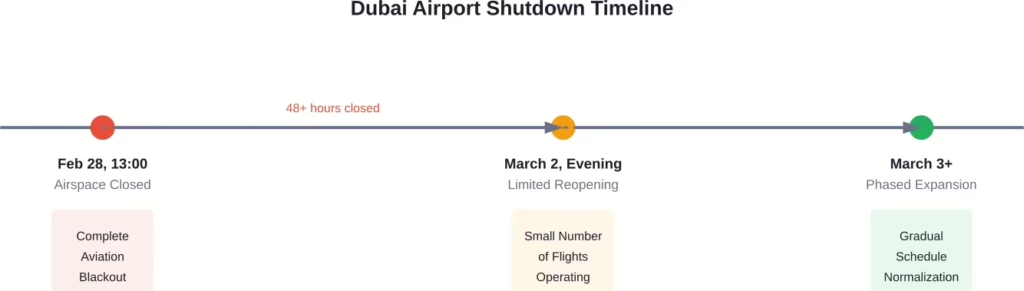
    Register contact details accurately in the airline’s booking system. According to Emirates’ disruption advice, operational notifications go to email addresses and phone numbers provided in bookings, so verify these are current and accessible.

    Travel Insurance: When It Helps and When It Doesn’t

    Travel insurance can significantly ease the financial burden of cancellations, but coverage varies dramatically between policies.

    Travel insurance policies vary significantly in coverage, and specific coverage details should be verified in individual policy documents. Some policies offer broader “cancel for any reason” coverage, though reimbursement percentages vary by policy.

    For flight cancellations specifically, travel insurance often covers accommodation and meal expenses during delays, alternative transportation costs, and unused prepaid arrangements at destinations when flights don’t operate.

    But there’s a catch. Many policies exclude “known events.” If airspace closures or geopolitical situations were publicly known before policy purchase, claims related to those specific events may be denied. This makes timing of insurance purchase critical—buy before situations develop, not after.

    Review policy documents carefully and contact insurers promptly when disruptions occur. Many insurers have 24-hour emergency assistance lines that provide guidance on coverage and claims procedures.

    Airport Access During Disruption Periods

    Dubai Airports has issued specific guidance about airport access during periods of mass cancellation. The official travel advisory states passengers should check with their airline for the latest updates and not travel to the airport without confirmation.

    This guidance exists for good reasons. Airports become overwhelmed during major disruptions, with limited ability to assist passengers whose flights aren’t operating. Ground staff focus on passengers with confirmed bookings on operating flights.

    According to community discussions, some passengers have attempted to visit the airport to speak with airline representatives directly about rebooking. While this sometimes yields results, current advisories discourage this approach unless you have confirmation of operational flights or specific appointments with airline staff.

    If you must go to the airport, bring documentation of everything—booking confirmation, cancellation notice, correspondence with the airline, identification documents, and any hotel or other expense receipts.

    Alternative Routing Options

    When direct flights from Dubai get canceled, alternative routing may get travelers to destinations faster than waiting for direct service restoration.

    Depending on the final destination, routes through Doha (Qatar Airways via Hamad International), Abu Dhabi (Etihad), Istanbul, or European hubs might be available. Airlines generally prefer rebooking on their own flights or partner airlines, but in severe disruption situations they may offer routing through competitors.

    Don’t wait for airlines to suggest alternatives. Research options yourself and present them when speaking with airline representatives. Having specific flight numbers and routings ready speeds the rebooking conversation.

    Be aware that alternative routing often means longer travel times, additional connections, and potential visa complications for countries where layovers occur. Verify transit visa requirements for any new routing before accepting.

    Original PlanAlternative HubConsiderations
    Dubai → EuropeDoha, Abu Dhabi, IstanbulShort detour; usually visa-free transit; similar flight times
    Dubai → North AmericaEuropean hubs (Frankfurt, London, Paris)Significant detour; check transit visa rules; longer total travel time
    Dubai → AsiaAbu Dhabi, Muscat, BahrainMinimal detour; shorter connections; limited frequency
    Dubai → AfricaCairo, Addis AbabaVariable routing; check visa requirements; less frequent service

    Communication with Employers and Accommodation Providers

    When cancellations delay return travel, notify employers immediately. Most understand that circumstances beyond traveler control cause delays, especially during publicized disruption events.

    Get written confirmation from airlines about cancellations and rebooking. Employers typically require documentation for extended absences, and airline letters or emails provide official proof.

    For accommodation at destinations, contact hotels or rental properties about extended stays or late arrivals. Many providers offer flexibility during documented travel disruptions, though availability isn’t guaranteed during peak periods.

    When cancellations prevent reaching destinations, hotels and rental properties may offer refunds or credits if cancellations fall within their policies and are supported by airline documentation. Travel insurance with trip interruption coverage often reimburses unused prepaid accommodations.

    Frequently Asked Questions

    Will the airline provide a hotel if my flight is canceled in Dubai?

    It depends on the cause of cancellation and your connection time. Airlines typically provide hotels for connection times between 10 and 24 hours caused by cancellations within their control. For extraordinary circumstances like airspace closures, hotel provision varies by airline policy. Contact your airline directly to determine eligibility, and keep receipts if you book independently as travel insurance may cover costs.

    Can I get compensation for a canceled flight from Dubai?

    Compensation depends primarily on your departure location and cancellation cause. Flights departing from EU airports fall under EC 261/2004, which provides compensation unless extraordinary circumstances caused the cancellation. Canadian flights follow Air Passenger Protection Regulations with similar principles. For flights departing from Dubai itself, compensation depends on airline policies and the specific circumstances, though care assistance may still be required.

    Should I go to Dubai Airport if my flight is canceled?

    Dubai Airports currently advises passengers not to travel to the airport unless they have confirmed flight bookings and valid boarding passes. During major disruptions, airports become overwhelmed and ground staff focus on passengers with operating flights. Contact your airline through phone, app, or online channels first, and only visit the airport if specifically instructed or if you have confirmed rebooking.

    How long does it take to get a refund for a canceled Dubai flight?

    Refund processing times vary by airline and payment method, typically ranging from 7 days to several weeks. Credit card refunds usually process faster than original payment method refunds for cash or other payment types. Refund regulations apply to refunds depending on jurisdiction, though actual processing may take longer. Submit refund requests through official airline channels and keep documentation of all correspondence.

    What expenses can I claim for a flight cancellation?

    Potentially claimable expenses include meals during delays, accommodation if overnight stays become necessary, transportation between airport and hotels, and communication costs for rebooking arrangements. Keep all receipts and documentation. Whether airlines or travel insurance covers these costs depends on the cancellation cause, applicable regulations, and your specific insurance policy. Submit claims promptly with complete documentation.

    Does travel insurance cover flight cancellations from Dubai?

    Standard travel insurance typically covers additional expenses caused by delays and cancellations—accommodation, meals, alternative transportation—but rarely compensates for the inconvenience itself. Trip cancellation coverage applies when you cancel before departure due to covered reasons. Broader “cancel for any reason” policies may be available, though reimbursement percentages vary by policy. Coverage for known events like publicized airspace closures may be excluded if the situation was public knowledge before policy purchase.

    Can I rebook on a different airline if my Dubai flight is canceled?

    Airlines typically prefer rebooking passengers on their own flights or partner airlines within their alliance. During severe disruptions, some airlines may authorize rebooking on competitor airlines, but this isn’t guaranteed and often requires specific approval. If you book alternative transportation independently without airline authorization, reimbursement is unlikely unless your rights under specific regulations (like EU261) entitle you to self-help remedies with subsequent reimbursement claims.

    Moving Forward After Cancellation

    Flight cancellations at Dubai Airport create immediate stress and disruption. But knowing the right steps—immediate airline contact, understanding regional passenger rights, documenting everything, and exploring all rebooking options—transforms chaos into manageable problem-solving.

    The specific rights and remedies available depend heavily on departure location and cancellation cause. EU and Canadian departures carry stronger passenger protections, while flights originating in Dubai or other regions rely more on airline policies and general ICAO principles.

    Keep communication channels open with airlines, monitor official information sources, and don’t hesitate to escalate through airline customer service channels when initial responses don’t resolve situations adequately.

    Most importantly, stay flexible. Alternative routings, longer connection times, or delayed departure dates may not match original plans, but they get travelers to destinations. During major disruption events affecting hundreds of flights and thousands of passengers, perfect solutions rarely exist—acceptable compromises become the goal.

    If currently facing a canceled flight at Dubai Airport, start with immediate airline contact, document everything, and work through rebooking or refund options systematically. And for future travel, consider comprehensive travel insurance purchased well before departure—it won’t prevent cancellations, but it significantly eases the financial burden when disruptions occur.

  • Dubai Airport Resumes Operations: March 2026 Update

    Dubai Airport Resumes Operations: March 2026 Update

    Executive Summary: Dubai airports resumed limited operations on March 2, 2026, after a 48-hour complete shutdown triggered by UAE airspace closure. A small number of flights are operating from Dubai International (DXB) and Al Maktoum International (DWC), but passengers must receive confirmed departure times directly from airlines before heading to terminals.

    After more than 48 hours of total aviation blackout, Dubai’s airports have reopened—but don’t rush to the terminal just yet. The resumption of operations starting the evening of March 2, 2026, marks a cautious restart rather than business as usual.

    According to Dubai Airports, the authority overseeing both Dubai International (DXB) and Dubai World Central – Al Maktoum International (DWC), only a small number of flights are currently operating. This phased approach follows the UAE General Civil Aviation Authority’s (GCAA) unprecedented decision to close the entire national airspace at 13:00 local time on February 28, 2026.

    What Triggered the Complete Shutdown

    The blanket airspace restriction, taken as an exceptional precautionary measure, effectively turned the Emirates into a no-fly zone save for military, medical, and emergency movements. The GCAA’s decision applied to all commercial arrivals, departures, and over-flights—a response to regional security concerns that compounded global network pressures.

    Emirates, headquartered at Dubai International Airport, and Etihad Airways, headquartered at Abu Dhabi’s Zayed International Airport, were forced to cancel or reroute hundreds of flights. The disruption stranded hundreds of thousands of passengers across the Middle East region.

    Current Operating Status as of March 3

    Here’s the thing though—limited operations doesn’t mean normal service. Dubai Airports issued a clear passenger advisory emphasizing that travelers must not arrive at the airport unless they’ve received confirmed departure times directly from their airline.

    Schedules remain subject to change, and the current operating reality is far from predictable. Even passengers with confirmed flights need to verify which terminal their departure will use, as some operational adjustments may have shifted gate assignments.

    Complete timeline of Dubai airport closure and phased reopening from February 28 to March 3, 2026

    Which Airlines Are Operating

    Emirates and flydubai, the emirate’s two major carriers, have begun resuming select services. But the keyword here is “select”—most schedules remain unstable as airlines work through massive backlogs and crew repositioning challenges.

    Emirates handles 51% of all passenger traffic at Dubai International Airport and accounts for approximately 42% of all aircraft movements under normal circumstances. The hub’s status as the largest airline operation in the Middle East means the ripple effects of this shutdown extend far beyond regional boundaries.

    AirportStatusOperations LevelPassenger Action Required 
    Dubai International (DXB)Limited operationsSmall number of flightsConfirmed departure time from airline
    Al Maktoum International (DWC)Limited operationsSmall number of flightsConfirmed departure time from airline
    Abu Dhabi (Zayed International)Partial resumptionSelect routes onlyDirect airline confirmation

    Critical Steps Before Heading to the Airport

    Real talk: showing up at the terminal without confirmation is a recipe for frustration. Dubai Airports has been explicit about this requirement because terminal capacity remains constrained during this restart phase.

    Passengers must check which terminal their flight departs from, as some operations may have shifted between Terminal 1, Terminal 2, and Terminal 3 at DXB. For the latest flight information, airlines remain the authoritative source—not third-party booking platforms or generic flight tracking websites.

    What to Verify Before Departure

    Check your airline’s website or app directly for real-time updates. Confirmed departure times should come through official airline communication channels—email, SMS, or app notifications. Third-party sites may not reflect the latest operational changes.

    Verify terminal assignments, as some flights have been reassigned during the operational restart. Allow extra time for security and check-in, as processing may be slower than usual with reduced staffing and heightened security protocols.

    Essential verification steps passengers must complete before traveling to Dubai airports during limited operations phase

    Impact on Regional and Global Travel Networks

    The broader implications extend across the Middle East. The GCAA’s airspace closure forced dozens of foreign carriers to cancel or reroute flights, creating a cascading effect on global aviation networks.

    Travel chaos across the region has resulted in longer routings, higher operational costs, and potential insurance premium hikes for carriers. Companies with stranded staff face visa overstay concerns as the backlog clears.

    Under normal circumstances, Dubai International Airport serves as a critical global hub. The limited resumption of operations on March 2 represents the beginning of recovery, not its completion.

    What Happens Next

    The phased reopening approach suggests officials are prioritizing operational stability over rapid capacity expansion. This is where it gets interesting—the timeline for returning to full operations remains undefined.

    Airlines are working through complex crew repositioning and aircraft scheduling challenges. Some international carriers that typically use Dubai as a connection point may continue routing around the emirate until normal operations resume.

    Community discussions on aviation forums indicate passengers with bookings through mid-March should maintain flexible expectations and confirm travel plans within 24 hours of departure.

    Frequently Asked Questions

    When did Dubai airports resume operations?

    Dubai airports resumed limited operations on the evening of March 2, 2026, after a complete shutdown that began when UAE airspace closed at 13:00 on February 28. Only a small number of flights are currently operating from both DXB and DWC.

    Can I go to the airport if my flight is scheduled?

    No. Dubai Airports has explicitly stated that passengers must not travel to the airport unless they have received a confirmed departure time directly from their airline. Schedules remain subject to change, and showing up without confirmation may result in being turned away.

    Which airlines are operating flights from Dubai?

    Emirates and flydubai have resumed select services with limited schedules. Most major international carriers that use Dubai as a hub are gradually restarting operations, but service remains far below normal capacity during this phased restart.

    How do I check if my flight is confirmed?

    Contact your airline directly through their official website, mobile app, or customer service line. Do not rely on third-party booking platforms or generic flight tracking websites, as they may not reflect the latest operational changes during this restart phase.

    Are all terminals at Dubai International operating?

    Limited operations are occurring across DXB, but passengers must verify which terminal their specific flight will use. Some flights may have been reassigned to different terminals during the operational restart, so checking terminal assignments is essential.

    What caused the airport shutdown?

    The UAE General Civil Aviation Authority closed national airspace on February 28, 2026, as an exceptional precautionary measure in response to regional security concerns. The blanket restriction applied to all commercial flights, creating a complete aviation blackout for more than 48 hours.

    When will normal operations resume?

    No official timeline has been provided for returning to full operational capacity. The current phased approach prioritizes stability, and the gradual expansion of flight schedules will depend on operational conditions and regional security factors in the coming days.

    Looking Ahead: Travel Planning Considerations

    For travelers with upcoming Dubai bookings, flexibility remains essential. The limited resumption marks progress, but operational constraints will likely persist for several days as airlines work through backlogs.

    Monitor airline communications closely and avoid making firm ground transportation or connection plans until departure times are solidly confirmed. Travel insurance policies with interruption coverage may prove valuable for those with Dubai itineraries through mid-March.

    The short answer? Dubai airports are open, but not open for business as usual. This cautious restart reflects the complexity of bringing the world’s busiest international airport back online after an unprecedented complete shutdown.

    Stay informed through official channels, maintain direct contact with airlines, and don’t head to the terminal without that confirmed departure time. The operational landscape is improving, but patience and verification remain the watchwords for Dubai-bound travelers in early March 2026.

  • When Can I Leave Dubai? 2026 Travel Update & Exit Options

    When Can I Leave Dubai? 2026 Travel Update & Exit Options

    Executive Summary: As of March 2026, departures from Dubai are severely limited due to ongoing airspace closures following the U.S.-Israel conflict with Iran. The U.S. State Department urges Americans to leave immediately using any available commercial transportation, though many airports across the Middle East remain partially closed with only select flights operating.

    The quiet luxury of Dubai’s high-priced hotels took a brutal turn this past weekend. Iran launched hundreds of missiles and drones at targets across the United Arab Emirates in retaliation for Israeli-U.S. attacks, creating massive aviation disruptions across one of the world’s busiest travel hubs.

    For thousands of travelers, the question isn’t if they want to leave Dubai—it’s whether they actually can.

    Current Flight Status: What’s Actually Operating

    Here’s the thing though—select flights are departing from Dubai International Airport and Abu Dhabi, but operations remain severely limited. Airlines have resumed partial service following the airspace closures, though the situation changes by the hour.

    Emirates, the region’s flagship carrier, has been organizing select departures despite the chaos. An Emirates plane photographed at Dubai International Airport on Monday showed some movement, but some users on platforms like Reddit report difficulties reaching Emirates customer service, though this reflects individual experiences rather than systematic unavailability.

    The airspace closures hit suddenly. Videos posted online showed fires at five-star hotels including the Jumeirah Burj Al Arab and the Fairmont, puncturing Dubai’s reputation as a safe destination in a volatile region.

    Timeline showing the rapid deterioration of Dubai's flight operations following regional conflict escalation

    Official Government Guidance: Leave Now

    The U.S. State Department isn’t mincing words. On Monday, March 2nd, the agency urged Americans across the Middle East to depart as soon as possible using all available transportation.

    According to the U.S. State Department’s travel advisory system, Americans should enroll at https://step.state.gov to receive the latest security updates from the nearest U.S. embassy or consulate. This becomes critical when commercial options shrink by the hour.

    The weekend strikes against Iran caused massive disruptions to U.S. embassies and consulates throughout the region. Following the launch of U.S. combat operations in Iran, the State Department issued a worldwide caution specifically warning Americans in the Middle East.

    But here’s the problem—the guidance says leave immediately, yet many airports remain closed or operating at minimal capacity. It’s chaos and confusion wrapped in official language.

    What Travelers Stuck in Dubai Need to Know

    Don’t Travel to the Airport Without Confirmation

    The first instinct might be rushing to Dubai International Airport. Don’t. Airports across the UAE have seen massive crowds of stranded travelers with nowhere to go and limited information.

    Check flight status directly with airlines before heading out. Emirates has travel updates on their official help portal, though reaching customer service reportedly has been difficult on both chat and phone lines due to overwhelming demand.
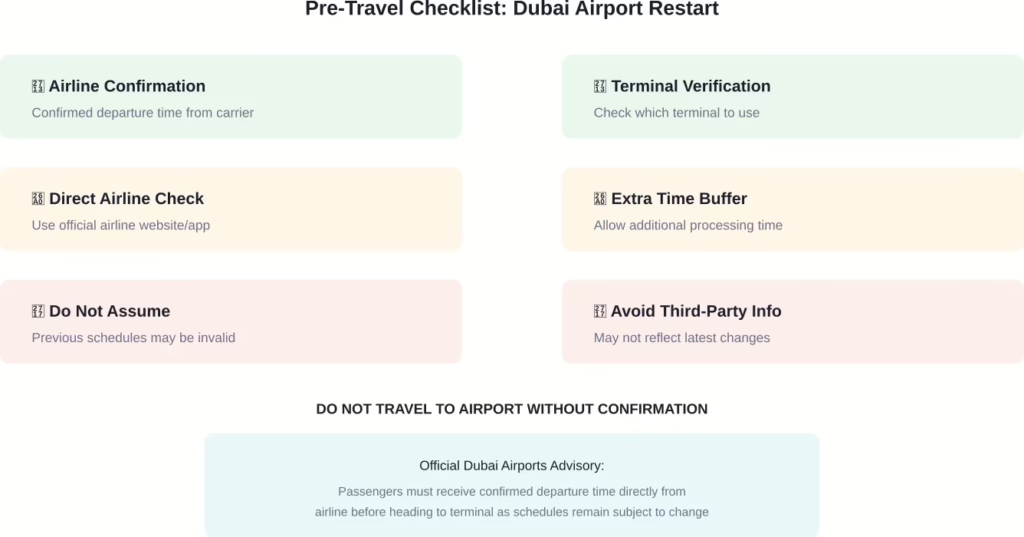
    Seek Out Official Government Sources

    Prioritize safety over speed. The U.S. State Department’s Travel Advisory page (travel.state.gov) provides destination-specific risks and essential precautions for Americans abroad.

    Contact your embassy or consulate immediately. These offices are coordinating with local authorities and airlines to facilitate departures when possible.

    ResourceContact MethodPurpose 
    U.S. Embassy UAESTEP enrollment systemSecurity alerts and evacuation updates
    UAE Police Emergency999Immediate safety concerns
    UAE Ambulance999Medical emergencies
    Emirates AirlineOfficial website travel updatesFlight status and rebooking
    Your Home EmbassyCountry-specific hotlineConsular assistance

    Accommodation If You’re Stuck

    Hotels across Dubai and Abu Dhabi are filling rapidly with stranded travelers. Some airlines are covering accommodation costs for passengers with cancelled flights, though policies vary widely.

    The Department of Health Abu Dhabi has issued circulars requiring healthcare facilities to maintain updated contact information. While this relates primarily to medical services, it reflects the broader government effort to maintain communication during the crisis.

    Alternative Exit Routes and Options

    Real talk: getting out of Dubai right now requires flexibility and multiple backup plans.

    Some travelers report success booking flights through alternative regional hubs, though this means potentially transiting through areas equally affected by airspace restrictions. The conflict impacts the entire Middle East region, not just the UAE.

    Ground transportation to neighboring countries remains an option, though the State Department’s security warnings apply throughout the area. Over 25 percent of road fatalities in the UAE are pedestrians according to official travel information, and highways present additional hazards including unmarked speed bumps and drifting sand.

    Essential do's and don'ts for travelers attempting to leave Dubai during the current crisis

    Mental Health and Safety Considerations

    The stress of being stranded in a conflict zone takes a toll. Mental health support becomes crucial when dealing with uncertainty, fear, and the practical nightmare of cancelled flights.

    Stay connected with family back home. Keep devices charged and maintain access to official news sources rather than relying solely on social media, which amplifies panic.

    The UAE’s reputation as a safe destination in a volatile area was put to a brutal test. That psychological whiplash—from luxury vacation to potential evacuation—creates genuine trauma.
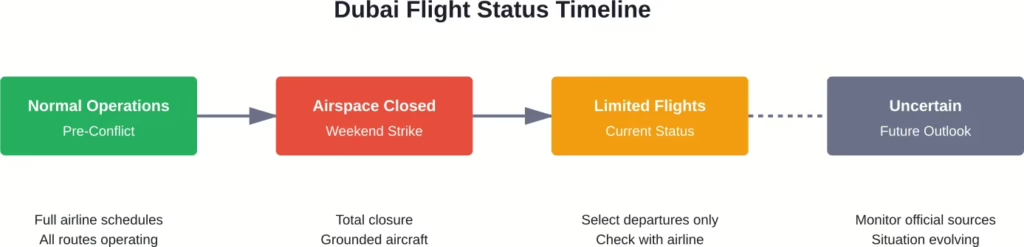
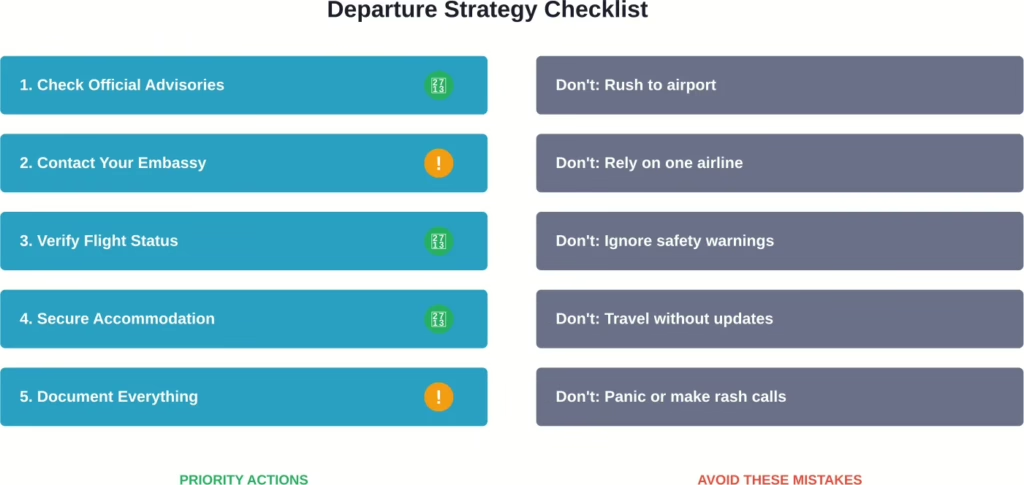
    Looking Ahead: When Will Normal Operations Resume?

    Sound familiar? Everyone wants a clear timeline, but there’s no certainty right now.

    Airlines and government officials haven’t provided specific dates for full operational resumption. The situation depends entirely on the ongoing conflict between the U.S., Israel, and Iran—factors beyond Dubai’s control.

    What’s clear: this isn’t a 24-hour disruption. The travel chaos extends across the Middle East and beyond, affecting connecting flights worldwide. Even travelers with layovers in Dubai face uncertainty about whether they’ll be able to leave the airport or if they’ll be stuck in transit zones.

    Frequently Asked Questions

    Are any flights currently leaving Dubai?

    Yes, select flights are departing from Dubai International Airport and Abu Dhabi, but operations remain severely limited. Airlines have resumed partial service following airspace closures, though schedules change frequently. Check directly with your airline before heading to the airport.

    Should I go to Dubai airport without a confirmed flight?

    No. Airports across the UAE have massive crowds of stranded travelers with limited information. Only travel to the airport after confirming your flight is actually departing through official airline channels.

    What is the U.S. State Department recommending?

    The State Department issued guidance on Monday, March 2nd urging Americans across the Middle East to depart as soon as possible using all available transportation due to safety risks following U.S. combat operations in Iran.

    Can I get a refund for my cancelled flight?

    Airline policies vary. Some carriers are covering accommodation costs for passengers with cancelled flights, while others offer rebooking options. Contact your airline directly for specific policy information, though reaching customer service has been difficult.

    What if I can’t reach Emirates customer service?

    Community discussions report Emirates customer support has reportedly been difficult to reach on both chat and phone lines due to overwhelming demand. Check their official website for travel updates and monitor your flight status online rather than waiting for phone support.

    Is it safe to stay in Dubai right now?

    The UAE experienced Iranian missile and drone attacks over the weekend, with videos showing fires at major hotels. The State Department warns Americans to follow security alerts and consider departing. Monitor official government sources for current safety assessments.

    Are there alternative routes out of the UAE?

    Some travelers report limited success with alternative regional hubs or ground transportation to neighboring countries, though the entire Middle East region faces similar security concerns and travel disruptions. Flexibility and multiple backup plans are essential.

    Conclusion: Stay Informed and Stay Safe

    The short answer? Leaving Dubai right now is possible but extremely limited and unpredictable.

    The conflict between the U.S., Israel, and Iran created unprecedented travel chaos across the Middle East. Dubai’s airports—normally among the world’s busiest and most efficient—are operating in crisis mode with select departures only.

    For travelers currently in Dubai or Abu Dhabi: prioritize official government sources over social media rumors. Contact your embassy immediately. Verify flight status multiple times before heading to the airport. And keep backup plans ready because the situation evolves by the hour.

    The region’s reputation for safe, luxurious travel took a brutal hit this weekend. How long until normal operations resume? That depends entirely on factors beyond aviation control—the broader geopolitical conflict that turned a travel hub into a stranded passenger nightmare.

    Check the U.S. State Department’s travel advisory page and enroll in STEP for real-time updates if you’re currently in the UAE or planning travel to the region.

  • When Can I Arrive in Dubai? 2026 Airport Status Guide

    When Can I Arrive in Dubai? 2026 Airport Status Guide

    Executive Summary: As of March 3, 2026, Dubai airports have resumed limited operations following a temporary airspace closure. Passengers must receive confirmed departure times from their airlines before traveling to the airport, as schedules remain subject to change. For international flights, plan to arrive 3-4 hours early, while domestic flights require 2 hours.

    Planning a trip to Dubai right now requires more attention than usual. Following a temporary partial closure of UAE airspace, Dubai International Airport (DXB) and Dubai World Central—Al Maktoum International (DWC) resumed limited operations on March 2, 2026. But here’s the thing—not all flights are operating normally yet.

    According to Dubai Airports, passengers must not travel to the airport unless they have received a confirmed departure time directly from their airline. Schedules remain subject to change, and showing up without confirmation could mean a wasted trip.

    Current Dubai Airport Operations Status

    Real talk: the situation is fluid. Dubai Airports issued operational updates on March 2, confirming that a small number of flights are operating from both DXB and DWC. Flight information for March 3 shows a mix of operating and cancelled services across all terminals.

    Several flights are still showing cancelled status, particularly on certain routes. For instance, flights to destinations like Novosibirsk, Ufa, Samara, and Mombasa appear cancelled on the latest schedules. Meanwhile, some services like the London Gatwick flight (EK 8009) reached final call status, indicating normal operations for select routes.

    Before making any travel plans, check which terminal your flight departs from. Emirates and other airlines are providing updates directly to ticketed passengers about confirmed departure times and any terminal changes.

    Timeline showing Dubai airport operations from closure to gradual recovery

    How Early Should You Arrive at Dubai Airport?

    Timing matters more than ever. According to a Reddit discussion, some travelers noted that the Emirates site recommends Americans flying back home arrive 4 hours prior to departure, though experiences vary. That’s based on current security processing times and check-in procedures.

    Here’s the breakdown for different flight types:

    Flight TypeRecommended Arrival TimeMinimum Time 
    International flights (US-bound)4 hours before departure3 hours
    Other international flights3 hours before departure2.5 hours
    Domestic/regional flights2 hours before departure90 minutes
    Connecting flights (Dubai Connect)Follow airline guidanceVaries by itinerary

    Most airlines operating from Dubai Airport offer online check-in, typically opening 24 to 48 hours before departure. Checking in online can save significant time at the airport, especially when traveling with only carry-on luggage.

    Navigating Connection Times and Dubai Connect

    Got a long layover? Emirates operates a Dubai Connect service for passengers with extended connection times. When the best connection time isn’t available and a longer wait is necessary, travelers could be entitled to accommodation, meals, and assistance.

    The Dubai Connect team at the Arrivals desk handles transfers and arrangements. But there’s a catch—the service must be added at least 24 hours ahead of the flight to Dubai. It’s easy to add during the online booking process, and Emirates will indicate eligibility based on connection duration.

    Connection planning becomes more critical during periods of schedule disruption. Passengers with connecting flights should build in extra buffer time and stay in contact with their airline for real-time updates.

    Security and Travel Advisory Considerations

    The U.S. Department of State maintains active travel advisories for the United Arab Emirates. Following recent regional developments, Americans worldwide and especially in the Middle East should follow guidance in the latest security alerts issued by the nearest U.S. embassy or consulate.

    Travelers abroad can enroll at step.state.gov to receive the latest security updates. This becomes particularly important during periods of airspace restrictions or operational changes at major airports.

    Sound familiar? The heightened security measures aren’t just about airport operations—they reflect broader regional security considerations that travelers should monitor.

    Essential checklist for traveling to Dubai during current operational conditions

    What About Health and Safety Protocols?

    Health considerations remain part of Middle East travel planning. The World Health Organization continues monitoring Middle East respiratory syndrome coronavirus (MERS-CoV), first identified in Saudi Arabia and Jordan in 2012. Since then, 27 Member States from all WHO regions have reported cases of MERS-CoV infection to the WHO.

    Typical MERS symptoms include fever, cough, and shortness of breath. Travelers should maintain standard health precautions and stay informed about any health advisories affecting the UAE region.

    Frequently Asked Questions

    Can I travel to Dubai Airport without a confirmed flight?

    No. Dubai Airports explicitly advises passengers not to travel to the airport unless they have received a confirmed departure time directly from their airline. Schedules remain subject to change following the recent airspace restrictions.

    How do I check my Dubai flight status?

    Check the Dubai Airports website for real-time flight information. The flight status search tool shows arrivals, departures, delays, and cancellations. Alternatively, contact the airline directly using the surname and booking reference number.

    What’s the difference between DXB and DWC airports?

    DXB is Dubai International Airport, the main hub handling most international flights including all Emirates services. DWC is Dubai World Central—Al Maktoum International, a newer facility handling select routes. Both airports are operating with limited schedules currently.

    How early should international passengers arrive at Dubai Airport?

    For international flights, especially US-bound services, arrive 3-4 hours before departure. Emirates specifically recommends 4 hours for American passengers. Domestic and regional flights require 2 hours minimum.

    What is Emirates Dubai Connect service?

    Dubai Connect provides accommodation, meals, and transfers for passengers with long connection times in Dubai. Travelers must add the service at least 24 hours before the flight. Eligibility depends on connection duration and is indicated during the booking process.

    Are there travel restrictions for Americans visiting Dubai?

    Americans can travel to the UAE, but the U.S. Department of State maintains active travel advisories. Following recent regional developments, travelers should monitor the latest security alerts from the nearest U.S. embassy or consulate and enroll in the STEP program for updates.

    Can I complete online check-in for Dubai flights?

    Yes, most airlines operating from Dubai Airport offer online check-in, typically opening 24 to 48 hours before departure. Online check-in saves time at the airport, particularly beneficial for passengers traveling with carry-on luggage only.

    Moving Forward with Dubai Travel Plans

    The short answer? Dubai airports are open, but operations remain limited and schedules are still stabilizing. Patience and flexibility are essential right now.

    Contact the airline before making any moves. Confirm the departure time, verify the terminal, and allow extra time for security processing. The situation continues to improve as operations gradually return to normal, but proactive communication with airlines remains the most reliable approach.

    For travelers with upcoming Dubai itineraries, stay connected with official sources. Dubai Airports publishes operational updates regularly, and airlines notify ticketed passengers about schedule changes directly. When in doubt, wait for confirmation rather than risking an unnecessary airport trip.

    Check Dubai Airports’ official website and your airline’s communications for the latest updates before heading to DXB or DWC. Safe travels.

  • What to Do If Your Flight Was Canceled in Dubai (2026)

    What to Do If Your Flight Was Canceled in Dubai (2026)

    Executive Summary: If your flight is canceled in Dubai, immediately contact your airline for rebooking or refund options, check your email and SMS for notifications, and know that you may be entitled to hotel accommodations if your layover exceeds 10 hours. Document all expenses and communication, and contact your travel insurance provider if you’re stranded.

    Flight cancellations at Dubai International (DXB) and Dubai World Central—Al Maktoum International (DWC) can turn travel plans upside down. Whether it’s weather disruptions, regional airspace closures, or airline operational issues, knowing what steps to take can save time, money, and stress.

    According to Dubai Airports, passengers affected by delays or cancellations receive notifications via email and SMS to the contact details provided during booking. But that’s just the starting point.

    How You’ll Be Notified About Your Canceled Flight

    Dubai Airports operates a robust notification system. If your flight gets disrupted, the airline sends alerts through multiple channels. Check your email inbox and spam folder, and review any SMS messages.

    Here’s the thing though—not all airlines provide the same level of detail in their initial notification. Some include rebooking options immediately, while others simply confirm the cancellation and direct you to contact customer service.

    Update your contact details through your airline’s booking management system before travel. This ensures you don’t miss critical updates if your phone number or email changes.

    Immediate Steps When Your Flight Gets Canceled

    Time matters when dealing with flight disruptions. Take these actions right away:

    Contact your airline directly. Don’t wait for them to reach you. Call their customer service hotline, use their mobile app, or visit the airline desk at the airport if you’re already there. According to Emirates’ disrupted travel guidelines, passengers can request assistance with rebooking through multiple channels.

    Document everything. Take screenshots of cancellation notifications, save all emails, and keep receipts for any expenses you incur. This documentation becomes crucial if you need to file insurance claims or seek compensation later.

    Check the Dubai Airports official website. Dubai Airports provides regular updates about operational disruptions on their media center. During significant events like regional airspace closures, they post advisories warning passengers not to travel to the airport until their flight status is confirmed.

    Timeline and documentation checklist for handling flight cancellations in Dubai

    Your Rebooking and Refund Options

    Airlines handle cancellations differently, but most offer two primary options: rebooking on the next available flight or requesting a full refund.

    If the airline cancels your flight, they typically rebook you automatically. Emirates, for instance, states that passengers receive rebooking notifications with new flight details. But what if those new dates don’t work for your schedule?

    Contact the airline to explore alternative options. Depending on your ticket type and the reason for cancellation, you might be able to change your travel dates or request a refund. Flexible ticket holders generally have more options than those with restrictive fares.

    SituationTypical Airline ResponseYour Options
    Weather-related cancellationAutomatic rebooking on next available flightAccept rebooking, request different date, or request refund
    Airspace closureHold status until airspace reopensWait for updates or request full refund
    Airline operational issuesRebooking with possible compensationAccept rebooking, request compensation, or demand refund
    Extended delay (24+ hours)Hotel accommodation and meal vouchersAccept airline arrangements or book independently and claim

    Hotel Accommodations and Care Provisions

    Long layovers due to rebooking can make you eligible for hotel accommodations. According to Emirates’ guidelines, passengers with connection times in Dubai between 10 and 24 hours might be eligible for hotel accommodations.

    Not all airlines provide this automatically. Ask specifically about accommodation provisions when you contact customer service. If the airline doesn’t offer hotel coverage, your travel insurance might cover these costs.

    The International Air Transport Association (IATA) endorses core principles on passenger rights that include the right to care and assistance during delays. This covers meals, refreshments, and accommodation when necessary. However, implementation varies by airline and jurisdiction.

    Understanding Your Passenger Rights

    Passenger rights for flight cancellations depend on where you’re flying and which airline you’re using. The International Civil Aviation Organization (ICAO) developed Core Principles on Consumer Protection that many countries have adopted.

    These principles cover situations before, during, and after travel. They address the right to information, the right to care during disruptions, and the right to refunds or compensation when flights get canceled.

    Real talk: Dubai isn’t covered by EU261 regulations, which provide some of the strongest passenger protection globally. That regulation requires airlines to compensate passengers for cancellations within the airline’s control, with potential compensation amounts varying based on flight distance under EU261 regulations.

    For flights departing from Dubai, compensation depends on the airline’s policies and the cancellation reason. Airlines typically don’t compensate for weather events or airspace closures classified as extraordinary circumstances.

    When Travel Insurance Comes Into Play

    Travel insurance becomes particularly valuable when airlines can’t or won’t cover all your expenses. Standard policies often include trip interruption coverage, which reimburses non-refundable expenses when flights get canceled.

    Contact your insurance provider as soon as you know about the cancellation. They’ll guide you through their claims process and clarify what documentation you need. According to IATA’s consumer protection research, passengers increasingly rely on insurance for situations airlines classify as extraordinary circumstances.

    Check your policy’s fine print. Some policies exclude certain types of disruptions, particularly those related to known events like regional conflicts or announced weather patterns.

    Dealing With Extended Delays and Strandings

    Being stranded in Dubai creates additional challenges beyond simple rebooking. If you’re stuck for multiple days, you’ll need to manage accommodation, meals, and possibly visa extensions.

    Dubai offers 96-hour transit visas for many nationalities. If your layover extends beyond that due to cancellations, contact immigration authorities at the airport for guidance on extending your legal stay.

    Keep detailed records of all expenses during your extended stay. Even if the airline doesn’t initially agree to cover costs, you may be able to claim them through your credit card’s travel protection benefits or through insurance.

    Financial responsibility breakdown for different cancellation scenarios

    Practical Tips for Managing the Situation

    Stay calm and organized. Flight cancellations are frustrating, but approaching the situation methodically helps you get the best outcome.

    Don’t leave the airport immediately. If you’re already at DXB or DWC when you learn about the cancellation, visit the airline desk before leaving. Face-to-face interactions often yield faster solutions than phone calls during mass disruptions.

    Use airline apps. Most major carriers allow rebooking directly through their mobile applications. This can be faster than waiting on hold with customer service.

    Monitor official channels. During significant disruptions, airlines and Dubai Airports post updates through official channels including media centers and customer notifications.

    Consider alternative airports. If you’re trying to reach a specific destination, check if nearby airports have available flights. Dubai has two airports—DXB and DWC—and flexibility between them might get you moving faster.

    Common Cancellation Scenarios in Dubai

    Understanding why flights get canceled helps you anticipate what happens next. Dubai Airports issued weather-related disruption statements (reference: media.dubaiairports.ae, 19 April 2024).

    Airspace closures represent another common cause. Regional tensions occasionally result in temporary airspace restrictions as precautionary measures. According to Dubai Airports’ statements, such closures can lead to both delays and cancellations at DXB and DWC.

    Technical and operational issues affect all airports globally. When an aircraft needs unexpected maintenance or crew scheduling problems arise, airlines must cancel or delay flights.

    Frequently Asked Questions

    How long does it take to get a refund for a canceled flight in Dubai?

    Refund processing times vary by airline and payment method. Most airlines process refunds within 7-20 business days for credit card payments, though some take up to 30 days. Contact your airline directly for their specific timeline, and keep all documentation in case you need to dispute charges with your credit card company.

    Will the airline pay for my hotel if I’m stranded in Dubai?

    Airlines may provide hotel accommodations if your connection time extends between 10 and 24 hours due to their rebooking. However, this isn’t guaranteed for all situations. Weather-related cancellations and airspace closures are often classified as extraordinary circumstances, which may limit airline obligations. Always ask explicitly about accommodation provisions when you contact the airline.

    Can I claim compensation for a canceled flight departing from Dubai?

    Compensation eligibility depends on the airline’s policies and the cancellation reason. Dubai isn’t covered by EU261 regulations, so compensation rules differ from European airports. If the cancellation results from airline operational issues rather than weather or airspace closures, you may be entitled to compensation. Check your airline’s conditions of carriage and contact them directly to inquire about compensation.

    What if my connecting flight from Dubai is canceled but my first flight already departed?

    The airline that operates your connecting flight is responsible for rebooking you to your final destination. If you booked both flights as a single ticket, the airline must provide alternative transport. If you booked separate tickets with different airlines, you may not be protected and might need to purchase a new ticket yourself. This is why booking through a single airline or alliance offers better protection.

    Should I book my own replacement flight if the airline can’t rebook me quickly?

    Only book your own replacement flight if the airline explicitly refuses to rebook you or if the delay is unacceptably long and you need to reach your destination urgently. Keep all receipts and document your attempts to resolve the situation with the airline first. Your travel insurance or credit card protection may reimburse you for reasonable replacement flight costs, but this isn’t guaranteed. Contact your insurance provider before making significant purchases.

    How do I prove my expenses for insurance claims or airline reimbursement?

    Keep itemized receipts for all expenses including hotels, meals, transportation, and communication costs. Take photos of receipts as backups. Save all email correspondence with the airline, screenshots of cancellation notifications, and records of phone calls including dates, times, and representative names. Most insurance companies require original receipts, so store both digital and physical copies safely.

    Can I get compensation if I chose not to fly due to safety concerns?

    Generally speaking, if you choose not to travel when the airline hasn’t canceled your flight, you’re not entitled to automatic refunds or compensation under standard airline policies. However, some airlines offer flexible rebooking during regional tensions or documented safety situations. Travel insurance policies with “cancel for any reason” coverage may provide partial reimbursement, though these policies cost more and require purchase well before departure.

    Moving Forward After a Cancellation

    Flight cancellations disrupt plans, but knowing your rights and options makes recovery faster. Dubai’s airports serve as major global hubs, which means airlines generally work to accommodate disrupted passengers efficiently.

    Keep communication channels open with your airline, document everything, and don’t hesitate to escalate issues if you’re not getting adequate assistance. The ICAO Core Principles on Consumer Protection emphasize that passengers deserve proper care during disruptions, even if specific compensation isn’t mandated.

    Contact your travel insurance provider early in the process, and remember that credit cards often provide travel protection benefits many cardholders don’t realize they have. Check your card’s benefits guide or contact them directly.

    Most importantly, stay informed through official channels—Dubai Airports’ website and your airline’s communications. During major disruptions, these sources provide the most reliable and current information about when normal operations will resume.