

Executive Summary: On February 28, 2026, the United Arab Emirates temporarily and partially closed its airspace following US and Israeli strikes on Iran, prompting suspension of all flight operations at Dubai International (DXB) and Al Maktoum International (DWC). Several Gulf countries including Bahrain, Qatar, and Iraq implemented similar airspace restrictions as regional tensions escalated, severely disrupting global air travel across the Middle East.
The United Arab Emirates implemented a temporary and partial airspace closure on February 28, 2026, in response to escalating military tensions across the Middle East. The decision came after the United States and Israel conducted strikes on several Iranian cities Saturday morning, which Iran met with retaliatory missile launches.
According to Dubai Airports, all flight operations at both Dubai International and Dubai World Central—Al Maktoum International were suspended until further notice. The authority issued a passenger advisory at 4:05 PM local time, urging travelers not to travel to the airport and to contact their airlines directly for updates.
Regional Airspace Closures Across the Gulf
The UAE wasn’t alone. At least eight countries across the Middle East closed or restricted their airspace on February 28, creating one of the most significant aviation disruptions the region has seen in years.
Bahrain, Iraq, and Qatar all implemented airspace closures following the intensification of the conflict between Iran and Israel. FlightRadar24 data showed airspace rapidly emptying over Iran, Israel, Iraq, and Jordan as commercial carriers diverted or cancelled flights.
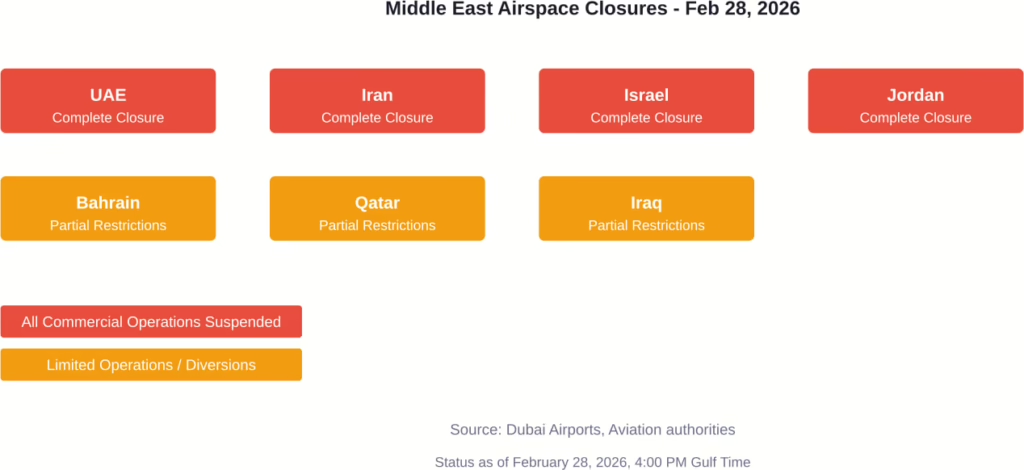
Countries implementing airspace restrictions across the Middle East on February 28, 2026
Impact on Dubai’s Aviation Hub
Dubai International, which welcomed 95.2 million passengers in 2025, came to a standstill. Flight status boards showed cancellations across the board. Emirates, the UAE’s flagship carrier, suspended all departures and arrivals.
Here’s what travelers faced that day:
| Airport | Status | Advisory Issued |
|---|---|---|
| Dubai International (DXB) | All operations suspended | 4:05 PM local time |
| Al Maktoum International (DWC) | All operations suspended | 4:05 PM local time |
| Abu Dhabi International | Partial restrictions | Throughout the day |
The General Civil Aviation Authority of the UAE emphasized that the decision followed a comprehensive assessment of security and operational risks. Safety of passengers and flight crews remained the top priority.
What Triggered the Closure
Saturday morning’s events unfolded rapidly. The United States and Israel launched coordinated strikes against several Iranian cities. Iran responded with ballistic missiles targeting US bases in the region.
According to the International Civil Aviation Organization’s Risk Assessment Manual for Civil Aircraft Operations over or near Conflict Zones (Doc 10084), States must assess risks from both deliberate attacks and unintentional impacts on civil aircraft. The document specifically addresses threats from surface-to-air missiles, ballistic missiles, and air-to-air attacks.
But wait. The UAE went further than just closing civilian airspace. State news agencies reported that the UAE intercepted several Iranian missiles, demonstrating the immediate nature of the threat.
Airlines Scramble to Respond
Global airlines suspended Middle East flights or implemented major diversions. Carriers avoided the entire region, routing flights around the affected airspace at significant cost.
According to aviation data research firm Cirium, of the 3,422 scheduled flights to Israel, Iran, Saudi Arabia, Oman, Bahrain, the UAE, Qatar and Jordan, 232 flights—or 6.7 per cent—were cancelled on Saturday. The disruption impacted global air travel:
- Emirates, the UAE’s flagship carrier, suspended operations
- International carriers rerouted flights away from Gulf airspace
- Airlines flying between Europe and Asia faced longer, costlier re-routing with higher fuel and insurance costs
- Russian airspace restrictions due to the Ukraine war further concentrated Europe-Asia traffic through Middle East corridors
According to Cirium data, the highest number of cancellations were for flights to Israel (37.3 per cent), followed by flights to Jordan (13.3 per cent) and to Qatar (10.1 per cent).
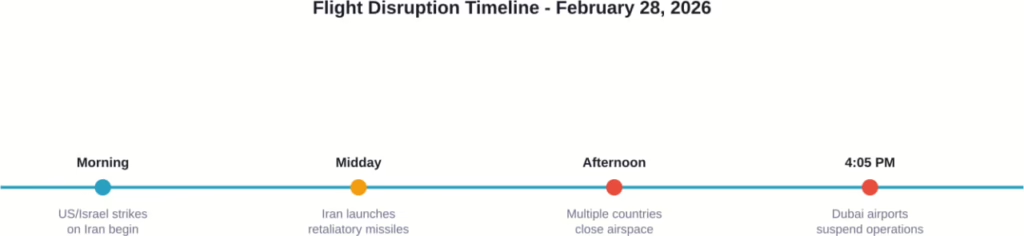
Timeline of key events leading to UAE airspace closure on February 28, 2026
Passenger Rights and Next Steps
So what should affected passengers do? Dubai Airports made it clear: don’t travel to the airport. Check directly with airlines for rebooking options and refund policies.
Most major carriers offered flexible rebooking without change fees for flights scheduled on February 28 and 29. Travel insurance policies covering conflict-related disruptions became suddenly relevant for thousands of travelers.
Frequently Asked Questions
When did UAE close its airspace on February 28, 2026?
The UAE implemented a temporary and partial airspace closure on February 28, 2026, with Dubai Airports issuing a passenger advisory at 4:05 PM local time suspending all operations at DXB and DWC.
Which other countries closed airspace on February 28?
At least eight countries closed or restricted airspace, including Iran, Israel, Jordan, Bahrain, Qatar, and Iraq. The closures followed US and Israeli strikes on Iran and subsequent Iranian missile launches.
Are Dubai flights operating now?
As of the February 28 advisory, all flight operations at Dubai International and Al Maktoum International were suspended until further notice. Passengers should check directly with their airlines for current status.
Why did the UAE close its airspace?
The General Civil Aviation Authority stated the closure followed a comprehensive assessment of security and operational risks after military strikes and missile activity across the region. The UAE also intercepted several Iranian missiles according to state news agencies.
How long will the airspace closure last?
Dubai Airports stated the suspension would continue “until further notice” with no specific reopening timeline provided in the initial announcement. The situation depends on regional security developments.
What should passengers do if their flight is cancelled?
Dubai Airports advised passengers not to travel to the airport and to contact their airlines directly for rebooking options, refunds, and the latest flight updates.
Has this happened before in the UAE?
While the UAE has implemented temporary airspace restrictions during regional conflicts, a complete suspension of operations at both Dubai International and Al Maktoum International represents one of the most significant disruptions to the Emirates’ aviation hub.
Looking Ahead
The February 28 airspace closure demonstrates how quickly regional conflicts can impact global aviation. Dubai’s position as a major connecting hub means disruptions ripple worldwide.
Aviation authorities continue monitoring the situation closely. The International Civil Aviation Organization maintains updated NOTAMs (Notices to Airmen) for conflict zones, which pilots and airlines must check before every flight.
For travelers with upcoming flights through the UAE or Middle East, staying in direct contact with airlines remains essential. Check your flight status before heading to the airport, and consider travel insurance that covers conflict-related disruptions.