
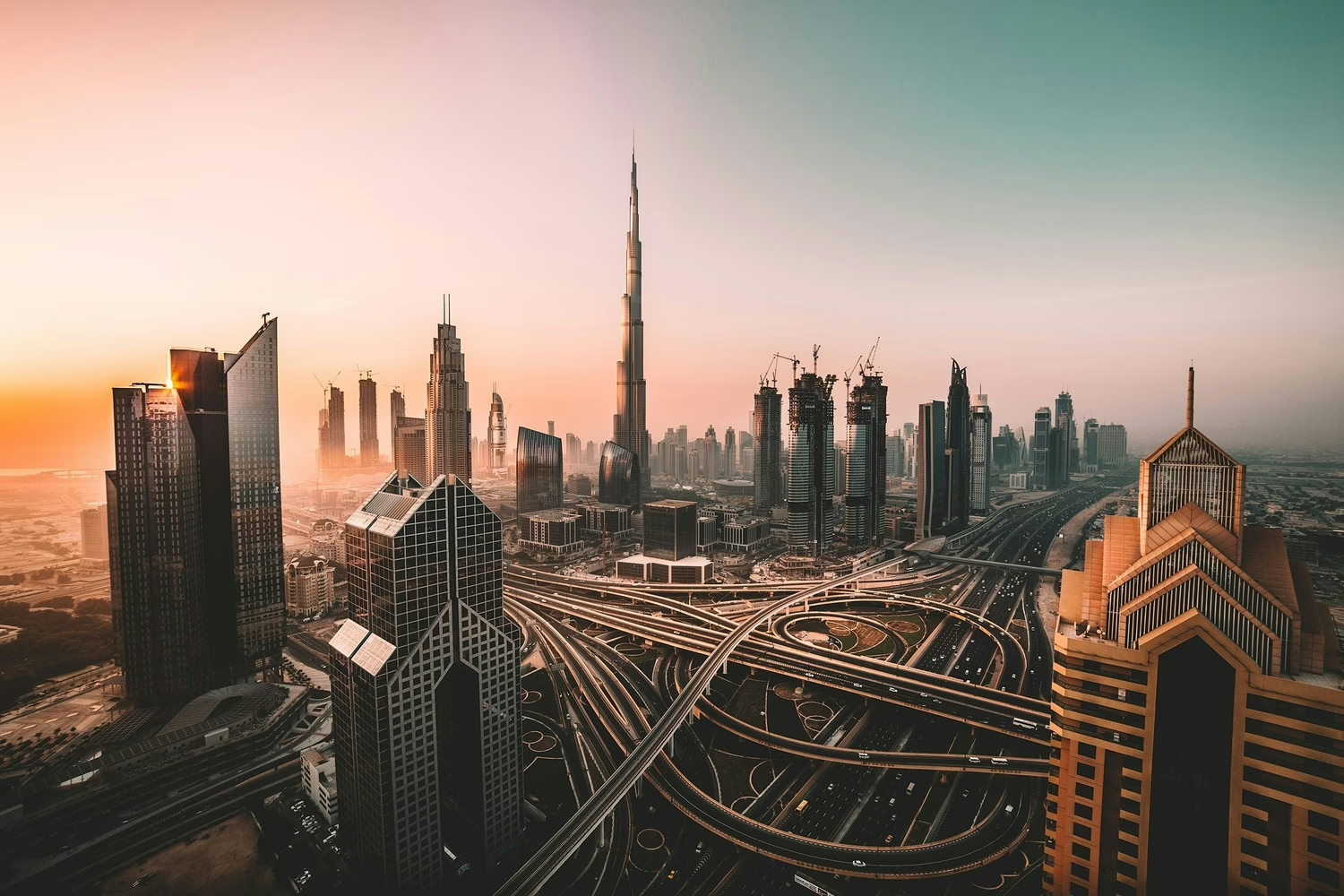
Dubai isn’t huge on paper. It covers just over 4,000 square kilometers – smaller than some suburbs in sprawling metropolises like Los Angeles or Beijing. But once you step inside its borders, the city tells a different story. Massive skyscrapers, densely packed neighborhoods, multi-lane highways, and an airport that handles millions each year – Dubai feels like it punches way above its size. And maybe that’s the point. It’s not about how wide the borders stretch. It’s about how much you manage to build within them.
Why Everyone’s Asking How Big Dubai Really Is
It’s a fair question and one that seems to come up more often than you’d expect. You see the videos of flying taxis and mega malls, read about islands shaped like palm trees, and hear about record-breaking airports and towers. At some point, people naturally wonder: how big is this place, actually? Because the scale of Dubai’s ambition makes it feel like it should stretch halfway across the region. But in reality, the city’s footprint is surprisingly compact.
Part of the curiosity comes from contrast. Dubai blends opposites – desert and glass, old souks and AI-powered offices, calm coastline and nonstop construction. And somehow, it all fits into a space smaller than many major cities. That tension between size and impact is exactly what makes people lean in. It’s not just geography – it’s about perception. How can a city this young, this geographically modest, take up so much space in the world’s imagination?
Geographical Size vs. Global Impact
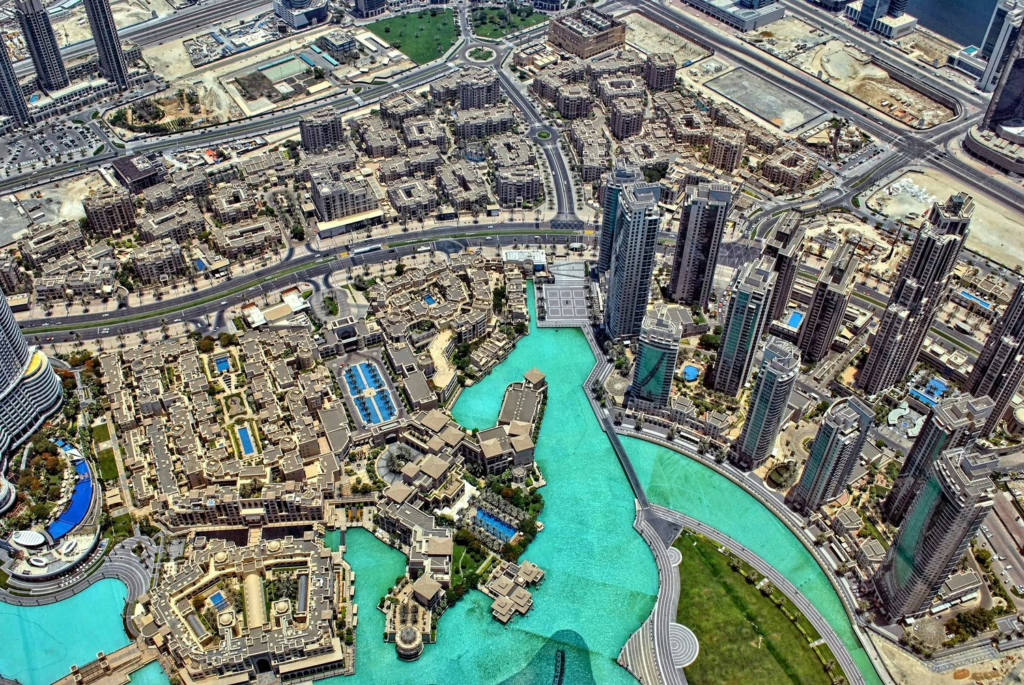
At just over 4,100 square kilometers, Dubai isn’t massive by land area. It’s smaller than many people imagine – especially compared to its global influence. But in terms of visibility, infrastructure, and ambition, it leaves a much bigger footprint than most cities twice its size.
A Compact City by the Numbers
Dubai spans approximately 4,114 square kilometers (or 1,588 square miles).
To put that in perspective:
- It’s about half the size of the U.S. state of Delaware.
- It’s actually much larger in land area than New York City, which covers about 1,214 square kilometers including water.
- You could drive across Dubai in under 90 minutes from end to end.
But unlike sprawling cities that grow outward, Dubai has grown upward and outward – deliberately, and fast.
The Reach Is What Makes It Feel Bigger
Despite its limited physical footprint, Dubai’s influence reaches far beyond its borders. Here’s where that oversized impact comes from:
- Global Travel Gateway: Dubai International Airport (DXB) handled 87 million passengers in 2023 (and 92.3 million in 2024), making it the world’s busiest airport for international travel volume, outpacing even London Heathrow.
- Economic Weight: Dubai’s economy is driven by trade, tourism, logistics, and finance – not oil. Its growth comes from smart diversification and global positioning.
- Tourism Engine: In 2023, Dubai welcomed 17.15 million international visitors, placing it among the top global tourist destinations. And this isn’t seasonal traffic – visitors come year-round for events, shopping, exhibitions, and beaches.
- Iconic Urban Development: The Burj Khalifa (828 meters) is the tallest building in the world. The Palm Jumeirah, a man-made island visible from space, added over 520 kilometers of new coastline to the city. These aren’t just architectural feats – they’re global symbols.
- Cultural & Business Soft Power: Dubai regularly hosts major global events like GITEX Global, Art Dubai, and Expo 2020 (held in 2021). It’s home to dozens of international business councils and more than 30 free zones, including Dubai Internet City, Dubai Design District, and DIFC.
Dubai in Focus: Urban Scale Through the Eyes of World Arabia
At World Arabia, we don’t measure Dubai by surface area. We’re more interested in how the city breathes – in the movement of people, in the stories behind each new district, in the tension between its past and its next big thing. From quiet galleries in Alserkal to design pop-ups in d3, we follow what makes the city feel alive.
Our editorial work goes beyond glossy visuals. We cover Dubai through curated interviews, cultural spotlights, and long-form features that explore not just where the city is heading, but why it’s heading there. The goal isn’t to capture what Dubai wants to show – it’s to reflect what’s actually happening on the ground, in real time, across business, art, fashion, architecture, and local experience.
For a closer, visual look at these moments, you can follow us on Instagram. But the heart of our coverage lives here – on the pages of the magazine, where the city’s pace, personality, and evolution come into focus one story at a time.
Living Dense: How Dubai Fits 4 Million People Into Tight Geometry
Dubai isn’t sprawling – it’s layered. The city packs nearly 4 million people into just a little over 4,100 square kilometers, and somehow, it works. Not by accident, but by design. Zoning is strict. Districts serve distinct functions. There’s a place for global finance (DIFC), one for tech (Internet City), creative industries (d3), old trade (Deira), and a dozen versions of residential life – from gated desert communities to waterfront high-rises. Density here isn’t chaos. It’s curated.
About 85 to 90 percent of the population are expats, which means Dubai isn’t just compact – it’s globally compressed. Walk a few city blocks and you’ll hear five languages, pass a Filipino bakery, a Lebanese café, a German-owned gallery, and a South Indian supermarket – all in the same neighborhood. What keeps it moving is infrastructure. The metro is long, fast, and driverless. Roads are wide and built for heat. And at street level, life blends business and leisure almost without pause.
Economic Footprint: Bigger Than Its Borders
Dubai is compact on the map but expansive in reach. With just over 4,100 square kilometers of land, it has grown into one of the most connected and economically diversified cities in the world. While its skyline often grabs the headlines, the real story lies in the city’s infrastructure, regulatory design, and ability to attract capital, talent, and trade from every continent.
Diversified, by Design
Dubai’s economy no longer leans on oil. As of 2022, oil accounts for less than 1% of the emirate’s GDP. Instead, the city thrives on trade, transport, tourism, real estate, and financial services. According to Dubai Statistics Center, Dubai’s GDP reached AED 307.5 billion ($83.7 billion USD) in the first nine months of 2023, with a projected full-year growth rate of 3.5-4%, depending on sector performance.
Built for Speed and Access
Dubai operates over 30 specialized free zones, including DIFC, Dubai Internet City, Dubai Multi Commodities Centre (DMCC), and Jebel Ali Free Zone (JAFZA) – home to 9,500+ companies. These zones offer full foreign ownership, tax exemptions, and fast licensing, drawing multinationals and startups alike.
Dubai International Airport (DXB) handled 87 million passengers in 2023, and Jebel Ali Port remains the busiest port in the Middle East, serving as a hub for re-exports and logistics between Asia, Europe, and Africa. Combined, these elements turn a relatively small city into a platform with global economic influence – one that exports scale and speed, not just goods.
Landmarks That Stretch Dubai Beyond Its Size
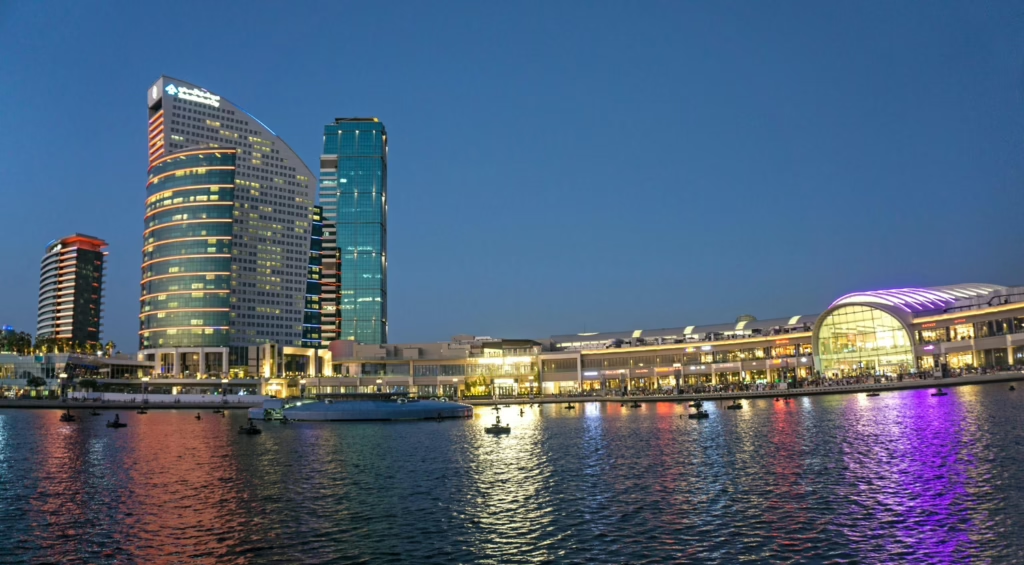
Dubai isn’t subtle when it builds and that’s by design. Its landmarks aren’t just infrastructure or skyline features. They’re part of how the city tells the world who it is. Each one takes a familiar concept – a tower, a mall, an island – and turns it into something exaggerated, ambitious, and unforgettable. The result? A compact city that feels much larger than its borders suggest.
- Burj Khalifa: More than a skyscraper, it’s a vertical signature. You see it from almost anywhere in the city, and it never feels ordinary. It’s a permanent reminder that Dubai was never aiming for average.
- Palm Jumeirah: Artificial islands shaped like a palm tree don’t just happen. This one extends the city into the sea, packed with beachfront homes, hotels, and high-profile restaurants. It’s not just real estate – it’s a gesture.
- The Dubai Mall: It’s hard to call this just a shopping center. With its internal attractions, layered design, and global brands, it feels more like a curated universe for visitors and residents alike.
- Museum of the Future: A building that looks like it belongs to the next century – and acts like it too. It’s where Dubai projects its next chapter, not through nostalgia, but through possibility.
- Dubai Frame: Part sculpture, part observatory, it visually connects the past and future. You walk through it and see the city from both sides – old and new – framed in gold.
Transportation and Connectivity in a Compact Giant
Dubai moves fast – literally. For a city its size, the level of mobility is almost surgical. The metro system glides above traffic, the roads are engineered for flow, and even the pedestrian zones feel intentional. It’s not just about getting from A to B – it’s about making that movement feel smooth, efficient, and, somehow, elevated. That’s part of what makes the city tick: the choreography of people, cars, and trains across a limited footprint.
Public transport here isn’t an afterthought. The driverless metro is clean, punctual, and surprisingly quiet. Buses connect the neighborhoods that sit outside the high-rise zones, while the tram along the Marina adds another layer of connection where density peaks. Sheikh Zayed Road cuts through it all like a backbone, lined with towers and lit with ambition. And if you step back for a moment, the whole system feels less like infrastructure and more like an operating system – one designed to keep the city in motion without letting the space feel cramped.
Living in Dubai: Cultural Size vs Geographical Size
Dubai might be geographically compact, but culturally, it doesn’t feel that way at all. The city lives in layers – languages, traditions, aesthetics, and habits all coexisting in a surprisingly natural rhythm. It’s one of the few places where you can hear morning prayers echo off the skyline, sip Ethiopian coffee on a side street, and walk into a minimalist Swedish design studio – all before noon.
A City of Many Worlds
With over 200 nationalities living side by side, Dubai isn’t a melting pot – it’s a mosaic. Each community brings its own shape, its own rhythm, and somehow it all clicks into place. The result is a kind of cultural overstimulation that never feels forced. Indian spice shops exist one street over from high-concept art galleries. You can attend a Korean film screening in the evening and grab Lebanese street food on the way home. It doesn’t just feel international – it feels immediate.
Tradition and Tomorrow in the Same Frame
What’s striking is how easily the past and future sit together here. Al Fahidi Historical District hasn’t been turned into a postcard; it’s still alive – with wind towers, courtyards, and artists working in restored spaces. Just across town, you’ve got digital-first concept stores and cultural centers experimenting with AI and immersive design. It’s not a clash. It’s a conversation. And that, more than anything, is what gives Dubai its cultural scale. It feels bigger because it holds more in one place and doesn’t apologize for the contrast.
Environmental Pressures on a Growing City
Dubai has always been about building big, fast, and bold. But the more the city grows, the more it has to reckon with what that growth demands from the environment. It’s not just about adding more – it’s about reshaping how things work behind the scenes. And that shift is already happening, slowly but noticeably.
- Water Use: In a place with little natural freshwater, every drop is the result of a heavy process. Green lawns, fountains, and daily routines depend on systems that are energy-intensive – and under pressure to evolve.
- Energy Load: Heat is a constant, and cooling is non-negotiable. While new developments promote solar and sustainable alternatives, much of the built environment still leans on older, power-hungry methods.
- Waste & Consumption: A high standard of living brings high waste. From packaging to fast-moving construction, the city produces more than it can easily process. Initiatives are growing, but changing habits takes time.
- Urban Heat & Transit: Dubai was designed for cars, not pedestrians. That’s slowly shifting – with shaded streets, parks, and walkable zones appearing in new districts – but the core city still radiates heat and movement in wide, vehicle-first corridors.
Conclusion
Dubai’s physical size may be modest, but what it does with that space is anything but. It’s a city that doesn’t try to sprawl – it sharpens, stacks, and reinvents. With carefully zoned districts, a fast-moving population, and landmarks that double as cultural statements, Dubai proves that scale isn’t just a matter of land. It’s a question of vision.
From the top of the Burj Khalifa to the backstreets of Karama, you feel it – the tension between precision and chaos, planning and spontaneity. That’s what gives Dubai its presence. It stretches far beyond its map outline not by expanding, but by pulling the world in.
FAQ
1. Is Dubai considered a big city in terms of land area?
Not really. It’s relatively compact when compared to cities like Los Angeles or Riyadh. But it feels big because of how densely it’s built and how quickly everything moves.
2. Why does Dubai seem larger than it actually is?
The vertical skyline, mega-infrastructure, and layered urban zones all create a sense of scale that goes beyond geography. It’s a small city with a global stage presence.
3. How does Dubai manage such a large population in a small space?
Through sharp urban planning. Residential, business, and tourism zones are tightly organized, and the transport network is built to move people fast across short distances.
4. Are there walkable parts of Dubai or is it all car-based?
Some areas – like Downtown, the Marina, and parts of City Walk – are designed for pedestrians. But much of the city still runs on cars and highways. That’s slowly changing.
5. How do cultural experiences fit into such a compressed city layout?
Easily. Different communities form their own rhythms within districts – from quiet Friday mornings in Al Qouz to street food nights in Deira. It’s a mosaic, not a blend.