
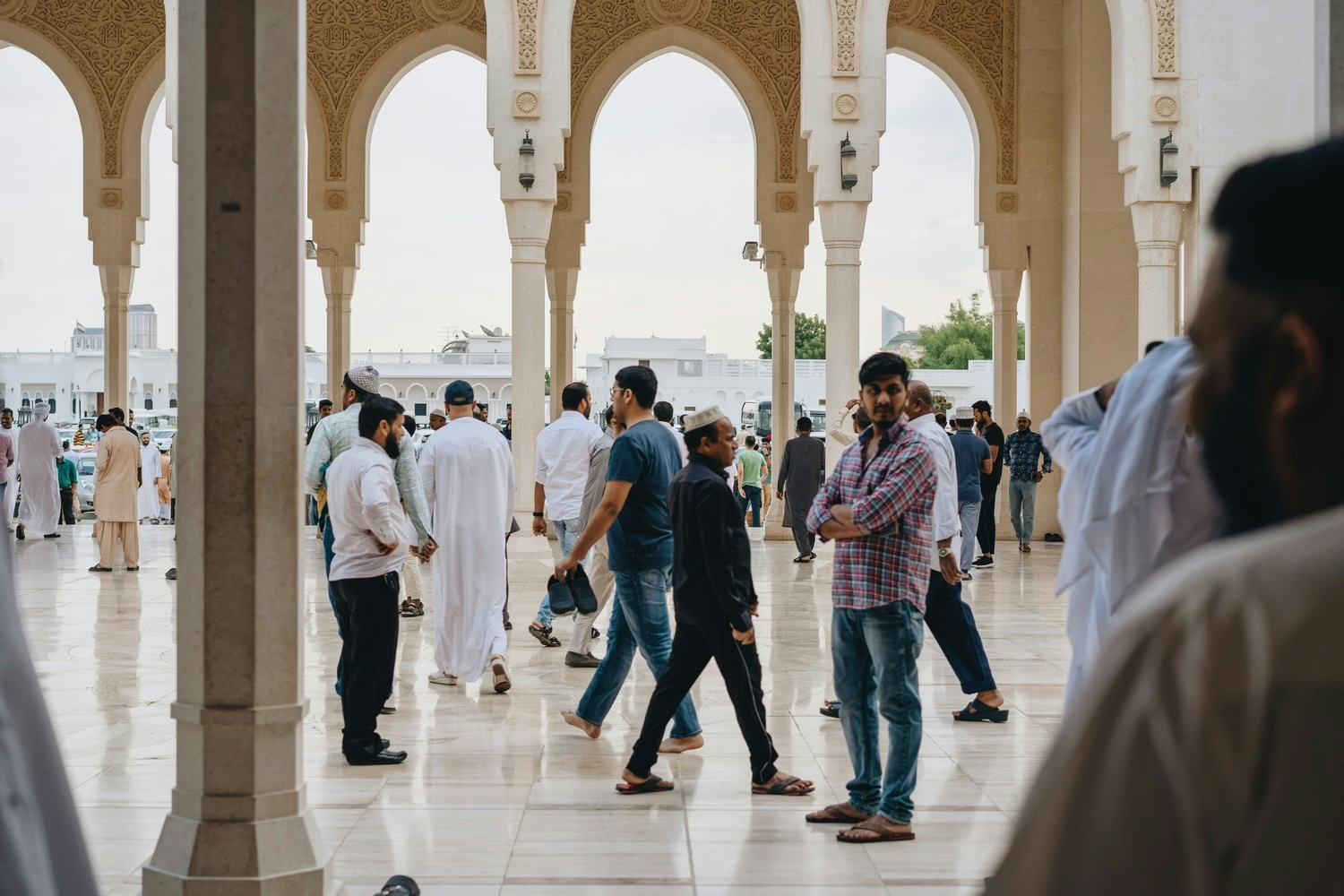
Dubai doesn’t just grow – it reinvents itself. What was once a quiet trading port is now a city shaped by ambition, speed, and global movement. But when people ask how many actually live there, it’s not just about numbers. It’s about flux. Workers on short-term contracts, long-term expats building a life, families planting roots, and entrepreneurs chasing a future – all folded into one population count that never really stands still.
A City Measured in Motion, Not Math
Ask how many people live in Dubai, and you’ll get a number. But that number shifts – daily, seasonally, rhythmically. It rises with new arrivals chasing opportunity and dips slightly when contracts end or lives change course. Dubai doesn’t hold still, and neither does the makeup of its population. This is a place shaped more by movement than by census data, where the question “how many” is almost secondary to “who” and “why.”
Because in Dubai, residency isn’t always permanent – but it’s rarely accidental. People come with purpose. Some stay for years, building businesses, raising children, laying foundations. Others pass through, working hard, sending money home, and collecting moments in between shifts. The city absorbs it all – ambition, transition, reinvention – and turns it into a pulse you can feel in the air. What defines Dubai’s population isn’t the statistic. It’s the sheer velocity of life that flows through it.
So, How Many People Actually Live in Dubai?
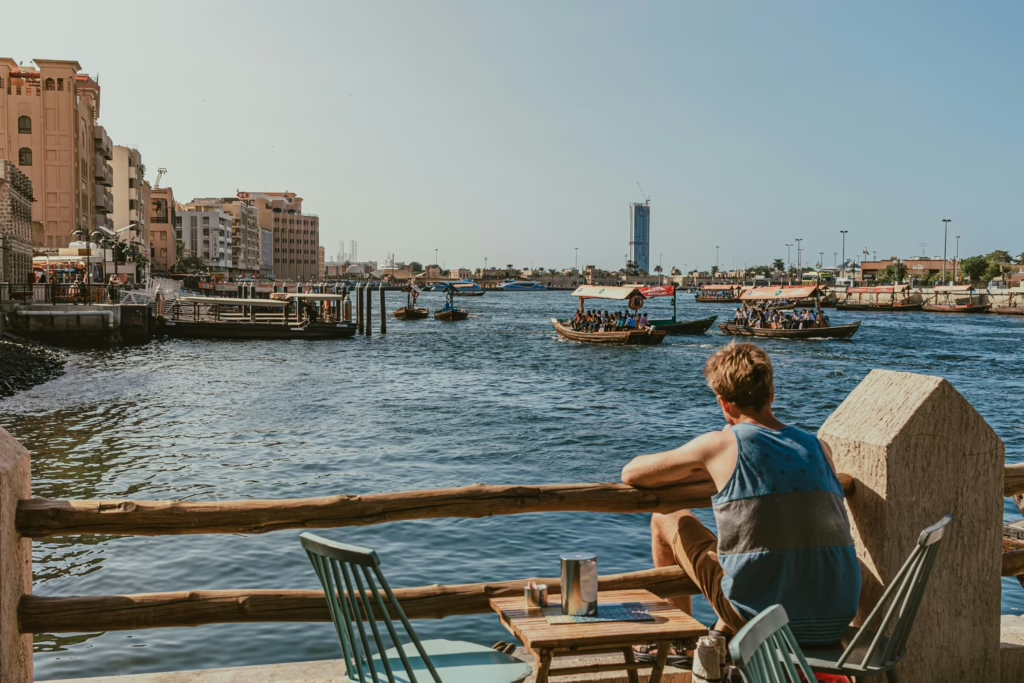
As of November 2025, Dubai’s population has reached 4,044,273 – and the number keeps climbing.. But here’s the thing: it’s not fixed. The city’s population isn’t static like a frame on the wall. It shifts. It breathes. One week it welcomes a wave of new professionals chasing opportunity, the next it sees others quietly pack up and move on.
What makes this number fascinating isn’t just its size – it’s what it represents. A city built on movement, migration, and momentum. Dubai has grown from a modest coastal town into a global hub where more than 85% of residents are foreign-born. People from every continent land here, build lives, start over, or start fresh. And somehow, through all that motion, Dubai manages to hold space for them all.
The Dubai We Walk Through: A World Arabia Perspective
At World Arabia, we experience Dubai as a rhythm, not a statistic. We move through its spaces with curiosity – watching how fashion spills into the streets, how heritage threads its way into art, how conversations unfold in cafés long after the sun sets. The city isn’t something we observe from a distance. It’s something we live alongside, reflect through, and write with. Not just in features, but in the way we choose what deserves a closer look.
It’s never just the skyline or the record-breaking headlines that catch our attention.
- It’s the contrast of soft linens against mirrored towers.
- The way a quiet gallery speaks louder than a press release.
- The rituals people create to make this city feel like home.
Our editorial lens follows that – across culture, wellness, fashion, and the unexpected intersections in between.
You’ll find more of that on our Instagram too – snapshots, textures, and moments that don’t always make it into the articles but still say everything. For us, Dubai isn’t only about who’s here. It’s about how the city makes people feel, build, and begin again.
Who Makes Up Dubai? A Look at Its People
A city of over 200 nationalities, Dubai isn’t defined by where people come from – but by what they bring with them.
Mostly Expats, Barely Still Tourists
Dubai is often described as international, but that’s putting it mildly. Around 92 percent of the people who live here weren’t born in the UAE. The local Emirati population forms a small but deeply rooted minority – about 8 percent – while everyone else has arrived from somewhere else, bringing with them languages, habits, cuisines, businesses, and a sense of possibility.
This isn’t the kind of city where expats stay hidden in compounds. They’re everywhere – running startups, teaching in schools, managing shops, building towers. Some stay for a few months. Some stay for decades. And almost every nationality seems to be represented somewhere, somehow.
South Asia at the Core
The largest communities come from South Asia. India, Pakistan, Bangladesh, and the Philippines are deeply woven into the fabric of the city – not just in terms of numbers but in everyday life. From back-of-house teams that keep luxury hospitality ticking to architects, bankers, and engineers, South Asian professionals and laborers form the structural and cultural backbone of Dubai.
You’ll hear languages like Hindi, Urdu, Malayalam, and Tagalog on the metro, in cafés, and even in corporate offices. It’s not unusual for teams to span three or four continents by birth, but communicate in a shared mix of English and familiarity.
Others Who’ve Made a Home Here
Beyond South Asia, Dubai has long attracted people from the wider Arab world – Egypt, Syria, Jordan, Lebanon – as well as Europe, Africa, and North America. There’s no typical expat. A French pastry chef and a Nigerian fintech developer might live two streets apart, both renting in Dubai Marina, both here for completely different reasons.
That mix is part of the city’s character. It’s not melting into sameness – it’s layering. The result? A city where national identity matters less than rhythm, adaptability, and knowing where to get good shawarma at 2 a.m.
What Pulls People In: The Quiet Magnetism of Dubai
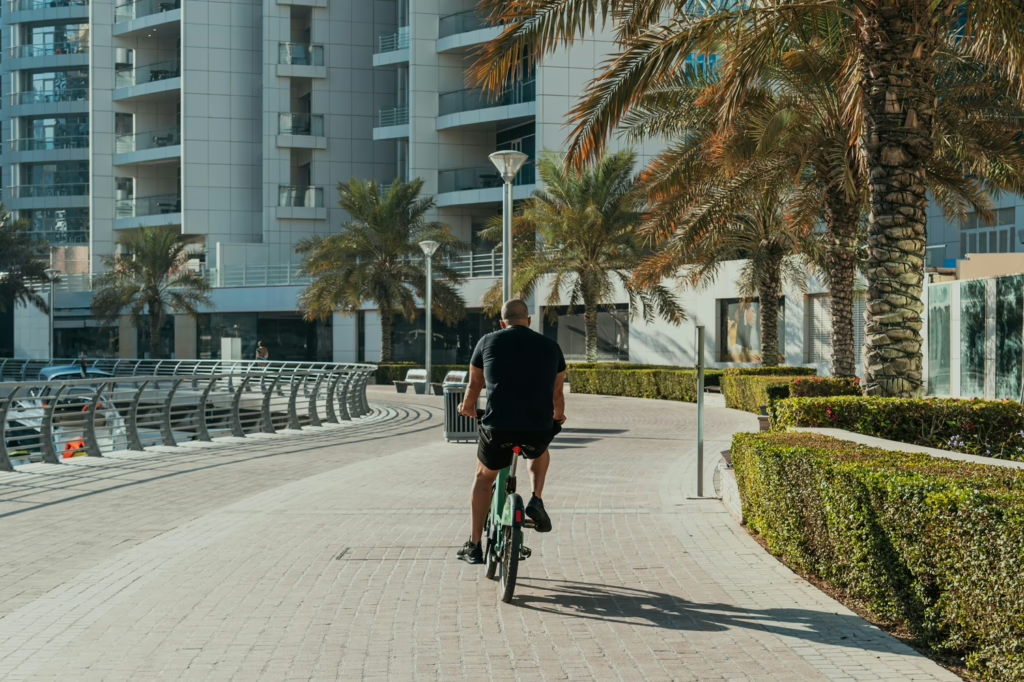
It’s not just high salaries or iconic skylines that keep people coming – Dubai offers something harder to pin down. A sense of movement. A place where things feel possible. Whether it’s launching a business, finding safety for your family, or simply living with more light and less noise, the city gives people room to try a different pace. And for many, that’s reason enough to stay longer than planned.
Part of the draw is practical – low taxes, strong infrastructure, global connectivity – but it’s also emotional. Dubai has a way of feeling both grounded and futuristic at once. People arrive for career shifts, investment opportunities, or creative freedom, and end up finding something more layered: community, calm, or just a better version of themselves.
Men, Women, and the Balance Behind the Numbers
Dubai’s population leans male – but the story behind that ratio is more nuanced than it seems, shaped by labor trends, shifting industries, and evolving roles.
Why There Are More Men Than Women
Dubai’s gender balance has never been 50/50 and that’s by design more than culture. A large portion of the male population comes on short-term work visas, especially in industries like construction, logistics, and security. These roles often involve single men relocating temporarily, which naturally tilts the numbers.
- Male population remains significantly higher due to labor migration
- Many arrive solo for contract work, often living in shared housing
- Short-term stays mean the population can shift noticeably within months
That said, the gender gap isn’t the same in every corner of the city. In residential communities, office towers, and creative districts, you’ll see more balance – and more change.
The Rise of Women in the Workforce
While men still dominate numerically, women have steadily been reshaping the tone of the city. In finance, education, tech, healthcare, and the creative industries, women are present, visible, and increasingly at the forefront.
- Women lead startups, head academic institutions, and anchor cultural spaces
- Many expat families choose Dubai for the safety and professional growth it offers women
- Emirati women continue to take up leadership roles in government and innovation
This isn’t a city where gender dynamics stay static. Work-life balance looks different for everyone here – but the possibilities are opening up, quietly and constantly.
Living Here: What Daily Life Actually Looks Like
Between mirrored towers and neighborhood cafés, Dubai’s day-to-day is quieter, more personal and far more diverse – than the headlines suggest.
Not One City, But Many Lives
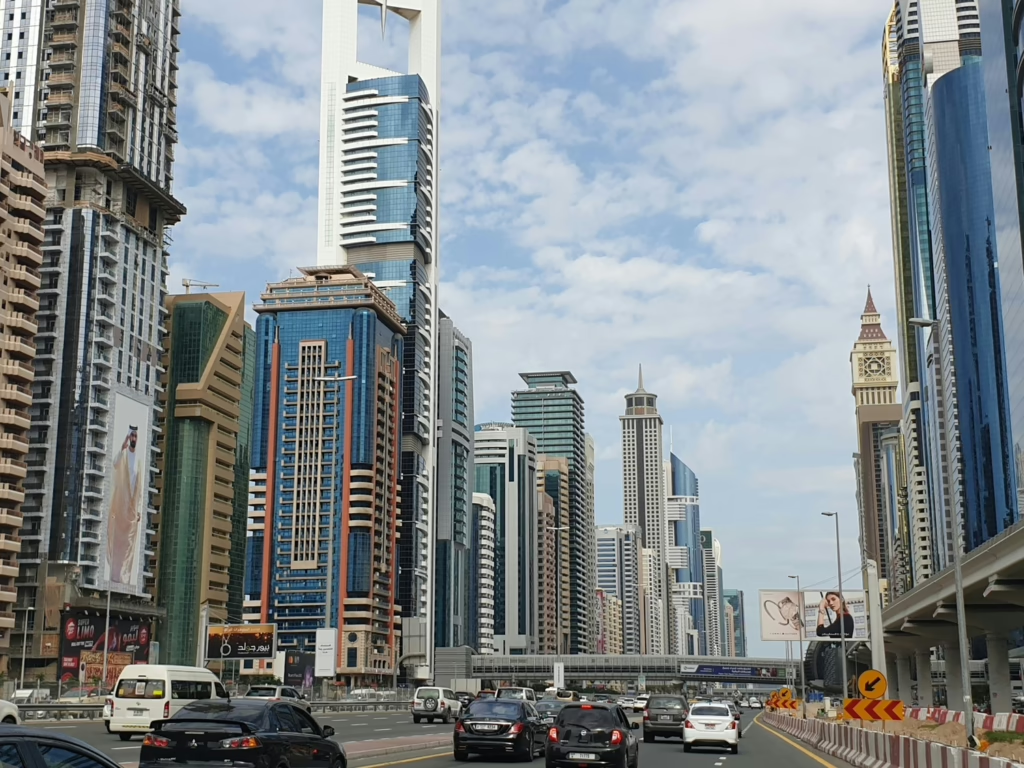
There’s no single way to “live in Dubai.” For some, it’s school drop-offs in gated suburbs and early morning Pilates before a day in finance. For others, it’s late-night shifts in hospitality or sunrise commutes across Sheikh Zayed Road. Life here stretches across districts and rhythms – fast, slow, familiar, unknown – all layered into one constantly moving city.
In the same hour, someone’s sipping espresso in DIFC, another is catching the metro to Deira, and someone else is unpacking fresh groceries on a balcony in JVC. The city runs on contrast, and that’s part of what makes it so strangely grounding. It’s polished, yes – but not out of reach.
The Everyday Rituals That Define a Place
For a city often defined by spectacle, the most telling details are the smallest ones. The barista who knows your coffee order. The sound of the call to prayer mixing with traffic. The quiet breeze on a rooftop at 7 AM. Dubai’s daily life isn’t just malls and skylines – it’s habits, routines, and tiny adaptations that make the place yours.
- Local groceries that stock products from five continents
- Friday brunches that turn into weekly tradition
- Late dinners, weekday beach walks, after-work sunset drives
- Constant movement – but also comforting repetition
No matter how long you stay, you start to find your own rhythm. And that’s when Dubai stops feeling like a stopover and starts to feel like a place you actually live in.
Looking Ahead: Is Dubai Still Growing – or Just Evolving?
Dubai isn’t chasing scale the way it once did. The tempo has shifted – still ambitious, but more measured. Growth here is no longer about outpacing itself with record-breaking towers or traffic-stopping launches. Instead, the focus has turned inward: smarter infrastructure, long-term livability, and strategies that speak less to spectacle and more to resilience. You can feel it in the policies, the planning, even the questions being asked.
Residency programs are being reworked to attract thinkers, creators, researchers – not just investors. There’s more room now for slow-build businesses, cultural institutions, and people who want to stay longer, grow roots, and shape something meaningful. Projects feel less rushed. Neighborhoods feel more human. It’s a different kind of growth – one that values rhythm over rush.
And yes, the population will likely keep rising. But the deeper shift is about quality over quantity. Dubai isn’t trying to impress the world with size anymore. It’s busy shaping a city people don’t want to leave. That kind of growth is harder to measure – but much harder to ignore.
Conclusion
There’s something slightly impossible about trying to define Dubai through population numbers alone. The city doesn’t stand still long enough for neat categories or final answers. One moment it feels like a fast-moving hub for dreamers and builders, and the next, like a surprisingly quiet place to catch your breath between chapters. Its population isn’t just made of people who happen to live here – it’s made of people in motion, each with a reason, a timeline, a rhythm of their own.
Ask how many people live in Dubai, and you’ll get a number. But stay long enough, and that number starts to fade into the background. What remains is the feeling of being part of something that doesn’t quite stop growing and maybe never will.
FAQ
1. Is everyone in Dubai an expat?
Not quite, but it’s close. Emiratis are the native population, but they make up a small percentage. The rest? A mosaic of people from all over – some here for a few months, others for good.
2. Why does the population keep changing?
Because life here rarely stands still. Jobs end, new ones begin, visas expire, companies grow or move. It’s a city built on transition and that’s reflected in its numbers.
3. Are there more men than women in Dubai?
Yes, but mostly because of how labor migration works. A large portion of the male population works in sectors like construction or logistics and often comes without family. That naturally shifts the balance.
4. Do most people stay long term?
Some do. Others don’t plan to – but end up staying anyway. It depends on the person, the job, the season of life. Dubai tends to surprise people like that.
5. Is Dubai still growing, or has it peaked?
It’s definitely still growing, but in a different way than before. Less about scale, more about intention. The city’s focusing on who it wants to attract – and how to keep them.