
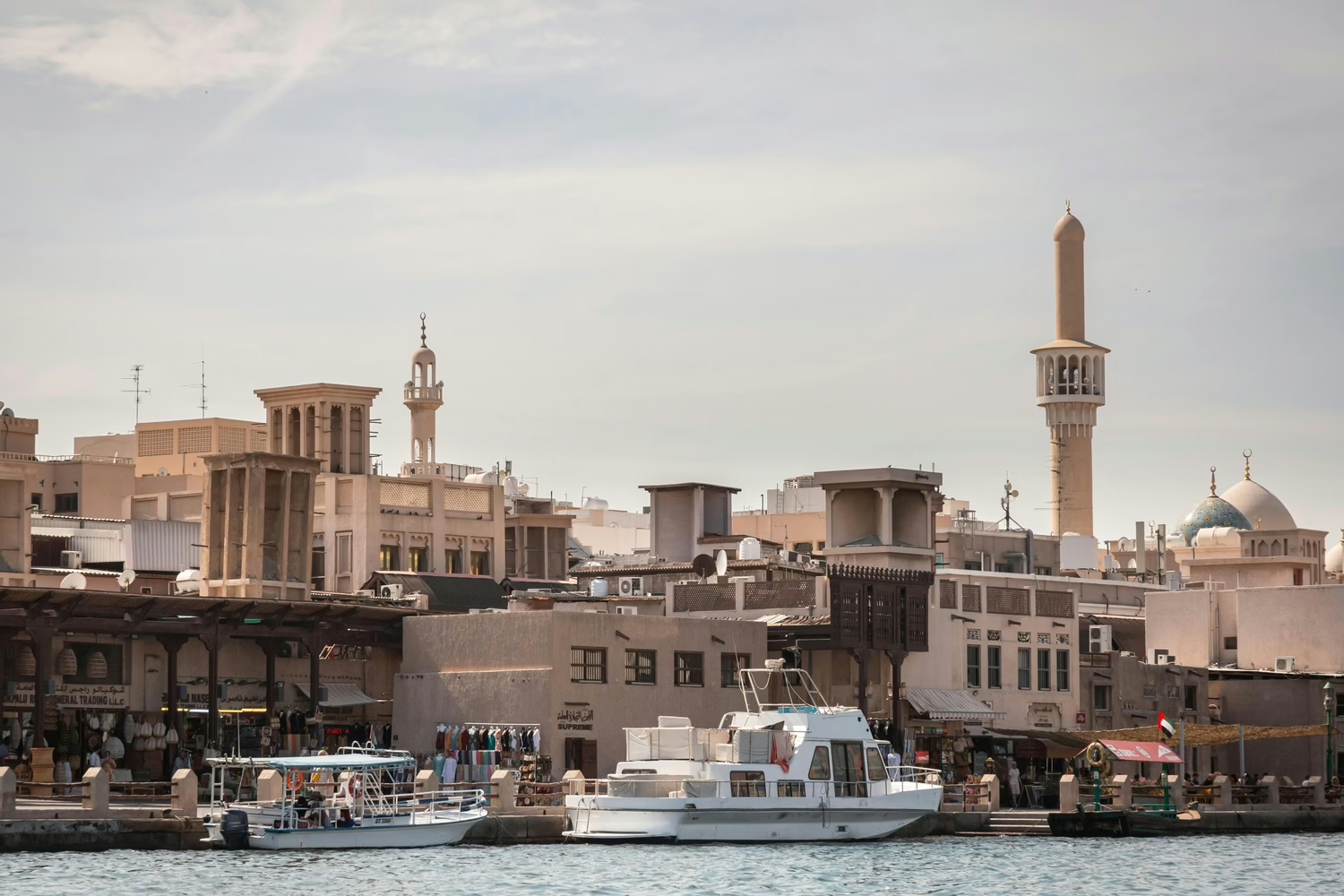
When people think of Dubai, it’s usually the skyline that comes to mind – glass towers, futuristic islands, and a city that seems to have appeared almost overnight. But that impression hides a much older story. Long before the oil and the skyscrapers, this patch of land on the Gulf was home to fishermen, traders, and nomadic families who planted the seeds of something far bigger than they could have imagined. The timeline of Dubai isn’t just about dates – it’s about reinvention. Let’s trace it back to where it all began.
Dubai Isn’t New – It’s Ancient
Before it was a skyline, Dubai was a shoreline – quiet, sun-bleached, edged with mangroves and shaped by wind. Early communities lived close to the earth here, fishing the shallows, herding animals, and planting date palms where the land allowed. It wasn’t yet a city, but it was already a place people understood how to live in.
- The coastline was once lined with dense mangrove forests.
- Bedouin tribes settled, moved, and returned with the rhythm of the seasons.
- Fishing, herding, and small-scale farming formed the core of early life.
- The land’s earliest patterns still echo in architecture and tradition.
That slower, instinctive way of life hasn’t vanished – it lingers behind the noise. Step past the last stretch of villas or pause in the alleys of the old districts, and it’s still there: that first layer of Dubai, quiet but steady.
World Arabia: Our Lens on Dubai’s Ever-Evolving Identity
At World Arabia, we don’t just observe Dubai – we move with it. The city’s rhythm is familiar to us, not just because we live in it, but because we document the people, ideas, and undercurrents that shape its transformation. From coastal roots to the global stage, Dubai’s story is layered, and so is our editorial approach. We follow not just what’s new, but what it means.
Our content speaks to readers who are curious, ambitious, and culturally awake. Whether we’re covering emerging designers in the Gulf, architectural icons, or the lives behind luxury, we approach each subject with intention. Dubai is a city where tradition and reinvention coexist – our pages reflect that same duality, shaped by voices from across the region and beyond.
You’ll also find us on Instagram, where we share glimpses of what moves us – events, style, people, and scenes that don’t always make the headlines but define the moment. In a city that never pauses, World Arabia tries to catch what’s worth remembering.
Founding Year: When Did Dubai Officially Begin?
Dubai’s official beginning is often traced to the year 1833, when around 800 members of the Al Bu Falasah tribe broke away from Abu Dhabi and settled by the Creek under the joint leadership of Maktoum bin Butti bin Suhail and Obeid bin Saeed bin Rashid. That moment marked more than just a relocation – it was the start of a ruling legacy. From that year forward, the Al Maktoum family would guide the city’s future, and they still do today.
What existed before then wasn’t a void. The area had already seen human presence for centuries, even millennia. But 1833 brought structure. Trade routes expanded, communities grew, and Dubai began to shape itself not just as a settlement, but as a city with momentum. It didn’t happen overnight – but something shifted. The foundation was no longer just sand and sea. It was intent.
Today, you can still feel the outline of those early decisions in the way the city functions: open to the world, deeply rooted in leadership, and always ready to adapt. Dubai’s story didn’t start in 1833 – but that’s the year it began to write itself on its own terms.
Before the Oil: Pearls, Trade, and Tax-Free Ports
Long before the first oil rig rose offshore, Dubai was already moving. The city built its early strength on the back of the Gulf’s waters – not just with pearls, but with open trade routes and policies that welcomed the world in.
A Coastline Built on Pearls
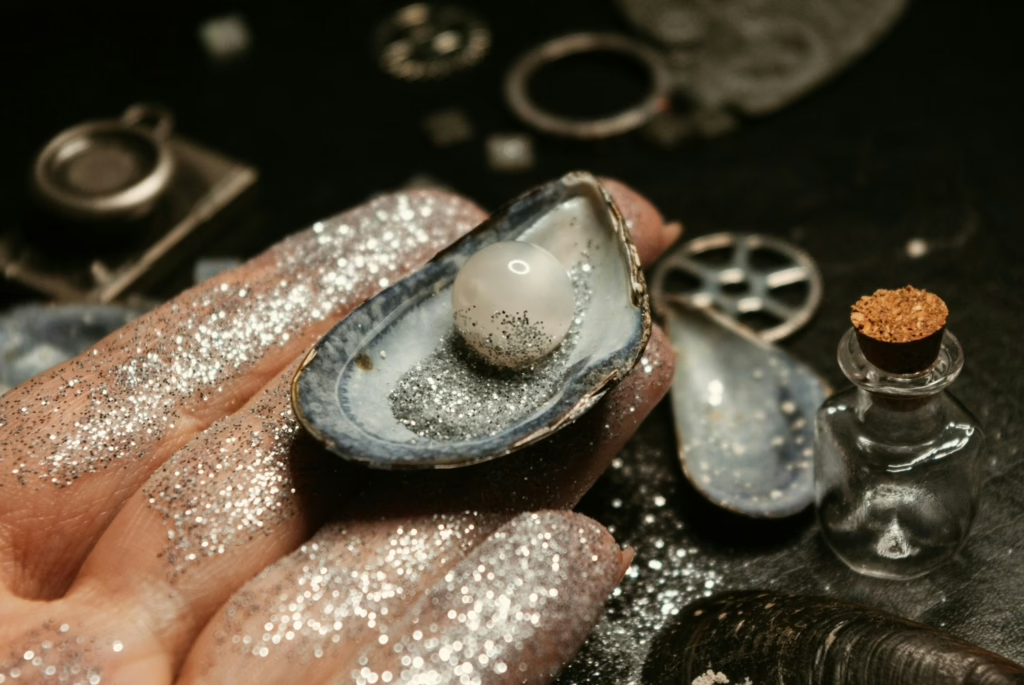
Pearl diving wasn’t just a job – it was a season, a rhythm, and a gamble. Divers spent weeks at sea, braving deep waters to find the oysters that could make or break a family’s income. Dubai became known for the quality of its pearls, and that reputation drew merchants from across the region. For a time, it was the lifeblood of the local economy.
Trade Without the Chains
In the late 1800s, the rulers of Dubai made a defining choice: they opened their port to foreign traders with full tax exemptions. That decision turned heads. It wasn’t just generous – it was strategic. Suddenly, Dubai wasn’t just a stop along the route; it was the destination.
The Shape of a Future City
Even without oil, Dubai was already laying the groundwork for what it would become – a place defined by movement, by exchange, and by its willingness to bet on possibility. That early openness still echoes through the city’s policies, its skyline, and its instinct to look outward, not inward.
Oil Changed Everything – But It Wasn’t the Start
The story of Dubai’s rise is often told as if it began with oil. But that’s not quite how it unfolded. When oil was discovered in the late 1960s, the city was already in motion – grounded in trade, known for its ports, and shaped by a leadership that understood the power of timing. Oil accelerated things, yes. It widened roads, raised towers, and funded the infrastructure we see today. But the momentum was already there.
What oil really offered was scale. Revenue from early exports was channeled into education, healthcare, transport – not just monuments, but mechanisms. Under the vision of Sheikh Rashid bin Saeed Al Maktoum, the city used this new resource not to reinvent itself, but to expand what was already working. That choice made all the difference. Dubai didn’t pivot – it amplified. And in doing so, it became something far more complex than just an oil-rich city. It became a blueprint.
Joining the UAE: A Turning Point in 1971
When Dubai became part of the United Arab Emirates in 1971, it wasn’t just about drawing new borders. It was a recalibration – a shift from standing alone to building something larger, with shared direction and broader ambition. Alongside Abu Dhabi, Sharjah, Ajman, Fujairah, and Umm Al Quwain, Dubai helped shape a federation that originally included six emirates. Ras Al Khaimah joined the federation later.
The union gave the city something it hadn’t had before: political stability on a national scale. That structure allowed long-term planning, bolder investment, and a greater confidence in its own pace. Still, what stands out is how Dubai managed to keep its independent character while contributing to a shared future. Even now, every emirate has its own rhythm – but 1971 marked the moment they began to move in sync. For Dubai, it was the start of thinking bigger – not just in height, but in direction.
Time Is Layered: How Old Is Dubai, Really?
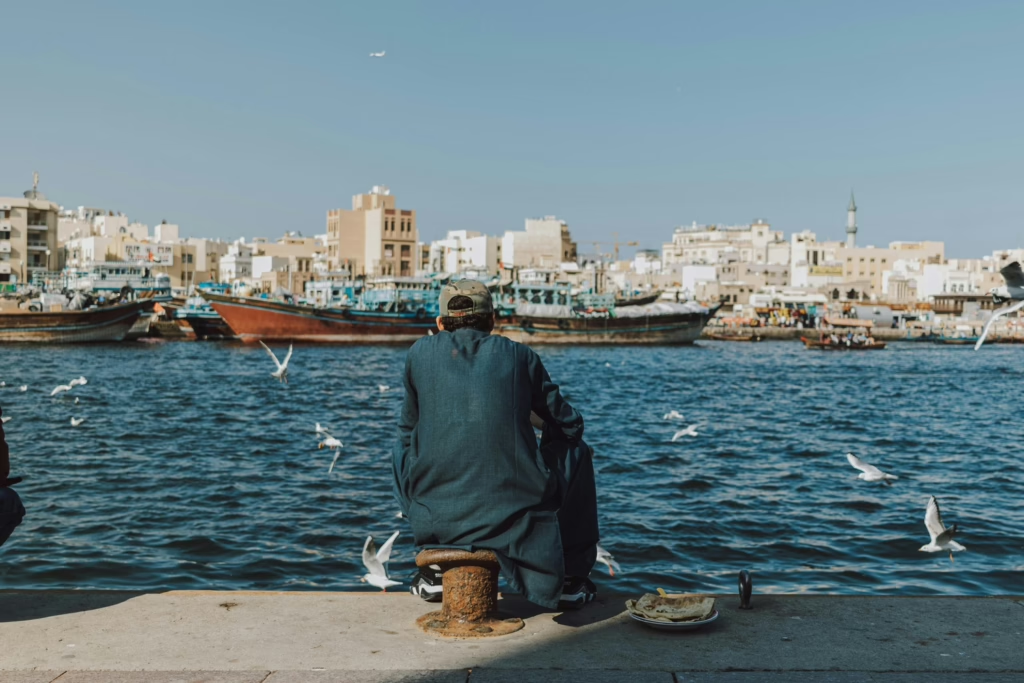
There’s no single number that can fully explain how old Dubai is – because the city didn’t arrive all at once. It unfolded. First as land, then as community, later as a city with leadership, and eventually as a modern state actor on the global stage. Each layer added shape, but none erased the one before it.
- Ancient settlement: The land was home to fishing and herding communities long before any formal city existed.
- City foundation: In 1833, the Al Maktoum family established Dubai as a tribal settlement by the Creek.
- National identity: In 1971, Dubai became one of the founding emirates of the United Arab Emirates.
- Modern transformation: From the late 20th century, the city grew rapidly through trade, oil, and global investment.
So yes, Dubai is old – but what makes it remarkable is not its age. It’s how much it’s evolved without losing sight of where it started.
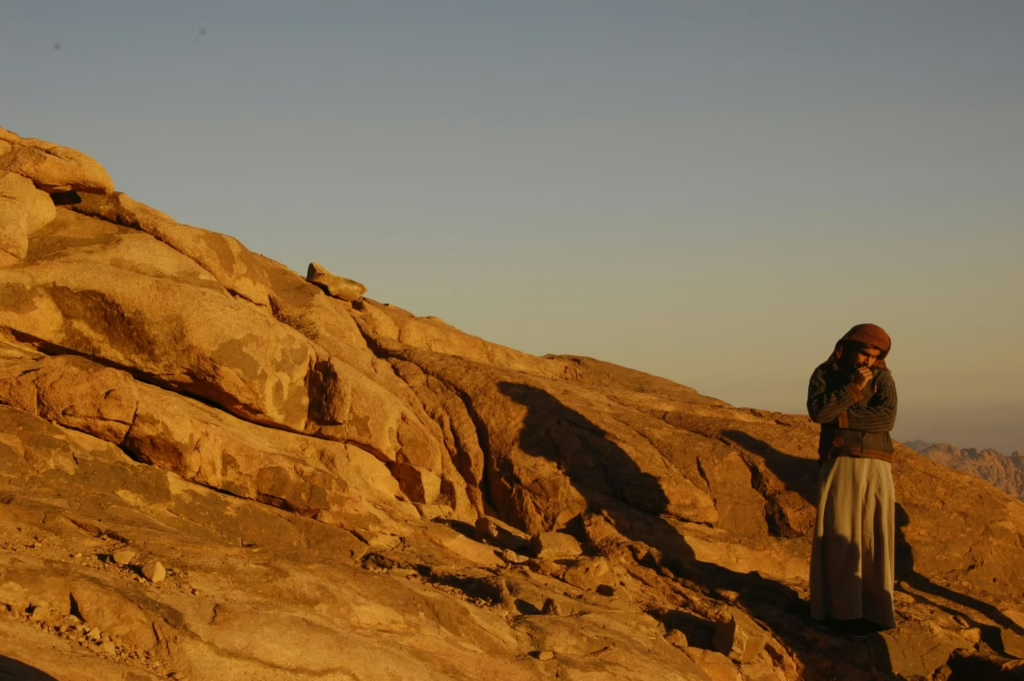
From Bedouins to Burj Khalifa: A Living Timeline
Dubai’s history doesn’t sit in the past – it moves. It’s a city that didn’t just grow over time, it transformed through it. Each chapter feels like a departure from the last, yet somehow still connected. What began as survival near the shore has become one of the most watched urban experiments in the world.
Early Echoes
The first signs of life here weren’t buildings – they were pathways, camps, and patterns etched into the sand by Bedouin tribes. These were communities shaped by weather, water, and movement, not plans or blueprints.
- Nomadic presence: Bedouins lived in rhythm with the land, migrating through what is now the UAE.
- Fishing and pearl diving: Coastal life developed around the sea, shaping early trade and culture.
- Palm cultivation: Farming practices emerged near oases and fertile patches, leaving behind more than food – they shaped settlement.
A Defining Split
The real shift came when Dubai was no longer just a stop on a route – it became a destination with its own vision.
- 1833: The Al Maktoum family leads a migration from Abu Dhabi and lays the foundation for modern Dubai.
- Late 1800s: Tax exemptions and port access turn Dubai into a magnet for traders across the Gulf.
- Early 1900s: The pearl industry peaks, drawing wealth and movement toward the coast.
Modern Acceleration
Oil added speed, but leadership set the course. What followed wasn’t just development – it was ambition, built vertically.
- 1966: Oil is discovered offshore, setting the stage for large-scale infrastructure investment.
- 1971: Dubai joins the UAE, gaining political structure and regional momentum.
- 2000s: Construction boom begins – not just buildings, but icons.
- 2010: Burj Khalifa opens, becoming a symbol of how high the city is willing to aim.
Dubai today doesn’t erase the chapters behind it – it builds on them. You can stand at the top of a skyscraper and still feel the quiet of the desert not far beyond. That contrast isn’t a glitch in the city’s story – it is the story.
Why Dubai’s Age Is More Than Just a Date
To talk about how old Dubai is, you have to look beyond numbers. The city doesn’t fit into a neat historical timeline – it stretches, folds, reinvents. Its story is less about a founding year and more about how it keeps reshaping itself without losing the thread of where it came from. Some cities wear their age in stone. Dubai wears its history in motion.
You’ll find traces of the past in the scent of oud drifting through a souk, in the quiet geometry of an old wind tower, or in the way a modern building still faces the coast. But what makes Dubai different isn’t just that it has history – it’s that it’s constantly in conversation with it. Here, the past doesn’t get sealed off. It evolves, and sometimes, it surprises you by showing up in places you didn’t expect.
This is a place that understands time as something to build with. Whether it’s Bedouin wisdom, pearl diver grit, or the vision behind a skyline, each layer adds to a story that’s still unfolding. And that’s why Dubai’s age isn’t just a number – it’s a rhythm.
Conclusion
Trying to define Dubai by a number is like trying to frame its skyline in a single shot – too much gets left out. The city didn’t appear overnight, and it didn’t evolve in a straight line. It grew from the shoreline up, layer by layer, shaped by movement, memory, trade, and risk. Yes, there’s a founding date. Yes, there’s a moment when oil changed everything. But the real age of Dubai lives in the tension between what it was and what it’s still becoming. It’s not just a timeline. It’s a pace, a perspective – and sometimes, a quiet refusal to stand still.
FAQ
1. When was Dubai officially founded?
Dubai was formally established in 1833, when the Al Maktoum family led a group of settlers to the Creek. That moment marks the beginning of the Dubai we know today.
2. Was there anything in Dubai before it became a city?
Yes, long before it was called a city, the area was home to fishing villages, Bedouin settlements, and early agricultural communities. The land has been lived on for thousands of years.
3. How did Dubai become wealthy?
Contrary to popular belief, oil wasn’t the first engine of growth. Pearls and trade laid the foundation. Oil added speed. But Dubai’s real wealth came from reinvesting that momentum into infrastructure, tourism, finance, and vision.
4. Is there still anything left of old Dubai?
Absolutely. You’ll find it in Al Fahidi, by the Creek, in the old souks, and sometimes just in the quiet pause before the next big thing. Dubai has changed, but it hasn’t forgotten.