
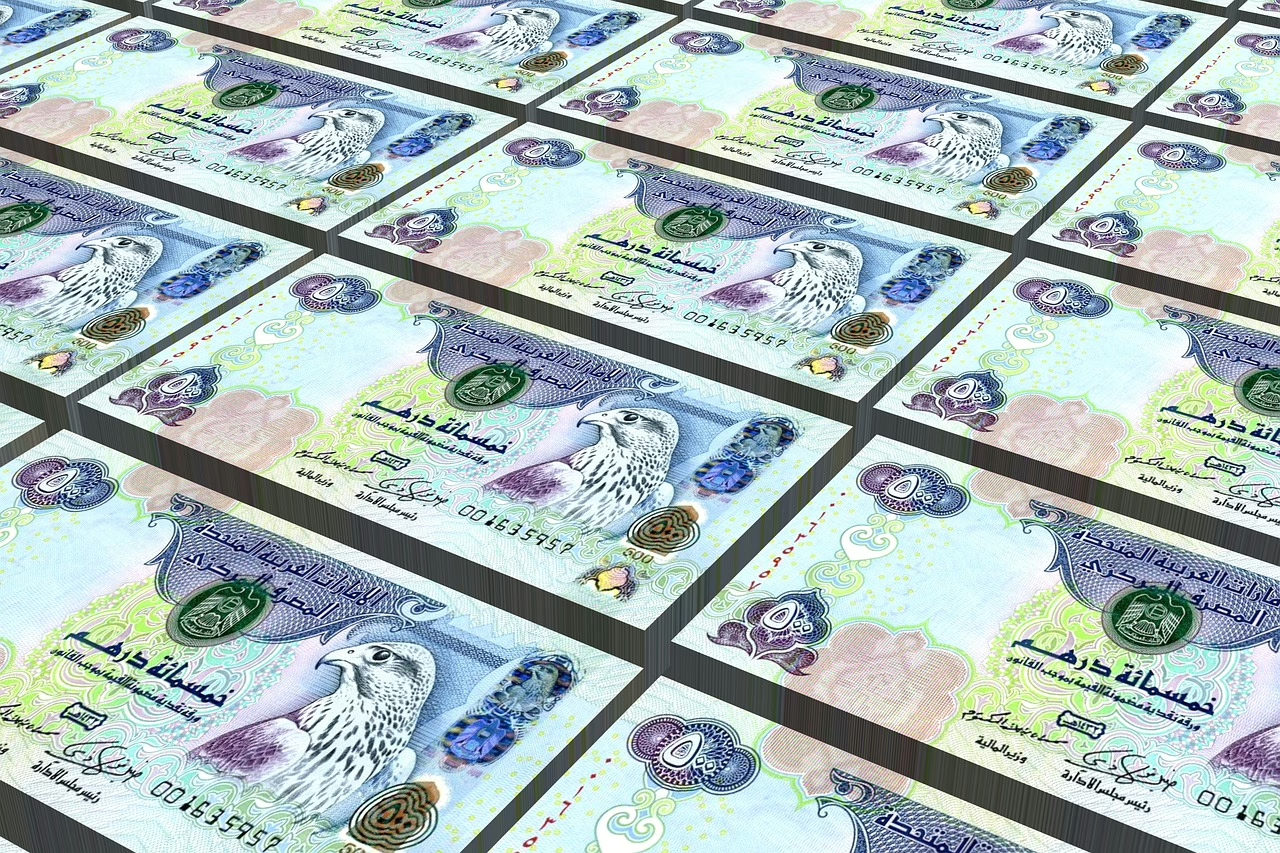
Dubai consistently ranks among the wealthiest cities on earth, yet the picture is far more layered than skyscrapers and supercars suggest. The city combines extreme concentration of private wealth at the top with large low-wage migrant populations at the bottom. This article breaks down the actual distribution of wealth, the latest millionaire statistics, and the economic structure that created both ends of the spectrum.
Current Wealth Rankings and Millionaire Population
Dubai sits in the global top 20 cities by number of resident millionaires. Reports released between 2024 and late 2025 show a clear upward trend. The earliest reliable figure from 2023 recorded just over 72,000 individuals with investable wealth above one million USD. By the end of 2024 the same methodology placed the count above 81,000. Current estimates for late 2025 range between 88,000 and 90,000 millionaires when projected inflows are included.
Beyond millionaires, the city houses several hundred centi-millionaires and roughly twenty billionaires. These ultra-high-net-worth residents drive most of the visible luxury real estate and private banking activity.
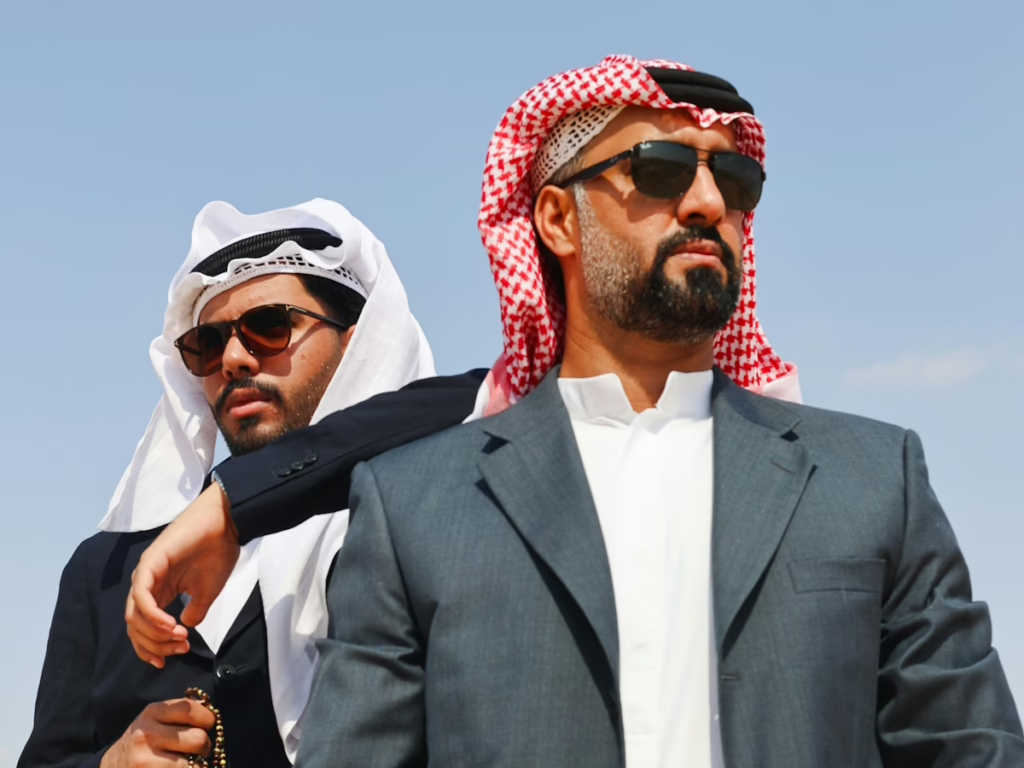
Income Classes: From Labour Camps to Billionaires Row
Wealth distribution in Dubai is heavily skewed. Roughly 85-90% of the resident population consists of expatriate workers, and the majority of them earn wages that place them at or below the regional poverty line when adjusted for local living costs. The gap between the lowest and highest earners exceeds most global cities.
Lower Income Segment
The majority of the workforce falls into the lower income bracket. Monthly take-home pay for construction workers, security guards, cleaners, and delivery riders typically stays below 3,000 AED. Shared accommodation, basic food allowances, and limited access to private transport define daily life for this group. Most live in labour camps in areas such as Jebel Ali, Al Quoz, or Sonapur, where rooms are shared by six to ten people and monthly rent per bed space ranges from 400 to 800 AED.
Working And Tower-Middle Class
Office administrators, retail staff, junior hospitality workers, and drivers earn between 5,000 and 15,000 AED per month. This range covers rent for a studio or shared apartment in older areas, public transport or a used car, and occasional dining out. Popular residential zones include International City, Discovery Gardens, and parts of Deira or Bur Dubai, where annual rent for a small studio stays between 35,000 and 60,000 AED.
Established Middle Class
Professionals in mid-level corporate roles, teachers in international schools, and experienced technicians bring home 20,000 to 50,000 AED monthly per household. Families in this bracket rent two- or three-bedroom apartments in mid-tier communities, own one or two cars, and send children to mid-range private schools. Communities such as JVC, Arabian Ranches, The Springs, and Motor City dominate this segment, with annual rents typically ranging from 100,000 to 180,000 AED.
Upper-Middle And Affluent
Senior managers, medical specialists, and successful entrepreneurs clear 50,000 to 120,000 AED per month. They live in townhouses or large apartments in prime locations, drive premium vehicles, and educate children in top-tier schools. Typical addresses include Dubai Hills Estate, The Lakes, Al Barari, and selected towers in Dubai Marina or Downtown, where three-bedroom townhouses command rents above 250,000 AED annually.
High-Net-Worth Residents
Households above 150,000 AED monthly net income belong to the visible wealthy class. Private villas in gated communities, multiple luxury cars, and international schooling are standard. Most own rather than rent, with property values starting at 10-15 million AED for a five-bedroom villa in communities like Emirates Hills or Jumeirah Golf Estates.
Ultra-Wealthy Tier
Individuals with liquid wealth measured in tens or hundreds of millions maintain primary residences on Palm Jumeirah, Emirates Hills, or private islands. Their spending supports the luxury retail and private aviation sectors. Waterfront mansions on the Palm regularly trade above 50 million AED, while signature penthouses in Burj Khalifa or custom villas on exclusive fronds exceed 100 million AED.
Geographic Concentration of Wealth
Affluent residents concentrate in a small number of districts that together account for the majority of luxury real estate turnover and visible wealth indicators.
- Emirates Hills and nearby golf estates: Custom villas on large plots sell from 45 million AED upward and remain the most expensive mainland address.
- Palm Jumeirah waterfront villas: Beachfront signature mansions on the fronds regularly exceed 100 million AED in resale value.
- Downtown Dubai and Business Bay towers: Full-floor penthouses in Burj Khalifa and Address buildings trade above 80–150 million AED.
- Dubai Marina and Jumeirah Beach Residence: Marina-view penthouses and duplexes in prime towers range from 25 million to 80 million AED.
- Jumeirah Bay and emerging private islands: Limited-edition mansions on new man-made islands start at 60 million AED and sell off-plan.
These areas contain the highest per-square-metre property values and the majority of luxury vehicle registrations. Data from the Dubai Land Department for 2024–2025 shows that over 68% of all transactions above 15 million AED occurred within these five zones, confirming their dominant position in the high-end market.
Explore Dubai’s Wealth Up Close with World Arabia
At World Arabia we live inside the circles that actually move Dubai’s money: family offices quietly buying entire floors in DIFC, developers finishing the last signature villas on the Palm, and newcomers who arrived a few years ago with one suitcase and now control whole blocks in Dubai Hills.
This city runs on discreet conversations in Emirates Hills driveways and late-night decisions on Jumeirah Bay plots. We track exactly which districts are heating up next, where the serious capital is parking itself in 2025, and how the skyline keeps rewriting the rules of wealth. Through our stories you see the real mechanics behind the headlines: the off-market trades, the shifting buyer nationalities, and the projects that will define the next decade of Dubai’s elite landscape.
Economic Pillars That Built the Wealth
Dubai’s transformation began with oil discovery in 1966, but the emirate never possessed Abu Dhabi-scale reserves. Revenue was deliberately redirected into infrastructure rather than consumption. By the late 1990s oil contributed less than 1% of GDP, forcing early diversification that later became the model for the modern economy.
Trade And Logistics
Jebel Ali Port and the associated free zone, established in the 1980s, turned Dubai into a re-export hub between Europe, Asia, and Africa. Zero customs duties and full foreign ownership attracted thousands of trading companies. Today Jebel Ali handles over 13 million containers annually and supports more than 9,500 registered businesses across logistics, manufacturing, and commodity trading.
Real Estate And Construction
Large-scale land reclamation and landmark projects created new supply of prime property. Off-plan sales financed further expansion while delivering high returns to early investors. The sector now accounts for roughly 7-8% of GDP directly and drives secondary activity in finance, retail, and hospitality through continuous project cycles.
Aviation And Tourism
Dubai International Airport and Emirates airline turned the city into a global transit point. Tourist arrivals grew from under one million in 1990 to 1.4 billion pre-pandemic. The airport handled 86.9 million passengers in 2019, ranking it as the world’s busiest international airport by passenger traffic.
The sector’s resilience post-pandemic is evident in 2023 figures, which exceeded pre-2019 levels with 17.2 million visitors. Events like the Dubai Shopping Festival and Expo 2020 legacy sites continue to draw diverse demographics, from luxury shoppers to adventure seekers.
Financial Services
The Dubai International Financial Centre operates under English common law and offers tax-free status, making it the preferred regional base for private banks, family offices, and asset managers. DIFC currently hosts over 5,500 registered entities with combined assets under management exceeding one trillion USD, establishing Dubai as the leading wealth-management centre between Singapore and Switzerland.

Tax Regime and Residency Programs
Dubai operates one of the simplest and most attractive tax systems in the world for individuals. There is no federal personal income tax, no capital gains tax, no wealth tax, and no inheritance tax. This framework, combined with long-term residency options, forms the backbone of the city’s appeal to high earners and investors.
Zero Personal Income Tax
Absence of personal income tax remains the single most quoted reason for relocation among high earners. Salaries, dividends, rental income, capital gains, and inheritance are all completely tax-free for individuals, regardless of the amount. This zero-rate policy has existed since the founding of the UAE and shows no sign of changing in the foreseeable future. Even residents who spend only part of the year in Dubai benefit from the same treatment, making the city one of the last true tax havens for private wealth.
Corporate Tax Rules
Corporate tax, introduced in 2023 at 9%, applies only to mainland companies with annual taxable profit above 375,000 AED. Free-zone businesses that meet substance requirements stay fully exempt, and individual salary income is never subject to corporate tax in any case. For most expatriate professionals and investors this means their entire take-home pay and investment returns remain untouched.
Golden Visa Through Property Ownership
Long-term residency visas tied to property ownership have accelerated inflows since 2019. Investors who buy real estate worth 2 million AED or more automatically qualify for a ten-year renewable Golden Visa. Multiple properties can be combined to meet the threshold, provided they are under the applicant’s name and free of restrictions that prevent full ownership.
The investment must be verified by a property status certificate from the Dubai Land Department or equivalent authority in other emirates. Off-plan, completed, mortgaged, or cash-purchased properties all qualify as long as the total value hits or exceeds 2 million AED at the time of purchase. There is no separate five-year tier based on lower investment amounts; the standard entry point remains the 2 million AED level for the full ten-year benefit.
This program extends to immediate family members, including spouses and children under 25, without additional investment requirements. Holders must maintain the property ownership to renew the visa, but they gain the flexibility to live, work, or study anywhere in the UAE without a sponsor.
Golden Visa Through Business and Other Routes
Entrepreneurs, retirees over 55, outstanding students, and highly skilled professionals can also obtain five- or ten-year visas without owning property. These routes require proof of income or achievement but still remove the need for an employment sponsor.
Impact on Residency Security
These visas eliminated the previous dependency on an employer to maintain legal residency. Once granted, the holder can live in Dubai indefinitely, bring immediate family members, and operate businesses without a local partner. The combination of permanent tax-free status and secure long-term residency has become the core pull factor for the majority of high-net-worth individuals arriving since 2020.
Sources of New Wealth Inflows
Recent arrivals come from four main regions:
- United Kingdom citizens facing higher capital-gains and inheritance tax
- European executives seeking tax-efficient jurisdictions
- French, German, and Scandinavian professionals relocating family offices and personal wealth
- Russian nationals moving assets after 2022 sanctions
- Indian and Pakistani entrepreneurs expanding regional headquarters
Each group contributes to property purchases and business registrations. The British segment dominates off-plan villa sales on Palm Jumeirah and Dubai Hills, while Russian buyers remain the largest cash purchasers of completed luxury apartments in Downtown and Marina. Indian and Pakistani investors concentrate on commercial free-zone setups and mid-tier residential units for rental portfolios.
Migration data from Henley & Partners shows Dubai captured more migrating millionaires than any other city for three consecutive years through 2025. The absence of wealth, gift, or estate taxes, combined with ten-year renewable residency tied to property ownership, continues to outweigh concerns about long-term political risk or currency peg stability for most of these cohorts.
Conclusion
Dubai operates a dual economy: a highly visible ultra-wealthy layer coexists with a much larger low-wage migrant workforce. The top one percent controls the majority of investable assets while the bottom half earns below regional poverty thresholds when adjusted for living costs. Between these extremes sits a growing professional middle class. The city’s wealth concentration continues to increase, driven by tax advantages, residency programs, and established trade infrastructure.
Frequently Asked Questions
How many millionaires actually live in Dubai right now?
Late 2025 estimates place the figure between 88,000 and 90,000 resident millionaires.
Is every local Emirati rich?
Emirati citizens receive government benefits and land allocations, but wealth levels still vary significantly among nationals.
What salary is considered good in Dubai?
Households earning above 35,000 AED per month belong to the upper-middle segment.
Where do most millionaires live in Dubai?
Emirates Hills, Palm Jumeirah, and Downtown Dubai host the highest concentrations.
Why do so many rich people move to Dubai?
Zero personal income tax, long-term residency options, and political stability are the primary drivers.
Can expats on low salaries survive in Dubai?
Yes, but living standards remain basic with shared housing and minimal discretionary spending.
Has the number of millionaires slowed down?
No, annual inflows have increased each year since 2022 according to migration reports.