
Dubai maintains one of the lowest violent-crime rates of any major city worldwide. Advanced technology, visible policing, and severe penalties keep streets and tourist areas remarkably secure for the overwhelming majority of American visitors. That same system, however, enforces rules on behavior, dress, medication, and speech that are far stricter than anything in the United States and can quickly turn a minor mistake into detention or worse.
Dubai Is Safe for Americans – As Long As You Follow Local Rules Strictly
For the typical American tourist who stays in tourist areas, follows basic rules, and does not bring restricted medication, Dubai is one of the safest big cities on the planet – dramatically safer than Chicago, Miami, Los Angeles, or New York when it comes to violent crime, robbery, or street harassment. Most visitors finish their trip without a single negative incident.
The catch is that safety here comes from strict control, not personal freedom. The same laws and surveillance that eliminate random crime also mean a misplaced prescription pill, a public kiss, or an angry social-media post can land you in jail faster than any street criminal ever could. Understand the rules and you are fine; ignore them and the consequences hit hard and fast.
Dubai maintains one of the lowest violent-crime rates of any major city worldwide. Advanced technology, visible policing, and severe penalties keep streets and tourist areas remarkably secure for the overwhelming majority of American visitors. That same system, however, enforces rules on behavior, dress, medication, and speech that are far stricter than anything in the United States and can quickly turn a minor mistake into detention or worse.
Overall Crime and Policing
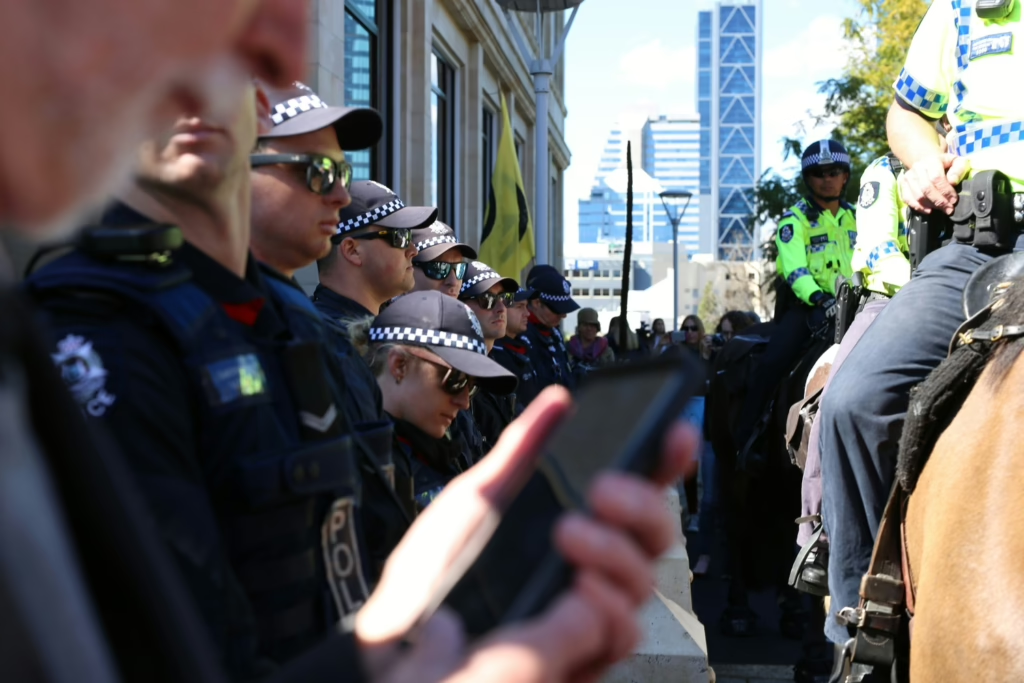
Dubai maintains a zero-tolerance policy that results in some of the lowest violent-crime rates of any major city worldwide. Mugging, armed robbery, sexual assault, and homicide directed at tourists are so rare that individual cases often receive international media coverage. Per-capita figures for these offenses are a small fraction of those recorded in most large American cities.
The city achieves this through comprehensive surveillance and rapid-response policing. Tens of thousands of high-resolution CCTV cameras, AI monitoring centers, facial recognition at entry points, and license-plate tracking cover virtually all public spaces. Patrol units, both marked and unmarked, maintain constant presence in tourist areas, with average response times under three minutes in central districts.
Lost property recovery rates are exceptionally high, and opportunistic theft rarely succeeds due to immediate detection and severe penalties. Anonymous reporting lines and regular public success stories further strengthen deterrence. As a result, the vast majority of American visitors, whether traveling alone or with family, experience no criminal incidents during their stay.
Personal Safety for Women and Solo Travelers
American women traveling alone consistently feel secure in Dubai’s central and tourist districts. Street harassment is rare because it carries immediate arrest, fines, and possible jail time, backed by constant CCTV and visible police patrols. This combination effectively discourages unwanted attention in everyday public settings.
The city provides practical options that give women extra control. Metro trains have clearly marked women-and-children-only carriages, while pink-roofed taxis driven only by female drivers operate across Dubai and can be booked through official apps or hailed at major locations. These services are designed for ladies and families of all nationalities – including groups with male family members such as fathers and children.
- Use the women-only metro carriage if you want complete peace of mind – it is always the first or last car and clearly signed
- Book a pink taxi through the DTC app or ask your hotel concierge; they are always female drivers for ladies and families only
- Stay on the main lit paths in Marina Walk and JBR after dark – security patrols are every few hundred meters
- Keep your phone charged and location sharing on with a trusted contact back home – standard advice anywhere, but especially useful when you are solo
Dubai ends up on a lot of “safest cities for women” lists for a reason – the system works, and most solo female visitors leave surprised at how relaxed they felt the entire trip.

A Note from Us at World-Arabia
We at World-Arabia have been covering life in the UAE for years, talking to American expats, embassy staff, lawyers, and regular travelers who keep coming back. What we hear most often is that Dubai feels safer than almost any big U.S. city they know – until someone breaks a rule they never knew existed. One wrong prescription pill, one drunk photo on Instagram, one middle finger in traffic, and the whole trip can turn into a nightmare. That is why we keep a dedicated section for Americans moving to or visiting the Emirates.
Our team updates medication lists every time the Ministry of Health changes them, explains exactly which documents you need for unmarried couples checking into hotels, and translates the latest court cases so you see real outcomes, not just rumors. We do it because we live here too – some of us are American passport holders ourselves – and we got tired of watching friends learn the hard way. If you are heading to Dubai, spend ten minutes on World-Arabia.com before you pack. It can save you months of trouble.
Road Safety and Transportation
Traffic deaths in Dubai have dropped by more than 90 % since the mid-2000s. The reduction comes from widespread speed-camera networks, high fines for violations, redesigned intersections, and extensive public-awareness campaigns. Modern multi-lane highways, clear signage, and consistent road maintenance keep the overall infrastructure among the best in the region.
Current Driving Reality
Despite the progress, local driving style remains assertive. Tailgating at high speed, frequent last-second lane changes, and occasional disregard for turn signals are common, especially on Sheikh Zayed Road and other major arteries. Drivers unfamiliar with these patterns need to stay alert and keep extra following distance.
Public Transport and Taxi Options
The metro, tram, and regulated taxi services run under the same surveillance system as the rest of the city. All official taxis are metered, tracked in real time, and linked to police databases. Licensed ride-hailing apps (Careem, Uber, and the official DTC app) follow identical licensing and safety standards, making them reliable alternatives to self-driving.
Practical Rules Every American Driver Must Follow
- Always use official taxis or licensed ride-hailing apps; unlicensed vehicles carry risk of overcharging and no insurance coverage in case of accident
- Seat belts are mandatory for every occupant, including rear-seat passengers; police issue instant fines for non-compliance
- Avoid driving during morning (6:30-9:30) and evening (16:30-19:30) rush hours on main highways if you are not used to heavy congestion
- Carry an international driving permit together with your valid U.S. license; rental companies and traffic police require both documents
Following these measures keeps road travel within acceptable safety margins for most visitors who choose to drive or use regulated transport services.
Strict Local Laws Every American Must Know
The same legal framework that eliminates street crime applies equally to every person on UAE soil, regardless of passport or tourist status. Ignorance of the law is never accepted as a defense in court, and U.S. consular officers have no authority to stop investigations, secure release, or influence sentencing once charges are filed. American citizens face the full local judicial process exactly like residents.
Public Conduct and Decency Rules
Physical affection in public beyond very brief hand-holding violates decency regulations. Kissing, prolonged hugging, dancing closely, or any intimate contact has triggered immediate detention, even inside hotels or shopping malls. Police have arrested married couples when they could not produce a marriage certificate on the spot, and unmarried couples sharing a hotel room risk additional charges of extramarital relations.
Swearing, obscene gestures, loud arguments, or visible intoxication outside licensed bars and hotels prompt rapid police intervention. Offenses can occur in hotel lobbies, beaches, or taxi queues, and the resulting fines or detention apply immediately. Public complaints about service, shouting at staff, or flipping someone off in traffic have all led to arrests of foreigners.
Medication and Drug Regulations
A large number of common U.S. prescription and over-the-counter medications (including certain painkillers, ADHD treatments, sleeping pills, and anything containing codeine or CBD) are classified as controlled or prohibited substances. Travelers arriving with these items without pre-approved documentation from the UAE Ministry of Health face automatic arrest at the airport and charges that carry multi-year prison sentences.
Blood and urine tests conducted during medical treatment or random police checks treat any detectable trace as possession, regardless of when or where the substance was consumed. Even medication taken legally in the United States weeks before travel can produce positive results and lead to detention with limited consular recourse.
Photography and Online Speech Restrictions
Taking photographs of government buildings, palaces, military installations, airports, or local women without explicit permission is illegal. Security personnel and plain-clothes officers monitor popular viewpoints and intervene quickly.
Posting content that criticizes the government, royal family, Islam, or UAE society on any social media platform, including private accounts, falls under cybercrime legislation. Authorities actively monitor online activity, and arrests for old posts or comments made from inside the country are well documented. Cases have involved both residents and short-term visitors.
Emergency Services and Healthcare
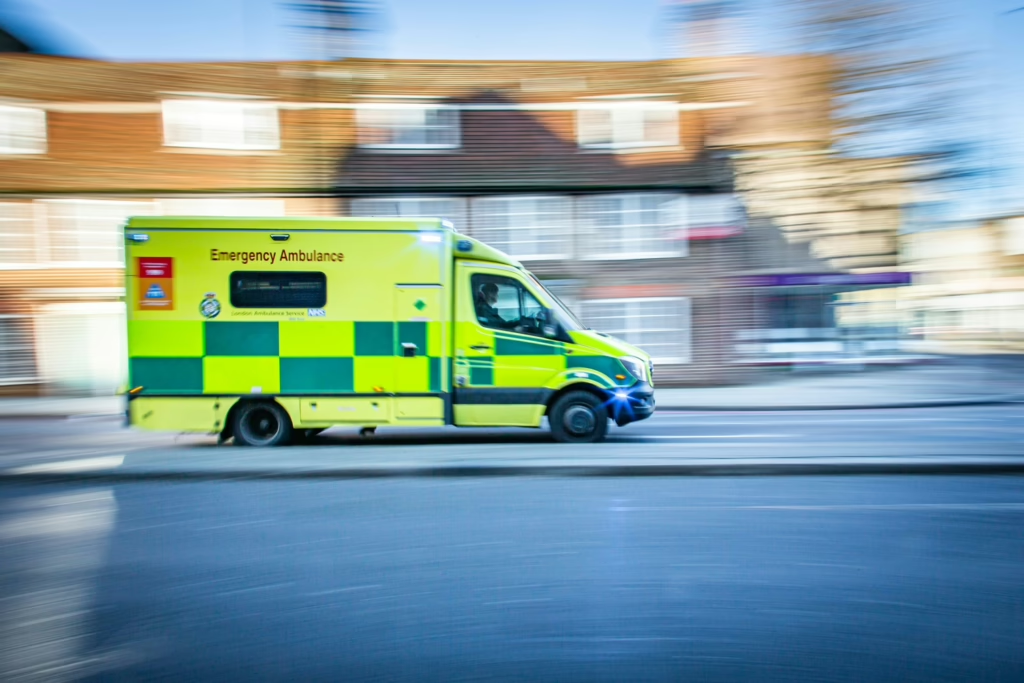
Emergency response in Dubai arrives within minutes across almost the entire city. One centralized dispatch center manages police, ambulance, and fire calls through easy-to-remember numbers, and English-speaking operators are on duty 24/7. Whether you are in a hotel, on the highway, or at the beach, help is dispatched fast and usually gets there before the situation gets worse.
Hospitals here hold the same international accreditations you see in the U.S. or Europe and staff a lot of Western-trained doctors who speak fluent English. Emergency rooms treat everyone immediately – payment is sorted out later – but bills climb fast. A simple overnight stay after a minor incident can easily reach five figures without proper coverage.
- Police emergency: 999
- Ambulance: 998
- Fire: 997
- U.S. Consulate Dubai emergency line: +971-4-309-4000
Having these numbers saved in your phone and solid travel insurance with high medical limits is the one non-negotiable preparation Americans should never skip.
Regional Security Situation
The United Arab Emirates is located in a region with ongoing conflicts and periodic missile or drone threats from neighboring countries. These incidents almost never reach Dubai itself, and daily life in the city continues without interruption even when tensions rise. The main impact on visitors is occasional short-notice flight delays, cancellations, or airspace closures that affect Dubai International Airport and connecting flights.
The U.S. Department of State keeps the UAE at Level 2 (exercise increased caution) primarily due to the risk of terrorism and potential spillover from regional conflicts. The same advisory explicitly states that the UAE maintains a safe internal environment and that terrorist attacks inside the country remain unlikely. American citizens are advised to monitor developments, enroll in STEP for alerts, and follow airline updates during periods of heightened tension.
In practice, Dubai’s extensive air-defense systems, rapid government communication, and pre-planned airport contingency protocols minimize disruption. Hotels and malls have designated shelter areas, though they are rarely used. For most travelers, the regional situation translates into occasional flight schedule changes rather than any direct security concern on the ground.
Conclusion
Dubai delivers a highly controlled environment that results in crime levels far below almost any American city. The primary dangers for U.S. citizens come from unfamiliar local laws rather than street crime or violence. Americans who research medication rules, respect public-conduct restrictions, and stay informed about regional developments experience the city without significant safety problems.
Frequently Asked Questions
Is Dubai safer than New York or Los Angeles?
Violent and property crime rates are substantially lower in Dubai than in most large U.S. cities.
Can Americans drink alcohol in Dubai?
Alcohol is available only inside licensed hotels, bars, restaurants, and private homes. Public consumption is illegal.
Are public displays of affection allowed?
Kissing or intimate contact in public violates decency laws and can lead to arrest.
Do I need travel insurance?
Medical costs are high; comprehensive coverage with sufficient limits is strongly recommended.
What medications are banned?
Many common painkillers, ADHD medications, and sleeping pills require prior approval. Check the UAE Ministry of Health list before travel.
Is it safe to rent and drive a car?
Road infrastructure is excellent, but defensive driving is necessary due to local habits.
What should I do if I am arrested?
Contact the U.S. Consulate General in Dubai immediately; local law applies fully, and consular officers cannot secure release.