
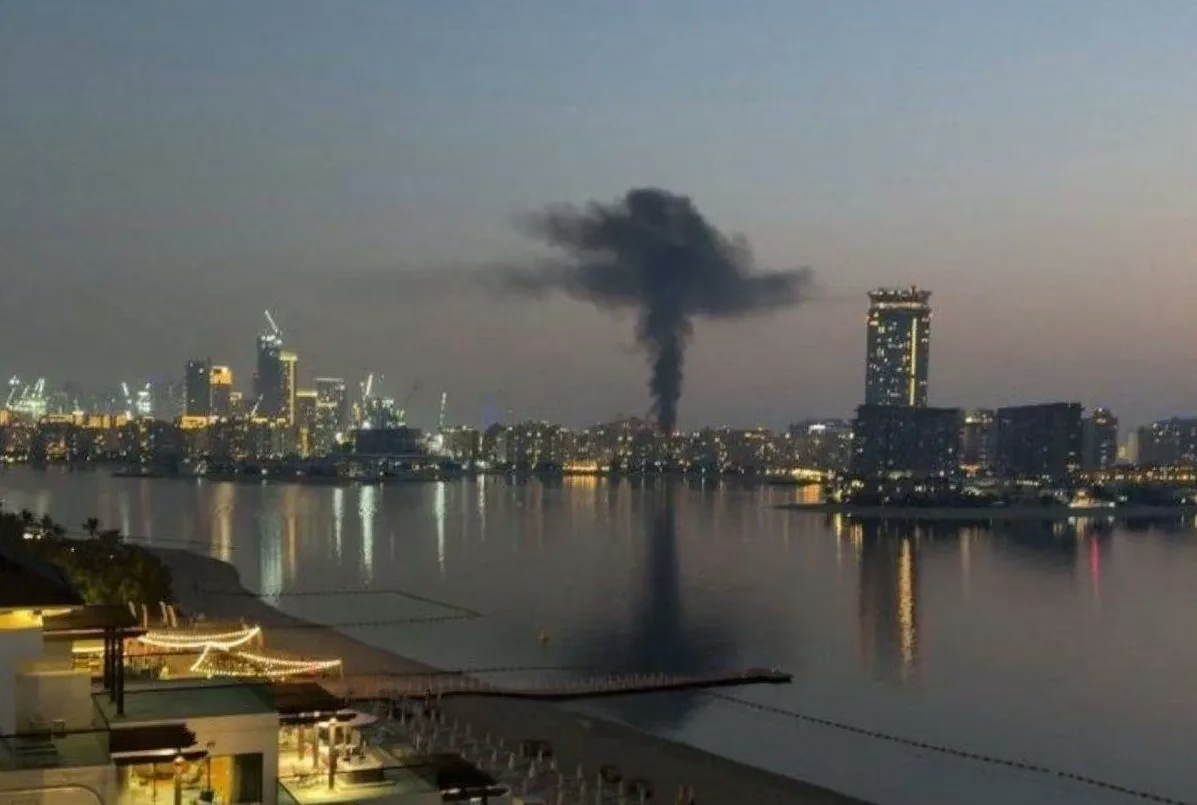
Executive Summary: On March 3, 2026, the UAE navigated the aftermath of a significant regional crisis involving US-Israel strikes on Iran and Iranian retaliatory attacks. According to the UAE Ministry of Defence, on Day 1 (February 28), 137 ballistic missiles and 209 drones were detected and intercepted. By Day 2 (March 1), forces destroyed 20 ballistic missiles, 2 cruise missiles, and 311 drones, with 21 drones striking civilian targets. Cumulative totals through March 1 reached 165 ballistic missiles, 2 cruise missiles, and 541 drones. Emirates and Etihad airlines began resuming limited operations after multi-day suspensions, while authorities maintained heightened security protocols.
The United Arab Emirates found itself at a critical juncture on March 3, 2026, as the nation worked to restore normalcy following unprecedented regional tensions. The situation escalated rapidly over the preceding days, transforming the Gulf from a stable business hub into a region on high alert.
What started as a US-Israel military operation against Iranian targets on February 28 quickly spiraled into broader regional instability. By March 3, the UAE was managing the complex aftermath of retaliatory strikes while working to reassure residents, businesses, and the international community.
The UAE’s response demonstrated both its advanced defense capabilities and the vulnerabilities of even the most secure Gulf states when regional conflicts escalate.
The Defense Response: Missiles and Drones Intercepted
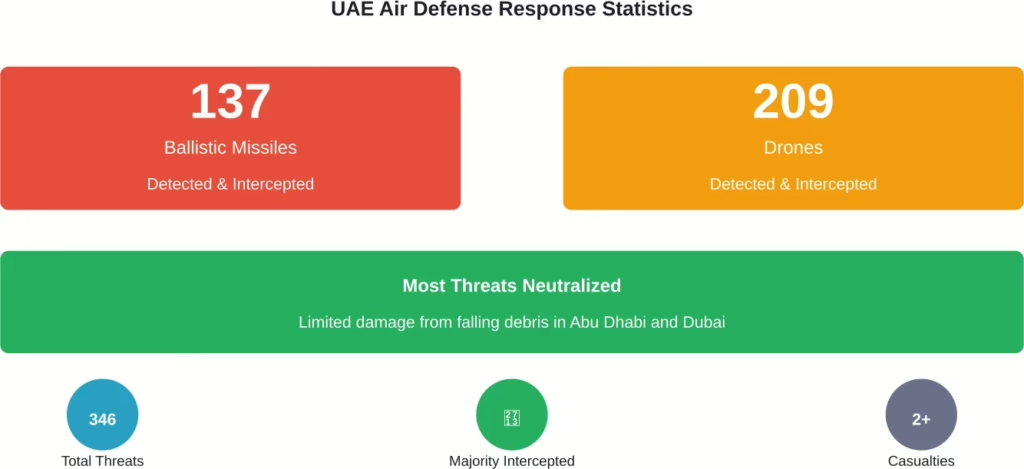
According to the UAE Ministry of Defence, on Day 1 (February 28), the nation detected and responded to a massive aerial assault consisting of 137 ballistic missiles and 209 drones. The scale of this attack represented one of the most significant threats to UAE airspace in recent history.
Most of these projectiles were neutralized by the UAE’s air defense systems before reaching populated areas. But the sheer volume meant that some debris inevitably fell to ground level.
While interceptions prevented major damage to infrastructure, falling debris caused limited harm in parts of Abu Dhabi and Dubai. One Pakistani national died from missile debris. Reports indicated that falling debris caused limited harm in parts of Abu Dhabi and Dubai, with some sources referencing two casualties from debris impact.
Geographic Impact Areas
Dubai and Abu Dhabi experienced the most significant impacts from falling debris. Reports from March 1 and March 2 detailed damage assessments, though authorities emphasized that direct hits to critical infrastructure were prevented.
The Dubai International Airport area saw some disruption, though not from direct strikes. Airport operations were suspended primarily due to regional airspace closures rather than physical damage.
Aviation Crisis and Recovery
The aviation sector bore the brunt of operational disruption. Emirates temporarily suspended all operations to and from Dubai until 15:00 UAE time on Sunday, March 1, due to multiple regional airspace closures.
By March 3, both Emirates and Etihad began resuming limited operations. This marked a cautious return to normalcy, with airlines emphasizing that schedules remained fluid and safety was the highest priority.
The resumption wasn’t comprehensive. Select routes reopened first, with carriers prioritizing repatriation flights and essential travel. A flight from Abu Dhabi to Bengaluru landed successfully on March 3, signaling the beginning of broader recovery.
| Airline | Suspension Period | Status on March 3, 2026 | Key Restrictions |
|---|---|---|---|
| Emirates | Until March 1, 15:00 UAE time | Limited operations resumed | Fluid schedules, select routes only |
| Etihad | Multi-day closure | Limited operations resumed | Prioritizing essential travel |
| Regional Carriers | Varied by location | Gradual resumption | Dependent on airspace clearance |
Impact on Stranded Travelers
The aviation disruption left thousands stranded across the Gulf region. South Asian celebrities including Ajith Kumar and Vishnu Manchu were among those affected, with media tracking their safety status.
Germany announced plans to evacuate vulnerable citizens from the UAE, reflecting international concern about the security situation. The scale of disruption meant that recovery would take days, not hours.
Diplomatic Fallout and Regional Responses
The UAE took decisive diplomatic action in response to the Iranian attacks. The nation shut its Tehran embassy and recalled its ambassador, signaling a significant deterioration in bilateral relations.
This move came after Iranian retaliatory strikes. The diplomatic rupture represented one of the most serious breakdowns in UAE-Iran relations in recent years.
The UAE had maintained careful diplomatic balance with Iran despite regional tensions. The attacks and subsequent embassy closure marked a clear red line being crossed.
US Embassy Security Alert
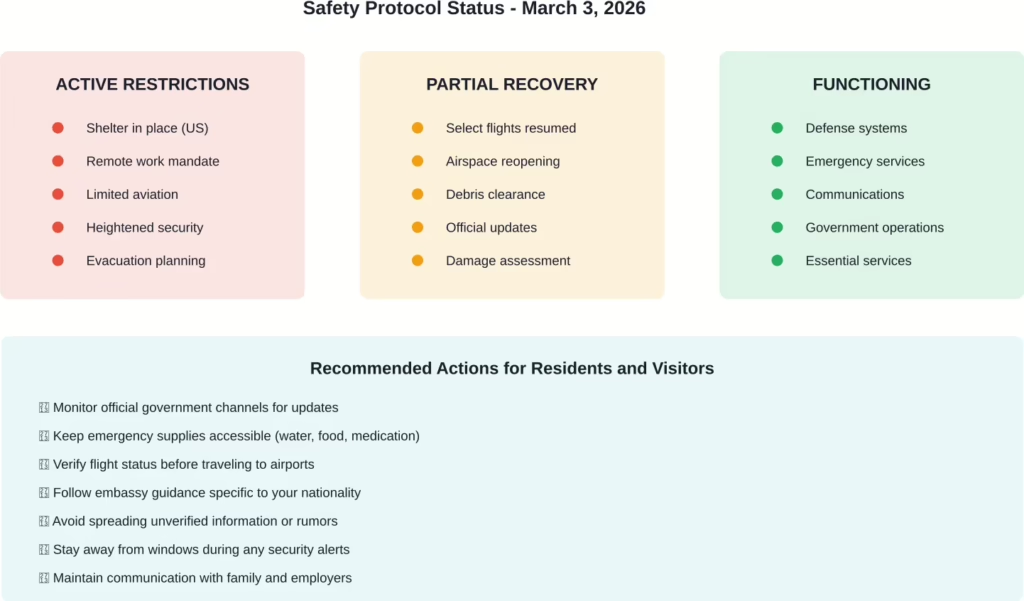
The U.S. Mission to the UAE issued a security alert on March 2, 2026, recommending that U.S. government personnel and all Americans in the UAE shelter in place. The guidance was explicit: remain in residences, hotels, or other structures, and stay away from windows.
The U.S. Mission to the UAE issued a security alert on March 2, 2026, recommending shelter-in-place status. The status on March 3 remained contingent on evolving security conditions. The U.S. also urged Americans to immediately depart more than a dozen countries across the Middle East, reflecting broader regional security concerns.
Meanwhile, a fire erupted at the US embassy in Riyadh following an explosion, demonstrating that the security situation extended well beyond UAE borders.
Economic and Business Impact
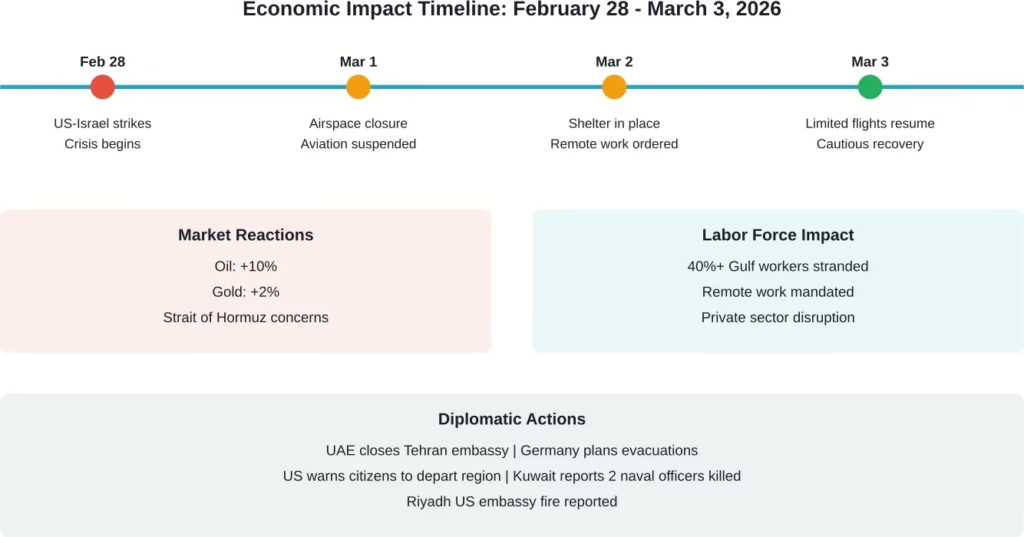
The UAE government urged the private sector to work remotely until Tuesday, extending work-from-home protocols that had been implemented during the initial crisis days. This directive aimed to minimize civilian exposure to potential secondary strikes or incidents.
Oil prices responded dramatically to the crisis. Reports indicated potential for crude to hit $100 per barrel if the Strait of Hormuz faced closure—echoing concerns about 1970s-style oil shocks. Gold climbed 2% on rising Middle East tensions, while oil jumped 10%.
Iran’s IRGC warned that oil prices could reach $200 following closure of the Strait of Hormuz, though this represented a threat scenario rather than immediate reality on March 3.
Labor Force Considerations
Over 40% of the labor force in Gulf countries consists of migrant workers. Many remained stranded as the crisis unfolded, unable to travel home or return to work. This demographic bore significant burden from the aviation disruptions and security restrictions.
Broader Regional Context
The UAE situation didn’t exist in isolation. Kuwait’s military reported two non-commissioned naval officers killed. Attacks and counterattacks created a multi-front crisis across the Gulf.
Iranian media confirmed significant developments following US-Israel strikes, though specific details varied across sources. The conflict involved multiple nations and created ripple effects throughout the Middle East.
President Trump issued fresh warnings on March 3, urging Iranians to “take over” their government and calling it “their only chance for generations.” The rhetoric signaled continued tensions despite tactical pauses in fighting.
Airspace Closures Across the Region
The UAE wasn’t alone in closing its airspace. Regional closures disrupted aviation patterns across the Gulf, forcing rerouting of international flights and creating cascading delays worldwide.
By March 3, selective reopenings began. But the situation remained fluid, with authorities maintaining the right to reimpose restrictions if security conditions deteriorated.
Information Management and Public Communication
UAE authorities consistently urged residents to rely on official sources and avoid spreading rumors. This message repeated throughout the crisis reflected challenges in managing information flow during rapidly evolving security situations.
The government provided updates through official channels, though the pace of developments sometimes outstripped official communications. Media outlets aggregated information from multiple sources, creating comprehensive coverage despite restrictions.
Managing public information during a crisis of this scale presents unique challenges. The balance between transparency and security requires careful calibration.
Recovery Outlook and Ongoing Challenges
March 3 represented a transition day—no longer in acute crisis mode, but not yet returned to normalcy. The UAE demonstrated resilience in its response, leveraging advanced defense systems and coordinated government action.
But questions remained about regional stability. Would tensions escalate again? How long would aviation recovery take? What economic impacts would persist beyond the immediate crisis?
The IMF’s last Article IV Executive Board Consultation with the United Arab Emirates occurred on July 11, 2024, well before this crisis. Future economic assessments will need to account for the March 2026 events and their lingering effects.
| Sector | Immediate Impact | Recovery Status (March 3) | Outlook |
|---|---|---|---|
| Aviation | Complete suspension | Limited operations resumed | Gradual full recovery over days |
| Defense | 346 threats intercepted | Heightened alert maintained | Continued vigilance required |
| Diplomacy | Embassy closures | Ambassador recalled from Iran | Long-term relationship strain |
| Business | Remote work mandated | Continuing through March 3 | Gradual return to offices |
| Tourism | International warnings | Evacuation plans active | Reputation management needed |
Long-Term Strategic Implications
The events of late February and early March 2026 highlighted the UAE’s geographic vulnerability despite its economic prosperity and military capabilities. Located in a region prone to periodic conflict, the nation must continuously balance its role as a global business hub with security realities.
According to World Bank Open Data, as of 2023, life expectancy at birth in the UAE is 83 years. The poverty headcount ratio at $3.00 a day (2021 PPP) was 0.0% as of 2018, indicating minimal extreme poverty. Security challenges can disrupt even the most prosperous societies.
Safety Measures for Residents and Visitors
On March 3, practical safety guidance remained crucial. While immediate danger had subsided compared to March 1-2, authorities maintained precautionary measures.
The shelter-in-place recommendation from the U.S. Mission persisted. This meant staying indoors when possible, avoiding windows during any alerts, and keeping emergency supplies accessible.
Travelers faced difficult decisions. Some governments actively evacuated citizens, while others issued travel warnings. Israel arranged recovery flights to nearby border hubs such as Taba in Egypt and Aqaba in Jordan, with Taba crossings remaining open 24 hours.
Media Coverage and Information Landscape
Coverage of the UAE situation on March 3 came from multiple angles. Gulf News provided extensive live updates tracking developments hour by hour. International outlets like the Times of India and Hindustan Times focused on aviation disruptions affecting South Asian travelers.
The sheer volume of coverage reflected global interest in Gulf stability. Keywords like “Dubai news,” “Abu Dhabi updates,” and “UAE airspace” trended across search engines as people worldwide sought information.
Information quality varied. Some sources provided factual updates based on official statements. Others speculated about future scenarios. The UAE government’s emphasis on official channels made sense in this context.
Frequently Asked Questions
Is it safe to travel to the UAE on March 3, 2026?
Travel safety remains conditional on March 3. While immediate combat has subsided and limited flights resumed, authorities maintain heightened security protocols. The U.S. Mission recommends Americans shelter in place. Multiple governments issued travel warnings or began evacuations. Check with your embassy and airline before making travel decisions. The situation remains fluid, and security conditions could change rapidly.
Are Dubai and Abu Dhabi airports operational?
Both airports resumed limited operations on March 3 after multi-day suspensions. Emirates and Etihad began select flights, prioritizing essential travel and repatriation. However, schedules remain fluid with possible short-notice cancellations. Not all routes have reopened. Travelers should verify specific flight status directly with airlines before heading to airports, as regional airspace restrictions continue affecting operations.
How many missiles and drones did the UAE intercept?
According to the UAE Ministry of Defence, on Day 1 (February 28), air defense systems detected 137 ballistic missiles and 209 drones. By Day 2 (March 1), forces destroyed 20 ballistic missiles, 2 cruise missiles, and 311 drones. Cumulative totals through March 1 reached 165 ballistic missiles, 2 cruise missiles, and 541 drones. Most were successfully neutralized before reaching populated areas. However, falling debris from interceptions caused limited damage in parts of Abu Dhabi and Dubai, resulting in casualties including at least one confirmed death of a Pakistani national.
What caused the crisis between Iran and the UAE?
The crisis stemmed from US-Israel military strikes on Iran beginning February 28, 2026. Iran launched retaliatory attacks across the Gulf region, including strikes affecting the UAE. Iranian forces apparently targeted the UAE due to perceived support for US-Israel operations. The UAE subsequently closed its Tehran embassy and recalled its ambassador, marking a significant diplomatic rupture between the nations.
When will normal operations resume in the UAE?
Full operational normalcy remains uncertain as of March 3. Aviation recovery is happening gradually, with limited flights resuming but full schedules not yet restored. The government mandate for remote work extends through at least Tuesday. Defense systems remain on heightened alert. Recovery timeline depends on broader regional de-escalation, which hasn’t been definitively achieved. Authorities continue urging caution and reliance on official updates.
What should residents do if there’s another attack?
Residents should immediately seek shelter indoors, preferably in interior rooms away from windows. Follow official emergency broadcasts and government instructions. Keep emergency supplies accessible including water, food, medications, and important documents. Avoid spreading unverified information. Contact your embassy for nationality-specific guidance. The UAE’s air defense systems demonstrated effectiveness in intercepting most threats, but individuals should still take personal safety precautions during any alert.
How is this affecting oil prices and the economy?
Oil prices jumped 10% amid the crisis, with analysts warning of potential increases to $100 per barrel if the Strait of Hormuz faces closure. Iran’s IRGC suggested prices could reach $200 under worst-case scenarios. Gold climbed 2% on regional tensions. The mandate for remote work and aviation disruptions create short-term economic friction, though the UAE’s diversified economy provides some resilience. Long-term impacts depend on whether tensions escalate or de-escalate.
Conclusion: Navigating Uncertainty
March 3, 2026 found the UAE in a precarious position—past the immediate crisis peak but not yet returned to normalcy. The nation’s response showcased sophisticated defense capabilities and coordinated crisis management. Successfully intercepting 346 aerial threats prevented catastrophic damage.
But challenges persist. Aviation recovery proceeds cautiously. Diplomatic relationships need rebuilding. Economic disruptions ripple through sectors dependent on stability and connectivity. The broader regional situation remains volatile.
For residents, visitors, and businesses, the watchword is vigilance. Monitor official channels. Maintain flexibility in travel and business planning. Understand that conditions can change rapidly when regional tensions remain elevated.
The UAE has weathered this storm better than many scenarios might have predicted. The coming days will reveal whether March 3 marks the beginning of genuine recovery or merely a pause in ongoing regional instability.
Stay informed through official government sources, verify information before sharing, and prioritize safety over convenience during this uncertain period. The UAE’s resilience is being tested—and so far, it’s responding with both strength and prudence.