
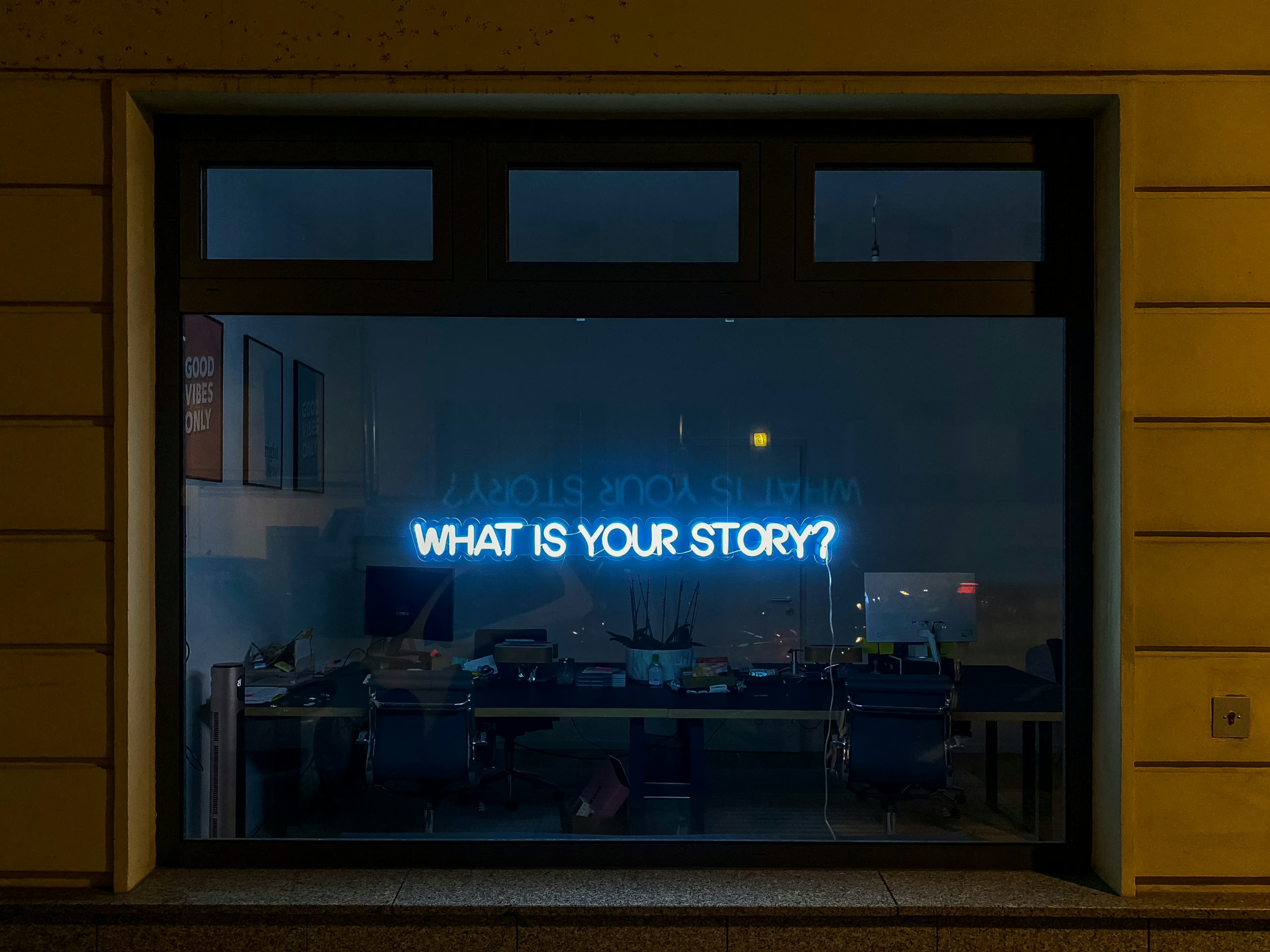
Coming up with a story name sounds easy until you actually try to do it. You know the characters, the mood, even the ending, yet the title just sits there, half right and slightly wrong. Too obvious feels lazy. Too clever starts to feel forced.
A good story name does not need to impress anyone. It just needs to fit. Something that sounds right when you say it out loud and still feels comfortable once the story is finished. This article focuses on story name ideas that grow naturally from the story itself, not from trends or generators, and helps you land on a title you will not want to change later.
Why Story Titles Get Overcomplicated So Fast
Most writers do not overthink story names because they are indecisive. They overthink them because titles feel permanent in a way drafts do not. You can rewrite scenes. You can cut characters. A title feels like a public commitment.
There is also pressure coming from everywhere else. Bestseller lists. Viral booktok names. Genre trends that seem impossible to ignore. It creates the sense that a story name has to perform before anyone has even read a word.
The problem is that this pressure pushes writers away from the story itself. Titles stop being about fit and start being about approval. That is where overthinking begins.
A useful reset is this: a story name is not a summary, a pitch, or a promise of greatness. It is a label that helps the right reader find the right story.
Once you view it that way, many decisions get simpler.
Why Waiting Until the Story Is Written Helps
There is nothing wrong with working titles. In fact, most writers need them to keep momentum. The mistake happens when a temporary name is treated like a final decision too early.
Stories change as they are written. Themes become clearer. Characters surprise you. The emotional center shifts. A title chosen too early often belongs to an earlier version of the story.
Waiting until the draft exists gives you more material to work with. You are no longer guessing what the story might become. You can see it.
At that point, naming stops being an abstract exercise and turns into recognition. You are not inventing a title. You are noticing one.

Story Name Ideas With Real Examples You Can Build On
Sometimes the problem is not understanding how titles work. It is simply needing to see enough real examples for ideas to click. These are not meant to be copied word for word. Think of them as directions you can adapt to your own story’s tone and theme.
Mood-Based Story Name Ideas
These titles focus on how the story feels rather than what happens. They work well for literary fiction, romance, drama, and introspective stories.
Examples:
- Quiet Between Us
- What Stayed Unsaid
- After the Last Light
- A Soft Kind of Ending
- The Weight of Waiting
- Where Silence Lives
These names tend to age well because they are not tied to specific plot details.
Place-Inspired Story Name Ideas
Instead of naming a location directly, these titles hint at atmosphere, distance, or memory connected to a place.
Examples:
- The House Near the Water
- East of the River Line
- The Road That Never Closed
- Beyond the Old Station
- Where the Town Ends
This approach works especially well when setting plays an emotional role in the story.
Character-Focused Story Name Ideas
These titles center on who the character is or what defines their inner struggle, rather than just using a name.
Examples:
- The Girl Who Stayed
- A Man Out of Season
- Someone Else’s Daughter
- The Last Honest Friend
- A Version of Him
They suggest character depth without requiring explanation.
Object or Symbol-Based Story Name Ideas
Objects often carry emotional meaning inside a story. When chosen carefully, they make grounded and memorable titles.
Examples:
- The Blue Envelope
- A Key Without a Door
- What the Photograph Held
- The Broken Watch
- Letters Never Sent
These titles work best when the object reappears or changes meaning over time.
Abstract Story Name Ideas That Still Feel Clear
Abstract titles can be powerful if they connect clearly to the story’s theme or tension.
Examples:
- What Remains
- In Other Words
- The Space Between
- If Only Briefly
- Almost Home
The key is specificity. If the title could belong to any story, refine it.
Time-Based Story Name Ideas
Titles built around time feel reflective and natural, especially for coming-of-age or memory-driven stories.
Examples:
- The Summer We Didn’t Leave
- Before Everything Changed
- After the Long Year
- The Night That Stayed
- Once, Then Again
They suggest movement and transformation without spelling it out.
Relationship-Driven Story Name Ideas
These focus on connection, distance, or tension between people.
Examples:
- Between You and Me
- Not Quite Strangers
- The Shape of Us
- Someone I Used to Know
- Closer Than Before
This direction works well for romance, drama, and character-driven fiction.

Short and Minimal Story Name Ideas
Simple titles can feel confident and lasting when the word choice is precise.
Examples:
- Still
- Elsewhere
- Return
- Held
- Drift
These titles rely on the story to give them meaning, which often makes them stronger.
Slightly Narrative Story Name Ideas
These hint at a situation or moment without turning into a summary.
Examples:
- Everyone Left Early
- The Day We Stopped Calling
- What Happened After
- No One Came Back
- Things We Never Fixed
They create curiosity without overexplaining.
Genre-Friendly Story Name Ideas (Flexible Across Genres)
These fit comfortably within common genre expectations without sounding copied.
Examples:
- The Quiet Pact
- A Measure of Distance
- Beneath the Surface Line
- The Other Side of Knowing
- Where It Begins Again
They feel familiar but not generic.
The Problem With Title Generators (And When They Help)
Title generators are often dismissed entirely, or relied on too heavily. The truth sits somewhere in between.
They are rarely good at producing finished titles. They do not know your characters, your tone, or your intent. That shows.
Where they can help is in shaking loose ideas. A word combination might spark something more personal. A structure might remind you of an option you had not considered.
If you use generators, treat them as raw material, not answers. The moment you feel tempted to accept a generated title without modification, pause. That is usually a sign it does not belong to the story yet.

The Quiet Truth About Good Story Names
The most reassuring thing to remember is this: readers do not judge a story as harshly by its title as writers imagine. A solid, fitting name is enough to get them to open the first page. What happens after that matters more.
Overthinking titles often comes from treating them as a verdict on the entire story. They are not.
A good story name feels natural because it belongs. Once you find that feeling, there is no need to keep searching.
Stop when it feels right. That is usually the signal you were waiting for.
Conclusion
Good story name ideas do not come from pressure. They come from attention.
When you pay attention to your story’s mood, language, and emotional center, names appear naturally. They do not shout. They do not perform. They simply belong.
Once you feel that sense of fit, stop. Close the list. Move on.
The story already has a name. You just needed to listen
Frequently Asked Questions
How do I know when a story name is good enough?
A story name is usually good enough when it stops causing debate in your head. If you can say it out loud without cringing, it still feels right a few days later, and it fits the tone of the story, that is usually the sign to stop searching.
Should I choose a story name before or after writing?
Most writers find it easier to choose a final story name after the draft is finished. A working title is fine while writing, but the story often reveals better name ideas once its themes and emotional center are clear.
Do story names need to explain what the story is about?
No. A story name does not need to summarize the plot. Its job is to set expectations around mood, genre, or feeling. The story itself should do the explaining.
Is it bad to change the story name later?
Not at all. Many stories go through several title changes before publication. Changing a name is part of refining the work, not a sign that something is wrong.
How long should a story name be?
There is no strict rule, but shorter titles are usually easier to remember and recommend. That said, a slightly longer name can work if every word adds meaning and nothing feels extra.