
Executive Summary: On February 28, 2026, the United States and Israel launched coordinated military strikes against Iranian nuclear facilities and military targets. President Donald Trump described the operation as necessary to eliminate threats from Iran’s nuclear program and called for regime change in Tehran. Iran responded with retaliatory strikes, escalating tensions across the Middle East.
The morning of February 28, 2026, marked a seismic shift in Middle Eastern geopolitics. What began as routine Saturday morning news cycles exploded into coverage of a massive coordinated military operation against Iran.
President Donald Trump confirmed that the United States, alongside Israel, had launched what he termed “major combat operations” targeting Iran’s nuclear infrastructure and military installations. The strikes represented the most significant direct military confrontation between the US and Iran since the 1979 hostage crisis.
Here’s what happened, why it matters, and what comes next.
The Strikes: What Actually Happened
The operation commenced early Saturday morning, February 28, 2026, with Israeli forces initiating what witnesses described as a “daylight preemptive attack” against multiple Iranian targets. Shortly after, US military forces joined the operation, expanding the scope and intensity of the strikes.
President Trump delivered an eight-minute address confirming the military action. He stated his objective was “to defend the American people by eliminating imminent threats from the Iranian regime.”
Witnesses in Tehran reported heavy explosions across the capital and smoke rising near facilities linked to Iran’s Supreme Leader Ayatollah Ali Khamenei. The strikes appeared to target both Iran’s nuclear enrichment facilities and military command centers.
Targets and Scope
Based on available reports, the operation focused on several key sites:
- Underground nuclear enrichment facilities
- Military command and control centers
- Missile development and storage facilities
- Locations associated with Iran’s leadership
Secretary of State Marco Rubio referenced Iran’s nuclear enrichment activities in remarks made just days before the strikes. Speaking on February 25, 2026, Rubio questioned Iran’s need for deep underground enrichment facilities, noting that countries genuinely seeking energy alternatives could pursue small modular reactors instead.
The strikes targeted facilities enriching uranium to concerning levels. Rubio’s remarks highlighted Iran’s history of enriching uranium to 20% purity, a level that significantly reduces the technical barriers to weapons-grade material.
Trump’s Call for Regime Change
What set these strikes apart from previous US military actions wasn’t just the scale. It was Trump’s explicit messaging to the Iranian people.
During his address, Trump directly appealed to Iranian citizens to “take over your government.” This marked an unprecedented public call for regime change from a sitting US president during active military operations.
Trump framed the strikes not as aggression against the Iranian people, but as action against what he called a “murderous terror regime.” Israeli Prime Minister Benjamin Netanyahu echoed this sentiment, stating that “for 47 years, the Ayatollah regime has called out ‘Death to Israel’ and ‘Death to America.’”
Netanyahu described Iran’s leadership as a threat that “must not be allowed to arm itself with nuclear weapons.”
The messaging represented a deliberate strategy: separate the Iranian government from its citizens, position the military action as liberation rather than conquest, and create potential openings for internal Iranian opposition movements.
Background: How We Got Here
The February 2026 strikes didn’t emerge from a vacuum. They’re the culmination of escalating tensions that accelerated throughout 2025 and early 2026.
Failed Diplomatic Efforts
In December 2025, UN Under-Secretary-General Rosemary DiCarlo briefed the Security Council on the implementation of resolution 2231 (2015), which governed the Iran nuclear agreement. Her assessment was blunt: “Despite intensified diplomatic efforts during the second half of 2025, there was no agreement on the way forward regarding the Iran nuclear programme.”
The Trump administration, which took office in January 2025, pursued a maximum pressure approach combining renewed sanctions with military mobilization. According to public opinion research, Americans remained divided on military action against Iran, with 49% opposing an attack including 74% of Democrats and 51% of independents.
Cuba Incident
Days before the strikes, on February 25, 2026, Secretary of State Marco Rubio addressed remarks noting awareness of an incident off the coast of Cuba reported by Cuban authorities. While details remain sparse, the incident apparently involved Iranian activities that prompted immediate investigation by the Department of Homeland Security and Coast Guard.
The Cuba incident may have served as a triggering event, though the operation’s scale suggests planning was already well advanced.
European Diplomacy
On February 14, 2026, Secretary Rubio addressed the Munich Security Conference, championing “the leading role of the US on the world stage.” The speech emphasized the Trump administration’s willingness to act unilaterally when it deemed American interests threatened.
The following day, February 15, 2026, Rubio met with Slovak Prime Minister Robert Fico in Bratislava. The European diplomatic circuit suggested the administration was building coalition support or at minimum providing advance notice to key allies.
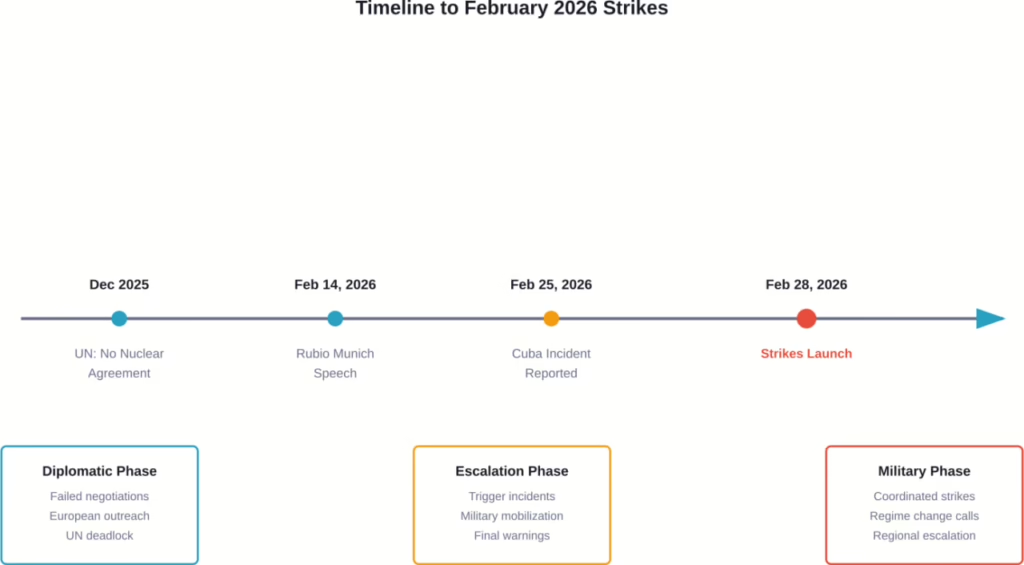
Key events leading to the February 28, 2026 military strikes on Iran, showing diplomatic failures and escalation triggers.
Iran’s Response and Regional Escalation
Iran didn’t absorb the strikes passively. Tehran launched retaliatory strikes of its own, dramatically expanding the conflict’s geographic scope.
Most significantly, Saudi Arabia reported that Iran launched what Riyadh called a “blatant and cowardly” attack targeting the Saudi capital and eastern regions. The Saudis stated they successfully repelled the attacks.
The Iranian strikes on Saudi Arabia represented a dangerous escalation. By targeting US regional allies, Iran signaled its willingness to expand the battlefield beyond its own borders.
Strait of Hormuz Concerns
According to analysis from the Brookings Institution, strikes against Iran could push the regime to use what experts call its “ace in the hole”—control of the Strait of Hormuz. About 20% of the world’s supply of both oil and liquefied natural gas travels through the strait on its way to global consumers.
While Iran likely lacks the capability to completely block the strait, even temporary disruptions could send energy prices soaring and create supply chain shocks rippling through the global economy.
Markets immediately responded to these concerns, with energy analysts warning that US-Iran conflict could carry heavier market consequences than recent geopolitical shocks, including Russia’s invasion of Ukraine.
Status of Iranian Leadership
Early reports suggested strikes may have targeted Iran’s Supreme Leader Ayatollah Ali Khamenei directly, with witnesses reporting smoke near offices associated with the supreme leader.
However, Iran’s foreign minister later stated in an NBC News interview that both the supreme leader and president were alive “as far as I know.” The qualification suggested uncertainty even within Iran’s own government about leadership status in the strike’s immediate aftermath.
International Reactions
The strikes triggered immediate diplomatic responses across the globe.
United Nations
The UN Security Council scheduled an emergency meeting to address the crisis. As of February 27, 2026, the Security Council—which bears “primary responsibility for the maintenance of international peace and security”—convened to discuss the escalating situation.
A February 12, 2026 UN resolution (S/RES/2816) addressed “Threats to international peace and security,” though specific details regarding Iran weren’t immediately available from public documents.
The UN’s ability to mediate effectively remained constrained by the same dynamics that have paralyzed action on Middle Eastern conflicts for decades: competing interests among permanent Security Council members.
Regional Players
Egypt immediately began consultations with several countries to assess the situation and coordinate regional responses. As a key Arab state that maintains diplomatic relations with both Western powers and Iran, Egypt’s positioning could prove crucial in any de-escalation efforts.
Saudi Arabia’s direct involvement as a target of Iranian retaliation fundamentally altered the conflict’s regional dimensions. The strikes on Riyadh forced Gulf states to move from concerned observers to active participants.
Congressional Notification
According to sources cited by the Associated Press, the US Congress received notification before the strikes commenced. This notification fulfilled constitutional requirements regarding the use of military force, though debate immediately erupted about whether the action required formal congressional authorization.
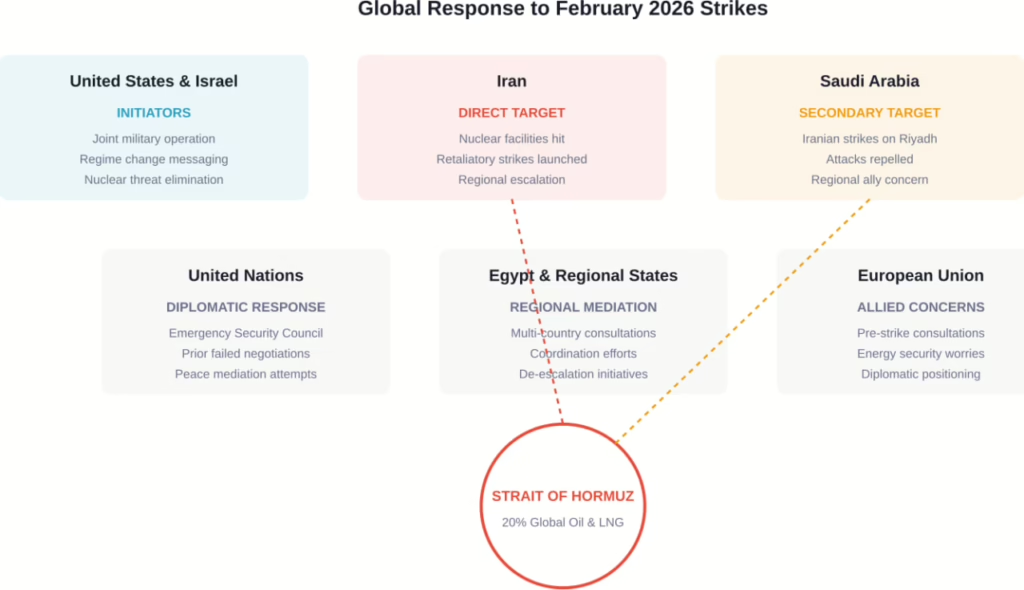
Key international actors and their positions in the February 2026 Iran conflict, highlighting the central threat to global energy supplies through the Strait of Hormuz.
Economic and Energy Market Impact
The conflict’s economic ramifications extended far beyond the immediate military theater.
Oil prices experienced immediate volatility, with energy analysts predicting significant price swings. The threat to Strait of Hormuz shipping lanes created particular concern given the concentration of global energy supplies transiting that narrow waterway.
Markets had become somewhat accustomed to absorbing recent geopolitical shocks. Trump’s announcement of a hike in US tariffs on all imports to 15% just weeks earlier had already tested market resilience. But direct US-Iran military conflict represented a different magnitude of risk.
The economic impact potentially affected:
- Global energy prices and supply chains
- Regional trade routes and commercial shipping
- Defense sector stocks and military spending
- Currency markets, particularly oil-dependent economies
- Broader investor confidence in Middle Eastern stability
Energy experts noted the unique vulnerability created by the Strait of Hormuz chokepoint. Unlike distributed supply chains that can route around disruptions, the strait represents an irreplaceable transit point for massive energy volumes.
Expert Analysis and Strategic Implications
Rice University made faculty experts available to discuss the evolving situation, highlighting the conflict’s complexity across multiple dimensions: geopolitical strategy, regional dynamics, humanitarian impacts, and energy markets.
Indirect talks between the US and Iran, according to Syracuse University’s Osamah Khalil speaking with CBS News on February 26, had failed to produce breakthrough agreements. The diplomatic track appeared exhausted by the time military operations commenced.
The strategic calculation behind the strikes involved several factors:
Nuclear Timeline Concerns: Intelligence assessments apparently concluded Iran was approaching a threshold where preventing weapons capability would become significantly more difficult. The decision to strike reflected a judgment that the window for preventive action was closing.
Regional Deterrence: By acting jointly with Israel and targeting Iranian capabilities to strike regional allies, the operation aimed to restore deterrence that had eroded through years of Iranian proxy operations and missile development.
Domestic Political Factors: Trump’s appeal to the Iranian people suggested an attempt to leverage internal Iranian discontent with the regime. Whether this reflected realistic assessment of Iranian domestic politics or wishful thinking remained debatable.
Casualties and Humanitarian Concerns
Trump warned that US casualties were possible, acknowledging the inherent risks of major military operations. Specific casualty figures from the initial strikes remained limited in publicly available reports.
The humanitarian implications of expanded conflict raised serious concerns. Military operations in urban areas inevitably risk civilian casualties, regardless of precision targeting capabilities.
Iran’s retaliatory strikes on Saudi Arabia and potentially other locations further multiplied the humanitarian risks. Each escalation expanded the number of civilians potentially in harm’s way.
Travel advisories for Iran had already warned US nationals against travel to the country, with the State Department noting that Iran detains dual nationals “without warning or evidence they committed a crime.” The conflict made an already dangerous situation for Americans in the region exponentially more perilous.
What Happens Next: Possible Scenarios
The conflict’s trajectory remained highly uncertain as of late February 2026. Several scenarios appeared possible:
Escalation to Broader Regional War
Iran’s strikes on Saudi Arabia demonstrated willingness to expand the battlefield. If Iran continued targeting US allies or US forces throughout the Middle East, the conflict could metastasize into a multi-front regional war involving Saudi Arabia, the UAE, Iraq, Syria, and potentially others.
The nightmare scenario involved Iran attempting to close or mine the Strait of Hormuz, triggering massive Western military response to reopen the waterway and potentially devastating energy price shocks.
Negotiated De-escalation
Despite the violence, diplomatic off-ramps might still exist. If both sides concluded they’d demonstrated sufficient resolve, face-saving negotiations could produce a ceasefire followed by broader talks on Iran’s nuclear program, regional security architecture, and sanctions relief.
Egypt’s consultations with multiple countries suggested groundwork for potential mediation. The UN Security Council emergency session could provide a forum for de-escalation diplomacy.
Regime Collapse or Change
Trump’s direct appeals to the Iranian people reflected hopes that military pressure combined with internal discontent might trigger regime change. Iran has experienced periodic protests against the government, most recently in 2022-2023.
However, external military action could just as easily rally nationalist sentiment around the regime, making internal change less rather than more likely.
Frozen Conflict
The strikes might achieve degradation of Iran’s nuclear capabilities without toppling the regime or triggering all-out regional war. This could produce a tense frozen conflict with periodic flare-ups, similar to patterns seen in other regional disputes.
| Scenario | Likelihood | Key Indicators | Regional Impact |
|---|---|---|---|
| Broader Regional War | Moderate-High | Continued Iranian strikes on allies; Strait of Hormuz incidents; proxy force activation | Catastrophic: energy crisis, mass casualties, economic shock |
| Negotiated De-escalation | Moderate | Back-channel diplomacy success; UN mediation progress; pause in strikes | Significant but contained: temporary energy disruption, regional tension |
| Regime Change | Low-Moderate | Internal Iranian protests; military defections; leadership casualties | Highly unpredictable: potential civil war or transition chaos |
| Frozen Conflict | Moderate | Nuclear capability degraded; neither side seeks further escalation; sanctions persist | Ongoing instability: periodic incidents, sustained energy price elevation |
Long-Term Implications
Regardless of the conflict’s immediate resolution, the February 2026 strikes will likely reshape Middle Eastern geopolitics for years.
The precedent of joint US-Israeli strikes on a sovereign nation’s territory—including explicit calls for regime change—established new parameters for what Western powers consider acceptable military action. This could embolden future operations or conversely trigger international pushback against unilateral military action.
Iran’s nuclear program, even if significantly degraded, represented knowledge and expertise that couldn’t be destroyed by airstrikes. The fundamental challenge—how to prevent Iranian nuclear weapons capability while avoiding permanent military occupation—remained unresolved.
Regional security architecture faced fundamental questions. The strikes demonstrated that deterrence had failed. Building a more stable regional order would require addressing the underlying conflicts driving Iranian and Israeli/US antagonism.
For the Iranian people, the conflict created profound uncertainty. Trump’s appeals suggested American policymakers distinguished between the Iranian regime and Iranian citizens. But military strikes inevitably affected ordinary Iranians, complicating the narrative of liberation versus aggression.
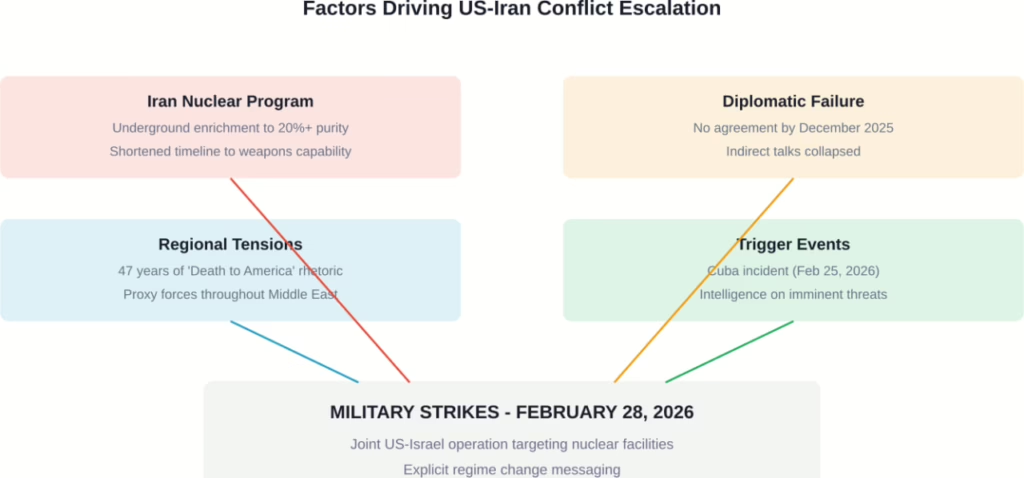
Multiple converging factors led to the February 28, 2026 military strikes, including nuclear proliferation concerns, diplomatic deadlock, regional hostilities, and specific trigger incidents.
Frequently Asked Questions
Why did the US and Israel strike Iran in February 2026?
The strikes targeted Iran’s nuclear enrichment facilities and military infrastructure. President Trump stated the objective was “to defend the American people by eliminating imminent threats from the Iranian regime.” The operation followed failed diplomatic efforts throughout 2025 to reach agreement on Iran’s nuclear program and concerns that Iran was approaching weapons capability.
What targets were hit in the strikes?
The operation focused on underground nuclear enrichment facilities, military command and control centers, missile development and storage facilities, and locations associated with Iranian leadership. Witnesses reported heavy explosions across Tehran and smoke near facilities linked to Iran’s Supreme Leader.
How did Iran respond to the strikes?
Iran launched retaliatory strikes targeting Saudi Arabia, hitting both Riyadh and eastern regions according to Saudi officials. The Saudi government reported successfully repelling the attacks. Iran’s willingness to strike regional US allies demonstrated the conflict’s potential to expand into a broader regional war.
What is the Strait of Hormuz and why does it matter?
The Strait of Hormuz is a narrow waterway through which approximately 20% of the world’s oil and liquefied natural gas travels. Iran has potential leverage over this critical chokepoint. Experts warned that disruption to Strait of Hormuz shipping could cause massive energy price increases and global supply chain disruptions.
Did the strikes kill Iran’s Supreme Leader?
Early reports suggested possible targeting of Supreme Leader Ayatollah Ali Khamenei, with smoke visible near associated facilities. However, Iran’s foreign minister later stated in an NBC interview that both the supreme leader and president were alive “as far as I know,” though the qualification suggested uncertainty even within Iran’s government.
What did Trump mean by calling on Iranians to “take over your government”?
Trump explicitly appealed to Iranian citizens to overthrow their government, representing an unprecedented public call for regime change during active military operations. The messaging attempted to separate the Iranian people from their government, positioning the strikes as targeting the regime rather than ordinary Iranians.
Could this lead to a broader war?
The conflict carries significant escalation risks. Iran’s strikes on Saudi Arabia already expanded the battlefield beyond Iran’s borders. If Iran attempts to disrupt Strait of Hormuz shipping or continues targeting US allies and forces throughout the region, the situation could escalate into a multi-front regional war with devastating humanitarian and economic consequences.
Conclusion: An Uncertain Path Forward
The February 2026 US-Israel strikes on Iran represent a watershed moment in Middle Eastern history. What began as a military operation targeting nuclear facilities quickly evolved into a complex regional crisis with global implications.
The strikes achieved tactical objectives—hitting nuclear and military targets across Iran. But the strategic outcomes remain deeply uncertain.
Trump’s call for regime change elevated the stakes beyond nuclear non-proliferation to fundamental questions about Iranian governance. Iran’s retaliatory strikes on Saudi Arabia demonstrated that Tehran won’t absorb military action passively. The Strait of Hormuz remains a potential flashpoint that could transform regional conflict into global economic crisis.
In the coming days and weeks, the world will learn whether these strikes represent the opening of a prolonged regional war, a catalyst for negotiated settlement, or something else entirely.
What’s certain is that the Middle East’s security landscape has fundamentally shifted. The question now isn’t whether the February 2026 strikes will have long-term consequences—it’s what those consequences will be and who will pay the price.
For now, the region holds its breath.
Stay informed on this developing situation by monitoring official State Department updates, UN Security Council proceedings, and credible news sources for the latest developments in this evolving crisis.