
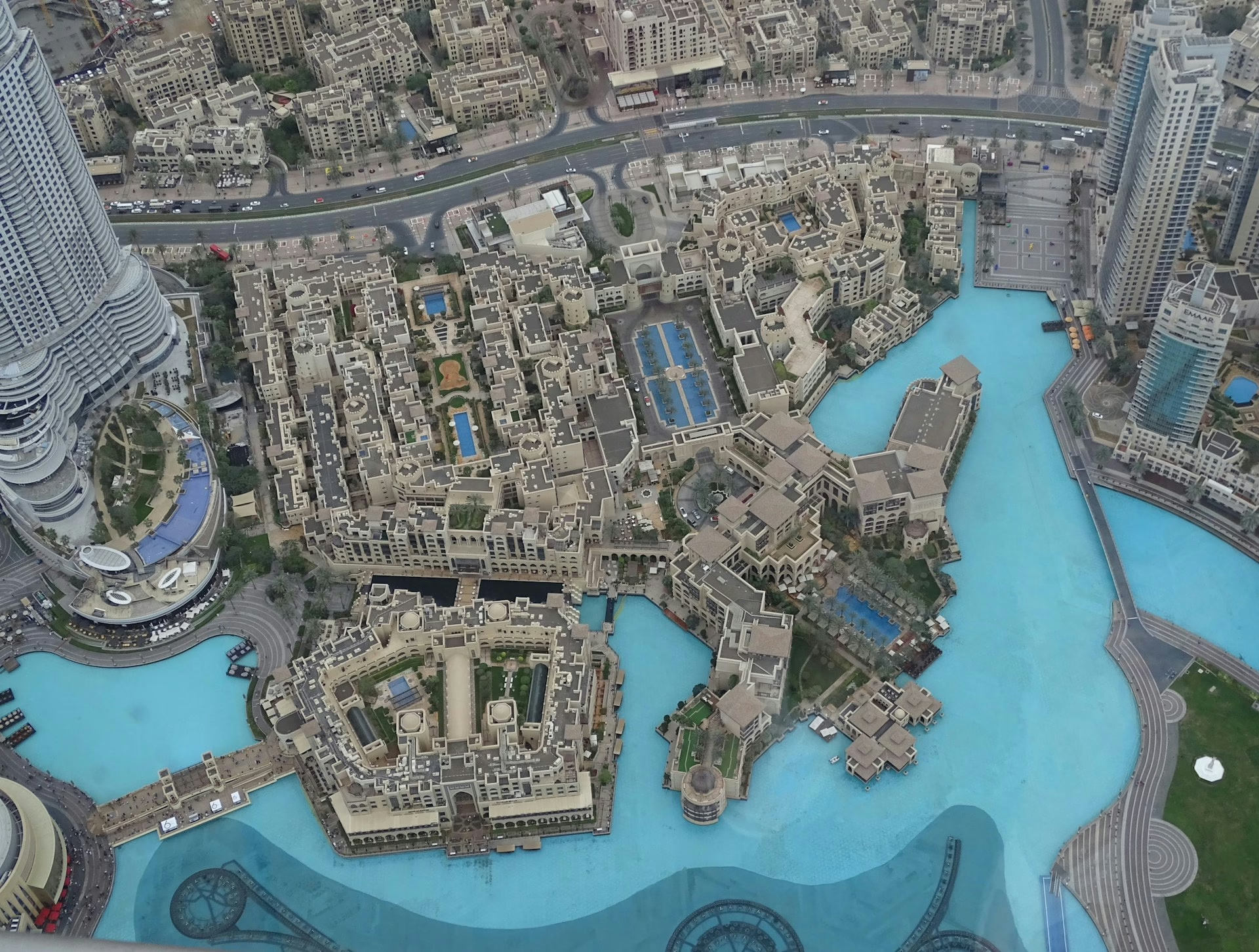
You’ve probably seen Dubai’s skyline pop up on your feed – the glittering towers, the palm-shaped islands, the desert that looks more like a movie set. But here’s the funny thing: for all its fame, a lot of people still aren’t sure where it actually is. Some think Dubai is a country, others guess it’s part of Saudi Arabia, and a few just know it’s “somewhere in the Middle East.” So, let’s clear it up. Dubai isn’t a country at all, it’s a city and one of seven emirates that make up the United Arab Emirates, or UAE. Once you understand that, everything else about Dubai’s story starts to make a lot more sense.
Getting the Basics Right
Let’s start simple. Dubai isn’t a country. It’s one of the seven emirates that make up the United Arab Emirates (UAE), a nation located on the southeastern edge of the Arabian Peninsula. Think of an emirate like a state or province, but with its own ruler and local government. The UAE includes Abu Dhabi (the capital), Sharjah, Ajman, Fujairah, Ras Al Khaimah, and Umm Al Quwain, alongside Dubai.
So if someone asks, “What country is Dubai in?” the answer is: it’s in the United Arab Emirates. The confusion often comes from the fact that Dubai has a much louder global presence than the country it belongs to. People recognize the city before they recognize the nation behind it.
Where Exactly Is Dubai?
Geographically, Dubai sits along the Gulf, roughly halfway between Saudi Arabia and Oman. Its coordinates are about 25°N latitude and 55°E longitude. That places it firmly in Asia, on the Middle Eastern part of the continent.
It’s bordered by:
- Abu Dhabi to the south
- Sharjah to the northeast
- The Sultanate of Oman to the southeast
- And the Gulf to the north
Dubai’s location has always been one of its greatest advantages. Historically, it was a natural meeting point for traders moving goods between India, Africa, and Europe. Today, the same location helps it act as a travel and logistics hub connecting three continents.
Why Do People Think Dubai Is a Country?
You’re not alone if you’ve ever made that mistake. A lot of people have. There are a few reasons:
- Global branding: Dubai markets itself as an independent destination. You rarely see “Visit the UAE” campaigns, but “Visit Dubai” is everywhere.
- Economic power: Dubai has its own business rules, tax-free zones, and even laws that differ from other emirates, making it feel semi-autonomous.
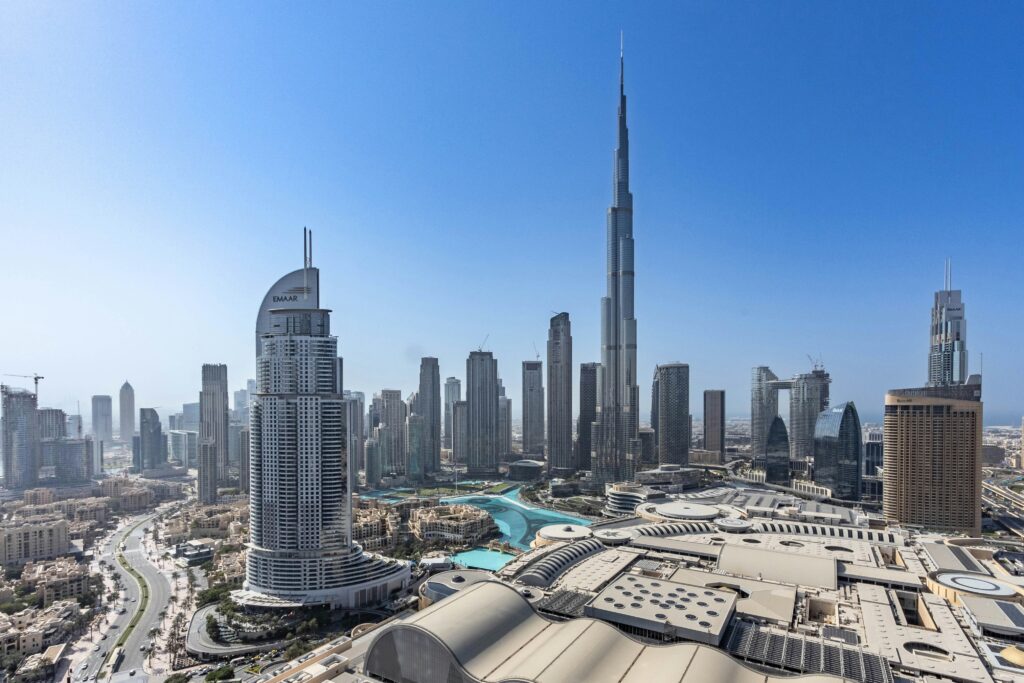
- Sheer visibility: The Burj Khalifa, Palm Jumeirah, and other global landmarks make Dubai seem like its own country-level brand.
- Fewer people know Abu Dhabi: Since Dubai is more famous internationally, travelers naturally assume it’s the capital.
It’s a bit like how people might think New York is the capital of the United States or Sydney is the capital of Australia. Fame and politics don’t always line up.
World Arabia in the Heart of Dubai’s Cultural Life
At World Arabia, we look at Dubai not just as a place on the map, but as a living, evolving story. This city doesn’t stand apart from the United Arab Emirates, it embodies what the country represents: ambition, cultural exchange, and a belief that tradition and modernity can thrive side by side.
Through our coverage of fashion, culture, business, and wellness, we see how Dubai connects people and ideas across continents. One week we’re writing about local designers shaping the region’s creative scene, the next we’re exploring art exhibitions or international conventions that bring voices from around the world to the Gulf.
What makes Dubai special isn’t only its architecture or skyline—it’s the rhythm of everyday life that blends local roots with global energy. We try to capture that pulse, because understanding what country Dubai is in also means understanding what kind of world it reflects: one that’s open, curious, and always looking forward.
The United Arab Emirates: A Quick Overview
To understand Dubai’s role, it helps to know what kind of country the UAE is. The federation was formed in 1971, after gaining independence from Britain. Each emirate joined voluntarily, agreeing to share power under a federal system.
- Abu Dhabi is the largest emirate and the political capital.
- Dubai is the second largest and the economic powerhouse.
- The remaining emirates each contribute culturally, economically, or geographically to the nation’s identity.
Every emirate has its own ruler, but together they form the Federal Supreme Council, the UAE’s highest governing body. The President of the UAE traditionally comes from Abu Dhabi, while the Prime Minister is usually from Dubai.
Dubai’s Political Setup
Dubai is ruled by Sheikh Mohammed bin Rashid Al Maktoum, who is also the Vice President and Prime Minister of the UAE. His leadership is one of the reasons Dubai developed so quickly from a desert town into a futuristic metropolis.
While the UAE has a national government, Dubai manages much of its own economy and infrastructure. It runs its own judicial system, police, and business regulations, especially in free zones like the Dubai International Financial Centre (DIFC), which even uses English common law for commercial cases.
This autonomy explains why Dubai often feels like a semi-independent city-state even though it’s part of a larger nation.
What Continent Is Dubai In?
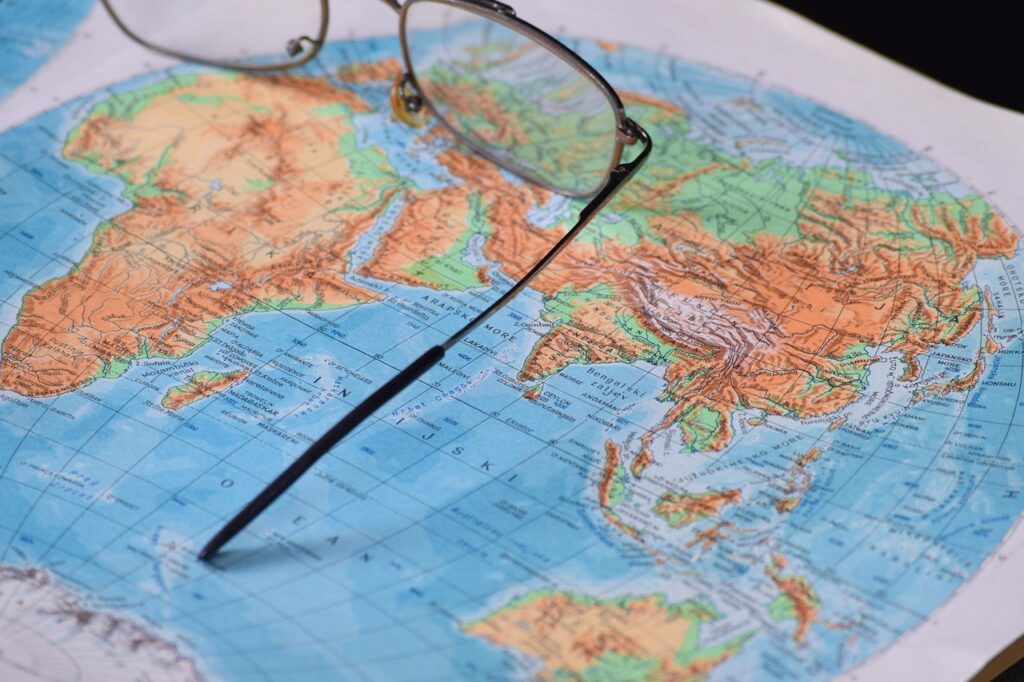
Dubai is in Asia, specifically in the Middle East, which is a transcontinental region connecting Asia, Africa, and Europe. To be more precise, Dubai lies on the Arabian Peninsula, bordered by the Arabian Desert to the south and the Gulf to the north.
This location makes it a natural crossroads between cultures. Flights from London to Dubai take about 7 hours, while it’s just 3 hours from India. That balance between East and West has shaped its identity as a truly international city.
Dubai and Abu Dhabi: The Twin Powerhouses
If Dubai is the UAE’s face to the world, Abu Dhabi is its backbone. Abu Dhabi holds the majority of the UAE’s oil reserves and wields major political influence.
The two cities complement each other perfectly:
- Abu Dhabi focuses on energy, governance, and culture.
- Dubai leads in trade, tourism, real estate, and finance.
They’re about 87 miles apart, and the drive between them takes roughly 1.5 to 2 hours along Sheikh Zayed Road, a straight and modern highway lined with futuristic buildings and desert views.
A Bit of History: From Desert Village to Global Icon
It’s hard to imagine now, but 60 years ago, Dubai was a modest fishing and pearl diving town. The big shift began in the 1960s when oil was discovered, followed by the UAE’s formation in 1971. But unlike Abu Dhabi, Dubai didn’t have massive oil reserves. Instead of relying on fossil fuels, it diversified early, investing in trade, aviation, real estate, and tourism.
That decision paid off. By the 1990s, Dubai had already built itself into a regional business hub. Then came the global expansion: skyscrapers, airports, artificial islands, luxury hotels, and some of the world’s boldest urban projects.
Today, oil contributes less than 1% of Dubai’s GDP. The rest comes from tourism, trade, logistics, and finance.
Dubai on the Map: Understanding Its Layout
If you’re planning a visit or just trying to visualize it, here’s a quick breakdown of Dubai’s main areas:
- Downtown Dubai: Home to the Burj Khalifa, Dubai Mall, and Dubai Fountain. It’s the city’s modern core.
- Dubai Marina: A waterside district packed with restaurants, nightlife, and skyscrapers.
- Palm Jumeirah: The famous palm-shaped island known for resorts like Atlantis The Palm.
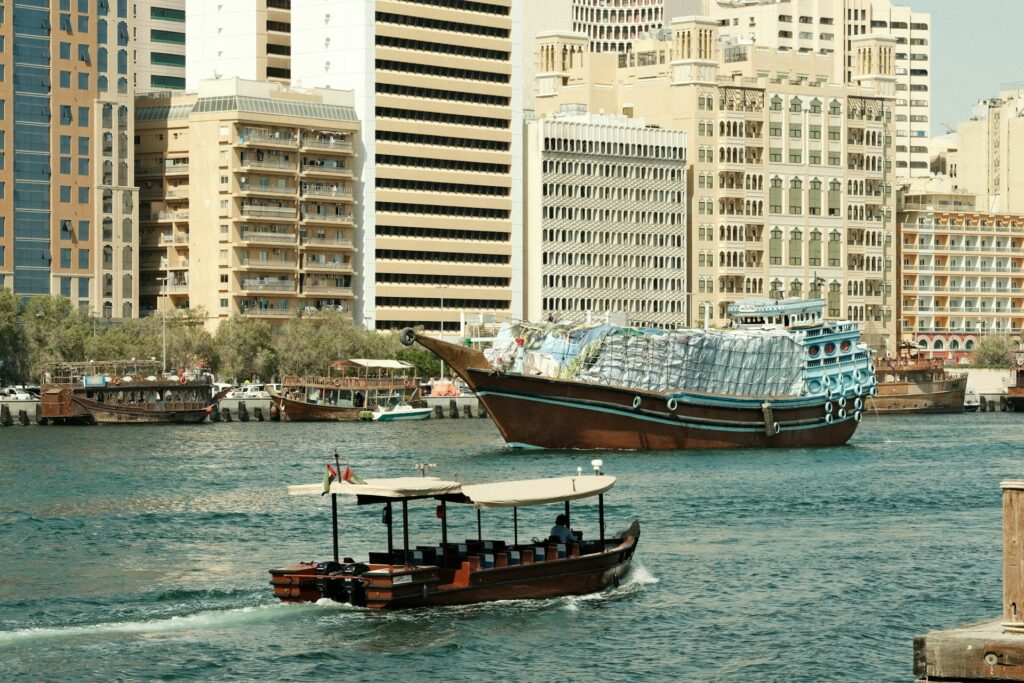
- Deira and Bur Dubai: The older parts of the city where you’ll find souks, museums, and a glimpse of traditional life.
- Jumeirah Beach: A coastal area lined with luxury hotels and family-friendly resorts.
- Al Barsha: Known for the Mall of the Emirates and easy access to main highways.
Each neighborhood reflects a different side of Dubai—from old trading roots to futuristic city planning.
The Geography That Shaped Its Growth
Dubai’s geography is both challenging and strategic. Built in a desert climate, it faces extreme heat, limited freshwater, and sandstorms. Yet it’s this very environment that pushed innovation—massive desalination plants, indoor ski slopes, and city-wide cooling systems all came out of necessity.
At the same time, its position on the coastline of the Gulf has made it an essential stop for global trade routes. The Jebel Ali Port is now one of the busiest in the world, and Dubai International Airport ranks among the top for international passengers.
Why Dubai’s Location Matters
Being at the crossroads of Europe, Asia, and Africa gives Dubai a unique edge. Businesses use it as a base to reach markets in all three regions. Airlines like Emirates have turned Dubai into a central stopover point, connecting hundreds of destinations.
For travelers, that means easy access. For entrepreneurs, it means opportunity. And for the UAE, it means influence that extends far beyond its borders.
The People, Culture, and Global Identity of Dubai
A City of Many Voices
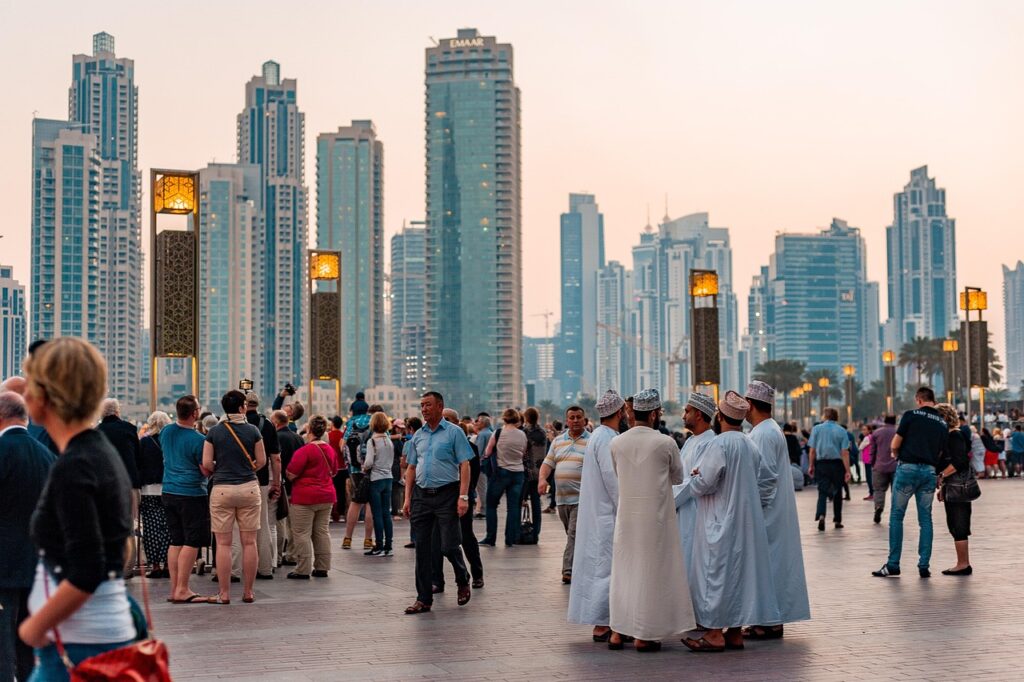
Despite being part of a small country, Dubai is home to a remarkably diverse population. Only around 15% of residents are Emirati citizens. The rest come from every corner of the world—India, Pakistan, the Philippines, the UK, Russia, Africa, and beyond. That mix has turned Dubai into one of the most international cities you can find.
Walk through any neighborhood and you’ll feel that diversity everywhere. You might have lunch at an Indian restaurant, pass a church next to a mosque, or join crowds celebrating both Islamic and multicultural holidays. What’s fascinating is how Dubai manages to celebrate global diversity without losing its Arabic character. Emirati culture, hospitality, and faith are woven into the city’s rhythm—it’s what keeps this modern hub grounded.
Language, Law, and Everyday Life
Arabic is the official language, but English is the common thread that connects everyone. It’s spoken in offices, restaurants, and schools, making life surprisingly easy for visitors and foreign residents.
Dubai’s laws combine Islamic principles with civil systems, balancing modern governance with cultural respect. The result is one of the safest cities in the world, orderly, welcoming, and remarkably efficient. Still, cultural awareness matters. Modesty in dress and behavior, especially in public spaces, goes a long way here.
Dubai’s Role in the Modern World
Dubai’s influence stretches far beyond tourism. It has evolved into a global financial hub that attracts major investors, a technology hotspot where startups in AI and logistics take root, and a transport leader connecting continents through air and sea. It’s also an event capital that hosts global expos, major sports tournaments, and international summits.
Its strength lies in reinvention. Every few years, Dubai finds a new way to redefine itself, whether through smart city projects, sustainable design, or cultural collaboration. It’s not just part of a country; it’s a symbol of how that country thinks, dreams, and builds for the future.
Final Thoughts
So, what country is Dubai in? It’s part of the United Arab Emirates, a federation that turned desert sand into one of the world’s most modern nations. Dubai may not be a country, but its global influence often makes it feel like one.
It’s where tradition meets ambition, where the desert meets the sea, and where a city built on vision continues to outgrow its own limits. Whether you visit for business or leisure, understanding where Dubai truly belongs helps you see not just where it is on the map, but why it stands out on the world stage.
Frequently Asked Questions
Is Dubai in Asia or the Middle East?
Both. The Middle East is part of Asia, and Dubai lies squarely within it, on the Arabian Peninsula.
Is Dubai the capital of the UAE?
No. Abu Dhabi is the capital. Dubai is the largest city and economic center.
Is Dubai a country?
No. Dubai is an emirate within the United Arab Emirates (UAE).
What are the neighboring countries?
Dubai is bordered by Saudi Arabia and Oman, and across the Gulf lies Iran and Qatar.
What makes Dubai so successful?
Smart diversification, investor-friendly policies, and a prime location connecting three continents.