
Dubai has a way of impressing you the moment you land. The skyline rises out of the desert, the roads are impeccable, and everything seems to run in a smooth, almost choreographed rhythm. But while the city feels futuristic, one question remains pretty down to earth for every traveler: what currency do you actually use here and how much do you need to understand before you start spending?
If you have been digging through travel forums, blogs, and even social media videos, you already know the answers can vary wildly. Some people say you do not need cash at all, some insist you should carry dirhams everywhere, and others mention that you can still pay with dollars in some places. The truth sits somewhere in between, and this guide breaks everything down clearly, so you can step into Dubai with confidence.
Let’s walk through everything you need to know about the UAE currency, how it works, how to handle payments, and the smart ways to exchange your money without losing a chunk to hidden fees.
Understanding the Official Currency of Dubai
Dubai uses the UAE dirham, officially written as AED. You may also see it written in Arabic, especially on receipts or small price tags. AED is the currency of all seven emirates, not just Dubai, and it has been the official currency since 1973.
A single dirham is divided into 100 fils, which function similarly to cents in the US or pennies in the UK. You will rarely need to think in fils unless you are buying small items such as bottled water, metro tickets, or snacks.
How the Dirham Looks
If you like noticing design details, dirham notes are quite beautiful. Each banknote features cultural and historical symbols that represent different parts of the UAE.
- AED 5, 10, 20, 50, 100, 200, 500, 1,000
- Coins: 1 dirham, 25 fils, 50 fils
You will rarely see the smaller 5 or 10 fils coins, and even locals do not use them much.
The AED 1 coin shows a traditional dallah coffee pot, something you will also spot in souvenirs and local shops. Higher denomination notes include falcons, forts, mosques, and native wildlife, which makes the currency feel like a mini tour of UAE heritage.
Discovering Dubai’s Cultural Pulse With World-Arabia
When we explore Dubai beyond exchange rates and practical money tips, we always end up browsing World-Arabia. It gives us a chance to see how the city moves through culture, fashion, business, and everyday life. The platform covers everything from street style trends to major exhibitions, so it helps us understand how people live, shop, and express themselves here.
We like using it as a way to add context to the numbers. When you read stories about designers, wellness spaces, or new events shaping the city, you start to see how the dirham connects to lifestyle choices and real experiences. It turns practical information into a bigger picture, showing how Dubai blends its traditions with modern influences.
A Currency Built on Stability
One of the most defining features of the UAE dirham is its fixed exchange rate with the US dollar. Since 1997, 1 USD has been valued at AED 3.67, and that figure does not fluctuate day to day. For travelers, this makes budgeting incredibly straightforward.
This peg also explains why the dirham feels predictable. The country maintains large financial reserves, manages inflation carefully, and has a strong economic base that includes energy, trade, tourism, technology, and logistics. These factors work together to create a sense of stability that many other currencies do not have.
What This Means for Travelers
- You will not see sudden price changes because of currency swings.
- If your home currency moves with the dollar, your costs will reflect that.
- If your home currency moves against the dollar, the AED will mirror that shift.
For example, when the British pound weakens against the dollar, it also weakens against the dirham at almost the same rate.
Common Exchange Rates to Keep in Mind
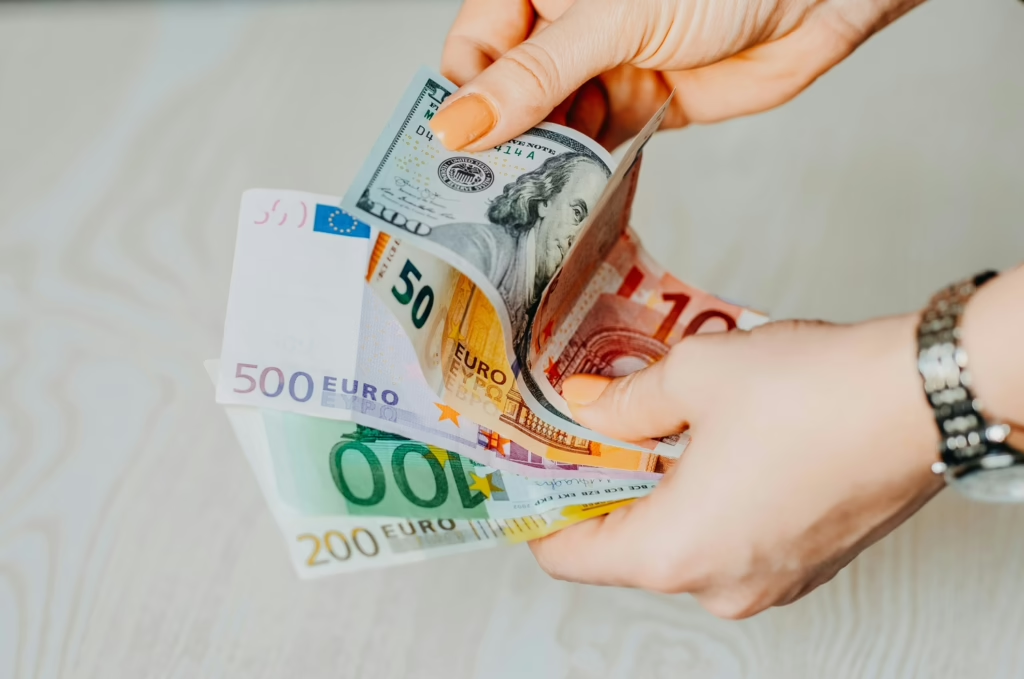
Since the dirham is pegged to the USD, the AED to USD conversion always stays around 3.67. But other currencies change depending on global fluctuations.
Here are approximate values:
- 1 USD = 3.67 AED
- 1 GBP = around 4.9 AED
- 1 EUR = around 4.3 AED
- 1 INR = roughly 0.044 AED
- 1 PKR = roughly 0.013 AED
These numbers shift slightly based on international markets, but the changes are typically small.
Where to Exchange Money in Dubai
If you plan to exchange cash once you arrive, you have several options. Each choice comes with its own balance of convenience, cost, and accessibility, so it helps to know what to expect before you hand over your bills.
Exchange Desks at the Airport
Airport counters are open around the clock, which makes them a lifesaver if you land late at night or need a small amount of cash immediately. The downside is the rate. These desks usually add higher markups, and the difference becomes noticeable if you exchange a larger sum. They work well for quick cash to cover your taxi or first meal, but not for your whole travel budget.
Shopping Mall Exchange Centers
Mall exchange houses are often the sweet spot for travelers. Dubai malls are full of reliable, well regulated exchange companies that tend to offer better rates than airport kiosks. Names like Al Ansari Exchange, Al Fardan Exchange, and Travelex are easy to find. These places usually stay open late, and the process is fast, straightforward, and safe. If you plan to exchange a sizeable amount, this is one of the best options.
Banks
Banks offer solid and trustworthy rates, but they sometimes apply service fees or require extra identification. Operating hours can be shorter, especially on weekends, and you may encounter queues during busy hours. Still, if you prefer dealing directly with a financial institution, banks are a stable and secure choice for exchanging currency.
Hotels
Hotels are the most convenient option but also the most expensive. Many guests walk to the front desk hoping to exchange money quickly and end up paying a noticeable premium for the comfort. Hotels often add a significant margin on top of the exchange rate, so while it is easy, it is usually the least cost effective method. This should be your last option unless speed matters more than savings.
Smart Tips for Getting the Best Rate
When it comes to saving money, timing and method matter. A few simple habits can help you avoid unnecessary fees and make your dirhams stretch further:
- Compare the rate you are offered with the mid market rate, the real exchange rate you see online. This gives you a clear baseline so you can spot inflated rates instantly.
- When withdrawing from an ATM, always choose to be charged in AED instead of your home currency. Selecting your home currency triggers a markup that adds no real value.
- Avoid airport and hotel currency desks unless you need a quick amount. They are convenient but often include heavy markups that can take a noticeable bite out of your travel budget.
- If your card supports it, use a travel card or a multi currency card with low fees. These cards usually convert money at fairer rates and help you avoid extra bank charges while spending abroad.
- For larger withdrawals, pick ATMs in malls or major banks instead of random standalone machines. Bank operated ATMs are more transparent and less likely to surprise you with added fees.
Is Dubai Cashless or Cash Friendly?
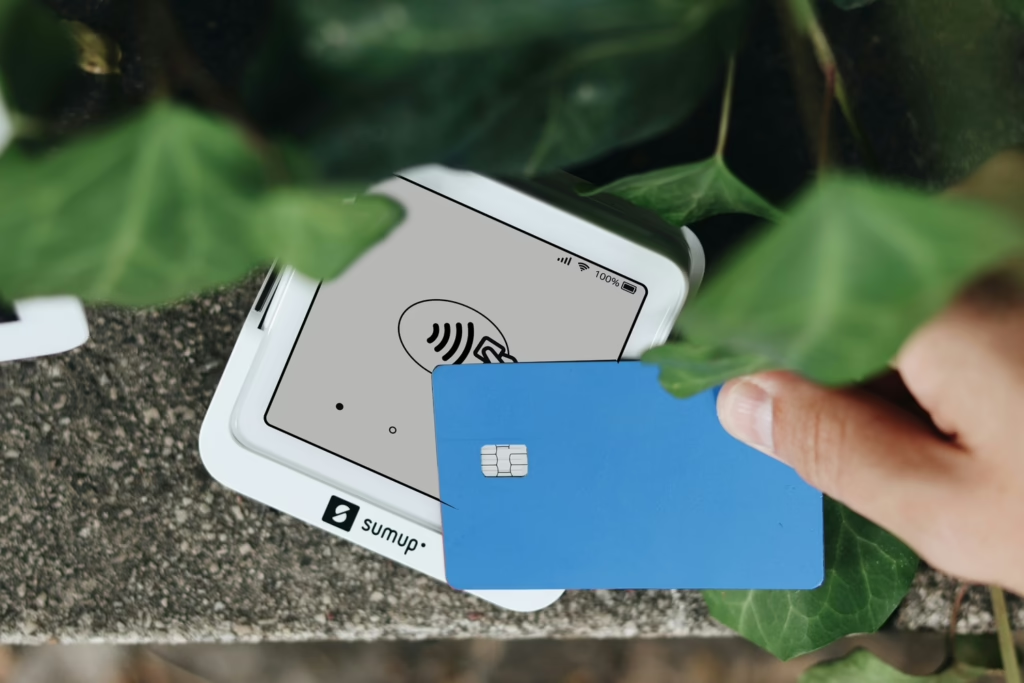
Dubai supports both, but leans heavily toward digital payments. You will find that credit and debit cards are accepted almost everywhere, including small cafes, metro stations, salons, and supermarkets. Visa and Mastercard dominate, and digital wallets are becoming more common, especially in malls and larger restaurants.
Still, carrying a small amount of cash can make life easier in certain moments. You might want a few dirhams on hand when you buy street food or snacks, take a taxi in an older part of the city, or tip porters and delivery staff. Smaller shops in traditional souks sometimes prefer cash as well. Most locals do not walk around with thick wallets either, but having around AED 50 to 100 in your pocket keeps daily transactions simple and avoids awkward situations.
Using ATMs in Dubai
ATMs are easy to find in Dubai. You will see them in malls, metro stations, hotels, supermarkets, and even smaller neighborhood centers. Most machines support several languages, and the interface is straightforward, so withdrawing cash is usually quick and simple.
One thing to keep in mind is the prompt that appears during withdrawal. When the machine asks whether you want to be charged in your home currency or in AED, always select AED. Choosing your home currency triggers dynamic currency conversion, which adds a hidden markup you do not need. It is also worth checking whether your bank charges its own international withdrawal fees, because those can add up depending on how often you use the ATM.
While almost all machines work fine, standalone ATMs in heavily touristed areas sometimes apply additional charges. If you want a smoother experience, stick to ATMs belonging to major banks like Emirates NBD, Mashreq, or ADCB. They tend to have clearer fee structures and more predictable rates, which helps you avoid unnecessary costs.
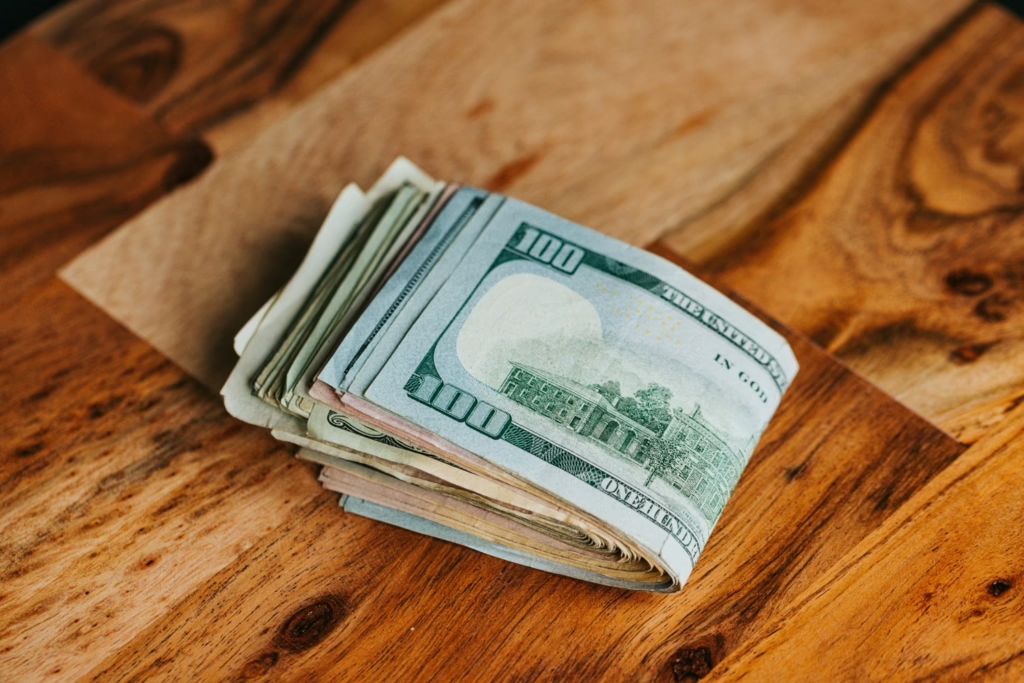
Can You Use Dollars or Other Foreign Currencies?
Technically, no. By law, businesses in Dubai are supposed to charge in AED, and that is the currency you will see everywhere. In day to day situations, especially in local shops and restaurants, you will be expected to pay in dirhams. There are exceptions in big malls or large hotels where staff might accept US dollars or euros, but this is more of a convenience gesture than a standard practice, and the exchange rate used is rarely in your favor.
If you choose to hand over dollars or euros, you will almost always pay more than you need to. Most places that accept foreign cash apply rounded or simplified conversions, and you will receive change in dirhams anyway. It works in a pinch, but it is not a smart way to manage your money in Dubai.
How the Digital Dirham Could Change the Future
The UAE is actively studying the idea of a digital version of its national currency, often referred to as the Digital Dirham. Unlike cryptocurrencies that fluctuate wildly and rely on decentralized networks, this digital version would be issued and overseen by the Central Bank. The intention is to modernize financial systems, improve transaction security, and build a foundation that supports a more digital economy. In a place like Dubai, where technology is woven into everyday life, the move feels like a natural step forward.
A digital currency could streamline payments on multiple levels. It might make cross border transfers smoother, enhance financial transparency, and reduce reliance on physical cash for government services. For businesses, it could also make corporate transactions faster and less dependent on traditional banking hours. Considering how quickly Dubai adopts new technologies in areas like transport, finance, and urban services, the Digital Dirham fits neatly into the country’s bigger technological direction.
For tourists, this development will not change much in the immediate future. Cards, cash, and online payments will continue to dominate day to day spending. But the idea itself shows how forward thinking the UAE is when it comes to financial infrastructure. When the Digital Dirham eventually rolls out, it may influence how visitors pay for services or interact with local systems, especially if tourism apps and platforms begin supporting it.
Final Thoughts
Understanding the currency in Dubai is not complicated. The UAE dirham is stable, easy to use, and widely accepted in both cash and digital forms. Whether you are walking through a souk in Old Dubai, grabbing a latte in a beachside cafe, or checking out at a luxury store, the system is built to make transactions smooth.
Dubai loves efficiency, and its payment ecosystem reflects that. Once you get familiar with the basics, everything becomes second nature. The important thing is to stay aware of exchange rates, carry a mix of cash and cards, and choose AED whenever a machine gives you payment options.
If you know how the dirham works, you are already several steps ahead. Now you can focus on exploring the city instead of worrying about money.
FAQ
What is the official currency used in Dubai?
Dubai uses the UAE dirham, written as AED. It is the currency used across all seven emirates, not just Dubai.
Can I pay with US dollars or euros?
Some tourist heavy places might accept them, but the rate is almost always poor. You will get a much better value by paying in AED.
Do I need to bring cash, or can I rely on cards?
You can easily rely on cards in most places. Still, carrying a bit of cash helps when you are in traditional souks, taking small taxis, or buying inexpensive items.
Are credit cards widely accepted in Dubai?
Yes. Visa and Mastercard are accepted nearly everywhere. Digital wallets are becoming more common as well.
Is it better to exchange money before traveling or after arriving?
You can do either. Many travelers exchange a small amount before arriving and convert the rest in Dubai at mall exchange counters, which often offer better rates than airports or hotels.