
Executive Summary: All flights to and from Dubai airports (DXB and DWC) are suspended as of February 28, 2026, due to UAE airspace closure following U.S. and Israeli strikes on Iran. Passengers should not travel to airports and must contact airlines directly for rebooking options.
February 28, 2026 marks a significant disruption for travelers heading to or from Dubai. Both Dubai International Airport (DXB) and Dubai World Central – Al Maktoum International (DWC) have suspended all flight operations until further notice, according to official statements from Dubai Airports.
The closure stems from escalating tensions in the Middle East following coordinated U.S. and Israeli military strikes on Iran. What started as regional airspace restrictions quickly cascaded into widespread flight cancellations across major Gulf hubs.
Complete Suspension at Dubai Airports
Dubai Airports issued a passenger advisory at 4:05 PM on February 28, 2026, confirming the full operational shutdown. The official statement is clear and direct: passengers must not travel to the airport and should contact their airline directly for flight updates.
This isn’t a partial closure or delay situation. Both airports have gone into full stop mode, with no incoming or outgoing flights permitted. Flight tracking data from both airports shows a stark pattern of cancellations throughout the day.
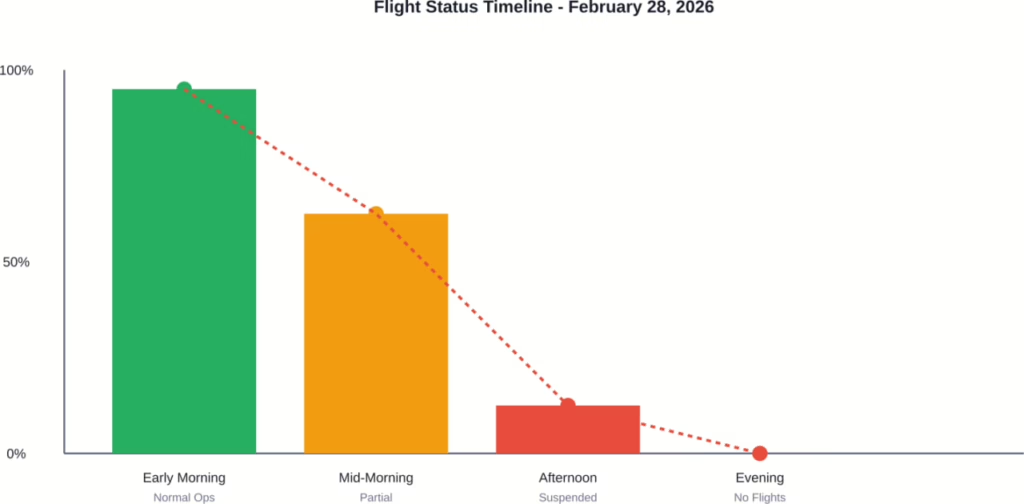
Dubai flight operations deteriorated throughout February 28, reaching complete suspension by afternoon
Real-Time Flight Status Data
According to official Dubai Airports flight information systems, the pattern of disruption began earlier in the day. At DXB, numerous flights showed cancelled status by evening, including routes to Kuwait, Yekaterinburg, Amman, and Ahmedabad. At DWC, flights to Riyadh and Jeddah were among those cancelled.
Some flights that departed earlier managed to complete their journeys. Data shows flights to Bratislava, Thiruvananthapuram, and New Delhi departed in the early hours before the full suspension took effect.
Why UAE Airspace Closed
The United Arab Emirates implemented a temporary closure of its airspace as a precautionary measure following military strikes. The UAE, along with Bahrain, Kuwait, Qatar, and Jordan, confirmed intercepting missiles during the escalation.
The closure affects not just Dubai but regional connectivity across the Gulf. Qatar Airways confirmed a temporary suspension of flights to and from Doha. This creates a domino effect since DXB and DOH serve as major connection hubs for travelers between Europe, Asia, and Africa.
Real talk: when two of the world’s busiest connection hubs go offline simultaneously, the impact spreads globally.
Which Airlines Are Affected
Emirates, the Dubai-based carrier operating from DXB, faces the most significant operational impact. The airline operates a large fleet of aircraft including Airbus A380s.
But it’s not just Emirates. The cancellations extend to:
- FlyDubai flights from both DXB and DWC
- International carriers with Dubai routes, including services that had already departed from origin airports
- Air India Express flights to Indian destinations
- Jazeera Airways Kuwait services
- SpiceJet connections
Several flights that were already airborne when the closure was announced had to return to their origin airports. Emirates flights from Dublin, Turkish Airlines services to Istanbul, and LOT flights to Warsaw all turned back mid-flight.
What Travelers Should Do Right Now
Dubai Airports has been explicit: do not travel to the airport. This instruction applies whether you’re departing from Dubai or have an incoming flight.
Here’s the action plan:
| Situation | Immediate Action | Timeline |
|---|---|---|
| Flight scheduled today | Contact airline directly for rebooking | Now |
| Connecting through Dubai | Check with first airline for alternate routes | Within 2 hours |
| Multi-city trip | Review entire itinerary for cascading delays | Today |
| Already at airport | Proceed to airline counter for options | Immediately |
| Hotel near airport | Extend booking, keep receipts | Before checkout |
Connection Hub Complications
The most exposed travelers are those with connection itineraries through Dubai. If you’re flying from Europe to Asia or Africa to the Middle East with a Dubai stopover, you’re facing potential misconnections.
Many airlines had already reduced service into the region before this incident. With fewer fallback options available, finding alternate routing becomes significantly harder.
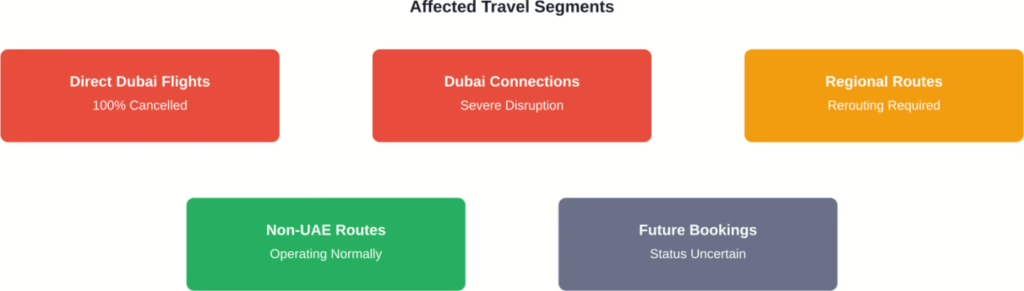
Impact severity varies by travel pattern, with direct and connecting Dubai routes facing complete suspension
Refunds and Rebooking Options
Since the airspace closure is beyond airline control, most carriers are offering flexibility. But the specifics vary by airline and ticket type.
For Emirates bookings, passengers should contact the airline directly through their customer service channels. The airline typically offers rebooking without change fees during major disruptions, though availability on alternate dates depends on capacity.
Travel insurance may cover expenses related to the disruption, including hotel stays and meals. Keep all receipts if you’re incurring additional costs while stranded. Most policies require documentation of the event, which the official Dubai Airports advisory provides.
Regional Context and Duration Uncertainty
Here’s the thing though—nobody knows how long this will last. The Dubai Airports advisory states operations are suspended “until further notice.” That phrasing indicates authorities are monitoring the situation in real-time.
The General Civil Aviation Authority of the UAE coordinates airspace management decisions. Their priority remains safety, which means the closure continues as long as the security situation warrants it.
Other regional airports face similar considerations. The broader Middle East airspace closure pattern affects routing even for flights that don’t touch Dubai directly.
Frequently Asked Questions
Can I fly to Dubai on February 28, 2026?
No. Dubai Airports confirmed all flight operations at DXB and DWC are suspended until further notice. Passengers should not travel to either airport.
Will my Emirates flight be automatically rebooked?
Not automatically. Passengers must contact Emirates directly for rebooking options. The airline is offering flexibility during the disruption, but you need to initiate the rebooking process.
Are flights from other UAE cities affected?
The entire UAE airspace is temporarily closed as a precautionary measure. This affects Abu Dhabi and other airports in addition to Dubai.
How long will Dubai airports stay closed?
The suspension is in effect until further notice, with no specific reopening time announced. Dubai Airports stated they are closely monitoring the situation and will provide updates as soon as available.
Can I get a refund if I cancel my Dubai trip?
Refund eligibility depends on your ticket type and airline policy. Given the airspace closure is beyond airline control, most carriers are offering flexible rebooking. Contact your airline directly to discuss options.
What about connecting flights through Dubai?
All connections through Dubai are disrupted. Contact your originating airline to arrange alternate routing. Many passengers are being rerouted through European or Asian hubs depending on their destination.
Is it safe to travel to Dubai once flights resume?
The airspace closure is a precautionary measure related to regional military activity, not a threat to Dubai itself. Once authorities determine it’s safe to resume operations, normal travel can continue. Monitor official advisories from Dubai Airports and your government’s travel advisory service.
Looking Ahead
The February 28, 2026 Dubai flight suspension represents a significant but temporary disruption. Dubai International Airport is one of the world’s busiest airports by passenger traffic, making it a critical global hub. The infrastructure and operational capability remain intact—this is purely an airspace security measure.
For travelers with upcoming Dubai bookings, stay in close contact with your airline. Check flight status frequently and sign up for airline notifications. The situation continues to develop, and official channels provide the most current information.
Dubai Airports and the GCAA will announce when operations resume. Until then, flexibility and patience remain essential for anyone with Middle East travel plans.