
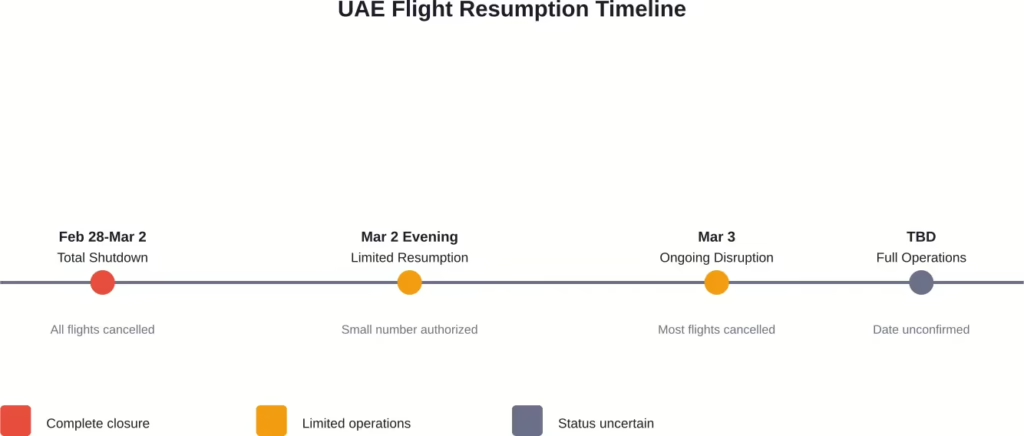
Executive Summary: As of March 3, 2026, Dubai Airports has authorized a limited resumption of operations following a 48-hour total shutdown due to regional airspace closures. A small number of flights are operating from Dubai International (DXB) and Dubai World Central (DWC), but the majority of scheduled services remain cancelled. Passengers are strongly advised not to travel to airports without confirmed flight status from their airline.
Hundreds of thousands of passengers remain stranded across the Middle East after UAE airports implemented a complete shutdown over the weekend. The disruption stems from temporary partial closure of UAE airspace as a precautionary measure amid escalating regional tensions.
But here’s where things stand right now. Dubai Airports announced late Monday evening that limited operations would begin, marking the first flights after more than 48 hours of total suspension. The keyword here is “limited.”
Current Flight Status at UAE Airports
According to Dubai Airports’ official travel advisory, some flights at DXB and DWC are cancelled or delayed due to the temporary partial closure of UAE airspace. Safety remains their top priority, and passengers are explicitly advised to check with their airline for the latest updates and not travel to the airport without confirmation.
The reality on the ground? Most scheduled services remain cancelled. Flight status boards at Dubai International show a pattern of cancellations across multiple routes, including flights to Novosibirsk, Ufa, Mombasa, Samara, and Baku—all marked as cancelled for March 3.
Meanwhile, Al Maktoum International Airport’s departure and arrival boards show no available flights at the moment, with the airport advising passengers to check back later.
What “Limited Resumption” Actually Means
Dubai Airports confirmed that from the evening of Monday, March 2, a small number of flights would operate from both Dubai International and Dubai World Central. But don’t mistake this for business as usual.
The authorized operations represent a fraction of normal capacity. Airlines have been notified on a case-by-case basis about which flights received clearance. Most schedules remain unstable, with the operational reality far from normal service levels.
Here’s the thing though—even for flights that do operate, delays are significant. The ripple effects of a 48-hour shutdown don’t disappear overnight. Aircraft positioning, crew availability, and passenger rebooking create cascading complications that will take days to resolve.
Regional Airspace Impact Beyond UAE
The disruption extends well beyond UAE borders. Lufthansa Group suspended its airlines’ flights to Beirut, Amman, Erbil, Tehran, and Tel Aviv until March 7. The airline is actively avoiding airspace of Iran, Iraq, Israel, Jordan, Lebanon, Qatar, and the UAE.
European airlines without direct Middle Eastern destinations face indirect impacts. Those relying on Gulf hubs for connecting flights experienced ongoing disruption as the conflict stretched into a third day on March 2.
| Region | Airspace Status | Impact Level |
|---|---|---|
| UAE | Partial closure, limited flights | Severe |
| Qatar | Restricted by multiple carriers | High |
| Iran, Iraq, Israel, Jordan, Lebanon | Avoided by Lufthansa Group through March 7 | High |
| Europe-Asia routes via Gulf | Rerouted or cancelled | Moderate |
Major Airlines’ Current Operating Status
Emirates and Etihad—the UAE’s flagship carriers—suspended virtually all operations during the total shutdown. As of March 3, both airlines began resuming select routes, though passengers face significant restrictions.
The airlines are prioritizing repatriation flights and essential routes. Commercial operations remain severely curtailed. Both carriers have issued waivers allowing passengers to rebook without penalty or request refunds for cancelled flights.
But wait. Before assuming a flight will operate based on airline schedules, verification is critical. Schedule displays may not reflect real-time cancellations, and gates can change with minimal notice.
What Airlines Are Telling Passengers
Official airline communications stress one consistent message: do not come to the airport without confirmed flight status. This isn’t standard precautionary language—it reflects genuine operational chaos.
Airlines recommend checking flight status through official apps or websites multiple times before departure. Phone lines are overwhelmed, so digital channels provide faster updates.
Broader Middle East Aviation Context
The timing of this disruption is particularly notable given the region’s aviation trajectory. According to IATA data released in December 2025, the Middle East was projected to lead global aviation profitability in 2026 with the highest net profit margin and highest profit per passenger.
Regional airlines were expected to generate $6.9 billion in net profit in 2026, with a profit margin of 9.3%—well above the global industry average. The current airspace closures represent a significant blow to that forecast.
IATA Regional Vice President Kamil Al-Awadhi had noted that “a more harmonized regulatory approach and deeper cooperation will help ensure all markets can participate in—and benefit from—the region’s growth trajectory.” The current crisis underscores the fragility of that growth when regional tensions escalate.
What Passengers Should Do Right Now
Real talk: don’t make assumptions about flight status based on yesterday’s information. The situation remains fluid, with changes happening hourly.
First priority is confirming flight status directly with the operating airline. Dubai Airports’ official channels provide general updates, but airlines hold definitive information about specific flights.
For those already at airports, prepare for extended waits. Airport hotels near DXB are fully booked, and alternative accommodations fill quickly. Community discussions indicate passengers who secured hotel rooms early fared better than those who waited.
Passenger Rights During Disruptions
When flights are cancelled due to airspace closures—classified as extraordinary circumstances—airline liability varies by the ticket’s governing regulations. EU261 protections apply to qualifying European carriers and routes, guaranteeing compensation and assistance under specific conditions.
Gulf carriers typically offer rebooking or refunds but may not provide automatic compensation for extraordinary circumstances. Travel insurance becomes critical here, particularly policies covering geopolitical disruptions.
| Situation | Airline Obligation | Passenger Action |
|---|---|---|
| Flight cancelled by airline | Rebook or refund | Contact airline immediately |
| Stranded at airport | Meal vouchers (varies) | Request assistance at service desk |
| Extended delay (6+ hours) | Hotel if overnight (varies) | Document all expenses |
| EU-regulated flight | EU261 rights apply | File compensation claim within deadline |
When Will Full Operations Resume?
That’s the question everyone’s asking. The honest answer? No confirmed timeline exists yet.
Dubai Airports describes the current phase as “limited resumption”—not a return to normal. Full restoration of operations depends on regional airspace reopening, which hinges on geopolitical developments beyond aviation authorities’ control.
Based on the current trajectory, airlines are planning contingencies through at least March 7. Some carriers have suspended Middle Eastern routes through that date, suggesting internal assessments don’t anticipate rapid normalization.
The phased approach indicates authorities are prioritizing safety margins over speed. That’s reassuring from a security perspective but frustrating for the hundreds of thousands waiting for confirmed travel options.
Frequently Asked Questions
Are flights operating from Dubai airports right now?
A limited number of flights are operating from Dubai International and Dubai World Central as of March 2 evening. However, the majority of scheduled services remain cancelled. Passengers must verify flight status directly with their airline before traveling to the airport.
When will UAE airspace fully reopen?
No official timeline has been announced for full airspace reopening. The current status is described as “temporary partial closure” with limited operations authorized. Airlines are planning contingencies through at least March 7, 2026.
Should I go to the airport if my flight shows as scheduled?
No. Dubai Airports explicitly advises passengers not to travel to the airport without confirmed flight status from their airline. Schedule displays may not reflect real-time cancellations.
Will I get compensation for my cancelled UAE flight?
Compensation depends on the airline and applicable regulations. Airspace closures are typically classified as extraordinary circumstances, which may limit automatic compensation. Airlines generally offer rebooking or refunds. EU261 regulations provide specific protections for qualifying European flights.
Which Middle East airports are operating normally?
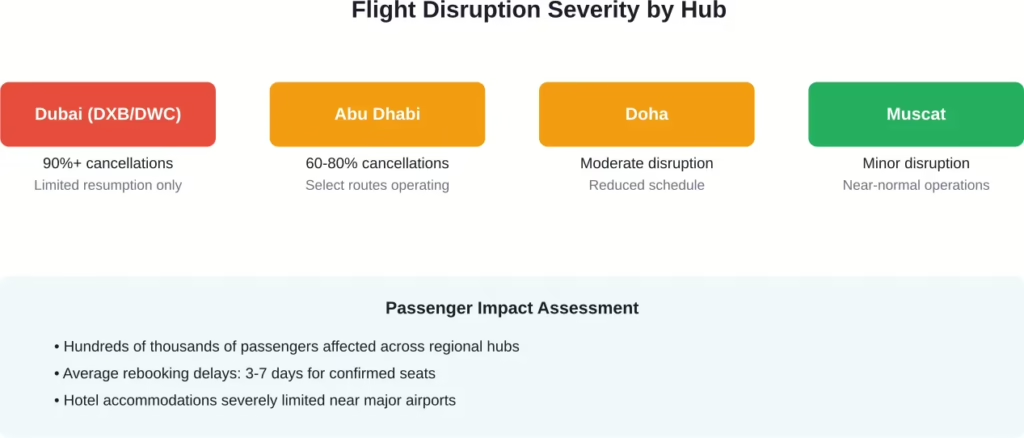
As of March 3, most major Gulf hubs face some level of disruption. Muscat appears to have the least impact with near-normal operations. Dubai and Abu Dhabi airports face the most severe cancellations. Passengers should verify status for specific airports and routes.
How long will it take to clear the passenger backlog?
Based on the scale of disruption, clearing the backlog will likely take several days to a week after normal operations resume. Airlines must address aircraft positioning, crew scheduling, and rebooking for hundreds of thousands of affected passengers.
Are connecting flights through Dubai affected?
Yes, connecting flights face significant disruption. Passengers with connections through Dubai should contact their airline about alternative routing. Many international carriers are avoiding UAE airspace entirely and rerouting passengers through alternative hubs.
Looking Ahead
The aviation industry’s resilience will be tested in the coming days. The Middle East aviation sector, which was positioned to lead global profitability in 2026 according to IATA projections, now faces its most significant operational challenge in recent years.
For passengers, patience and flexibility remain essential. The situation continues evolving, and information from 24 hours ago may no longer apply. Checking official sources multiple times daily isn’t excessive—it’s necessary.
Airlines and airport authorities are working to restore operations safely. The emphasis on safety over speed, while frustrating, ultimately serves travelers’ best interests. When airspace fully reopens, the region’s aviation infrastructure is well-positioned to recover quickly given its world-class facilities and operational capacity.
Stay informed through official channels, maintain direct contact with airlines, and keep backup plans flexible. The disruption won’t last indefinitely, but the timeline remains uncertain. Check Dubai Airports’ official website and your airline’s status updates regularly for the most current information.