
Executive Summary: Dubai is served by over 150 international airlines flying into Dubai International Airport (DXB) and Al Maktoum International Airport (DWC). Emirates, the UAE’s flagship carrier, operates the largest network from Dubai with flights to 140+ destinations, while partner airline flydubai serves additional regional routes primarily from Terminal 2 and DWC.
Dubai has transformed itself into one of the world’s most important aviation hubs. In 2025, DXB handled 95.2 million passengers, cementing its position as the world’s busiest airport for international passengers.
But here’s what makes Dubai genuinely unique as a connecting hub—the sheer number of airlines operating through its airports. Whether flying from Asia to Europe, Africa to the Americas, or anywhere in between, chances are there’s a carrier routing through Dubai.
This guide breaks down exactly which airlines fly through Dubai, where they operate from, and how to navigate the airport’s multiple terminals.
Understanding Dubai’s Airport Infrastructure
Before diving into specific airlines, it’s crucial to understand Dubai’s airport setup. The emirate operates two main aviation facilities, each serving different purposes.
Dubai International Airport (DXB)
Dubai International is the primary gateway and the world’s busiest hub for international travel. Since opening in 1960, DXB has maintained double-digit growth rates, evolving into what Dubai Airports describes as “the ultimate global hub.”
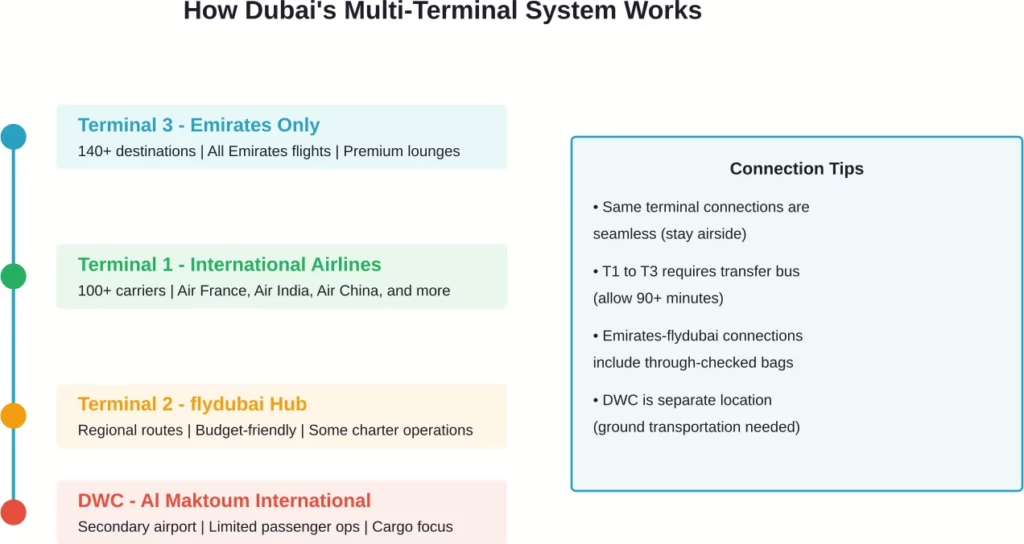
The airport operates three terminals:
- Terminal 1: Serves international airlines (excluding Emirates and flydubai)
- Terminal 2: Primarily handles flydubai operations and some charter services
- Terminal 3: Dedicated exclusively to Emirates operations
The scale here is impressive. DXB connects travelers to destinations across six continents, with world-class facilities including the iconic Emirates lounges, extensive shopping, and dining options that rival many city centers.
Al Maktoum International Airport (DWC)
Located at Dubai World Central, DWC serves as Dubai’s second airport. While considerably smaller than DXB, it handles specific airline operations and is positioned for future expansion.
Currently, DWC primarily serves cargo operations and select passenger airlines, including Air Atlanta Europe and certain seasonal carriers.
Real talk: Most international passengers transit through DXB rather than DWC. The infrastructure at Dubai International is far more developed for passenger connectivity.
Emirates: Dubai’s Flagship Carrier
When discussing airlines that fly through Dubai, Emirates dominates the conversation—and for good reason.
Founded on 15 March 1985 with backing from Dubai’s royal family, Emirates started with just two aircraft provided by Pakistan International Airlines and $10 million in start-up capital. The airline was required to operate independently without government subsidies from day one.
That’s a far cry from where things stand in 2026.
Emirates’ Global Network
Emirates operates as the world’s largest international airline, connecting passengers to nearly 140 destinations across six continents from its hub at Terminal 3.
The carrier operates the world’s largest fleet of wide-body aircraft, consisting entirely of Boeing 777 and Airbus A380 aircraft. This strategic fleet choice allows Emirates to offer spacious cabins and premium features like the A380 Shower Spa and Onboard Lounge.
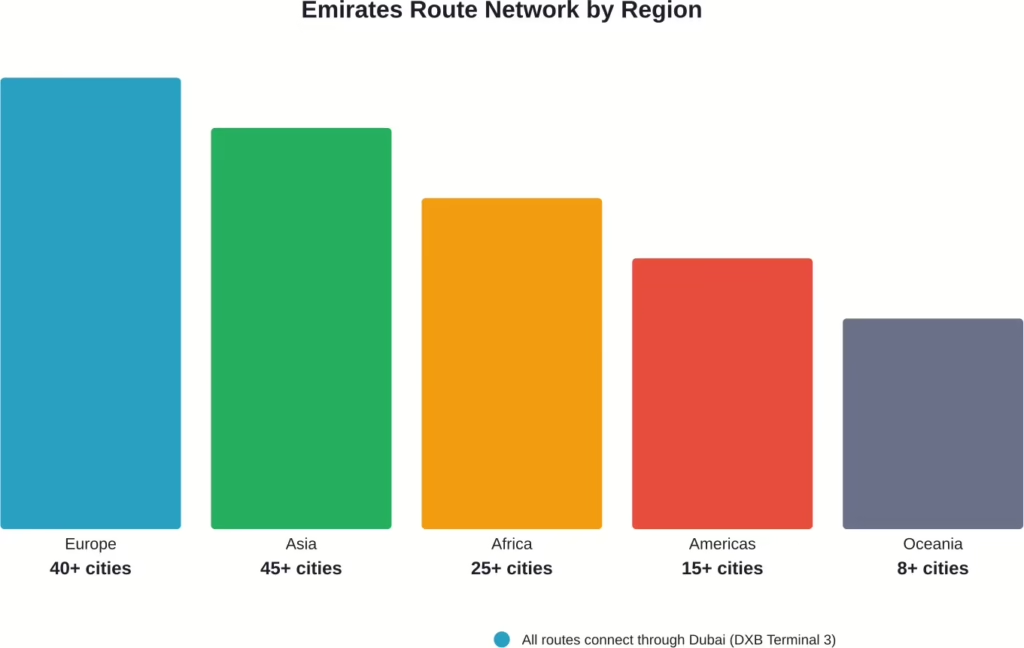
Emirates destinations span:
- Europe: Major cities including London, Paris, Frankfurt, Rome, and Manchester
- Asia: Extensive coverage across India, China, Southeast Asia, and Japan
- Africa: Key hubs like Johannesburg, Nairobi, Cairo, and Addis Ababa
- The Americas: North American gateways and select South American cities
- Oceania: Australia and New Zealand routes
- Middle East: Regional destinations across the Gulf and Levant
The airline’s hub-and-spoke model means virtually every Emirates flight connects through Dubai, making DXB a mandatory stopover for passengers traveling between distant regions on Emirates metal.
Emirates Premium Services
Emirates has built its reputation on premium service. The airline now offers four travel classes on select routes:
- Economy Class: Standard seating with award-winning ice entertainment system
- Premium Economy: Recently expanded with more legroom and enhanced service
- Business Class: Lie-flat seats and access to exclusive lounges
- First Class: Private suites with shower spas on A380s
The carrier’s Skywards loyalty program allows passengers to earn and redeem miles across the network, with Classic Rewards bookings available for members.
flydubai: Emirates’ Regional Partner
While Emirates handles long-haul international routes, flydubai fills a different niche in Dubai’s aviation ecosystem.
Launched as Dubai’s low-cost carrier, flydubai operates primarily from Terminal 2 at DXB and also utilizes Al Maktoum International Airport. The airline serves destinations that might not support Emirates’ wide-body operations.
The Emirates-flydubai Partnership
Here’s where things get interesting. Emirates and flydubai formed a strategic partnership that allows seamless connectivity between their networks.
According to Emirates’ official partnership page, passengers connecting from Emirates flights to flydubai services receive through-checked baggage and boarding passes for both segments. This integration essentially extends Emirates’ reach into secondary cities and regional markets.
The partnership benefits travelers by:
- Providing single-ticket bookings across both networks
- Eliminating baggage reclaim at Dubai for connecting passengers
- Offering coordinated schedules for convenient connections
- Extending Emirates’ destination count beyond its own metal
For passengers, this means booking an Emirates ticket might actually involve a flydubai-operated segment—particularly for routes to smaller cities in the Middle East, Central Asia, and Eastern Europe.
International Airlines Operating Through Dubai
Beyond Emirates and flydubai, Dubai Airports lists over 150 international carriers operating regular services through DXB and DWC.
These airlines use Dubai for various purposes: as a destination, as a connecting hub for their own passengers, or as a technical stop on ultra-long-haul routes.
Major Airlines at Terminal 1
Terminal 1 serves as the hub for international airlines excluding Emirates. According to the Dubai Airports airline directory, carriers operating from Terminal 1 include:
European Carriers:
- Aegean Airlines (A3) – connecting to Greece
- Air France (AF) – Paris and French destinations
- Air Baltic (BT) – Baltic region services
- Aeroflot (SU) – Russian destinations (subject to current operational status)
Asian Airlines:
- Air China (CA) – mainland China connections
- Air India (AI) – comprehensive Indian network
- Air Astana (KC) – Central Asian routes
African Carriers:
- Afriqiyah Airways (8U) – Libya services
- Air Algerie (AH) – Algerian destinations
The complete directory on dubaiairports.ae lists dozens more carriers across all global regions.
Airlines at Terminal 3
Terminal 3 operates exclusively for Emirates. If flying Emirates to, from, or through Dubai, Terminal 3 is the departure and arrival point.
This dedicated terminal handles Emirates’ massive daily operation of hundreds of flights, with specialized facilities designed specifically for the carrier’s wide-body fleet.
Carriers at Al Maktoum International (DWC)
DWC currently handles select carriers, including:
- Air Atlanta Europe (CT) – charter operations
- Various cargo carriers
- Seasonal passenger services
Passenger operations at DWC remain limited compared to DXB, though the facility is designed for significant future expansion as part of Dubai’s long-term aviation strategy.
North American Airlines Flying to Dubai
For travelers in North America, several options exist for reaching Dubai, though most routes involve connections rather than direct service.
United Airlines Dubai Service
United Airlines operates service to Dubai from select U.S. gateways. The carrier’s Dubai routes provide another Star Alliance option for travelers beyond Emirates’ own North American network.
Air Canada Routes
Air Canada operates through Terminal 3 at DXB, according to the Dubai Airports directory. The Canadian carrier provides connections for passengers traveling between Canada and destinations across the Middle East, Asia, and Africa via Dubai.
U.S. Gateway Cities
Emirates serves multiple U.S. cities directly, including:
- New York (JFK)
- Newark (EWR)
- Boston (BOS)
- Chicago (ORD)
- Dallas (DFW)
- Houston (IAH)
- Los Angeles (LAX)
- Miami (MIA)
- Orlando (MCO)
- San Francisco (SFO)
- Seattle (SEA)
- Washington, D.C. (IAD)
These direct Emirates services eliminate the need for connections when traveling between major U.S. markets and Dubai.
Terminal Assignments and Navigation
Understanding which airlines operate from which terminals saves considerable time and stress when connecting through Dubai.
Finding Your Terminal
Dubai Airports provides an online directory allowing passengers to search by airline code or name. The tool displays:
- Airline name and two-letter code
- Terminal assignment (T1, T2, T3, or DWC)
- Official airline website
Passengers should verify terminal assignments before traveling, as occasional changes occur for operational reasons.
Inter-Terminal Transfers
Connecting between terminals at DXB requires planning:
Within the Same Terminal: Passengers remain airside, following connection signage. Minimum connection time is typically 75 minutes for most airlines.
Between Different Terminals: Free shuttle buses operate 24/7 between terminals. Allow at least 90-120 minutes for inter-terminal connections, as the process involves:
- Following transfer signs to shuttle bus area
- Boarding the appropriate shuttle (clearly marked by destination terminal)
- Clearing security again at the arrival terminal
- Reaching the departure gate
Emirates-to-Emirates connections remain entirely within Terminal 3, which significantly simplifies the process.
Current Operational Status (March 2026)
It’s worth noting that Dubai’s airports have experienced operational impacts recently. According to Dubai Airports’ passenger advisory from March 2, 2026, limited airport operations resumed after a temporary partial closure of UAE airspace as a precautionary measure related to regional tensions.
As reported in recent coverage, escalating Iranian drone and missile strikes across the Gulf disrupted flights at both DXB and DWC in early March 2026. Passengers were advised not to travel to airports unless they received confirmed departure times directly from airlines.
By March 3, operations had resumed, though schedules remained subject to change. This situation illustrates an important reality about flying through Dubai: geopolitical factors can occasionally impact operations, given the region’s location.
Travelers should:
- Check flight status directly with airlines before heading to the airport
- Monitor Dubai Airports’ official channels for operational updates
- Consider travel insurance covering flight disruptions
- Allow flexible schedules when possible during periods of regional uncertainty
Booking Flights Through Dubai
Several strategies exist for booking travel through Dubai, depending on travel patterns and preferences.
Direct Airline Bookings
Booking directly with Emirates provides access to:
- Best availability of premium cabins
- Skywards loyalty program integration
- Flexible change options on certain fare types
- Access to Emirates’ own sales and promotions
The Emirates website allows multi-city bookings, promotional code application, and integration with partner airlines including flydubai.
One-Ticket vs. Separate Tickets
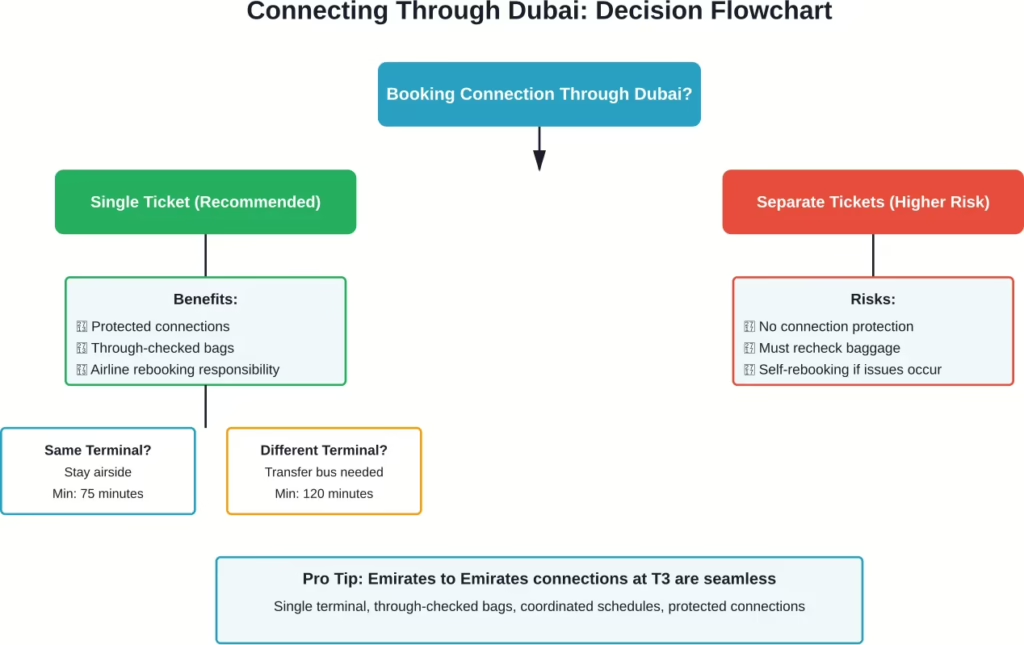
Passengers face a crucial decision when connecting through Dubai on different airlines: booking as a single itinerary versus separate tickets.
Single Ticket Benefits:
- Protected connections if delays cause missed flights
- Through-checked baggage to final destination
- Single check-in process
- Airline responsibility for rebooking if issues occur
Separate Tickets Risks:
- No protection if first flight delay causes missed connection
- Must collect and recheck baggage
- Separate check-ins required
- Passenger responsible for rebooking at own expense
For connections at Dubai, single-ticket bookings provide significantly more security, particularly given the airport’s high volume and potential for delays.
Using Flight Search Tools
Multiple online platforms search Dubai connections, but it’s crucial to verify:
- Which airlines actually operate each segment
- Terminal locations for connections
- Minimum connection time allowances
- Baggage policies across multiple carriers
Some attractive fares involve tight connections or terminal changes that look fine on paper but prove stressful in reality.
Most Popular Routes Through Dubai
Dubai’s geographic location makes it ideal for connecting certain city pairs that lack direct service.
Asia to Europe Connections
Cities across India, Southeast Asia, and East Asia connect efficiently to European destinations via Dubai. Popular routing examples include:
- Mumbai to London via Dubai
- Bangkok to Frankfurt via Dubai
- Hong Kong to Paris via Dubai
- Singapore to Amsterdam via Dubai
Emirates operates multiple daily flights on many of these segments, providing connection flexibility.
Africa to Asia Routes
Dubai serves as a primary connector between African and Asian cities:
- Johannesburg to Singapore via Dubai
- Nairobi to Mumbai via Dubai
- Cairo to Bangkok via Dubai
- Addis Ababa to Hong Kong via Dubai
According to 2019 data from AGSI, low-cost carriers like Air Arabia and flydubai delivered a total of nearly 22 million passengers, contributing to the UAE’s position as a global air hub.
Transcontinental Long-Hauls
Some of the world’s longest flights route through Dubai:
- Australia to Europe (often via Dubai rather than direct)
- New Zealand to Middle East destinations
- East Africa to North America
Emirates’ all-wide-body fleet makes these ultra-long sectors feasible with competitive comfort levels.
| Route Type | Average Connection Time | Popular Airlines | Key Advantages |
|---|---|---|---|
| Asia to Europe | 2-4 hours | Emirates, Air India, Air France | Frequent flights, competitive pricing |
| Africa to Asia | 2-5 hours | Emirates, flydubai, Ethiopian | Limited direct alternatives |
| Americas to Middle East | 3-6 hours | Emirates, United | Access to regional destinations |
| Oceania to Europe | 3-5 hours | Emirates, Qantas partnership | Break up ultra-long journey |
Comparing Dubai to Other Gulf Hubs
Dubai isn’t the only Gulf aviation hub. Understanding how it compares to alternatives helps travelers make informed routing decisions.
Dubai (DXB) vs. Doha (DOH)
Qatar Airways operates its hub from Doha’s Hamad International Airport, competing directly with Emirates for connecting traffic.
Dubai Advantages:
- Higher flight frequency on most routes
- More terminal space and passenger facilities
- Better ground transportation into the city
- Wider range of airlines beyond the hub carrier
Doha Advantages:
- Newer, more modern single-terminal facility
- Often shorter connection times
- Qatar Airways’ premium service reputation
Dubai (DXB) vs. Abu Dhabi (AUH)
Abu Dhabi International Airport serves as Etihad Airways’ hub, located just 90 minutes from Dubai.
Dubai Advantages:
- Significantly more flight options
- Emirates’ larger global network
- Better connectivity to Asia and Africa
Abu Dhabi Advantages:
- Less congested facilities
- Potentially lower airport fees
- Etihad’s premium offerings
For most travelers, Dubai’s vastly larger network outweighs any operational advantages of smaller Gulf hubs.
Lounge Access and Airport Facilities
Long connections at Dubai become more comfortable with lounge access and knowledge of airport facilities.
Airline Lounges at DXB
Emirates Lounges (Terminal 3):
- First Class Lounge with shower facilities and dining
- Business Class Lounge with workspaces and refreshments
- Exclusive access to Emirates premium passengers
Other Airline Lounges (Terminal 1):
- Air France Lounge
- Marhaba Lounge (paid access)
- Various airline-specific facilities
Airport Amenities
Dubai International offers extensive facilities for connecting passengers:
- Shopping: Duty-free options across all terminals with luxury brands and local products
- Dining: Dozens of restaurants from fast food to sit-down service
- Sleep Options: Hotels within the airport for longer layovers
- Shower Facilities: Available in premium lounges and some public areas
- WiFi: Free throughout the airport
For layovers exceeding six hours, many passengers opt for airport hotels or quick city tours, though the latter requires appropriate visa arrangements for certain nationalities.
Visa Requirements and Transit Rules
Understanding visa requirements prevents unpleasant surprises when connecting through Dubai.
Transit Without Visa
Most nationalities can transit through Dubai without a visa if:
- Remaining airside (not passing through immigration)
- Holding confirmed onward tickets within 24 hours
- Possessing valid travel documents for the final destination
This transit privilege applies regardless of nationality for passengers not leaving the airport.
Leaving the Airport
Passengers wanting to exit the airport and explore Dubai during layovers need appropriate entry clearance:
- Many nationalities receive visa-on-arrival or visa-free entry for short stays
- Others must arrange visas in advance through airlines or embassies
- Transit visa options exist for longer layovers (typically 48-96 hours)
The General Civil Aviation Authority (GCAA) of UAE regulates aviation matters, though visa policies fall under immigration authorities.
Luggage Considerations
Baggage handling at Dubai varies based on ticketing arrangements and airlines involved.
Through-Checked Baggage
On single-ticket itineraries, baggage typically checks through to the final destination automatically. This applies to:
- Emirates to Emirates connections
- Emirates to flydubai connections (per their partnership agreement)
- Interline agreements between participating carriers
Passengers don’t need to collect and recheck bags during the Dubai connection.
Self-Transfer Baggage
Separate ticket bookings require passengers to:
- Collect checked baggage after arriving in Dubai
- Clear customs if necessary
- Check in again for the departing flight
- Pass through security screening
This process adds significant time and complexity to connections, particularly between different terminals.
Baggage Allowances
Different airlines operating through Dubai maintain distinct baggage policies:
- Emirates: Generally generous allowances, especially on long-haul routes
- flydubai: More restricted basic allowances with paid upgrades available
- Other airlines: Vary widely based on carrier, route, and fare class
When booking connections involving multiple airlines, verify that baggage allowances on each segment meet travel needs.
Alternative Airlines and Routing Options
While Emirates dominates Dubai’s aviation landscape, travelers should consider alternative routing through other carriers in certain situations.
When to Consider Other Airlines
Non-Emirates options might make sense when:
- Seeking lower fares on specific routes
- Holding elite status with other airline alliances
- Preferring certain aircraft types or cabin configurations
- Connecting to destinations not served by Emirates
For example, passengers traveling between smaller European cities and South Asian destinations might find better connections via Istanbul (Turkish Airlines) or Doha (Qatar Airways) rather than routing through Dubai.
Low-Cost Carrier Options
Beyond full-service carriers, low-cost airlines operating through Dubai include:
- flydubai: Extensive Middle East and regional network
- Air Arabia: Based in nearby Sharjah with some Dubai operations
These carriers offer budget-conscious options, though with fewer amenities and more restrictive policies than full-service airlines.
Business Travel Considerations
Corporate travelers have specific needs when routing through Dubai.
Business Class Products
Emirates’ Business Class on its Boeing 777 and A380 aircraft offers:
- Lie-flat seats in 2-2-2 or 1-2-1 configurations
- Direct aisle access on many aircraft
- Onboard WiFi for productivity
- Premium lounge access at Terminal 3
For business travelers, these features can justify premium fares by enabling work and rest during long-haul flights.
Frequent Flyer Considerations
Business travelers should evaluate:
- Skywards Membership: Emirates’ loyalty program rewards regular travel through Dubai
- Alliance Partnerships: Emirates partners with Qantas and select other carriers but isn’t part of a major alliance
- Credit Card Integration: Various credit cards offer Skywards earning potential
Corporate travelers heavily invested in Star Alliance, SkyTeam, or oneworld might find other Gulf hubs more rewarding for loyalty accumulation.
Tips for Smooth Dubai Connections
Veteran travelers who regularly connect through Dubai offer practical advice for hassle-free transits.
Timing Your Connection
Connection time recommendations:
- Minimum for same-terminal connections: 90 minutes (though airline minimums may be 75 minutes)
- Inter-terminal connections: 2.5-3 hours minimum
- Separate ticket bookings: 4+ hours to account for delays and rechecking baggage
Tighter connections work during off-peak periods, but busy times (particularly evenings when multiple flights arrive simultaneously) benefit from padding.
Managing Jet Lag on Long Connections
Dubai’s time zone (UTC+4) sits between Europe and Asia, making it challenging for biological clocks on transcontinental journeys.
Strategies include:
- Using airport hotels for connections exceeding 6 hours to get horizontal rest
- Accessing shower facilities in lounges to refresh
- Timing meals to destination time zone
- Getting natural light if exiting the airport during daytime layovers
Download Key Apps
Before traveling:
- Emirates app: For managing bookings and mobile boarding passes
- Dubai Airports app: Real-time flight information and terminal maps
- Airline-specific apps: For any non-Emirates segments
Having boarding passes accessible offline prevents issues with spotty airport WiFi or depleted phone batteries.
Future Developments
Dubai’s aviation infrastructure continues evolving to handle projected growth.
Al Maktoum International Expansion
DWC is positioned as Dubai’s future primary airport, with ambitious expansion plans to eventually eclipse DXB’s capacity. When fully developed, Al Maktoum International is designed to handle over 200 million passengers annually.
For now, DWC remains secondary to DXB, but future decades may see a gradual shift of operations to the newer facility.
Fleet and Network Growth
Emirates continues taking delivery of new aircraft, with substantial orders for Boeing 777X and additional A380s. These deliveries enable network expansion and frequency increases on existing routes.
The airline’s position as the world’s largest international carrier suggests continued dominance of Dubai’s aviation landscape for the foreseeable future.
Frequently Asked Questions
How many airlines fly through Dubai?
Over 150 international airlines operate through Dubai’s airports (DXB and DWC), according to Dubai Airports. This includes Emirates, the largest operator, along with carriers from every continent serving destinations worldwide.
Which terminal does Emirates use at Dubai Airport?
Emirates operates exclusively from Terminal 3 at Dubai International Airport (DXB). All Emirates flights—arrivals and departures—use this dedicated terminal, which features Emirates-specific facilities including premium lounges, dining, and shopping.
Can I leave the airport during a layover in Dubai?
Yes, though visa requirements depend on nationality. Many passport holders receive visa-free entry or visa-on-arrival for short stays. Passengers remaining airside don’t need visas for transit. Check specific entry requirements for your nationality before planning to exit the airport.
What’s the minimum connection time at Dubai Airport?
For same-terminal connections, airlines typically require 75-90 minutes minimum. Inter-terminal connections should allow 2-3 hours minimum due to shuttle buses and security rescreening. Separate ticket bookings need 4+ hours to safely manage baggage reclaim and check-in processes.
Does Emirates fly direct to the United States?
Yes, Emirates operates direct flights from Dubai to multiple U.S. cities including New York (JFK), Newark, Boston, Chicago, Dallas, Houston, Los Angeles, Miami, Orlando, San Francisco, Seattle, and Washington, D.C. These routes eliminate the need for connections when traveling between major U.S. markets and Dubai.
Is Dubai Airport the busiest in the world?
Dubai International Airport (DXB) is the world’s busiest airport for international passengers. In 2025, DXB handled 95.2 million passengers, cementing its position as the world’s busiest, most preferred, and one of the most connected international airports.
What’s the difference between Emirates and flydubai?
Emirates is Dubai’s flagship full-service international carrier operating wide-body aircraft to 140+ destinations from Terminal 3. flydubai is Dubai’s low-cost carrier serving regional destinations primarily from Terminal 2 with narrow-body aircraft. The two airlines have a partnership allowing seamless connections with through-checked baggage and coordinated schedules.
Conclusion: Navigating Dubai’s Aviation Hub
Dubai’s position as a global aviation crossroads means understanding which airlines fly through the emirate opens up countless routing possibilities.
Emirates dominates with its massive network of 140+ destinations, but over 150 airlines operate through Dubai’s airports, providing options for virtually any global journey. Whether connecting between continents, accessing secondary markets, or simply transiting through one of the world’s premier airport facilities, Dubai serves as a viable and often excellent routing option.
The key to smooth Dubai connections lies in understanding terminal assignments, allowing adequate connection times, and booking appropriately (preferably single-ticket itineraries with protected connections).
Ready to book your next flight through Dubai? Check current schedules and availability directly with your preferred airline, verify terminal information on dubaiairports.ae, and allow flexibility in your schedule to account for the realities of connecting at one of the world’s busiest international hubs.