
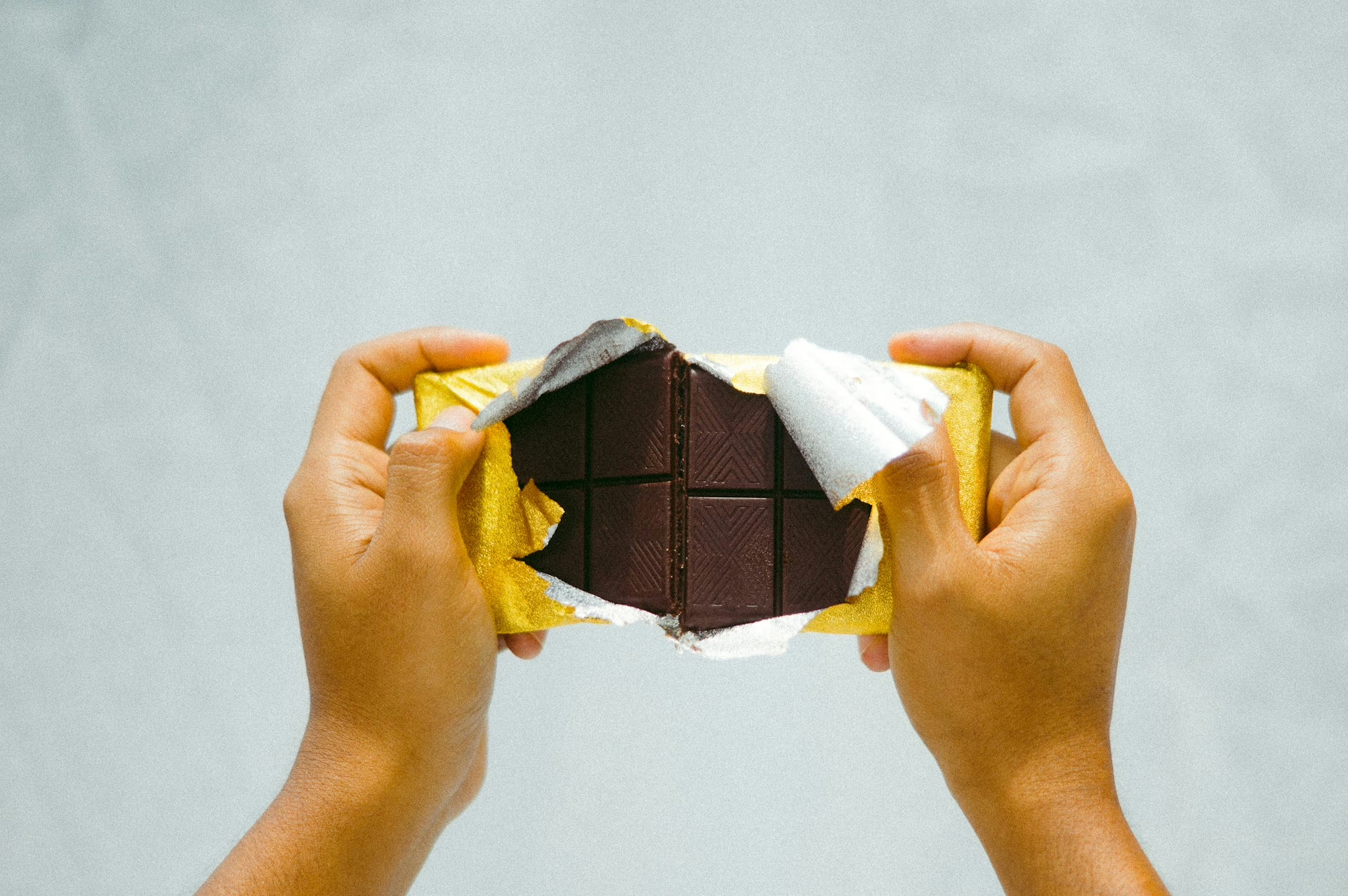
It’s hard to scroll without seeing it – that glossy chocolate shell cracking open to reveal a swirl of green pistachio cream and golden pastry. What was once a quiet boutique creation in the UAE has now turned into one of the most photographed (and devoured) desserts on the planet. But behind the viral videos and social buzz is something much more layered: flavor, culture, and a certain kind of emotional indulgence that feels very… Dubai.
The Viral Formula: Crunch, Cream, and Chocolate
What makes Dubai chocolate so irresistible isn’t just its ingredients – it’s the architecture of taste and texture. Every layer is designed to hit a different sensory note, and that’s exactly what keeps people watching, biting, and sharing.
Texture First, Always
There’s a reason people hold their breath when slicing into one of these bars on camera. That clean snap of chocolate, the slow give of pistachio cream, the unexpected crunch of golden kataifi – it’s a choreography of textures that’s as satisfying to hear as it is to taste.
But it’s not just for show. That combination – crisp, creamy, silky – is built to linger. It turns a simple bite into a moment, and in a world flooded with sugar, that kind of contrast still cuts through.
Pistachio at the Center
Pistachio isn’t new to Middle Eastern desserts – it’s everywhere from baklava to halva – but here, it’s been reimagined as a luxurious cream blended with tahini for a smooth, faintly salty profile: deeply nostalgic for those who grew up with these flavors.
It’s not overpowering. It doesn’t need to be. It’s there as a reminder of home, of tradition, softened by milk chocolate and reintroduced to the world in a format that feels entirely new.
Kataifi, the Quiet Star
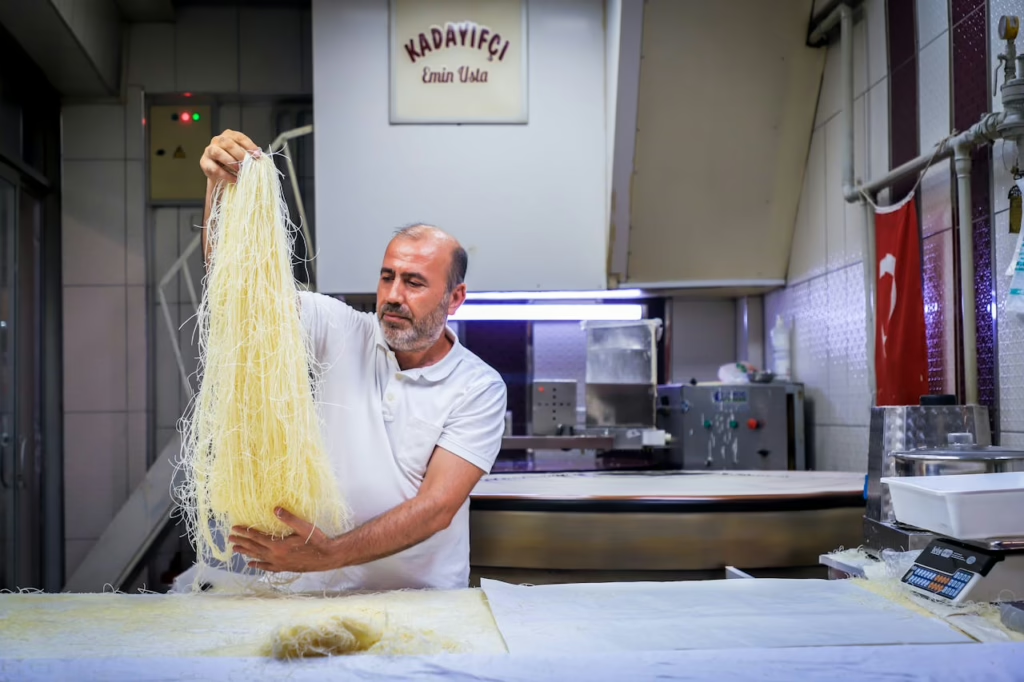
Kataifi isn’t just an accent – it’s the part that makes people pause. Shredded, toasted, and somehow still delicate beneath the weight of chocolate, it brings a sense of place into the dessert.
It’s easy to miss what it’s doing until it’s not there. That final crunch, the warmth it brings to the cold sweetness of the chocolate – it’s what anchors the whole thing. A pastry element turned texture icon.
Built for Craving, Designed for Sharing
Dubai chocolate didn’t go viral because it was sweet. Plenty of desserts are. It went viral because it knew what it was doing. Visually sharp. Sensory-rich. Wrapped in gold or deep black. And it hits that intersection where indulgence meets identity – where people don’t just want to eat something, they want to show that they’ve tasted it. It’s not just a bar of chocolate. It’s a small, edible flex.

Where Culture Meets Craft – The Middle Eastern Influence, by World Arabia
At World Arabia, we’ve always been drawn to the places where tradition and innovation intersect. Dubai chocolate is one of those places. What looks like a simple bar – glossy, structured, designed for the camera – actually carries the weight of centuries-old flavors: pistachio, kataifi, saffron, rose. Familiar, but not predictable.
We see these ingredients not as decoration, but as memory. They speak of shared rituals and quiet sweetness – the kinds of flavors that come from home kitchens, layered desserts, and evening gatherings. The craftsmanship lies in restraint. Nothing is overdone. Every layer has a reason to be there.
Of course, it’s made for the modern world too. We’ve seen it making rounds on Instagram, where that glossy shell and soft green filling pause even the most distracted scroll. But beyond the visuals, it’s the balance that holds – between culture and craft, comfort and elegance. And that’s something we always pay attention to.
More Than a Trend: Who’s Really Buying Dubai Chocolate
It’s easy to call it viral – and it is – but behind the numbers is something more intimate. This isn’t just a dessert people post once and forget. It’s become part of personal rituals, gifts, moments of pause. So who’s actually keeping this chocolate in demand, and why does that matter?
The Core Audience: Millennial and Gen Z Sweet Tooths
They’re not just buying with their mouths – they’re buying with their eyes, their values, and their moods.
- Craving meets aesthetics: The visual drama of the chocolate bar – that precise crack, the pistachio green, the soft cream – makes it an instant draw on TikTok and Instagram.
- Emotional purchase: For younger consumers, this isn’t just a snack. It’s a mood boost, a self-care token, a mid-week indulgence that feels earned.
- Global palates: Gen Z is more open to cross-cultural flavors. Pistachio, kataifi, tahini – these aren’t “exotic,” they’re just… interesting.
What It Says When You Gift It
Gifting this chocolate carries a certain quiet flair. You’re not handing someone a supermarket truffle box – you’re giving them something curated, rooted, a little dramatic.
- It looks thoughtful: The packaging, the shape, even the way it slices – it feels like something you chose, not grabbed in a hurry.
- It bridges worlds: For many, it’s a way to share a piece of Dubai without saying a word. A soft cultural gesture, tied up in chocolate.
Rituals and Repeats
People come back to it. And not just because it tastes good.
- Pregnancy cravings: It’s been mentioned again and again – the layered richness, the texture, the emotional hit. It satisfies more than one sense at once.
- Moments of pause: Post-dinner, mid-week reset, something small after a long day. It slips into routines without demanding attention – but delivers it anyway.
This isn’t mass-market sugar. It’s dessert that feels personal – and in a world that moves fast, that’s what makes people return.
The Moments That Made It Unmissable
Some trends go viral because they’re loud. This one didn’t need to be. Dubai chocolate slipped into global culture with quiet precision – built on visual clarity, emotional pull, and a kind of elegance that didn’t ask for attention, but got it anyway. Here’s how it happened – moment by moment:
- The cut-through video: It started simple. A glossy bar, a slow knife, and that perfect cross-section – pistachio green against golden kataifi, wrapped in chocolate. No sound needed. It triggered something instantly satisfying.
- Cafés designing around it: In places like London, Riyadh, and Istanbul, the chocolate wasn’t just added to menus – it became the thing. Whole display shelves styled around it. Launch photos framed to feature that one clean slice.
- Rituals, not just reactions: This wasn’t a one-and-done dessert. People built it into their routines. Evening treats. Birthday gifts. Ramadan tables. It slipped into habits without branding itself as essential – and became just that.
- Social without trying: Of course it landed on Instagram and TikTok – the form invites it. But what’s rare is how people filmed it: slowly, with care. Less performance, more appreciation.
What started as a boutique creation became something with rhythm, with repeat value. Not because it screamed “trend,” but because it felt like it belonged. And that’s what makes it last.
Global Reach: From Dubai to Supermarket Shelves
Not long ago, you had to know someone in the UAE to get your hands on a bar. Now it’s on café counters in London, in cheesecake slices in New York, and in curated snack boxes in Seoul. What started with Fix Dessert Chocolatier, a boutique idea grounded in texture and memory – has quietly turned into a global format. As the trend exploded, many regional confectioners and mass-market brands worldwide created similar versions with pistachio cream and crisp elements to capitalize on the viral structure.
And yet, something in the original still carries through. The balance of sweet and salt, the layers of crisp and cream, the feeling of familiarity dressed in something new. Even when the recipe shifts, the tone doesn’t. It still feels like Dubai – composed, confident, and unexpectedly generous.
What Sets It Apart From Other Luxury Chocolates
It’s tempting to compare Dubai chocolate to other high-end bars – the ones lined up in glass cases or stamped with gold. But they’re not speaking the same language. While European luxury chocolate leans on origin, purity, and pedigree, Dubai’s version plays by different rules – and that’s exactly why it stands out.
Less About Provenance, More About Presence
There’s no long backstory about cacao farms or rare beans aged in oak. Instead, Dubai chocolate wins you over with how it looks, how it feels, how it lands in the moment. It’s immediate, not theoretical.
- Built for craving, not connoisseurship
- Sensory-first: crisp, creamy, layered
- Designed to be seen, shared, sliced
Visual Identity Matters
You know it when you see it. There’s an elegance in its structure – even layering, the clean snap, the soft contrast of pistachio against chocolate. It doesn’t need embellishment.
- No gold dust, no frills
- Recognizable across cultures without translation
- Effortlessly photogenic, but still grounded in taste
Emotional Over Intellectual
Luxury doesn’t always have to whisper. Sometimes, it speaks through comfort, through nostalgia, through a bite that reminds you of something you didn’t know you missed.
- Taps into mood and memory
- Balances indulgence with subtlety
- Feels new, but familiar enough to crave again
This isn’t chocolate for collectors. It’s chocolate for people who want to feel something – texture, warmth, delight – without needing to explain it. And that, in its own quiet way, is luxury.
Not Just a Trend: A Cultural Dessert with Global Legs
Some trends disappear as quickly as they arrive. But Dubai chocolate seems to have taken a different path – not rushed, not noisy, just steadily expanding. It didn’t need a gimmick. It had texture, memory, and enough quiet elegance to travel on its own terms.
What makes it lasting isn’t just the flavor. It’s the cultural layer beneath – pistachio, kataifi, rose, tahini – ingredients that carry weight in this region, now reimagined without losing their sense of place. The form is new, but the feeling is familiar. That’s what gives it reach.
Even now, as it shifts – into lighter versions, plant-based creams, or dessert hybrids – the core stays intact. It’s still recognizably regional, even as it blends into something broader. Less a one-time hit, more a format the world didn’t know it needed.
Conclusion
Dubai chocolate didn’t arrive with a press release. It emerged – quietly, deliberately – from the hands of local artisans and into the world’s appetite for something that felt both comforting and new. And what’s kept it here isn’t just the taste, but the tone. It doesn’t chase attention. It earns it.
Maybe that’s what makes it resonate: the way it brings together heritage and detail without overexplaining either. A bite is enough. It tells you everything you need to know – about place, about care, about restraint.
And as it finds new forms – lighter creams, different coatings, playful hybrids – the essence holds. That quiet, confident balance between craft and craving. Between local and global. Between something small, and something that somehow stays with you.
FAQ
1. Is Dubai chocolate just a TikTok trend?
It may have started there, but it’s clearly grown beyond the algorithm. The structure, flavor, and cultural depth behind it give it a longevity that most viral foods never reach.
2. What makes the pistachio filling different?
It’s not overly sweet or artificial – it’s smooth, grounded, and often paired with subtle ingredients like rose water or tahini. That contrast with the chocolate is part of what keeps people coming back.
3. Why does kataifi matter?
Kataifi isn’t just for texture – though the crunch is crucial. It’s also a direct connection to Middle Eastern dessert heritage. It adds something both emotional and structural to the bite.
4. Can you buy authentic Dubai chocolate outside the UAE?
Yes, though quantities are often limited. Fix Dessert Chocolatier ships small batches, and some international cafés and luxury retailers are starting to feature their own versions. But the original is still worth seeking out.
5. What makes it different from European luxury chocolate?
Dubai chocolate isn’t obsessed with origin or percentage. It’s less about terroir and more about emotion. The design, the texture, the layered experience – it’s built to be felt, not just analyzed.
6. Will it fade, or is it here to stay?
If anything, it’s just getting started. The format is flexible, the flavor is memorable, and the emotional link to Middle Eastern tradition gives it staying power. This isn’t a trend. It’s a new classic in the making.